
Hay for Alpacas and Llamas: What the Fibre Market Needs
Camelids are not small cattle — their modified rumen and low-NDF tolerance means the hay specification for alpacas and llamas is closer to horse hay than sheep hay, and most general-purpose hay fails the test.
Why Standard Farm Hay Is Often Wrong for Alpacas and Llamas
Australia’s alpaca industry — approximately 350,000 to 400,000 registered alpacas, concentrated in Victoria’s Macedon Ranges and Goulburn Valley, SA’s Adelaide Hills and McLaren Vale, and NSW’s Tablelands — is one of the fastest-growing small livestock sectors in Australian agriculture. The fibre from Huacaya alpacas (the more common of the two alpaca breeds in Australia) sells for AUD $15 to $45 per kilogram at current clean fleece prices, depending on micron, staple strength, and colour purity. For properties running 30 to 200 alpacas as a commercial fibre enterprise, feed quality directly affects both fleece weight per animal and fibre fineness — the primary determinant of price.
The nutritional management mistake that most new alpaca and llama producers make is feeding their animals like sheep or cattle. This is understandable — alpacas are ruminant-adjacent animals managed in a pastoral context, and the farm supply store sells hay without alpaca-specific nutritional guidance. The problem is that alpacas and llamas are not true ruminants — they are pseudo-ruminants (camelids with a three-compartment stomach rather than the four-compartment cattle stomach) with a metabolic efficiency and roughage-processing capability that differs from sheep and cattle in important practical ways.
The result: standard farm hay that performs acceptably for ewes or dry cows — mature oaten hay at 60 to 65% NDF, 7% crude protein — produces poor body condition scores in alpacas fed at ad-lib intake because their smaller, more efficient digestive system extracts nutrients differently from high-NDF fibrous material. This article covers what hay specifications alpacas and llamas actually need, which Australian hay species meet those specifications, and the baling and storage management that maintains those specifications from paddock to feeding rack. For general baling equipment context across the small livestock property scale typical of Australian alpaca operations, our article on round baler solutions for sheep and wool farms covers equipment selection at this farm scale.
Alpaca and Llama Digestive Physiology — Why It Matters for Hay Selection
The Three-Compartment Stomach and Its Implications
Camelids (alpacas and llamas) have a three-chambered stomach system (C1, C2, and C3) rather than the four-chambered ruminant system of cattle and sheep (rumen, reticulum, omasum, abomasum). The C1 compartment functions similarly to the rumen — fermentation occurs here — but its capacity is smaller relative to body size than the cattle rumen, and the rate of fermentation is slower and more efficient per unit of feed DM. Camelids extract more nutrients per kilogram of DM from high-quality, low-NDF feed than cattle or sheep do, but they are less effective at processing high-NDF, mature roughage.
In practical terms: an alpaca can maintain good body condition on 1.5 to 2.0% of body weight in DM per day from high-quality hay (NDF below 52%, ME above 9.5 MJ/kg DM). The same alpaca fed mature oaten hay at 65% NDF needs 2.5 to 3.0% of body weight in DM to maintain condition — an intake level that exceeds the camelid stomach capacity in most individual animals, resulting in progressive body condition loss even when hay is fed ad-lib.
| Hay Specification | Alpacas & Llamas | Sheep | Cattle (dry) | Notes |
|---|---|---|---|---|
| NDF | <52% ideal, <58% acceptable | <65% | <70% | Camelids most sensitive to high NDF |
| Crude protein | 10–16% | 8–12% | 7–10% | Higher protein improves fleece weight |
| ME (MJ/kg DM) | ≥9.5 | ≥8.5 | ≥8.0 | Camelids need density, not volume |
| Dust | Very low — similar to horses | Moderate ok | Moderate ok | Camelids respiratory sensitive |
| Mould | Zero — absolute | Near-zero | Low | Strict — similar to equine standards |
Which Australian Hay Species Work for Alpacas
Premium: Lucerne (Alfalfa) — The Gold Standard for Camelid Nutrition
Lucerne hay cut at the vegetative to early-bud stage is the best-performing hay for alpacas in Australia. At 20 to 24% crude protein, 38 to 46% NDF, and 9.5 to 10.5 MJ ME, it meets every camelid nutritional specification comfortably. The main management consideration is not to over-feed lucerne to alpacas at high protein availability — males and non-breeding females on pure lucerne ad-lib can become excessively conditioned, and fibre production does not necessarily improve proportionally with condition score above 3.0 on the 1-5 scale. Feed lucerne alongside a lower-protein grass hay (meadow, ryegrass, oaten) at a 30:70 or 40:60 ratio for most production classes.
Good: Oaten Hay at the Right Stage
Oaten hay cut at the flag-leaf to early-head stage — before the oat seed head is fully formed and the stem has lignified — produces hay at 48 to 55% NDF and 10 to 12% CP that meets alpaca requirements. The same oaten hay cut at full heading (the common commercial specification for cattle and sheep markets) rises to 58 to 65% NDF and drops to 7 to 9% CP — adequate for maintenance in dry sheep but genuinely sub-optimal for alpacas at commercial body condition targets.
Avoid: Mature Cereal Straw and Late-Cut Hay
Wheat straw, barley straw, and any cereal hay made from fully-headed crops are nutritionally inadequate for alpacas as a primary roughage. NDF above 68% and ME below 7.5 MJ/kg DM places these materials below the camelid’s metabolic efficiency threshold — the animal physically cannot eat enough to meet maintenance requirements without supplementary grain. These materials can be used as ‘filler’ roughage at 15 to 20% of the ration alongside high-quality hay or concentrate, but should not be fed as sole-roughage to alpacas or llamas.
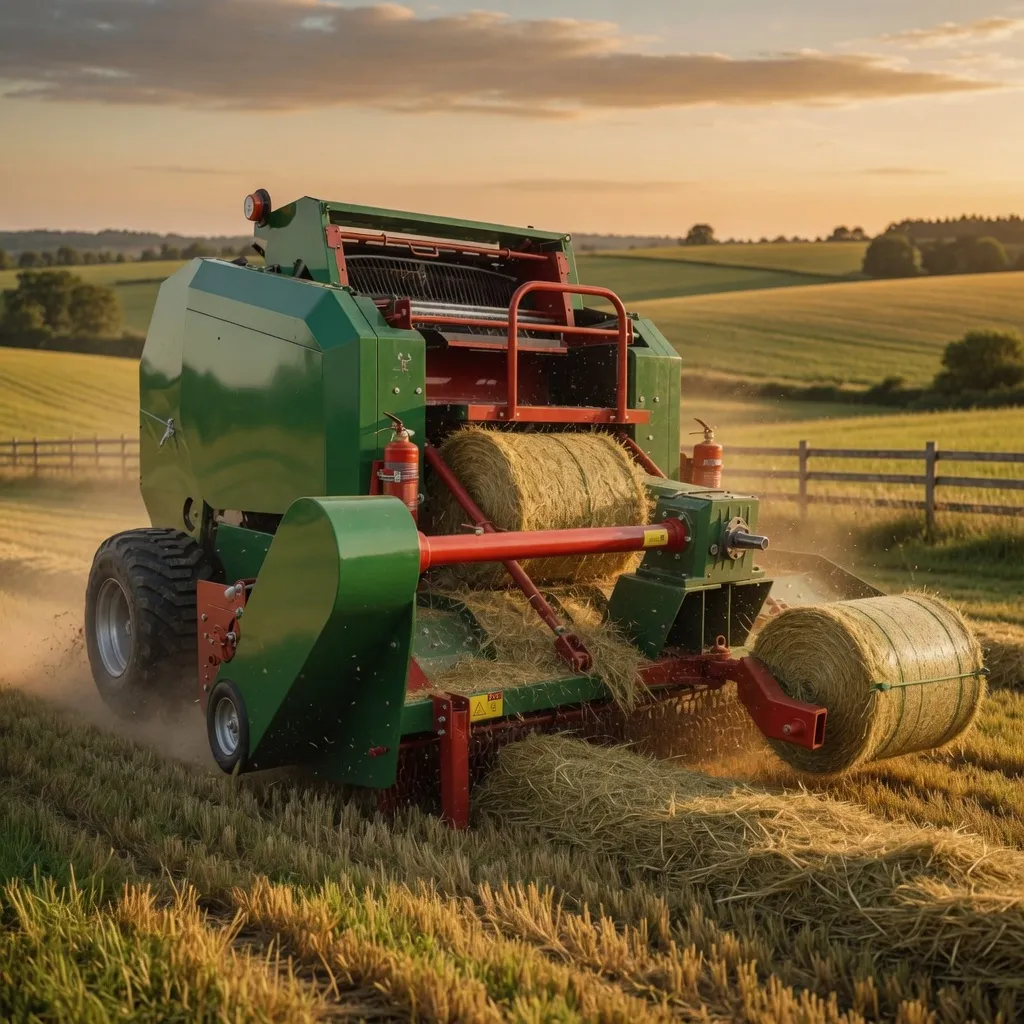
For alpaca property hay production at small scale (30 to 150 head, 150 to 400 bales per season), the 9YG-1.0 round baler produces 1.0 m bales at 180 to 240 kg — a 2 to 3 day supply for a mob of 30 to 50 alpacas, manageable with a compact tractor or quad-bike-rated bale cart for feeding distribution around the property.
Baling and Storage for Camelid-Standard Hay
Moisture and Dust — The Equine-Equivalent Standard
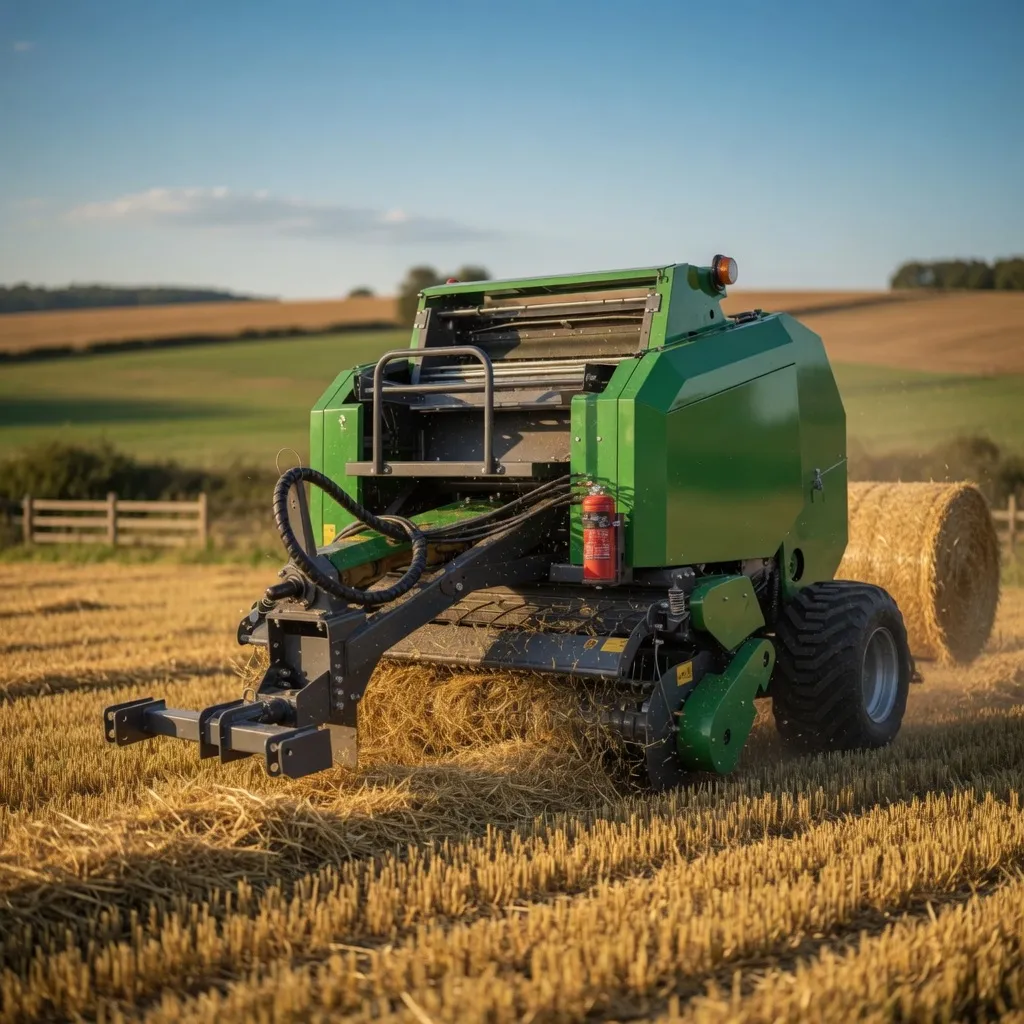
The dust and mould standards for alpaca hay are closer to horse hay than to sheep or cattle hay. Alpacas are nasal breathers with highly developed olfactory discrimination — they identify and refuse dusty or mouldy hay before cattle of equivalent size would show any refusal response. Bale at 13 to 16% moisture for camelid hay — the same target as premium horse hay — and store in a barn or covered structure to prevent moisture re-uptake from dew cycles and summer humidity. An alpaca that consistently refuses hay from a particular batch is providing reliable quality information; investigate the batch before assuming the animal is off-feed from another cause.
Bale Size for Alpaca Mob Feeding
Alpacas fed from round bales in a mob feeding arrangement show less social competition than horses or cattle because they are less aggressive at the feed source. A mob of 30 Huacaya alpacas consuming 1.8 kg DM per head per day consumes 54 kg DM per day from hay. A 1.0 m bale at 15% moisture and 180 kg DM per bale provides a 3 to 4 day supply — an acceptable feedout duration in cool conditions (below 15°C) where mould development on the bale face is slow. In summer conditions above 25°C, consume each opened bale within 2 days to prevent mould development on the exposed face.
Common Alpaca Hay Management Mistakes
Hay purchased through a rural merchandise store as ‘sheep hay’ or ‘cattle roughage’ is typically made to livestock-market specification — oaten hay at 60 to 65% NDF, 7 to 9% CP, variable moisture. This specification will maintain condition in dry ewes but will cause progressive body condition loss in commercial-production alpacas within 4 to 8 weeks of exclusive feeding. Always specify camelid-grade hay with NDF below 55% and CP above 10% — or test purchased hay before committing to a full-season supply contract.
Alpaca males on unrestricted lucerne hay ad-lib can reach body condition scores of 4.0 to 4.5 on the 1-5 scale — excessively fat by commercial fibre production standards. Excessive body condition in males reduces libido, increases heat stress risk in summer, and is associated with urinary calculi formation from the high calcium content of pure lucerne. Restrict lucerne to 30 to 40% of total hay DM for males and non-breeding females; use oaten or meadow hay as the balance.
Alpaca breeders and fibre producers who purchase hay without a NIR forage test and rely on verbal descriptions of crop and cutting date regularly find that purchased hay underperforms expectations. A $50 forage test from a NIR laboratory on a representative core sample from the delivery is the cheapest insurance against a season of sub-optimal nutrition. Require a forage test result from any new hay supplier before accepting a volume delivery.
Frequently Asked Questions
Discuss Your Alpaca or Llama Hay Programme
Tell us your herd size, current hay source, and target fleece production — we’ll advise on the hay specification and baling equipment that suits your camelid fibre operation.