
Silage Production Speed Is Determined by the Slowest Step in the Chain
Silage production is a race against fermentation. From the moment the crop is cut, the clock runs on aerobic dry matter losses. Every hour spent cutting, tedding, raking, baling, and — critically — wrapping is an hour in which unwrapped crop or bales are exposed to oxygen and microbial degradation. The practical question is not whether to wrap, but how to integrate wrapping into the production chain at a speed that does not become the bottleneck that slows everything upstream. A baler producing 20 bales per hour requires a wrapper that can keep pace — not a wrapper that falls 10 bales behind every hour, requiring the baler to stop and wait while the wrapper catches up. The 9YCM-850, at 40–60 bales per hour capacity, comfortably exceeds the output of the vast majority of single round balers in Australian conditions. Understanding how to set up the baling-and-wrapping workflow to fully exploit this capacity — and how to identify and remove the non-machine bottlenecks — is where silage day productivity is actually won.
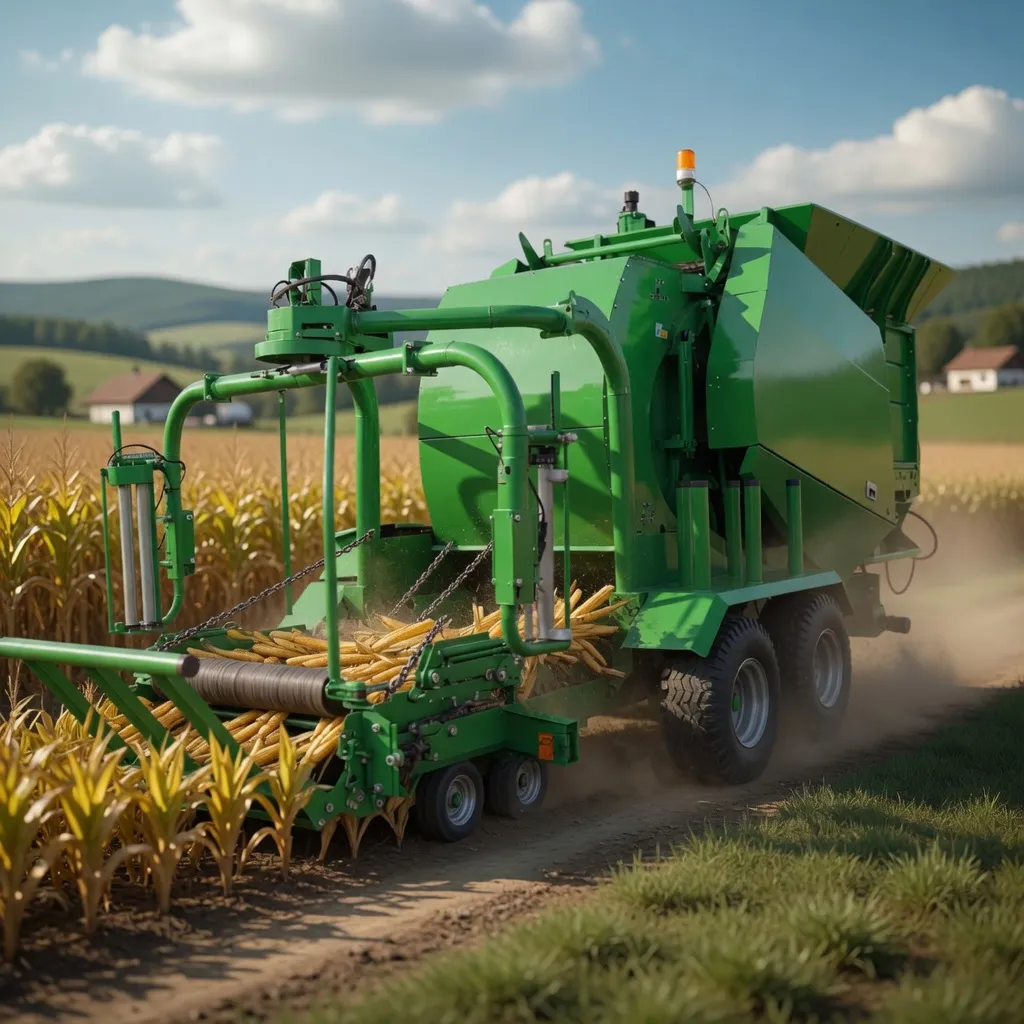
At 40–60 bales per hour, the 9YCM-850 comfortably outpaces single round balers — the wrapper is rarely the bottleneck in a well-organised silage production day.
The 9YCM-850’s Cycle Time: Where the 60–90 Seconds Goes
The 9YCM-850 wraps a standard 1.2 m bale in 60–90 seconds at four layers. Breaking down where this time is spent clarifies where improvements are possible and what the true limiting factors are at each stage of a wrapping cycle.
The two stages with meaningful improvement potential are bale loading and bale discharge. An operator who pre-positions the tractor and loader before the current wrapping cycle completes can load the next bale within 12–15 seconds of discharge. A storage site that allows the tractor to discharge the wrapped bale directly to its storage position — rather than placing it on an intermediate holding area and moving it later — eliminates one full handling cycle per bale. These two optimisations together can reduce the effective cycle time from 85 seconds to 65 seconds — a 23% throughput increase with no change to the machine.
Setting Up the Baling and Wrapping Workflow
The most productive silage day runs with the baler and wrapper working in the same paddock simultaneously — the baler making bales while the wrapper follows 5–10 bale lengths behind, wrapping each ejected bale before moving to the next. This requires two tractors: one for the baler and one for the wrapper. The wrapper tractor also carries the front-loader for bale loading.
The key coordination rule is simple: the wrapper must never fall more than 3–4 bales behind the baler. Beyond that gap, the earliest-ejected bales have been sitting unwrapped long enough for measurable aerobic losses to begin on high-moisture crops. If the wrapper falls behind due to a film change, a minor fault, or terrain difficulties, the baler operator should stop and wait rather than continuing to create an unshrinkable backlog of unwrapped bales.
For operations with only one tractor large enough for the baler, a second smaller tractor (45+ HP) can run the 9YCM-850 exclusively. This configuration allows continuous baling on the large tractor while the second tractor wraps at its own pace. As long as the wrapping pace can process each bale within 2 hours of ejection, this is a viable and common approach on Australian farms.
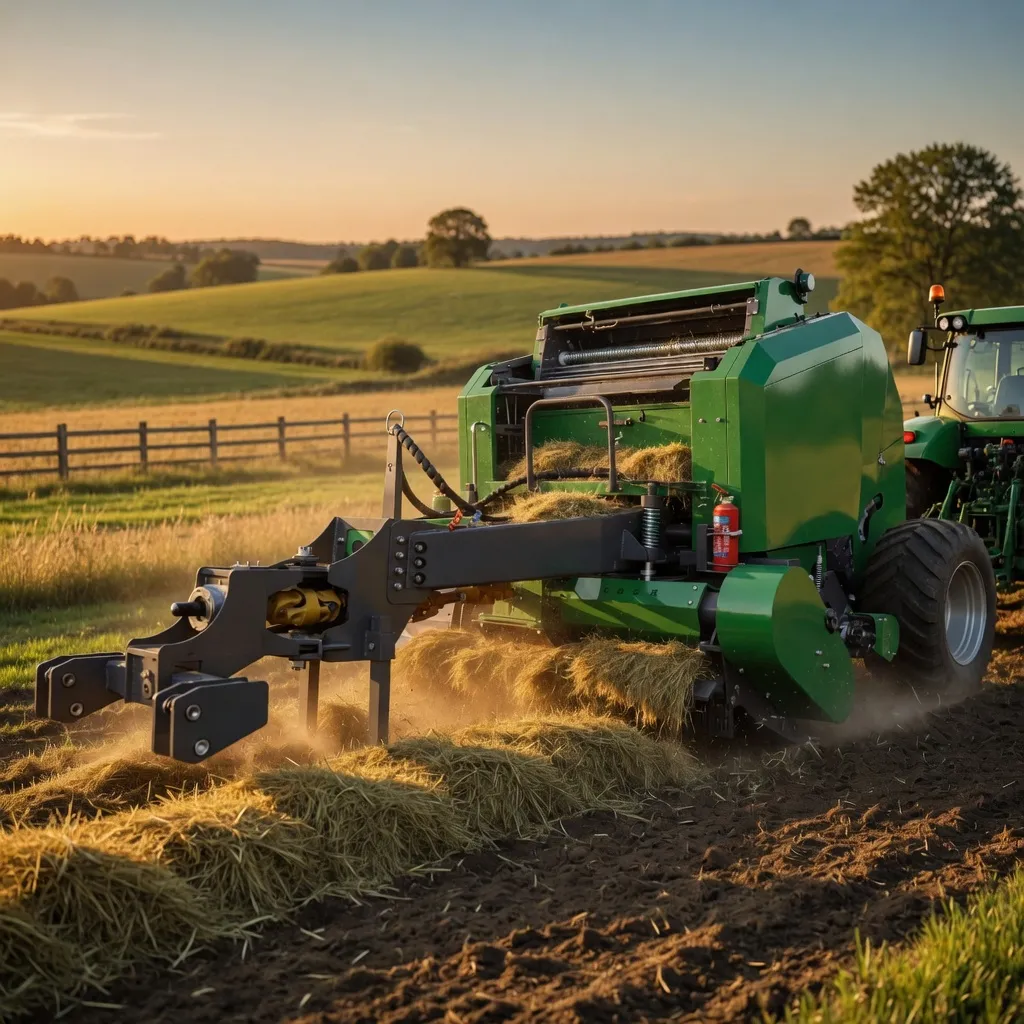
A high-output baler and a well-operated 9YCM-850 working in tandem can process a large paddock in a single day — the coordination between the two machines determines whether the day runs smoothly or stops and starts waiting for one side to catch up.
How a Fast Wrapper Improves Silage Quality — Not Just Speed
Wrapping speed is not just a logistics metric — it directly determines silage quality on high-moisture crops. The pre-wrap aerobic fermentation loss rate on freshly ejected whole-crop cereal or fresh pasture silage is approximately 0.2–0.5% of bale DM per hour. A bale wrapped within 30 minutes of ejection has incurred 0.1–0.25% DM loss during the pre-wrap window. The same bale wrapped 4 hours after ejection has incurred 0.8–2% DM loss — in addition to producing a crop surface environment with lower residual fermentable sugar content, which slows the lactic acid fermentation phase and increases the risk of clostridial fermentation taking hold before pH drops adequately.
The 9YCM-850’s 60–90 second cycle time, combined with a well-coordinated two-tractor workflow, allows every bale to be wrapped within 15–30 minutes of ejection on a typical paddock — achieving the minimum pre-wrap DM loss and the fastest possible pH drop after wrapping. Operations that adopted this workflow from single-tractor-sequential baling-then-wrapping have consistently reported improved silage quality in pH measurements, reduced clostridial fermentation incidence, and measurably higher DM recovery at feed-out.
Film Change Time: The Underrated Interruption
A 1,500 m film roll wraps approximately 17–25 bales at four-layer setting. On a 60-bale day, the operator changes film 2–3 times. Each film change — unloading the empty core, loading and threading the new roll — takes 3–5 minutes if the operator is practised and the new roll is pre-positioned on the tractor. That is 9–15 minutes of non-wrapping time per day, during which the baler continues producing bales that accumulate unwrapped.
The solution is simple: carry at least 3 full rolls on the wrapper tractor at all times. Change film immediately when a roll depletes rather than finishing a bale cycle with the tail end of the roll — a roll that runs out mid-bale produces an incompletely wrapped bale that must be rewrapped. Keep the next roll pre-positioned in a holder on the tractor frame so threading takes under 2 minutes rather than 5.
Recommended Product: 9YCM-850 Bundling Film Wrapping Machine
60–90 second cycle time at 4 layers — 40–60 bales per hour capacity. Comfortably outpaces single round balers on any Australian paddock. Simple bale-loading and discharge operation. 850 mm film — widely available from Australian rural suppliers. 3-point linkage for fast tractor connection and release. Available from EverPower’s Condell Park NSW warehouse with Australia-wide delivery.
Frequently Asked Questions
Wrap Faster. Preserve More. Waste Less.
EverPower can advise on tractor-wrapper coordination and workflow setup to maximise your silage production day output.
EverPower Baling Machinery Australia Pty Ltd | 27 Harley Crescent, Condell Park NSW 2200
📞 +61 2 9708 3322 | ✉️ [email protected]