
Loose Bales Are a Symptom, Not a Fault — Finding the Root Cause Saves Time
A round baler that produces loose, poorly shaped, or inconsistently dense bales wastes time, film, and feed value. Loose bales have more internal air space — air that sustains aerobic fermentation during wrapping and storage. They also lose shape in storage, creating poor stack stability. Most importantly, a baler that won’t form tight bales is telling you something specific is wrong mechanically — the chamber pressure system, the pickup, the feed system, or the belt and roller configuration. The temptation is to blame the crop, the conditions, or operator error. In most cases, the fault is mechanical and traceable to one of a small number of specific components. This guide works through every cause of loose bale formation in Australian round balers, from the most common to the least, with the specific checks and adjustments that resolve each one.
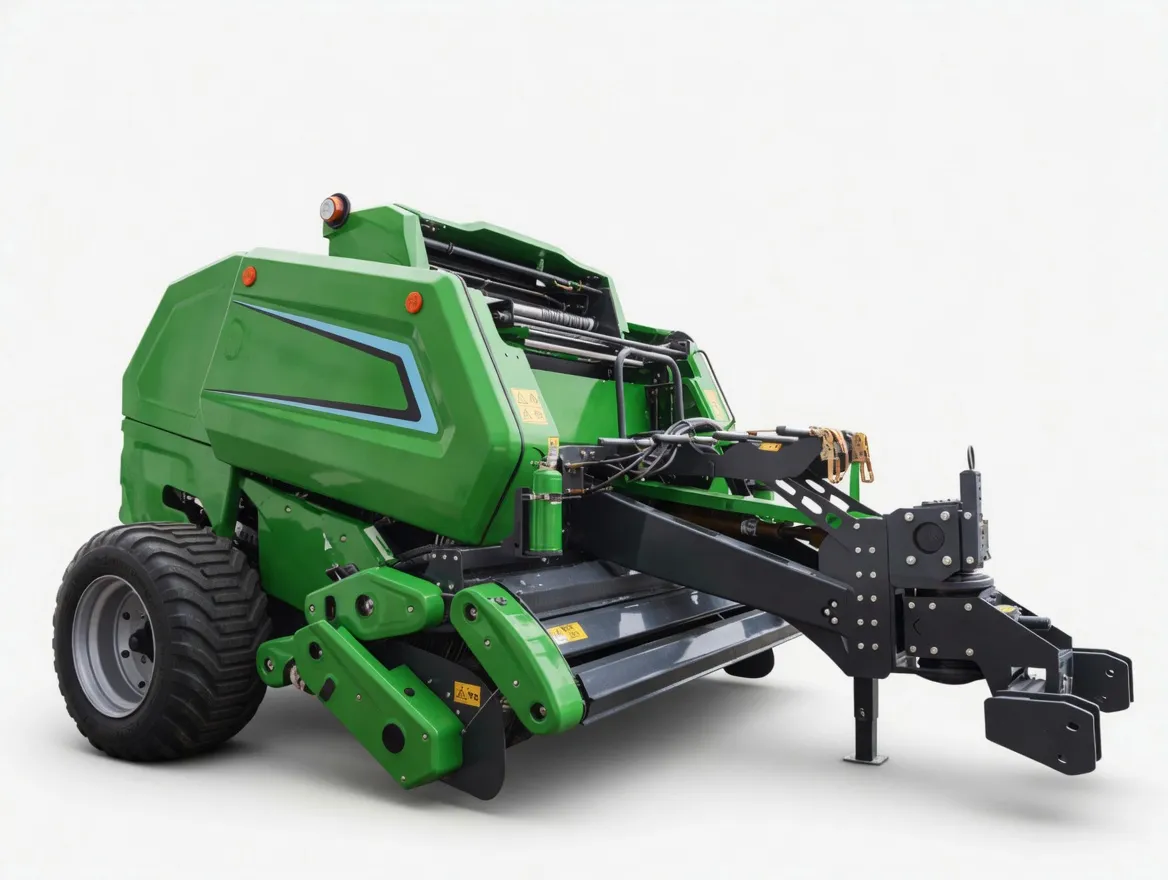
A well-adjusted round baler produces consistently dense, round bales across different crop types and conditions — loose bale formation is almost always traceable to a specific mechanical cause rather than crop or operator error.
How a Round Baler Creates Density: The Mechanism
Understanding why a round baler produces tight bales requires understanding the compression mechanism. In a fixed-chamber baler, the chamber is a fixed volume lined with rollers or belts — as material fills the chamber, it is forced to compress by the chamber walls. In a variable-chamber baler, the chamber starts small and expands as the bale grows, with tension applied to the expanding belts that creates the compressive force against the bale surface. In both designs, the critical variable is the resistance the crop encounters as it is forced into an increasingly compressed mass — too little resistance produces a loose bale; too much resistance prevents the chamber from filling at all.
The compression force is applied through two mechanisms working together: the belt or roller tension system (which squeezes the bale from outside), and the material’s own friction and interlocking properties (which create internal cohesion within the bale). When either mechanism fails — belt tension too low, or material that cannot interlock due to chopping, moisture, or contamination — the resulting bale is loose regardless of what the other mechanism is doing. Fixing the right mechanism is the key to a permanent solution.
Cause 1: Belt Tension Too Low (Variable Chamber Balers)
This is the most common cause of loose bales in variable-chamber round balers. The tension springs or hydraulic accumulator that applies pressure to the expanding belt system have weakened, stretched, or been adjusted incorrectly. When belt tension is inadequate, the chamber expands easily under crop pressure without applying sufficient compressive force back against the bale — the bale reaches its nominal diameter before achieving the density it should.
How to check: On spring-tensioned systems, check spring free length against the manufacturer’s specification — springs that have permanently compressed (shorter free length than spec) are fatigued and need replacement. On hydraulic systems, confirm the accumulator pre-charge pressure matches specification — a nitrogen pre-charge that has bled down provides no cushioning resistance and allows abrupt, uneven belt movement that prevents uniform compression. The pressure gauge on the hydraulic circuit should show consistent system pressure throughout the bale formation cycle.
Fix: Replace fatigued tension springs or recharge the hydraulic accumulator nitrogen pre-charge to specification. On balers with adjustable tension settings, increase tension by the specified increment and test with the next bale — re-adjust if the bale is still loose or if the baler starts struggling to accept material (over-tensioned).
Cause 2: Worn, Cracked, or Slipping Belts
The belts in a round baler are the primary surface in contact with the forming bale. Worn belts with smooth, glazed surfaces have reduced friction against the crop — the belt surface slides across the bale rather than gripping and rolling it into a tighter mass. Cracked belts can delaminate under load, creating zones of reduced stiffness that allow localised bulging. A single cracked or excessively worn belt in a multi-belt system disrupts the even pressure distribution across the bale surface and produces an oval or pear-shaped bale rather than a true round.
How to check: With the baler stopped and PTO disengaged, open the rear door and inspect all belts for: surface cracks (particularly at the inner splice points where stress concentrates), glazed or polished surfaces (normal belts have a slightly rough, grippy texture), delamination (belt layers separating — visible as a bubble or ridge on the belt surface), and uneven wear (one belt significantly thinner than others across the same system).
Fix: Replace any belt showing cracks at splice points or significant glazing. When replacing one belt, inspect all others — belts in the same system typically wear at similar rates, and replacing a single worn belt while leaving adjacent belts near end-of-life leads to a second replacement within a short time. Always replace belts as a full set if more than two show significant wear.
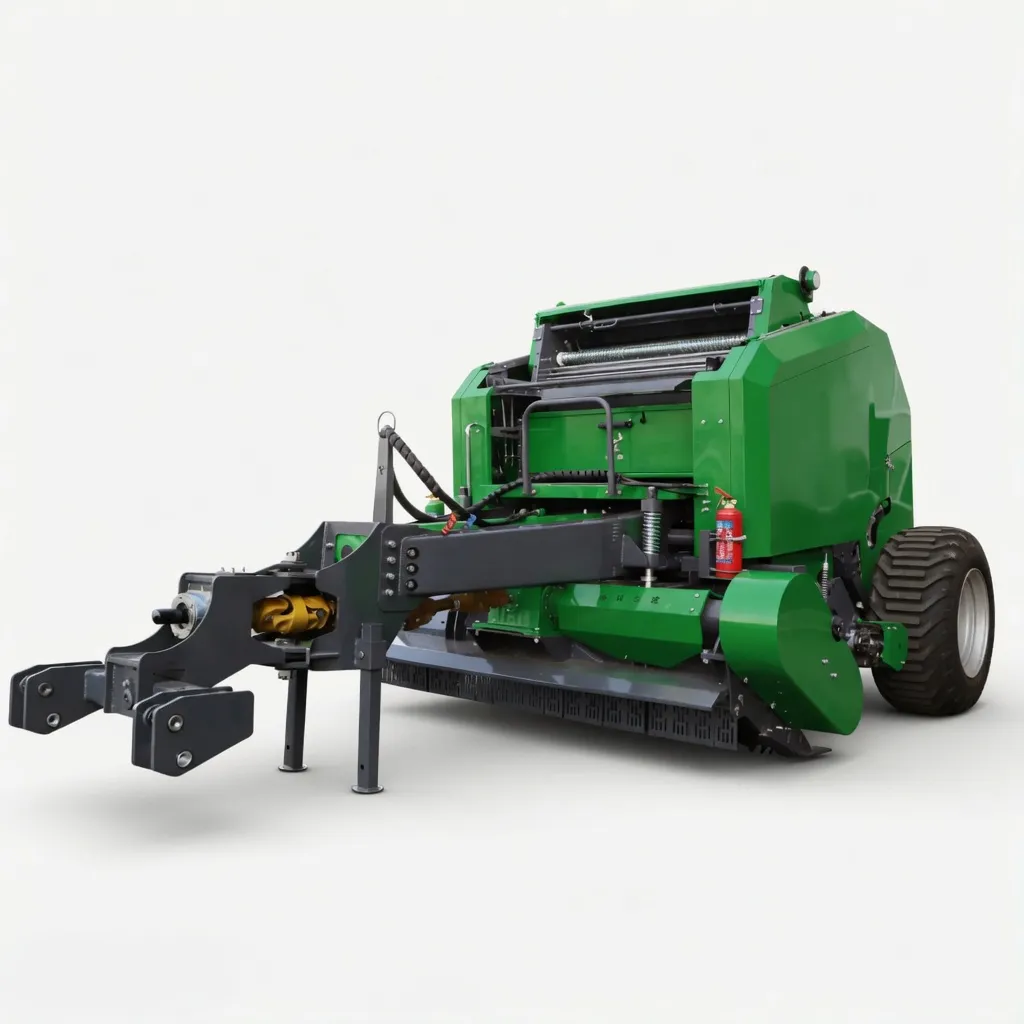
Belt inspection during the pre-season service is the most cost-effective way to prevent loose bale formation — a belt showing early cracking or glazing replaced before the season costs far less than a season of sub-density bales.
Cause 3: Starter Roller Worn or Misaligned
The starter roller (also called the core-forming roller) is positioned at the back of the intake area and is the first roller that the incoming crop contacts. Its purpose is to initiate bale rotation from the very first material entering the chamber — a small, tight core that subsequent material wraps around and compresses against. A worn starter roller with a smooth surface, or one that is misaligned in its mounting, fails to initiate rotation effectively. Material piles up rather than rotating, creating a loose, unformed core that never achieves adequate density regardless of subsequent belt tension settings.
Fix: Inspect the starter roller surface for wear — the roller surface should have defined ribbing or texturing. Smooth, polished surface indicates wear beyond the functional threshold. Check roller alignment by measuring the gap between the roller and the adjacent belts — uneven gap suggests a bearing problem or frame distortion at the roller mount. Replace the starter roller if surface wear is confirmed; check and replace the mounting bearings if misalignment is detected.
Cause 4: Incorrect Gate (Rear Door) Pressure Setting
The rear door or gate of a round baler is held closed during bale formation by springs, hydraulic cylinders, or a combination. The resistance the gate offers to opening is a direct component of the compression force acting on the bale — a gate that opens too easily allows the bale to reach its nominal diameter before achieving target density. On some balers, gate pressure is adjustable; on others, it is determined by spring or cylinder specification.
Fix: If gate pressure is adjustable, increase it by one increment and test. If the gate is spring-held, check spring free length as per the tension spring check above. If the gate is hydraulically held, confirm the hydraulic lock valve is functioning correctly — a weeping valve allows the gate to creep open under crop pressure before the density target is reached.
Cause 5: Crop and Conditions Issues
Not all loose bale problems are mechanical. Three crop and condition factors can produce loose bales even from a correctly adjusted baler.
Short-chop or pre-mowed crop: Crop that has been pre-cut by a mower conditioner with narrow roller spacing, or that is naturally short-stemmed (clover, lucerne leafy fraction), does not interlock well within the bale. Short particles pack initially but slide against each other under compression rather than matting — the bale never achieves the internal cohesion of long-stemmed grass. If short-chop crop is unavoidable, increase belt tension slightly above normal to compensate for the reduced material cohesion.
Very dry crop (below 12% moisture): Extremely dry hay is brittle and shatters rather than flexing under compression. The fragments do not bind together effectively, and the bale density indicator may show target density while the actual structural integrity of the bale is poor. Baling in the cooler part of the day when atmospheric moisture is higher reduces this problem; alternatively, accept that very dry hay will produce lower-density bales and plan for additional wrapping layers to compensate.
Too thin a windrow: A thin windrow feeds material into the baler unevenly — the chamber fills intermittently rather than continuously, allowing air pockets to form in the developing bale. Double-raking or combining windrows before baling to create a full-width, dense windrow is the most reliable fix for this cause.
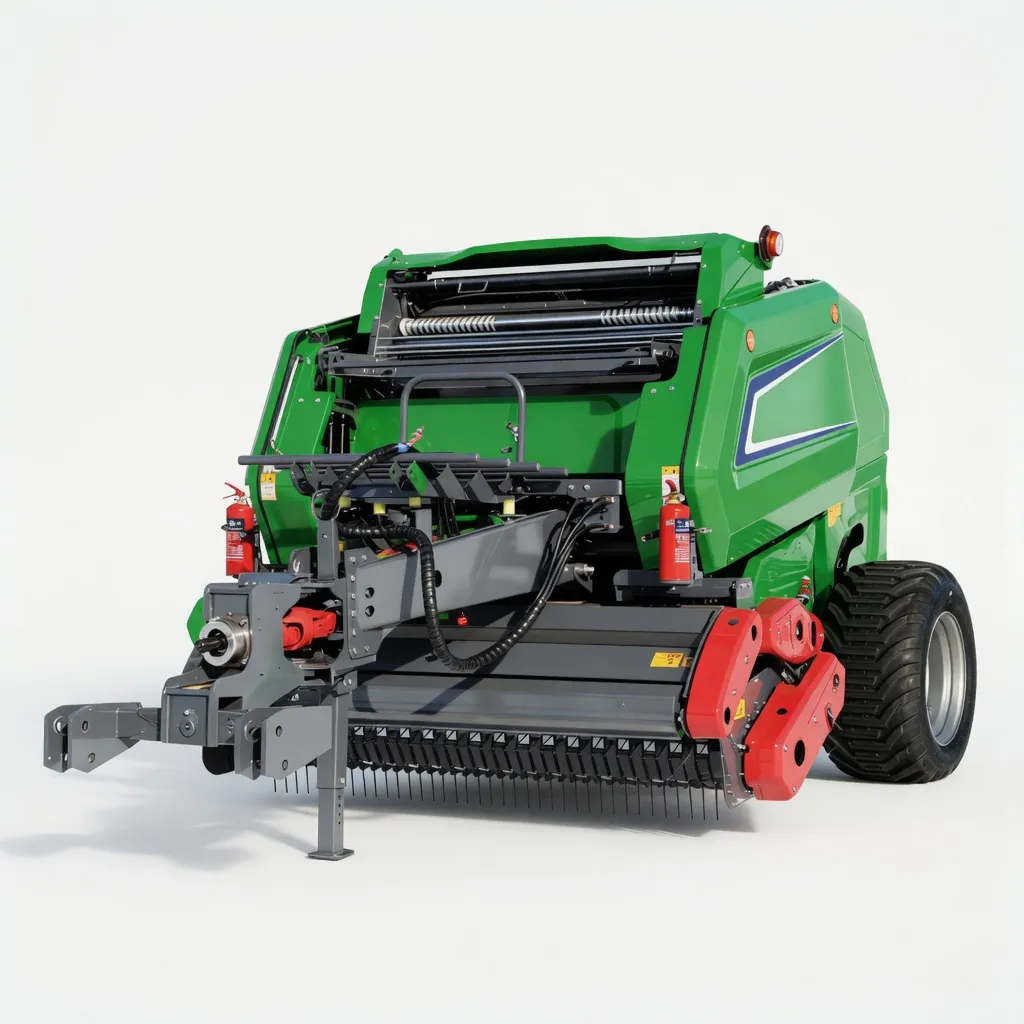
Correct belt tension, well-maintained starter roller, and a dense windrow are the three most controllable variables in achieving consistent bale density across different crop types and conditions.
Diagnostic Checklist: Work Through This Before Adjusting
EverPower Round Balers: Built for Australian Crop Density Requirements
EverPower’s 9YG series round balers — including the 9YG-2.24D S9000 Beyond, 9YG-1.25A, and 9YG-1.0 models — are configured for Australian hay and silage crops with belt tension systems calibrated for the dense, stemmy ryegrass, lucerne, and cereal hay that characterise Australian production. Replacement belts, tension springs, starter rollers, and bearing sets are stocked at the Condell Park NSW warehouse for same-day dispatch. Contact EverPower at +61 2 9708 3322 or [email protected] for parts, technical support, or pre-season service advice.
Recommended Product: 9YG-2.24D S9000 Beyond Round Baler
Variable-chamber round baler with hydraulic accumulator belt tension system, heavy-duty ribbed starter roller, and adjustable gate pressure for consistent density across ryegrass, lucerne, and mixed hay. Replacement belt sets, tension components, and starter rollers stocked at EverPower’s Condell Park NSW warehouse. Australia-wide delivery.
Frequently Asked Questions
Tight Bales Every Time. Find the Fault and Fix It.
EverPower can help diagnose loose bale problems and dispatch the right replacement parts for your 9YG series baler.
EverPower Baling Machinery Australia Pty Ltd | 27 Harley Crescent, Condell Park NSW 2200
📞 +61 2 9708 3322 | ✉️ [email protected]