
Silage Contractor ROI: When the Numbers Work
The income, cost, and break-even calculation for a silage and hay contracting business in Australia — using real numbers from current equipment prices, fuel costs, and contractor rates.
The ROI Question Every Aspiring Contractor Needs to Answer First
Before any equipment purchase, any phone call to a machinery dealer, or any conversation about silage contracting as a business, there is one calculation that determines whether the endeavour makes financial sense: what is the return on investment at the bale volumes and rates realistically achievable in my market, and how long does it take to recover the capital?
This article works through that calculation explicitly — not with optimistic high-volume assumptions, but with the mid-range numbers that characterise successful but not exceptional contracting operations in Victoria, NSW, and SA. The inputs are 2025 equipment prices, 2025 fuel costs, 2025 contractor rates, and realistic bale volumes for different stages of business development. The output is the income-minus-cost picture at different annual volumes that tells a prospective contractor whether the numbers work before they have committed to anything.
For the operational side of building a contracting business once the financial case is established, our article on maximising ROI as a silage contractor with a high-throughput round baler covers the equipment throughput management that drives the revenue side of the calculation.
The Full Cost Stack: What a Contracting Operation Actually Costs
Equipment Capital (Annual Cost at 7-Year Repayment)
| Equipment Item | New Price (AUD 2025) | Annual Repayment (7yr, 6% finance) | Notes |
|---|---|---|---|
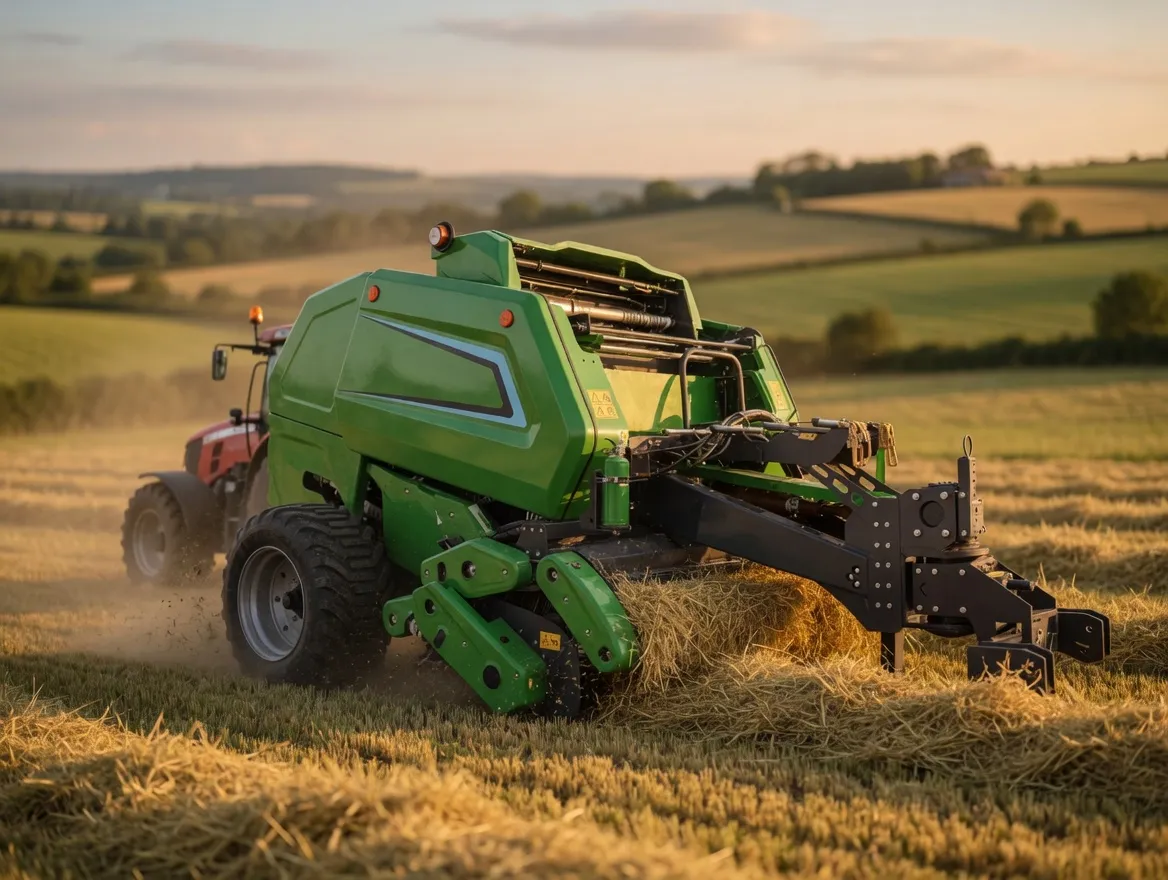
| 9YG-2.24D S9000 Beyond baler | $75,000–$95,000 | $13,500–$17,100 | High-cap contractor spec |
| 9YCM-850 film wrapper | $28,000–$38,000 | $5,000–$6,800 | Separate wrapper |
| Tractor (90–110 hp, 5-yr used) | $55,000–$80,000 | $9,900–$14,400 | Existing fleet may reduce this |
| Mower-conditioner (if offering mowing) | $32,000–$48,000 | $5,750–$8,600 | Optional — adds revenue per visit |
| Total (baler + wrapper + tractor) | $158,000–$213,000 | $28,400–$38,300 | Per year before operating costs |
Operating Costs Per Bale (Variable Costs)
| Operating Cost | Cost Per Bale | Basis |
|---|---|---|
| Silage film (6 layers, 1.25m) | $8.50–$12.00 | At $90–$110/roll, 18–22 bales/roll |
| Net wrap | $1.20–$2.00 | Standard polypropylene |
| Fuel (baler + wrapper tractor) | $3.50–$6.00 | At $1.80–$2.20/L, 25–35L/hr combined |
| Inoculant (if applied) | $1.50–$3.50 | Standard LAB product |
| Maintenance and wear parts | $1.20–$2.50 | Annual service / 1,500 bales |
| Insurance | $0.80–$1.50 | Equipment and liability insurance |
| Total variable cost per bale | $16.70–$27.50 |
Revenue and Break-Even at Different Volume Levels
| Annual Bales | Revenue (at $18/bale avg) | Variable Costs | Gross Margin | Annual Equipment Cost | Net (before wages) |
|---|---|---|---|---|---|
| 800 | $14,400 | $13,360–$22,000 | $(-7,600) to $1,040 | $28,400–$38,300 | $(-45,900) — not viable |
| 1,500 | $27,000 | $25,050–$41,250 | $(-14,250) to $1,950 | $28,400–$38,300 | $(-40,650) — not viable as primary income |
| 2,500 | $45,000 | $41,750–$68,750 | $(-23,750) to $3,250 | $28,400–$38,300 | $(-33,050) to $(-25,150) — marginal |
| 4,000 | $72,000 | $66,800–$110,000 | $(-38,000) to $5,200 | $28,400–$38,300 | $(-10,700) to $(-61,100) |
| 6,000 | $108,000 | $100,200–$165,000 | $(-57,000) to $7,800 | $28,400–$38,300 | $1,800–$41,400 |
The table above reveals the fundamental economics of silage contracting with a premium equipment investment: at the revenue rates typical of Australian contracting (AUD $14 to $22 per bale depending on service type and region), the break-even volume against full equipment cost and operating expenses is approximately 5,000 to 6,500 bales per season. Operations below this volume cannot pay themselves a market wage from contracting income alone.
The paths to viability below this volume: (1) lower capital cost — used equipment, smaller-capacity machines, or financing with higher equity reduces the annual equipment cost line; (2) higher rate per bale — full-service (mowing, raking, baling, wrapping) at AUD $28 to $38 per bale significantly improves the margin per unit; (3) supplementary income — farm income alongside contracting reduces the pressure on contracting to be the sole income source; (4) rapid volume growth — targeting 4,000+ bales by year 3 and accepting early-year losses against the business investment.
The 9YG-2.24D S9000 Beyond round baler is the equipment that makes 5,000+ bale seasons operationally possible — its throughput at 70 to 90 bales per hour means 5,000 bales requires 55 to 70 operating days, achievable across a 7-month Australian silage season with appropriate client density.
How Offering Mowing Changes the ROI Calculation
A contractor who offers mowing as part of a full-service package (mow, rake, bale, wrap) earns AUD $28 to $38 per bale rather than AUD $14 to $22 for bale-and-wrap only. At 4,000 full-service bales versus 4,000 bale-and-wrap-only bales: revenue differential at AUD $10 per bale average uplift = AUD $40,000 additional annual revenue. Against the additional capital cost of a mower-conditioner (AUD $5,750 to $8,600 per year at 7-year repayment), the net gain from adding mowing service is AUD $31,400 to $34,250 per year at this volume. Adding mowing is typically the single highest-return investment a mid-stage silage contractor can make after the core baler and wrapper are established.
Frequently Asked Questions
Run Your Contracting ROI Numbers With Us
Tell us your target market, available capital, and realistic first-season volume — we’ll work through the break-even calculation with you before any equipment decision is made.