বর্ণনা
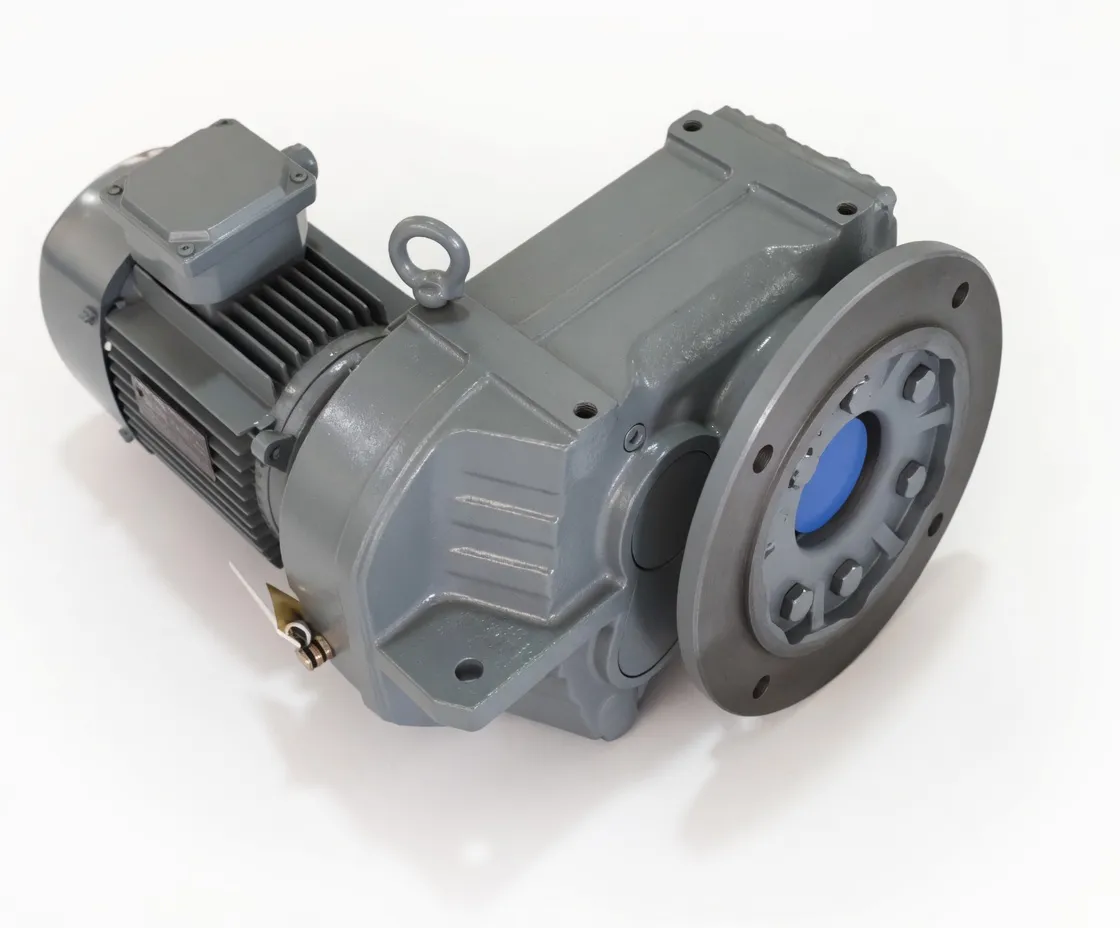
The engineering world frequently frames worm gearboxes and helical gear reducers as competing choices — but the helical-worm combination reducer challenges that framing entirely. The S Series takes the self-locking, right-angle, compact geometry of a worm gearbox and elevates its efficiency by 10 to 18 percentage points — not by abandoning the worm stage, but by adding a helical pre-stage that handles the high-speed input at rolling-contact efficiency before the worm stage handles the right-angle output at a lower, more favourable ratio. The result is a worm gearbox that self-locks natively, outputs at 90 degrees, achieves 100:1+ ratios in a compact envelope, and runs at 75 to 88 % efficiency rather than the 60 to 75 % of a single-stage worm at equivalent overall ratios. The S Series from EverPower Baling Machinery Australia spans frame sizes S37 to S97, covering 200 to 4,200 N·m output torque and 13.65:1 to 197:1 ratios — the efficiency-optimised helical gearbox alternative for applications where self-locking and right-angle layout are both non-negotiable.
Performance Specifications Across the S37–S97 Range
The S Series combines a hardened helical pre-stage with a worm final stage in a single integrated housing. The helical stage handles the high-speed input reduction at 97+ % per-stage efficiency, then hands off to the worm stage at a reduced intermediate speed where worm losses are proportionally smaller. This hybrid gear ratio gearbox architecture retains the self-locking, right-angle output, and compact footprint that make worm reducers indispensable in many applications — while pushing total efficiency 10 to 18 points higher than a single-stage worm attempting the same overall ratio.
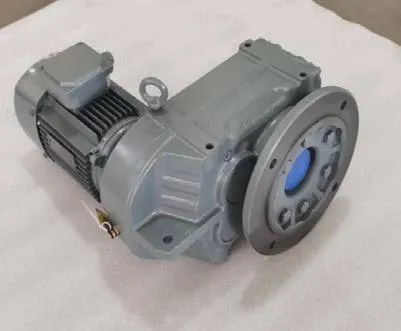
How the Helical-Worm Combination Achieves Higher Efficiency
A single-stage worm reducer attempting a 100:1 overall ratio must accomplish the entire speed reduction through sliding-contact worm mesh, where efficiency drops roughly in proportion to the gear ratio. At 100:1, a typical NMRV worm achieves only 55 to 62 % efficiency — nearly 40 % of input power is lost as heat. The S Series splits the work differently. A helical pre-stage takes the first reduction step — typically around 3:1 to 5:1 — at rolling-contact efficiency of 97 to 98 %. The worm final stage then handles the remaining reduction at a much lower effective ratio — 20:1 to 33:1 — where worm efficiency is substantially better (78 to 88 % versus the 55 to 62 % it would produce at 100:1). The combined result delivers 75 to 88 % total efficiency at overall ratios of 50:1 to 197:1, representing a 10 to 18 percentage point improvement over a single-stage worm gearbox of equivalent size.
This hybrid architecture retains every functional advantage of the worm stage — native self-locking at ratios above 30:1, right-angle output geometry, and compact packaging — while the helical pre-stage eliminates the worst of the sliding-contact losses. For applications in agricultural feed processing, textile machinery, packaging lines, and material handling where a worm gearbox is functionally necessary but its energy losses are becoming unacceptable, the S Series offers the middle path between a pure right angle gearbox using worm mesh and a more efficient but non-self-locking bevel-helical alternative.
Key Advantages Over Standard Worm Gearboxes
10–18 % Efficiency Gain
The helical pre-stage handles high-speed input at rolling-contact efficiency, reducing the worm stage’s effective ratio and pushing total drive efficiency to 75–88 % — meaningful energy savings on continuous-duty applications.
Native Self-Locking Retained
The worm final stage delivers inherent self-locking at ratios above 30:1. No external brake is needed for vertical lifts, inclined conveyors, or any application where the load must hold on power loss.
Reduced Heat Generation
Lower friction losses translate directly to lower operating temperature. Reduced thermal load extends lubricant life, slows seal aging, and prolongs bearing service intervals compared to a single-stage worm running at equivalent load.
High Ratios in Compact Envelope
Ratios up to 197:1 in a single integrated housing — comparable footprint to a standard NMRV worm reducer. No need for double-reduction gearbox arrangements or tandem reducer stacking.
Target Industries and Application Examples
The S Series fills a specific engineering niche: applications where a worm gearbox is functionally essential (self-locking, right-angle, compact) but where the energy cost of a single-stage worm is no longer acceptable. In agricultural feed-processing plants, the S Series drives bucket elevators, screw conveyors, and dosing mechanisms where self-locking prevents load backdriving during emergency stops. In textile machinery, the worm gearbox delivers the smooth, vibration-free output that loom drives and winding equipment demand, while the helical pre-stage cuts energy losses that accumulate across factory floors running hundreds of drives simultaneously. Packaging lines, food-processing conveyors, material-handling systems, and small-scale mixing equipment all benefit from the same self-locking + efficiency combination.
Agricultural Feed & Dosing Equipment
Textile Looms & Winders
Packaging Line Conveyors
Material Handling & Mixing
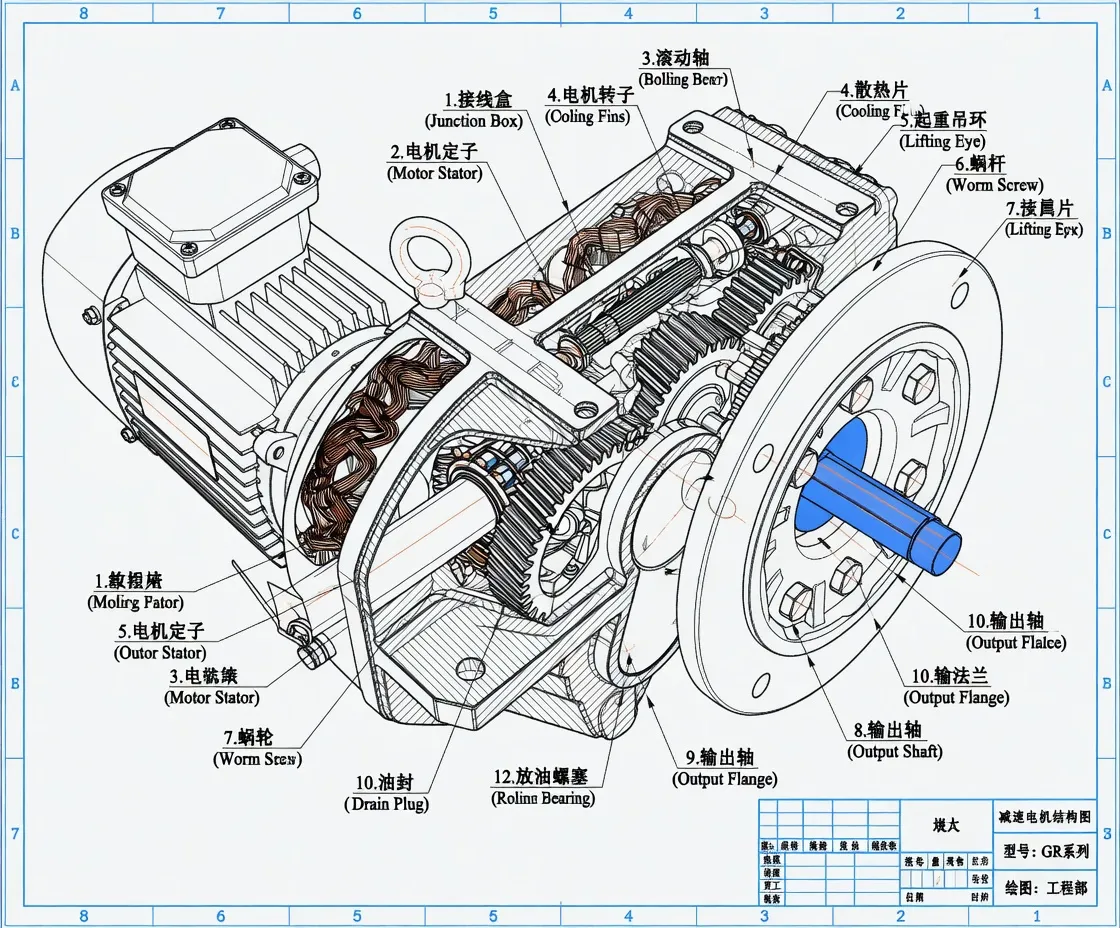
S Series vs Standard Worm vs K Series Bevel-Helical — Choosing the Right Architecture
The three right-angle reducer architectures each serve a distinct engineering purpose. Selecting the correct one depends on whether self-locking, efficiency, or both are the controlling requirement. The comparison table below provides a clear decision framework for engineers evaluating drives across the worm gearbox, helical gearbox, and hybrid categories available from EverPower.
Sizing and Selection Guide
Determine Required Torque, Ratio, and Self-Locking Need
Calculate the application’s required output torque including all service factors for shock loading, duty cycle, and ambient conditions. Confirm that self-locking is a functional requirement — if the load must hold on power loss without an external brake, the S Series is the correct architecture. If self-locking is not needed, the K Series bevel-helical will deliver higher efficiency. Then determine the required gear ratio by dividing motor speed by desired output speed. The S Series covers 13.65:1 through 197:1 in standard configurations.
Select Frame Size and Mounting Configuration
Cross-reference output torque and ratio against the S Series selection table to identify the correct frame size from S37 through S97. Choose from foot-mounted, flange-mounted, or shaft-mounted configurations. The IEC B5 and B14 motor interfaces accommodate motors from Siemens, ABB, WEG, SEW, and other major manufacturers at powers from 0.12 to 22 kW. For agricultural equipment requiring right angle gearbox configurations with self-locking, the S Series is the natural upgrade path from standard NMRV worm reducers without changing the mounting footprint. Contact [email protected] or call +61 2 9708 3322 for sizing assistance.
Why Specify the S Series From EverPower
EverPower Baling Machinery Australia Pty Ltd supplies the S Series from our Condell Park facility in Sydney, maintaining local stock across the most common frame sizes and ratios for rapid delivery throughout Australia and the wider Asia-Pacific region. Every S Series unit is built with case-hardened and ground helical gearing to ISO 1328 Class 6 for the pre-stage, and a precision-lapped worm-and-wheel set in the final stage. Cast-iron housings are CNC machined with precision bearing seats, and pre-loaded bearings ensure extended service life across the full product range.
Our engineering team provides application-specific sizing support with cross-referencing against competitor units from SEW-Eurodrive, Nord Drivesystems, Bonfiglioli, and Flender. For engineers upgrading existing standard worm gearbox installations to the more efficient helical-worm combination, we offer direct dimensional comparison data to confirm retrofit compatibility. Standard S Series units ship within 5 to 10 business days from local stock.
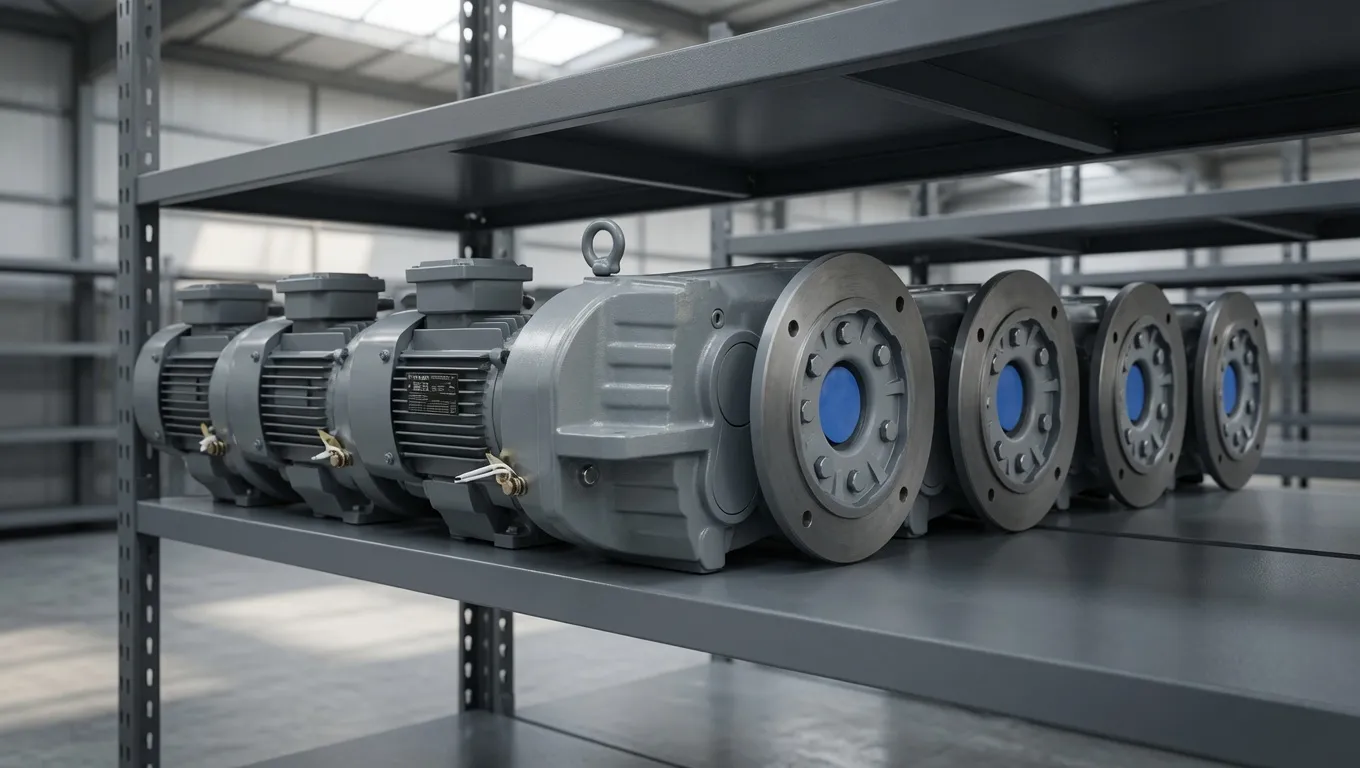
Upgrade Your Worm Drive to Helical-Worm Efficiency
Provide your current gearbox model, required torque, and self-locking requirement — receive an S Series sizing recommendation with efficiency comparison within one business day.