The Power Source Decision Is Made by Your Property, Not Your Preference
When choosing between a diesel-powered and electric-powered forage grinder, the decision is rarely about which power source is better in absolute terms. It is about which one matches the constraints and characteristics of your specific property and operation. An electric grinder on a property with reliable 3-phase power is almost always cheaper to run, quieter, and simpler to maintain than the equivalent diesel unit. A diesel grinder on a remote property with no 3-phase grid connection is the only practical option. The problem arises when operators choose based on initial purchase price or brand familiarity rather than honestly assessing their power supply, operating location, and long-term running costs. This guide compares diesel and electric forage grinders across every dimension that matters for an Australian livestock operation — power cost, flexibility, maintenance, noise, emissions, and total cost of ownership — so you can make a decision grounded in your actual situation.
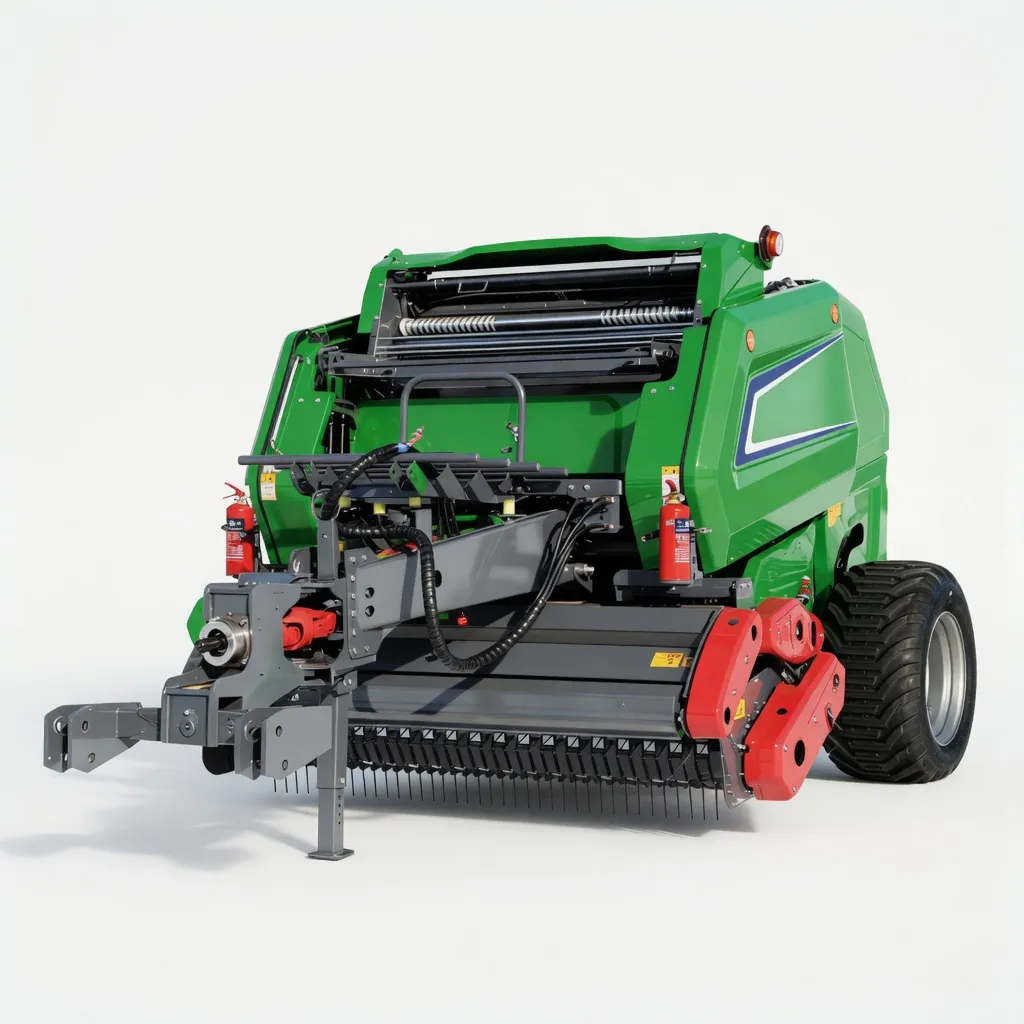
Australian farm infrastructure varies enormously — from grid-connected properties near regional centres to remote stations hours from the nearest three-phase supply. Power source choice must reflect this reality.
Electric Forage Grinder: Advantages and Limitations
An electric-powered forage grinder draws power from the grid or on-farm generator and uses an electric motor to drive the rotor. For the 9F-70 rated at 11–15 kW, this means a 3-phase 415 V supply capable of delivering approximately 25–35 amps at full load. Electric motors have a number of characteristics that make them well-suited to stationary, fixed-installation grinding operations.
Running cost: At the current Australian commercial electricity tariff of AUD $0.18–$0.28 per kWh, a 15 kW motor running at 75% load draws 11.25 kW and costs $2.03–$3.15 per hour to run. Over 300 hours per year, annual electricity cost is AUD $610–$945. Compare this to diesel at 5–7 litres per hour at AUD $1.80/litre — $9–$12.60 per hour, or $2,700–$3,780 per year for the same 300 hours. The electricity cost advantage is approximately $2,000–$2,800 per year.
Maintenance: Electric motors have no fuel system, no cooling system, no oil to change, and no injectors to service. The main maintenance items are bearing lubrication (annually or per the motor’s service schedule), belt tension checks (monthly), and starter contactor inspection (annually). Total annual maintenance cost is typically under AUD $200, compared to $600–$1,200 for diesel engine servicing at standard intervals.
Limitations: Requires a 3-phase 415 V supply within practical cable distance of the grinding location. Single-phase properties cannot run an 11–15 kW motor without a phase converter (which adds $1,500–$3,000 to installation cost and introduces efficiency losses). The grinder is also fixed to the power supply point — mobility is limited to the length of the supply cable unless a generator is used.
Diesel Forage Grinder: Advantages and Limitations
A diesel-powered forage grinder uses a diesel engine — typically 15–22 kW output — to drive the grinding rotor directly via belt drive or through a gearbox. Diesel engines deliver high torque across a wide RPM range, making them tolerant of load spikes when dense material enters the chamber. They require no external power infrastructure and can operate anywhere a vehicle can reach.
Mobility: The diesel unit can be loaded on a trailer and moved between properties, sheds, or paddock locations. For contract grinding operations, a mobile diesel grinder is the standard configuration. For farms with multiple feed preparation points (a main feedlot area plus a remote backgrounding paddock, for example), diesel allows grinding at each location without fixed electrical infrastructure.
Grid independence: Remote properties in northern and western Australia with no 3-phase supply have no practical alternative to diesel. Even properties with single-phase grid power often find the diesel option simpler than installing a phase converter or running a heavy-gauge 3-phase cable from the nearest connection point.
Limitations: Running cost is 3–4× the electric equivalent at current fuel prices. Annual maintenance includes oil and filter changes every 250 hours, fuel filter replacement, air filter cleaning, injector inspection, and cooling system checks — typically $600–$1,200 per year in parts and 3–4 hours of skilled labour. Diesel engines are also significantly noisier than electric motors (85–95 dB vs 70–75 dB for the equivalent electric unit), which matters in residential-adjacent operations or where daily grinding occurs before standard working hours.
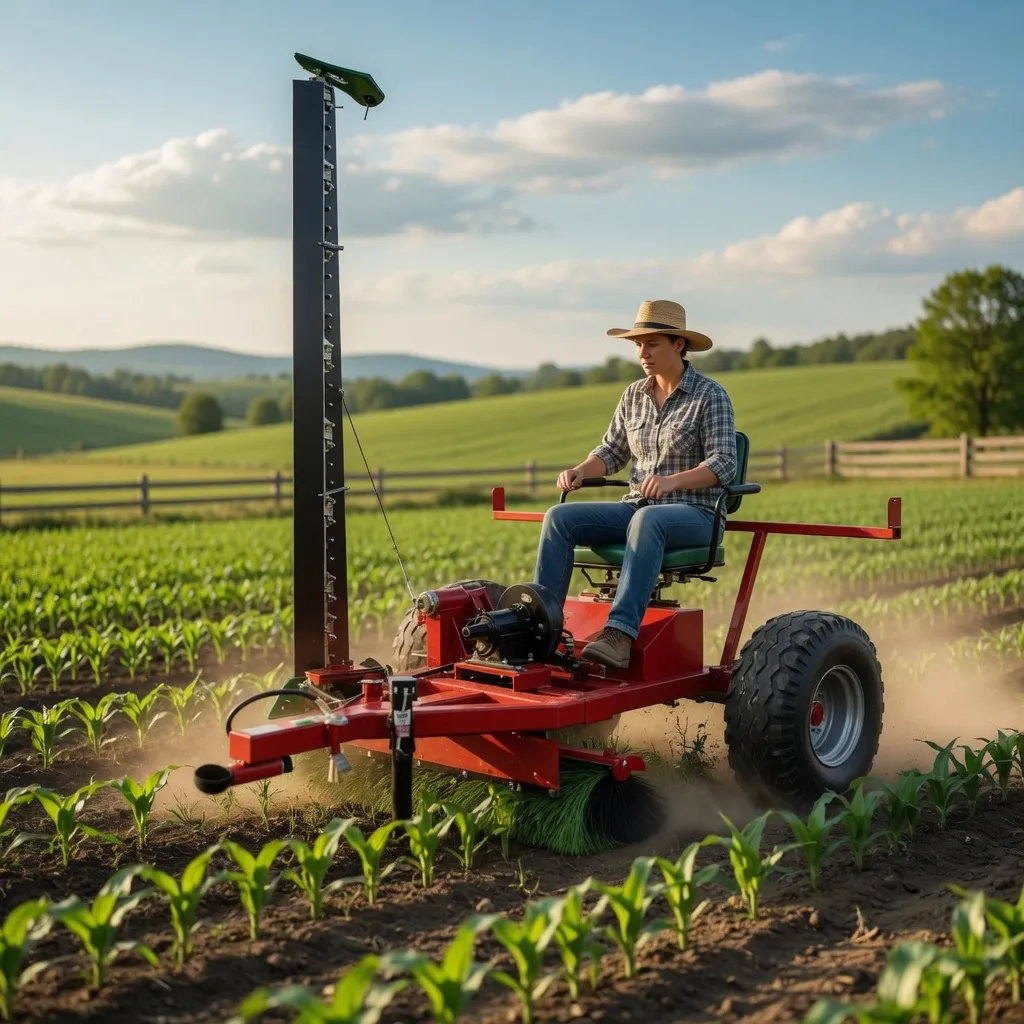
Australian farming operations often combine fixed and mobile equipment across diverse property layouts — matching each machine’s power source to its location and role is the key to minimising operating cost.
Head-to-Head Comparison: Electric vs Diesel for the 9F-70
Decision Framework: Which Option Is Right for Your Farm?
Choose electric if:
Your grinding location has reliable 3-phase 415 V power within 50 m. You grind at a fixed location (feed shed, TMR mixing area). You run the grinder more than 150 hours per year and want to minimise operating cost. You need low noise for early-morning operation or near residential areas. You want minimal maintenance and maximum motor reliability over a 10+ year service life.
Choose diesel if:
No 3-phase supply is available or is cost-prohibitive to install. You need to move the grinder between locations on the same property or across multiple properties. You operate as a grinding contractor serving multiple farms. You grind fewer than 100 hours per year and the cost savings of electric do not justify the infrastructure investment.
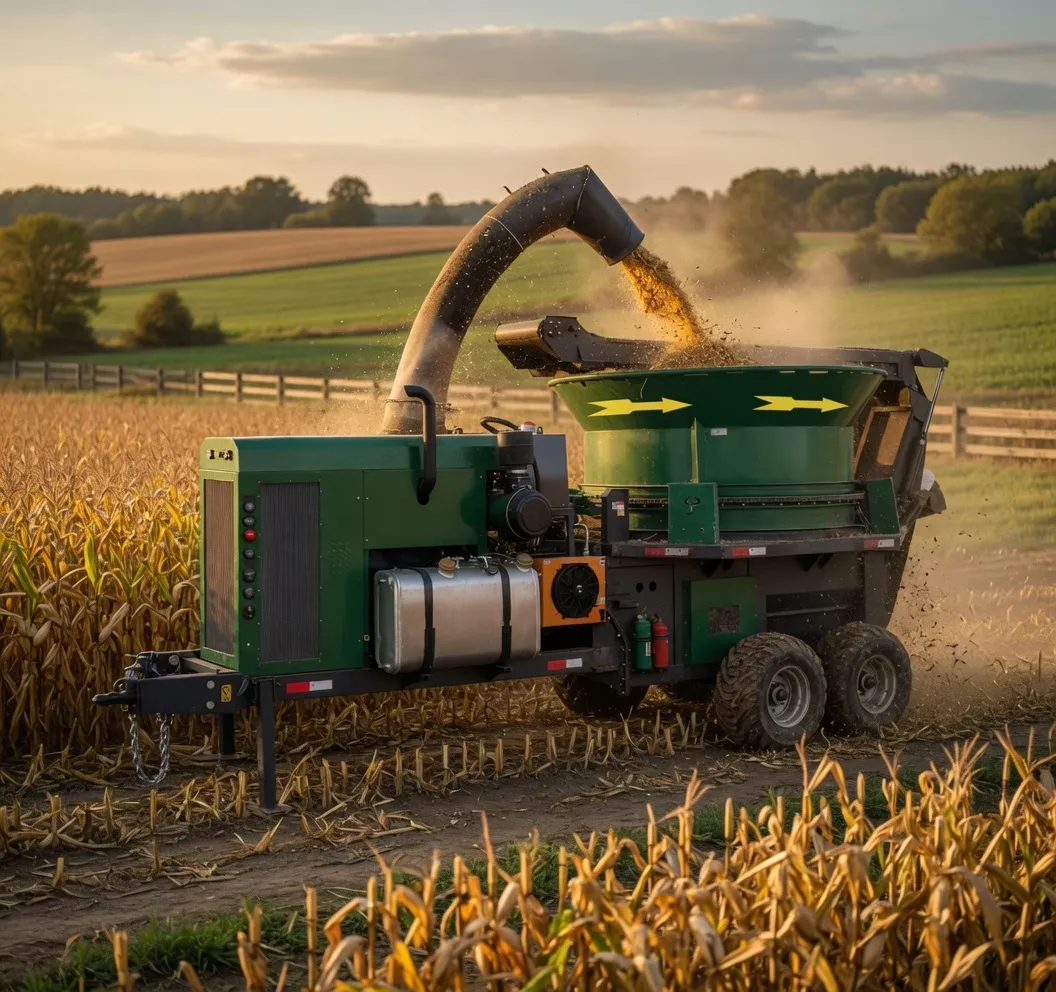
The 9F-70 is available in both electric and diesel configurations from EverPower — specify your power supply situation when requesting a quote and the team can confirm the correct option for your property.
The 9F-70 from EverPower: Both Power Options Available
EverPower Baling Machinery Australia offers the 9F-70 in both 3-phase electric and diesel engine configurations. Both versions use the same grinding rotor, hammer set, screen system, and discharge configuration — the only difference is the power unit. Specify your power supply situation when requesting a quote and the EverPower team will confirm the correct option, advise on electrical installation requirements for the electric version, or confirm diesel engine specifications for the diesel version. Both configurations are stocked with full spare-parts support from the Condell Park NSW warehouse.
Recommended Product: 9F-70 Animal Feed Grass Grinder
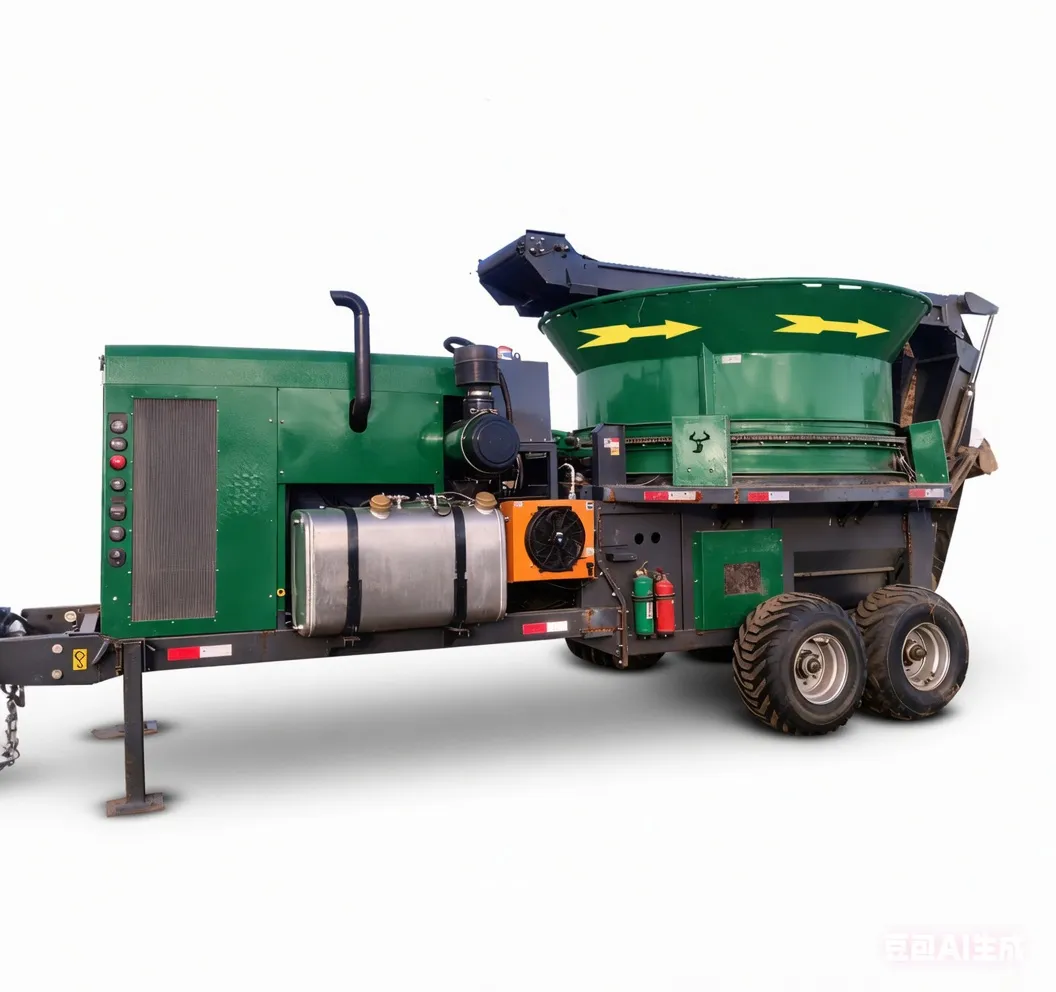
Available in 3-phase electric (11–15 kW) and diesel engine configurations. Same grinding performance — 500–800 kg/hour on dry hay, 4–15 mm particle size with interchangeable CNC-punched screens — regardless of power source. Through-hardened reversible manganese steel hammers. Full spare-parts support from Condell Park NSW. Australia-wide delivery.
Frequently Asked Questions
Not Sure Which Power Option Suits Your Property?
Tell EverPower about your power supply and grinding location and the team will recommend the right 9F-70 configuration for your operation.
EverPower Baling Machinery Australia Pty Ltd | 27 Harley Crescent, Condell Park NSW 2200
📞 +61 2 9708 3322 | ✉️ [email protected]