
What Exactly Is a Single-Blade Traction Mower?
A single-blade traction mower is a towed cutting implement that uses one reciprocating knife bar to shear standing forage at a set height above the ground. Unlike rotary disc mowers or flail mowers that rely on high-speed spinning elements, the single-blade design operates on a scissor principle: a series of triangular blade sections slide back and forth across stationary guard fingers, and the crop is cut where the moving edge meets the finger ledge. The term “traction” refers to the machine’s mounting style — it rolls behind the tractor on its own wheels and drawbar rather than hanging off the three-point linkage. This arrangement lets the cutter bar follow ground contours independently, which is a significant advantage on the undulating paddocks found across much of New South Wales, Queensland, and Victoria. Single-blade traction mowers have been a staple of Australian hay production for decades. Modern versions such as the 9GD-2.5 retain that proven cutting mechanism while incorporating improved metallurgy in the blade sections, sealed bearings in the pitman drive, and adjustable stubble-height settings that older sickle-bar units lacked.
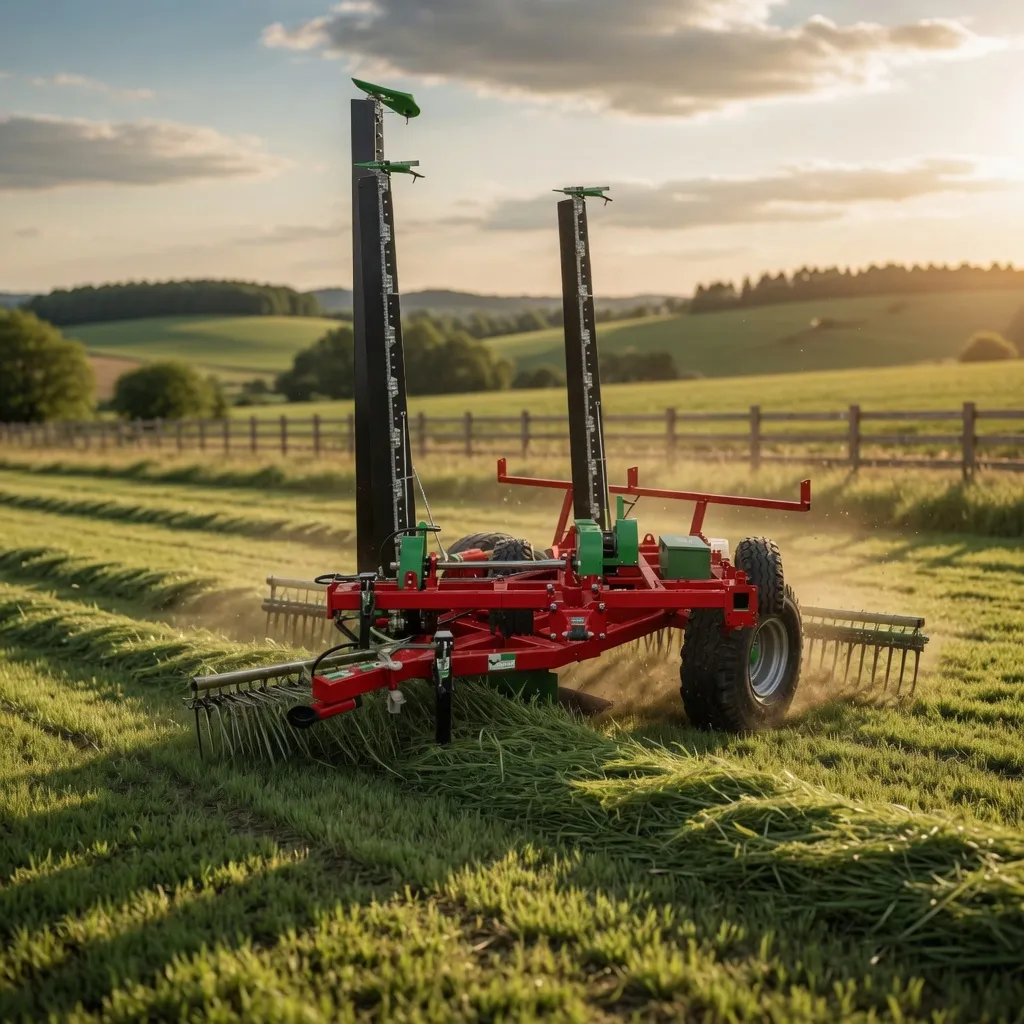
The Cutting Mechanism: How the Reciprocating Knife Actually Works
Understanding the mechanics removes the mystery and makes troubleshooting far simpler. The entire cutting system contains just four functional groups: the PTO input, the pitman arm, the knife bar, and the guard fingers. Each one plays a specific role in converting tractor power into a clean, repeatable cut.
PTO to Pitman Drive
Power enters the mower through a standard 540 rpm PTO shaft connected to the tractor. That rotational energy passes through a simple gearbox or eccentric hub that converts rotation into linear reciprocation. The output is the pitman arm — a connecting rod that pushes and pulls the knife bar side to side. At 540 rpm input, the knife completes around 540 full strokes per minute (one stroke = one back-and-forth cycle), though gear ratios vary slightly by manufacturer. On the 9GD-2.5, the pitman bearing is a sealed unit designed to run 500+ hours between services, significantly reducing the greasing frequency that older open-bearing designs demanded.
Knife Bar and Blade Sections
The knife bar is a flat steel rail running the full 2.5-metre width of the mower. Riveted or bolted along its length are individual blade sections — hardened triangular steel pieces spaced at 76.2 mm (3-inch) centres, which is the global standard pitch for sickle-bar mowers. When the pitman arm pushes the knife bar sideways, each blade section slides past a guard finger, creating a shearing point. The crop stem, trapped between the blade edge and the finger ledge, is sliced cleanly. A sharp section with correct finger clearance (under 1 mm gap) produces a cut comparable to hand shears. Worn sections or loose fingers allow the stem to bend and tear instead of shearing, which bruises plant tissue, slows drying, and reduces feed value. According to NSW Department of Primary Industries field notes, a ragged mower cut can add 6–12 hours to hay curing time compared to a clean shear under identical weather conditions.
Guard Fingers: The Stationary Half of the Equation
Guard fingers are the pointed steel castings bolted to the cutter bar frame. They serve two purposes: they hold the crop in position while the blade passes, and they protect the knife from ground contact and rocks. Each finger has a machined ledge plate on top where the blade section slides — this ledge is the “anvil” of the cutting action. Over time, the ledge wears smooth and the shearing gap opens up, degrading cut quality even if the blades themselves are sharp. Checking finger condition is part of the daily pre-mow walkaround, and replacing worn fingers is as important as replacing dull blades.
Why the Traction (Towed) Configuration Matters for Australian Terrain
Australia’s pastoral country is rarely flat. Coastal hay-growing regions in the Hunter Valley, Gippsland, and the South-East of South Australia all feature rolling terrain with elevation changes of 5–15 metres across a single paddock. Western NSW stations deal with gilgai — irregular depressions in black-soil plains — that can vary ground level by half a metre within a few tractor lengths. For a mower, these undulations are the primary challenge. A three-point-linkage mounted mower rises and falls with the tractor chassis: when the tractor crests a rise, the cutter bar lifts and misses crop; when it dips into a hollow, the bar digs in and scalps the pasture crown. Repeated scalping weakens perennial pastures, delays regrowth, and in extreme cases opens bare ground to weed invasion.
A traction mower avoids this entirely. Running on its own wheels, the cutting assembly floats independently of the tractor’s pitch and roll. Spring-loaded or gravity-weighted gauge wheels on the cutter bar maintain consistent stubble height regardless of terrain changes. On the 9GD-2.5, the cutting height is adjustable between 30 mm and 90 mm via a simple pin-and-hole setting on the gauge wheel brackets — no tools required. That independence is precisely why traction-style mowers account for a significant share of hay mower sales in regions with anything beyond pancake-flat topography.
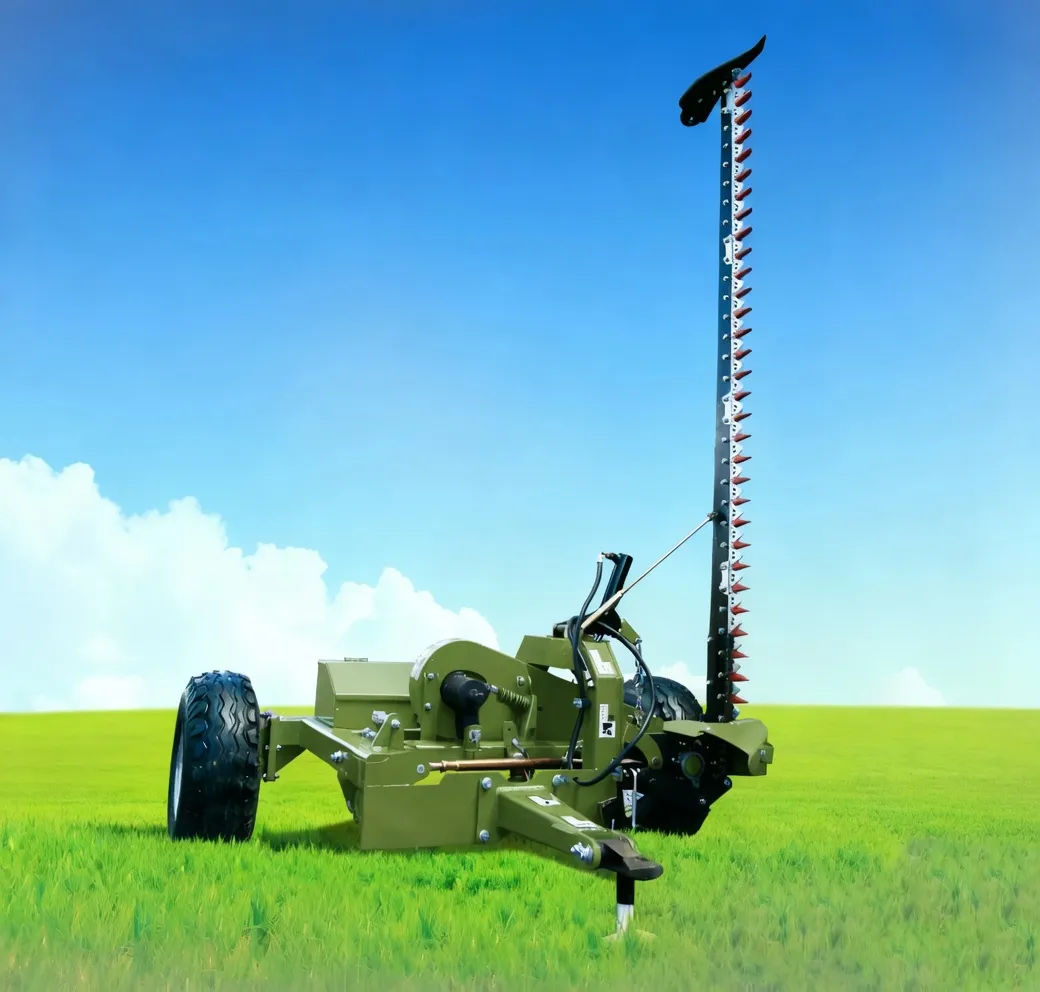
The towed chassis and independent wheel assembly allow the 9GD-2.5 to track ground contours on rolling country.
Step-by-Step: How a Mowing Pass Unfolds in the Paddock
Watching a traction mower work from the tractor seat is straightforward, but understanding each phase helps operators optimise speed, height, and overlap for maximum output and minimum crop loss. Here is how a single pass breaks down from entry to headland turn.
Engage PTO and Lower the Bar
With the tractor stationary at the paddock edge, engage the PTO at idle (around 1,000 engine rpm). The knife begins reciprocating at low speed. Lower the cutter bar to the preset cutting height using the hydraulic lift or mechanical latch. Confirm the blade is stroking smoothly and no unusual vibration or noise is present before moving forward.
Bring Engine to Operating RPM
Increase engine speed to deliver 540 rpm at the PTO — typically around 1,800–2,100 engine rpm depending on the tractor’s PTO gear ratio. This is the rated blade speed. Running below it results in a ragged cut; running above it accelerates wear without improving quality. Most modern tractors have a PTO tachometer or indicator light to confirm the correct speed.
Forward Travel and Cutting
Move forward at the appropriate ground speed for your crop density — 10–12 km/h for light pasture, 8–10 km/h for medium ryegrass, and 6–8 km/h for thick lucerne or heavy oaten hay. The crop enters the guard fingers, is held momentarily, and sheared by the passing blade section. Cut material falls behind the cutter bar into a loose swath ready for tedding or windrowing.
Headland Turn and Overlap
At the paddock boundary, slow down, lift the cutter bar hydraulically, and execute a wide turn. Traction mowers need a slightly wider arc than mounted units due to the trailing drawbar geometry. When re-entering the next pass, overlap the previous cut by 100–150 mm to avoid leaving a standing strip. Consistent overlap prevents the need for a cleanup pass and keeps the swath uniform for downstream baling machinery.
End of Run: Disengage and Inspect
After completing the paddock or at a natural break (fuel stop, meal break), reduce engine speed to idle, disengage the PTO, and raise the cutter bar fully. Walk the knife bar and check for chipped blade sections, bent fingers, or debris build-up in the guard channels. Address any issues before the next run to prevent cascading damage.
Crops Australian Farmers Cut with Single-Blade Traction Mowers
The versatility of a reciprocating knife bar is one reason single-blade mowers remain popular despite the rise of disc mowers. The shearing action works on virtually any stem diameter that fits between the guard fingers, from fine perennial ryegrass to thick oat straw. Below is a practical overview of the major forage and hay crops cut with these machines across Australian farming zones.
Ryegrass (Perennial and Annual)
Ryegrass is the most widely grown pasture species in the temperate zones of south-eastern Australia. Annual ryegrass varieties are commonly cut for hay in late spring, while perennial stands may be mowed two or three times per growing season. A single-blade mower produces a clean cut that preserves the leaf-to-stem ratio — critical because ryegrass leaves contain roughly 18–22% crude protein compared to just 6–9% in the stem fraction. The recommended cutting height of 50–70 mm also protects the tiller base, encouraging vigorous regrowth for the next cut or grazing rotation.
Lucerne (Alfalfa)
Australia’s lucerne belt stretches from the Riverina through to the Darling Downs, and the crop is valued at over AUD $600 per tonne in premium export markets. Lucerne stems are woodier than grass, so blade sharpness is paramount — operators typically service sections every 20–30 hectares in lucerne compared to 40–50 in ryegrass. The cutting height should remain at 70–90 mm to avoid damaging the crown buds that drive regrowth. A clean single-blade cut also minimises leaf shatter, preserving the high-protein leaf fraction that buyers pay a premium for.
Oaten Hay and Cereal Crops
Oaten hay production is a major enterprise in Western Australia, South Australia, and parts of western Victoria. The crop is cut at the soft-dough stage when the grain head has formed but is still pliable. Stems at this stage are thick and stiff, placing higher load on the blade sections and guard fingers. The 9GD-2.5 handles this comfortably at moderate speeds (8–10 km/h), and its adjustable cutting height can be dropped to 40–60 mm to capture the full stem length that export markets prefer. Australia exported approximately 1.3 million tonnes of oaten hay in the 2023–24 season, with Japan and China as the largest markets — making cut quality a direct commercial consideration.
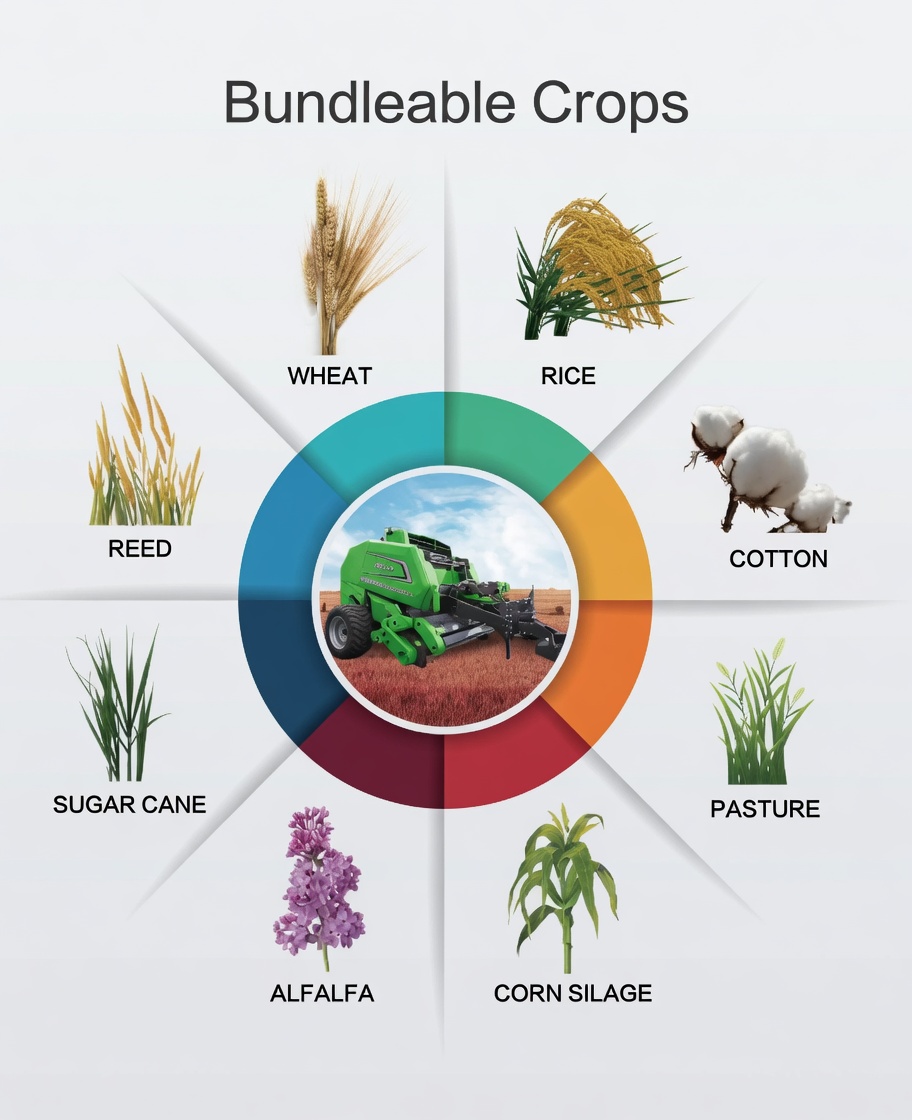
From ryegrass to oaten hay — Australian hay operations rely on consistent mowing to preserve forage value.
Real-World Output: How Many Hectares Can You Mow Per Day?
Productivity figures circulated by manufacturers tend to reflect ideal conditions — flat ground, uniform crop, zero downtime. Actual field output is always lower, and knowing the realistic range helps with planning contractor-free hay programs. The 9GD-2.5 has a 2.5-metre cutting width. At an effective working speed of 9 km/h (a reasonable average across mixed crop densities), and accounting for a 10% overlap between adjacent passes, the machine covers approximately 2.0 hectares per operating hour. Over an eight-hour mowing day — which in practice includes two fuel stops, a blade inspection, and normal headland turning time — the usable cutting time is closer to 6.5–7 productive hours.
That translates to 13–14 hectares per day as a realistic baseline for medium-density pasture. In lighter crops where ground speed can increase to 11–12 km/h, daily output pushes toward 16–18 hectares. In thick lucerne stands at 6–7 km/h, expect 9–11 hectares. These figures align with operator reports from hay-producing regions in southern NSW and Gippsland, where single-blade traction mowers of similar width class are the standard tool for properties running 200–600 hectare annual hay programs.
Power Requirements and PTO Matching
Every reciprocating mower has a minimum PTO horsepower threshold, and running below it creates two problems simultaneously: the blade speed drops, causing torn rather than sheared stems, and the tractor engine labours under constant load, accelerating fuel consumption and clutch wear. The 9GD-2.5 specifies a minimum of 50 PTO horsepower through a standard 540 rpm output shaft. In real terms, that means the tractor should be rated at approximately 60–75 engine horsepower, because drivetrain losses between the engine and the PTO shaft typically consume 15–20% of rated power.
A practical guideline used by machinery advisors in NSW and Victoria is to budget 20–22 PTO horsepower per metre of cutting width for single-blade sickle-bar mowers. For the 2.5-metre 9GD-2.5, that calculation lands at 50–55 hp — right on its rated minimum. If your operation involves predominantly thick lucerne or heavy sorghum-sudan, sizing up to a 75–80 hp tractor provides breathing room and keeps fuel efficiency in the optimal range. Tractors commonly paired with 2.5 m traction mowers in Australia include the Kubota M7060, John Deere 5075E, New Holland T4.75, and various Chinese-made utility tractors in the 70–80 hp bracket.
Where the Single-Blade Fits in the Full Hay-Making Chain
A mower does not work in isolation. It occupies the first position in a multi-step process that ends with a baled, stored, or sold product. Understanding how the mower interacts with the downstream equipment helps producers select a mower that complements — rather than bottlenecks — their overall operation.
Mowing → Tedding → Raking → Baling
After the mower lays the crop in a swath, a tedder spreads it across the stubble to accelerate drying. Once the moisture content drops to the target level — around 12–15% for dry hay, or 45–65% for silage — a rake gathers the spread crop into a windrow aligned with the round baler’s pickup width. The baler then collects the windrow and forms it into round or square bales. Each of these machines has an optimal throughput rate, and the mower sets the pace. If the mower cannot keep up, the tedder and baler sit idle; if the mower runs too far ahead, wilted crop lies exposed to weather risk while waiting to be processed. A 2.5-metre single-blade mower like the 9GD-2.5 pairs well with mid-size tedders (3.0–4.0 m working width) and round balers producing 0.9–1.25 m diameter bales — a common equipment spread on Australian properties running 200–800 hectares of annual forage.
Silage Workflow: Mowing for Wrapped Bales
When the end product is silage rather than dry hay, the mower’s role is identical but the timing changes. Silage crops are cut at a higher moisture content (typically 50–65% dry matter), so the wilting window between mowing and baling is shorter — sometimes as little as 4–8 hours in warm weather. The traction mower’s clean cut promotes even wilting across the swath, which helps the silage baler and bale wrapper produce a consistently fermented product. Uneven mowing creates wet spots that ferment poorly and dry patches that lose nutritional value, so the ground-following capability of a traction-style mower becomes even more valuable in a silage system where moisture uniformity is the primary quality driver.
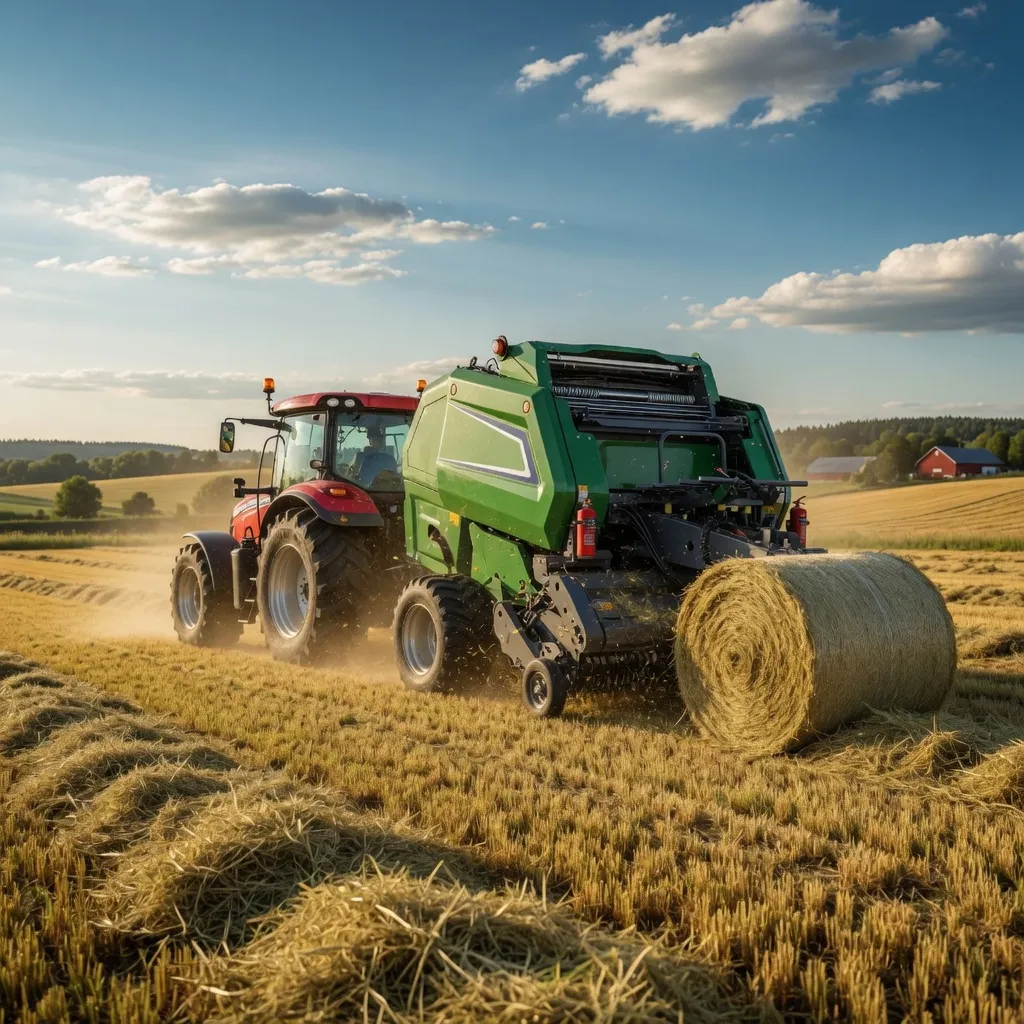
The mower is the first link in the hay and silage chain — its output rate and cut quality set the pace for everything downstream.
Common Operating Mistakes and How to Avoid Them
Even experienced operators occasionally fall into habits that degrade cut quality or shorten machine life. Recognising these patterns early saves both time and money across a cutting season.
❌ Running Dull Blades “Just One More Paddock”
This is the single most costly shortcut. A dull blade tears instead of cutting, which bruises plant tissue, extends drying time, and can add a full day to the hay curing window. That extra day of field exposure increases the risk of rain damage — potentially downgrading an entire cut from premium to stock-feed grade. Replace or sharpen sections at the intervals your crop type demands, not when the cut “starts to look rough.”
❌ Ignoring Guard Finger Wear
New operators focus entirely on blade sections and forget the fingers. A worn finger ledge opens the shearing gap, allowing stems to fold and escape uncut. Check finger ledge condition every 100–150 hectares, or immediately if cut quality drops despite sharp blades. Replacement fingers for the 9GD-2.5 are inexpensive and bolt on in minutes.
❌ Driving Too Fast in Heavy Crop
Attempting highway speeds (12+ km/h) in a thick lucerne or sorghum stand overloads the cutter bar, causing plugging, uncut strips, and excessive pitman arm stress. Match ground speed to crop density — the output table in this article provides realistic speed ranges for each crop type. Consistency beats speed every time.
❌ Skipping the Pre-Season Service
A mower that sat in the shed for six months needs more than a visual glance. Bearings can corrode, mice can nest in the guard channels, and grease hardens in zerks. A proper pre-season service — repacking bearings, replacing dried grease, checking PTO shaft universal joints, and test-running the knife at idle — takes two to three hours and prevents breakdowns during the first critical cutting day.
Cost of Operating a Single-Blade Mower vs Hiring a Contractor
The economics of owning a traction mower hinge on one question: how many hectares do you mow each year? Contractor rates for mowing in NSW and Victoria typically sit between AUD $35 and $55 per hectare, depending on paddock size, access, and local demand. For a 300-hectare annual hay program, that amounts to $10,500–$16,500 per season in mowing costs alone. Owning a machine like the 9GD-2.5 shifts those costs to a fixed capital outlay plus variable running expenses.
Assuming a purchase price in the mid-range bracket, amortised over five years, plus annual running costs of $500–$700 (blades, grease, minor parts) and fuel at approximately $1,800–$2,200 per season (200 ha), the all-in cost per hectare drops to roughly $11–$16 — less than a third of contractor rates at the high end. The breakeven point for most producers falls around 80–120 hectares per season. Beyond that threshold, every additional hectare mowed represents direct savings. There is also a scheduling benefit that dollar figures do not capture: owning the mower means cutting when the crop is ready, not when the contractor is available. In a tight hay season, a two-day delay waiting for a contractor can mean the difference between premium hay and weather-damaged stock feed worth 40–50% less per tonne.
Local Support That Keeps You Cutting: EverPower Baling Machinery
Purchasing agricultural equipment from an overseas listing without local after-sales support is a gamble that many Australian farmers have learned to avoid. EverPower Baling Machinery Australia, based at 27 Harley Crescent, Condell Park NSW 2200, maintains warehouse stock of the 9GD-2.5 and its full spare-parts inventory — blade sections, guard fingers, pitman bearings, PTO shaft components, and hardware kits. Orders placed before midday can typically ship same-day to metropolitan and regional NSW addresses, with national freight options to all states.
Beyond parts supply, EverPower’s technical team provides phone-based troubleshooting (+61 2 9708 3322) and email support ([email protected]) for setup, adjustment, and maintenance questions. For producers building a complete hay or silage system, EverPower also supplies round balers, bale wrappers, rakes, and hay conveyors — allowing a single-source approach that simplifies warranty claims and ensures all machines in the chain are matched for throughput compatibility.

EverPower’s Sydney-based facility provides warehousing, inspection, and rapid parts dispatch across Australia.
Recommended Product: 9GD-2.5 Traction Single-Blade Mower
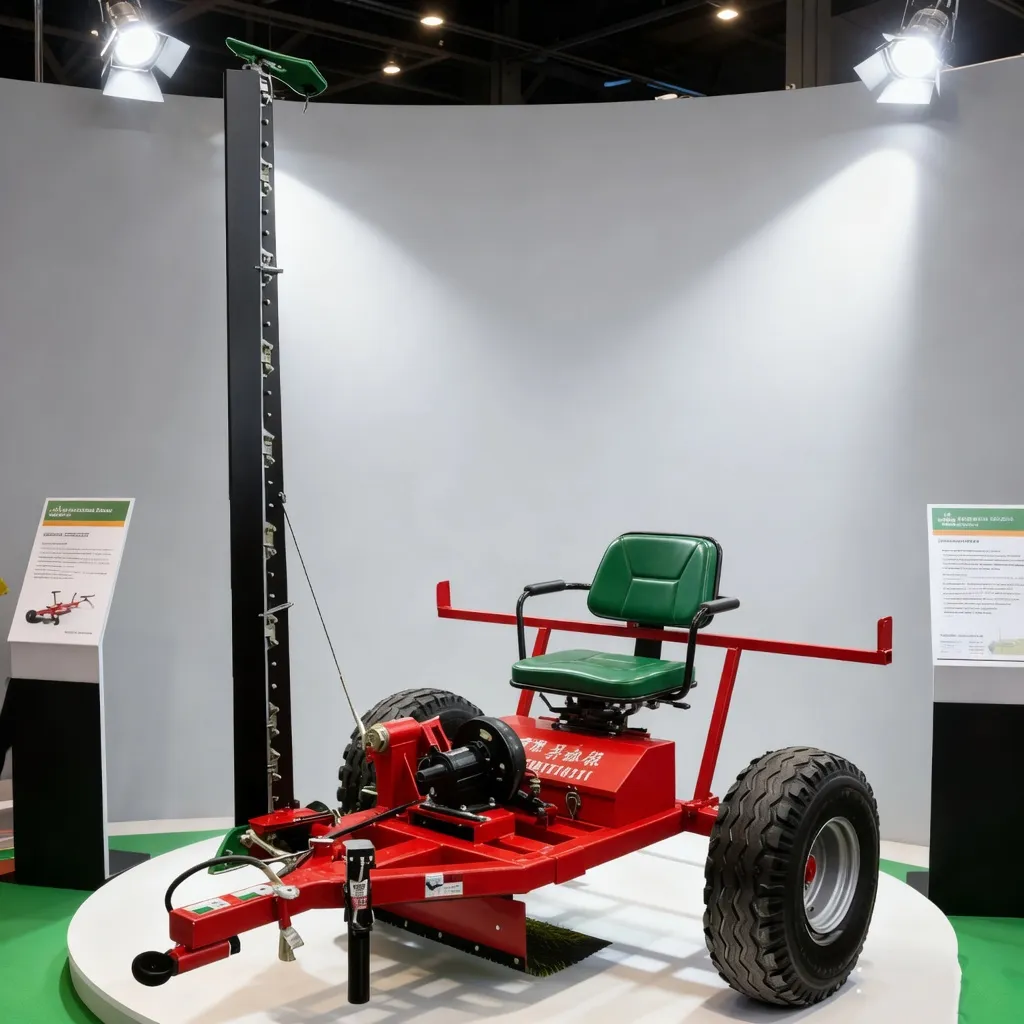
Built for Australian hay producers who value reliability over complexity. The 9GD-2.5 delivers a 2.5-metre clean cut across ryegrass, lucerne, and oaten hay with a 540 PTO input, towed ground-following chassis, and field-replaceable blade sections. Minimal moving parts, predictable running costs, and full spare-parts support through EverPower’s Sydney warehouse.
Frequently Asked Questions
Need Help Choosing the Right Mower?
Whether you are replacing an ageing mower or buying your first machine, EverPower’s team can match the right model to your tractor, terrain, and crop type.
EverPower Baling Machinery Australia Pty Ltd | 27 Harley Crescent, Condell Park NSW 2200
📞 +61 2 9708 3322 | ✉️ [email protected]