
Australia has 1.2 million feral camels and a growing commercial camel industry in SA, WA, and NT — here is how remote camel stations are using silage baling to solve their most persistent feed security challenge.
The Australian Camel Industry: Feed Security in a Remote Context
Australia’s domestic camel population is estimated at 1.2 million head — the world’s largest population of feral dromedary camels (Camelus dromedarius) — distributed across SA’s outback, WA’s Pilbara and Goldfields, and the NT’s arid interior. Overlapping this feral population is a growing commercial camel industry: approximately 40 to 60 registered camel meat and fibre operations managing mustered and domesticated camels for camel meat export (primarily to the Middle East and Southeast Asian halal markets), camel milk production for specialty dairy markets, and camel tourism and racing enterprises.
The feed security challenge for commercial camel operations in remote SA, WA, and NT is distinct from that of any other Australian livestock enterprise. Camel stations are typically 200,000 to 2,000,000 hectares of arid rangelands where rainfall averages 150 to 350 mm per year, pasture growth is episodic rather than seasonal, and the nearest commercial hay supplier may be 400 to 800 km away. Purchasing and freighting hay to a remote outback camel station at AUD $180 to $280 per tonne plus AUD $80 to $160 per tonne freight cost produces a landed feed price that makes on-farm silage production from any available forage source economically compelling even at relatively modest yields.
This article covers how outback camel stations are using silage baling to build feed security in arid remote contexts — which forage sources are available and suitable, how camels differ from cattle in their silage tolerance and nutritional requirements, and the equipment and logistics that make remote baling practical. For how beef cattle stations in similarly remote northern contexts approach silage production, our article on silage baling for beef cattle stations in drought covers the comparable management framework.
Camel Nutritional Physiology: What Makes Them Different
The Camel’s Feed Efficiency Advantage
Dromedary camels are the most metabolically efficient large ruminant-adjacent animal in domestic production — their ability to extract nutrients from high-fibre, low-quality roughage while maintaining body condition through extended dry periods is unmatched by cattle, sheep, or horses. Camels achieve this through: a slow, selective digestive passage rate that allows 90 to 100 hours of retention time for fibrous material (versus 48 to 72 hours for cattle), highly efficient water re-absorption from the large intestine that reduces water requirements to 50 to 60% of cattle’s on equivalent dry matter intake, and a body fat storage mechanism (the hump) that serves as metabolic energy reserve during complete feed shortage periods.
In practical terms for silage management: a camel can maintain body condition on roughage NDF up to 72 to 75% DM — significantly above the 65% NDF ceiling for cattle and the 58% ceiling for sheep before significant condition loss begins. This means lower-quality silage (mature cereal, lignocellulosic native grass baleage) that would be inadequate for cattle is nutritionally usable by camels at maintenance level. The bar for silage quality on a camel station is lower than for a cattle or dairy operation — but it is not zero.
| Silage Type | ME (MJ/kg DM) | NDF | Suitable for Camels? | Feeding Role |
|---|---|---|---|---|
| Native grass baleage (mulga, Mitchell) | 7.5–9.5 | 65–75% | ✓ Yes — maintenance | Dry period roughage buffer |
| Sorghum silage | 9.0–10.5 | 55–65% | ✓ Yes — moderate production | Supplementation feed |
| Hay-grade oat/barley baleage | 9.0–10.5 | 52–62% | ✓ Yes — good | Breeding females, growth |
| Lucerne baleage | 9.5–11.0 | 38–48% | ✓ Yes — premium | Lactating females, young |
| Clostridial/butyric silage | >5.0 pH | Variable | ✗ — camels reject it | Not suitable |
Silage Palatability for Camels — The Butyric Refusal Response
Like all camelids, dromedary camels are highly discriminating feeders with a strong butyric acid refusal response. Well-fermented silage at pH below 4.8 with the characteristic lactic-acid aroma is readily accepted by domesticated working camels and commercial camel herds after a brief 5 to 10 day introduction period. Clostridially spoiled silage at pH above 5.0 with butyric/ammonia odour is refused entirely — and unlike cattle, which may reluctantly adapt to mildly spoiled silage, camels maintain the refusal. On a remote station where silage is the only stored feed option, a spoiled batch means a feed crisis. Fermentation quality is not negotiable for camel station silage.
Forage Sources on Remote Camel Stations
Native Grass Baleage: The Abundance Capture Opportunity
The primary forage source for most outback camel stations is native perennial grasses — Mitchell grass (Astrebla spp.) on the black soil plains of SA’s north and NT’s Barkly Tableland, Mulga (Acacia aneura) browse in the arid zone, and various spinifex and native grass species across WA’s pastoral country. Following good rainfall events (above 50 to 100 mm in a single system), native grass biomass production can reach 2 to 5 tonnes DM per hectare in the most productive catchments — an abundance that cannot be grazed off before the material matures and loses quality.
Baling this ephemeral peak biomass as silage baleage — capturing the nutritional flush before it matures and weathers — is the fundamental feed security strategy for camel stations. A 300 mm rainfall event on 5,000 hectares of productive Mitchell grass country produces 10,000 to 25,000 tonnes of green DM — baling even 5% of this yield (500 to 1,250 tonnes DM = 2,500 to 6,250 bales) provides 6 to 18 months of supplementary feed reserve for a 500-head camel operation.
Irrigated Forage Production on Station Homestead Blocks
Many remote SA and WA camel stations have bore water access for small-scale irrigation adjacent to the homestead. A 5 to 20 hectare irrigated lucerne or Rhodes grass block — producing 15 to 20 tonnes DM per hectare per year under drip or flood irrigation — generates 75 to 400 tonnes DM of reliable annual silage production regardless of rainfall conditions. This irrigated core production provides the high-protein silage (lucerne at 20 to 24% CP) for lactating camel females and growing calves, while the opportunistic native grass baleage from rainfall events provides the bulk maintenance roughage for the adult herd.
Remote Baling Logistics: The Practical Realities
Equipment Reliability in Remote Conditions
A baler breakdown on a Goulburn Valley dairy farm is inconvenient — a dealer is 30 to 60 minutes away and the crop can survive another day in the windrow. A baler breakdown on a remote SA or NT camel station during a post-rainfall baling window is potentially catastrophic — the moisture window closes, the crop matures past optimal fermentation stage, and the next rainfall event may be 12 to 18 months away. Equipment reliability is not a convenience specification for remote camel station operations; it is the primary selection criterion.
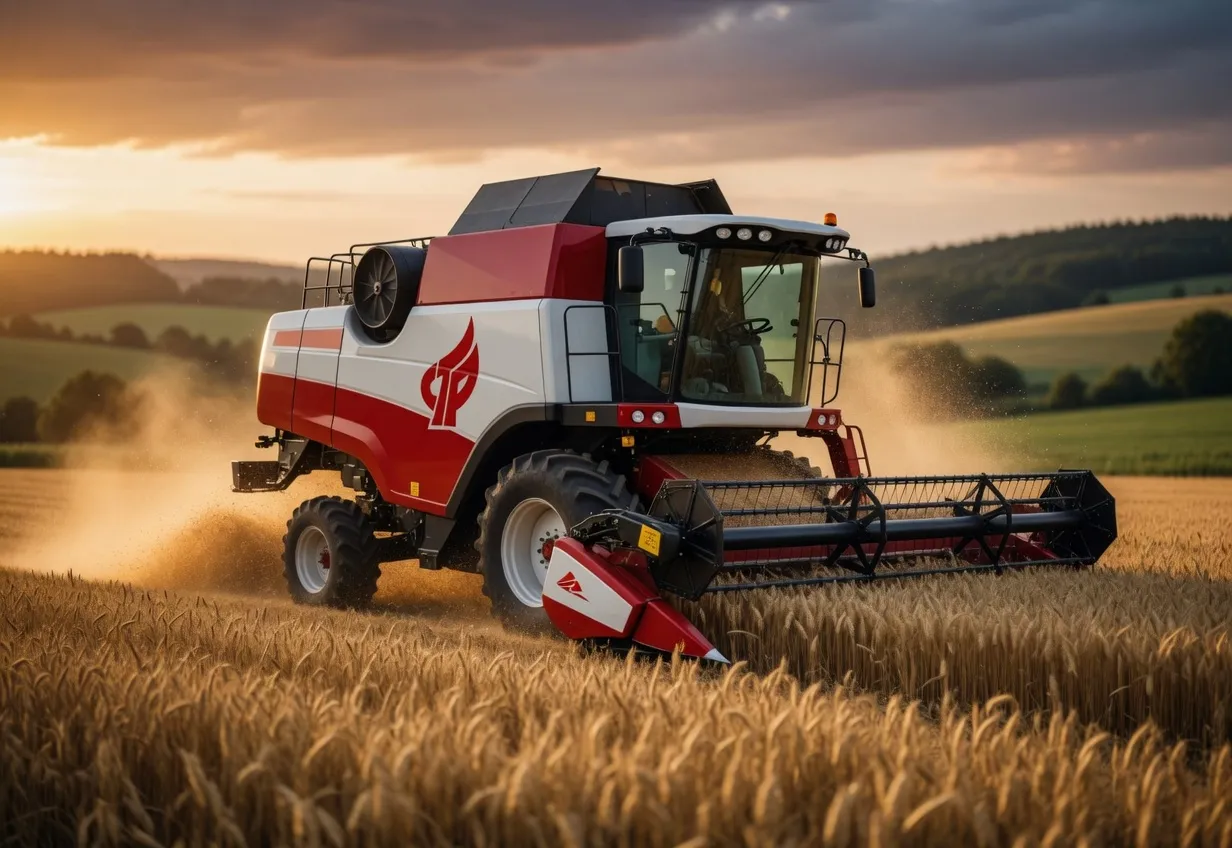
The 9YG-1.25A variable-chamber round baler is specified for remote station use because of its mechanical simplicity — hydraulic functions are straightforward, electronic controls are limited to essential monitoring rather than complex automated systems, and common wear parts (pickup tines, net wrap knife, belts) are compact enough to stock on the station. A remote station operator who maintains a 2-year parts inventory (pickup tine sets, net wrap knife, belt sets, PTO shaft U-joints) for a 9YG-1.25A can manage most breakdown situations without waiting for freight from the nearest dealer.
Fuel and Transport for Remote Operations
A remote baling operation may need to move the baler 50 to 200 km between baling sites following different rainfall catchments across the station. On station tracks, baler transport at 20 to 30 km/h is standard — a 150 km move takes 5 to 8 hours of tractor driving time. Plan remote baling operations with the transport time built into the schedule: a 3-day baling event requires 1 day transit each way plus 3 days in the paddock. Total fuel planning should include transport fuel at 15 to 25 litres per hour for tractor towing, plus baling fuel at 8 to 15 litres per hour during operation.
Storage on Remote Stations: Practical Without Infrastructure
Remote camel stations rarely have concrete pad storage areas or purpose-built silage sheds. The practical storage solution is: compacted red earth or gravel clearing adjacent to the baling area (natural clay/gravel soils in SA and NT provide adequate drainage if the surface is graded flat), single-layer storage for the first 21 days (a corral fence or temporary electric fence to exclude feral camels and kangaroos from the stored bales), and white or silver film (mandatory for outback UV conditions where standard green film fails within 6 months in direct sun). LAB inoculant is essential on all native grass and mixed grass baleage — the low WSC of mature native grasses makes uninoculated fermentation unreliable.
Frequently Asked Questions
Discuss Your Remote Camel Station Silage Programme
Tell us your herd size, available forage sources, and nearest service centre — we’ll advise on the right baler specification and parts inventory for remote outback operations.