Description
Wide-Cut Roll Drum Round Baler with 2300 mm Pickup and Dual-Stage Feeding for High-Volume Operations
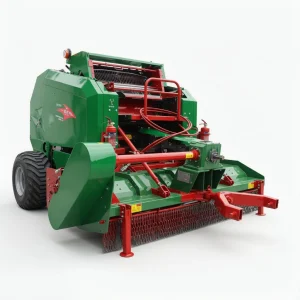
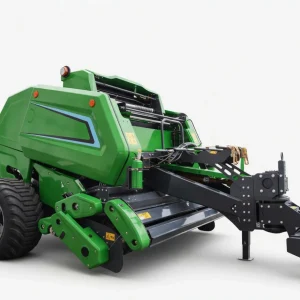
The 9YQ-2300 is the widest-pickup model in EverPower’s roll drum round baler range — a trailed machine built for farms and contractors who work with wide-cut mowers, large combine header windrows, or high-volume pasture silage where maximising pickup coverage per pass directly reduces total field time and machine hours per season. At 2300 mm, the spring-tooth pickup reel captures the full width of windrows from 5–6 metre disc mowers and combine headers in a single pass, eliminating the secondary raking or merging pass that narrower-reel machines require to utilise wide-cut equipment efficiently.
The 9YQ-2300 carries the same proven dual-stage feeding system as the 9YQ-1950 — a shift fork feeding mechanism followed by a screw continuous feeding mechanism — together with the identical roll drum compression chamber: 18 rollers of Φ190 mm arranged around a Φ1000 mm compression zone within a 1250 mm chamber width. Where the two machines diverge is in pickup width and power requirement. The 9YQ-2300’s wider reel and heavier windrow handling demands a higher minimum tractor output — 58.8 kW (approximately 80 hp) — while the upper limit reaches 132.5 kW (approximately 180 hp), accommodating large four-wheel-drive tractors that high-volume operations commonly use for silage baling alongside cultivation and spreading duties.
Like the 9YQ-1950, the 9YQ-2300 produces Φ1000 mm fixed-diameter round bales with automatic net wrapping — delivering the density uniformity that defines roll drum chamber performance in a format suited to medium-scale dairy silage, high-volume hay contracting, and large pastoral stations where windrow width and daily throughput are the binding constraints on baling efficiency. For a full explanation of how roll drum baler technology differs from belt-drive designs, see our guide on what a silage baler is and how it works.
Complete Technical Specifications
Full technical documentation including PTO shaft configuration, roller maintenance schedule, and spare parts diagrams available on request — contact our team.
2300 mm Spring-Tooth Pickup — Capturing Every Wide-Cut Windrow in One Pass
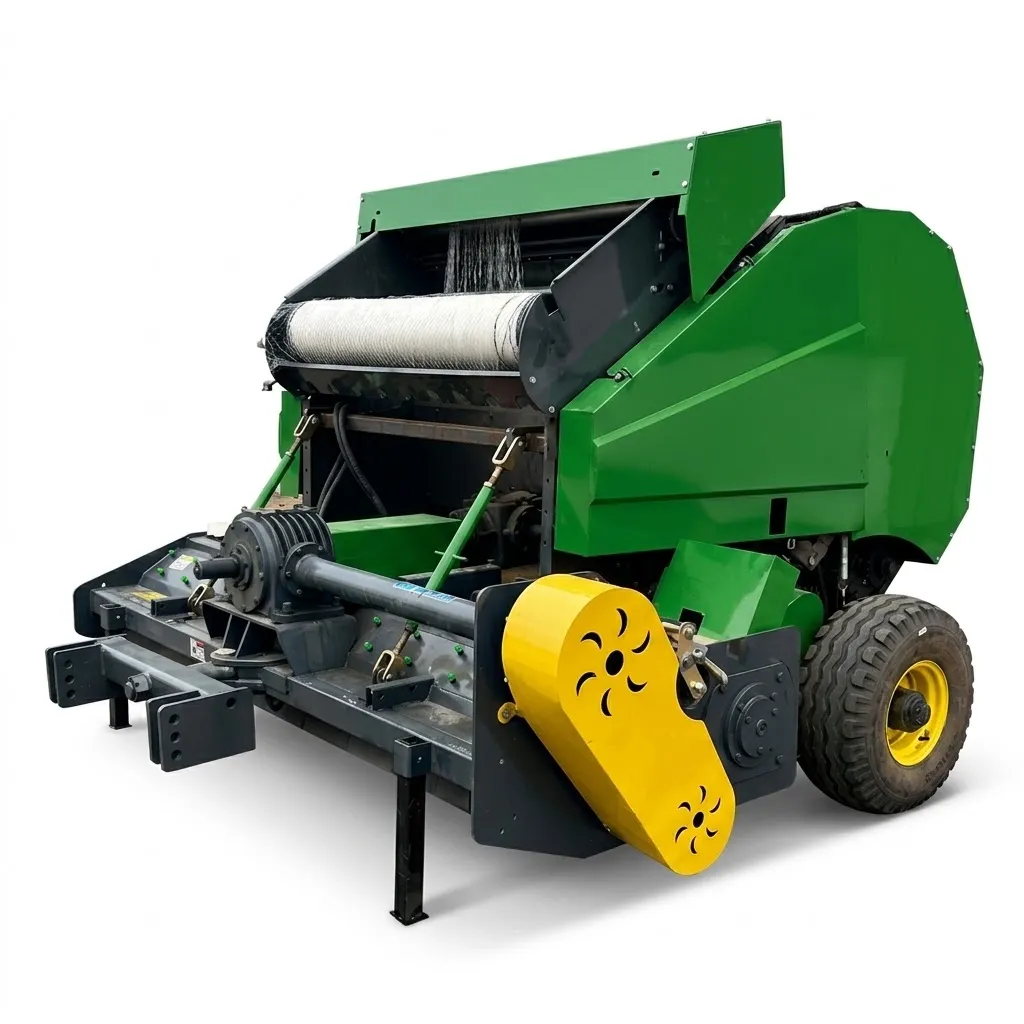
The 9YQ-2300’s 2300 mm pickup reel is its defining specification — 350 mm wider than the 9YQ-1950 and 100 mm wider than the 9YG-2.2. That difference is significant in practice: a 2300 mm reel comfortably captures the full windrow width produced by 5–6 metre disc mowers and large combine headers without requiring the operator to merge two windrows or re-rake before baling begins.
Why Pickup Width Determines Field Efficiency — Not Just Speed
The relationship between pickup width and field efficiency is straightforward: a wider reel captures more windrow per metre of forward travel. When the pickup reel width closely matches the windrow width produced by the cutting equipment, the baler makes clean, full-width captures on every pass without the operator needing to judge overlap, track narrow windrow edges, or deal with the soil disturbance that occurs when a reel is wider than the windrow and its outer tines drag bare ground.
The cost of mismatching pickup width to windrow width
When a baler’s pickup is narrower than the windrow, the operator must either merge windrows — adding a tractor pass, fuel, and time before baling begins — or accept that the baler misses the outer edges of each windrow on every pass, leaving crop in the field and reducing bale weight. On a large high-yield silage paddock, the material left outside a narrow pickup reel across dozens of passes accumulates into a meaningful total loss of dry matter. The 9YQ-2300’s 2300 mm reel eliminates this mismatch for the widest-cut equipment common in high-volume Australian silage operations.
Spring-Tooth Tine Action on Wide, Heavy Windrows
The 2300 mm spring-tooth pickup uses the same tine design approach as the 9YQ-1950 — spring-loaded tines that flex on contact with the ground surface rather than rigid tines that snap on impact with soil, stones, or drainage ridges. At 2300 mm, maintaining consistent tine pressure across the full reel width is more mechanically demanding than at 1950 mm — the wider span introduces more variability in ground contact force at the reel edges, particularly when the baler is tracking slightly off-windrow centreline on uneven ground.
Operating the 2300 mm reel on undulating ground
On undulating pasture, paddy edges, and contour-cropped slopes, maintaining the reel’s tracking centrally on the windrow is more important at 2300 mm than on narrower reels — because the outer 175 mm of reel on each side has less tolerance for tracking error before it runs off the windrow edge entirely. Hydraulic pickup height adjustment allows the operator to compensate for surface irregularity across the paddock from the cab, maintaining clean capture without stopping for manual adjustment. On significantly undulating terrain, reducing ground speed slightly improves reel tracking stability and reduces the risk of the outer tine rows contacting soil on the downslope side of a ridge.
Power Requirement 58.8–132.5 kW — Sized for the Wider Reel Load
The 9YQ-2300’s minimum power of 58.8 kW (approximately 80 hp) is higher than the 9YQ-1950’s 36.7 kW minimum, reflecting the additional mechanical load of the wider pickup reel and the heavier windrow material it captures per unit of forward travel. At 2300 mm, a full-width pass through a heavy green ryegrass windrow at working speed presents a substantially larger crop mass to the pickup and feeder per unit of time than the same speed through the same windrow with a narrower reel.
Practical tractor matching for the 9YQ-2300
For dry hay baling from light windrows, an 80–100 hp tractor runs the 9YQ-2300 comfortably within its rated operating range. For high-moisture silage from wide-cut pasture — the 9YQ-2300’s primary design application — a tractor in the 120–160 hp range maintains better PTO speed stability under peak windrow load. The upper limit of 132.5 kW (approximately 180 hp) accommodates the largest common four-wheel-drive models used on high-volume Australian silage operations, allowing the 9YQ-2300 to be run from the same tractor used for other heavy field tasks on the same property without operating outside the machine’s design parameters.
Dual-Stage Feeder and Roll Drum Chamber — Critical at 2300 mm Pickup Width
The dual-stage feeding system and roll drum chamber are more important — not less — at the wider 2300 mm reel width. A wider reel presents more material variability to the feeder per machine cycle, making the fork stage’s pre-metering function critical for consistent chamber charging.
🌀 Fork Stage — More Critical at Wider Reel Width
A 2300 mm reel collecting a heavy ryegrass windrow at field speed delivers a larger crop volume surge per unit of time than a 1950 mm reel in the same conditions. Without the fork stage’s pre-metering action, these surges would reach the screw feeder as unmanageable volume peaks — stalling the screw and creating the feeder blockages that interrupt baling cycles and reduce daily bale output. The fork stage is the 9YQ-2300’s surge buffer: it absorbs the variability that the wide reel introduces and delivers a manageable, consistent charge to the screw regardless of how the pickup reel encounters the windrow on a pass-by-pass basis.
🔘 Roll Drum — Consistent Density Despite Variable Input
Wide-reel balers inherently present more material variability to the compression chamber than narrow-reel machines — because any given 2300 mm pass collects a wider cross-section of windrow with more variation in crop thickness from edge to centre. The roll drum chamber’s fixed-geometry 18-roller arrangement applies consistent radial compression on the forming bale regardless of whether the material entering the chamber is heavy or light, wet or dry. This chamber characteristic is what converts the dual-stage feeder’s consistent flow into the uniform bale density profile that distinguishes roll drum output from variable-chamber belt baler output in demanding silage conditions.
9YQ-2300 vs 9YQ-1950 vs 9YG-2.2 — Choosing the Right Roll Drum Baler
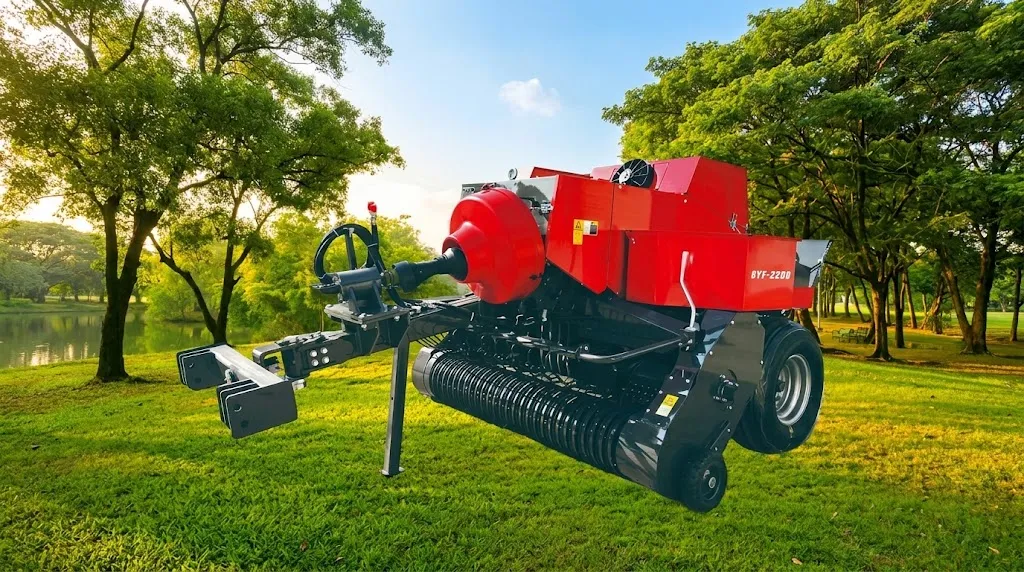
All three share roll drum chamber technology and automatic net wrapping. The decision between them comes down to pickup width, tractor availability, bale size requirement, and whether touchscreen weight monitoring justifies the 9YG-2.2 investment.
✓
✓
✓
✓
✓
→
→
→
→
Where the 9YQ-2300 Delivers Its Strongest Performance
The 9YQ-2300’s wide pickup and dual-stage feeding combination make it particularly effective in high-yield silage crops and large paddock situations where baling throughput is the priority constraint on seasonal operations.
Wide-Cut Ryegrass Silage
The 9YQ-2300’s headline application. A 5–6 metre disc mower working ahead of the baler lays down a 2100–2300 mm windrow that the 9YQ-2300’s reel captures cleanly in one pass. The dual-stage feeder handles the high-volume, high-moisture ryegrass charge from the wide reel without the blockage risk that a single-mechanism screw feeder faces when presented with a 2300 mm width surge of green, sticky silage crop at field working speed.
High-Yield Lucerne and Cereal Hay
First-cut lucerne and heavy cereal hay yields produce thick windrows from wide-cut equipment that benefit from the 9YQ-2300’s 2300 mm capture width. At 15–20% moisture, lucerne hay bales cleanly in the roll drum chamber with consistent density — the uniform compression across the 1250 mm bale width supports even string tension in the net wrapping cycle, producing tight, well-retained bales that handle well in loader stacking operations.
Large Dairy Farm Silage Programs
Dairy farms running wide-cut mowers to complete silage programs within narrow weather windows — typically 2–5 days from cut to baled and wrapped — benefit most from the 9YQ-2300’s combination of wide pickup and fast dual-stage feeding. The higher daily bale count that the wide reel enables means less of the cut paddock is left lying in the window waiting for the baler at the end of each day, reducing the risk of weather deterioration affecting crop quality between cut and bale.
High-Volume Silage Contractors
Contractors working across multiple properties in a silage season — where total seasonal bale count determines profitability — benefit from the 9YQ-2300’s higher daily throughput per field hour compared to narrower-reel alternatives. The machine’s 2500 kg weight and 2950 mm length make it straightforward to transport between properties on a standard trailer, supporting the multi-property daily movement patterns that silage contracting in many Australian regions requires.
Large Pastoral Stations — Drought Reserve Baling
Large beef and sheep stations baling pasture silage or native grass hay during productive seasons to build drought reserves need machines that maximise bales-per-hour across broad paddock areas. The 9YQ-2300’s wide pickup reduces total field passes per paddock, cutting machine hours per tonne of hay secured — a meaningful efficiency gain across the large areas that pastoral station drought reserve programs typically cover in a single season.
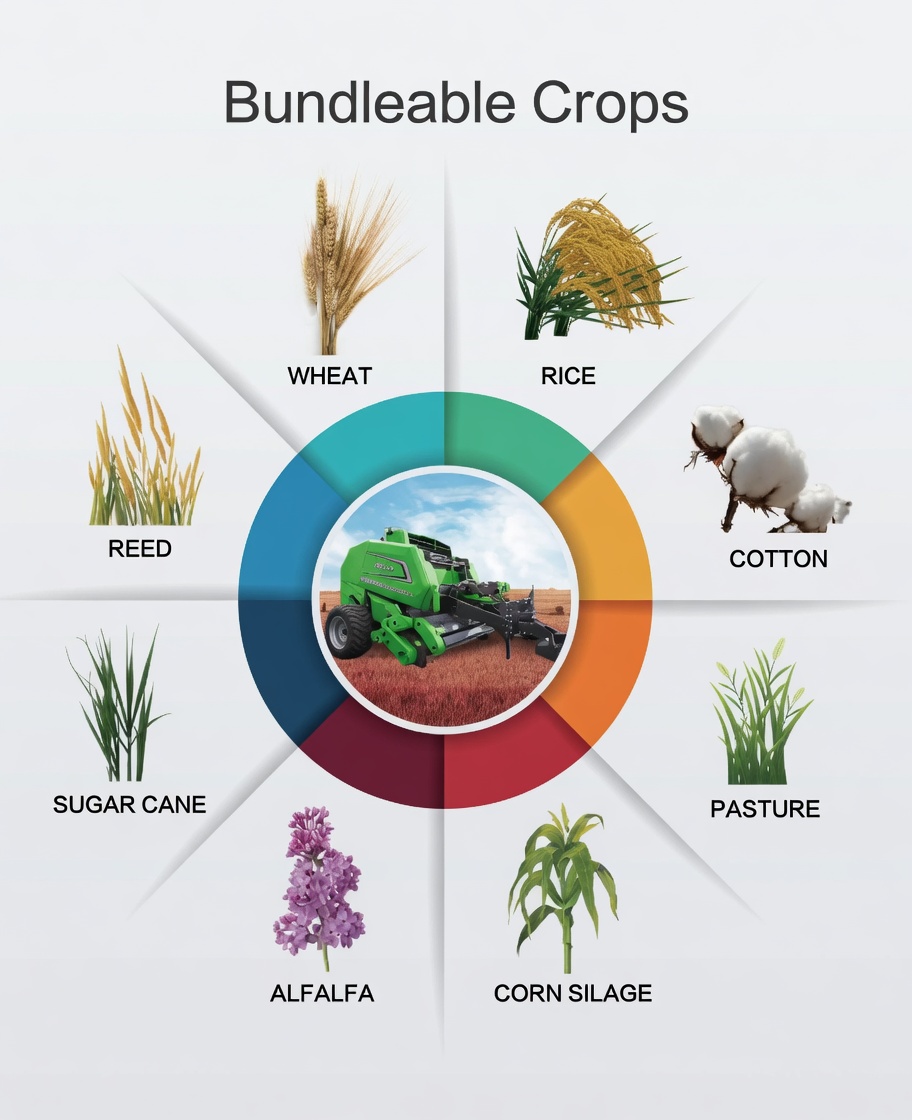
Whole-Plant Corn and Sorghum Silage
Chopped whole-plant corn and sorghum silage baling — where a chopper works ahead of the baler and leaves material in wide swaths across the field — matches the 9YQ-2300’s wide pickup well. The dual-stage feeder handles the coarser, heavier material charge that chopped corn presents per unit of forward travel, and the roll drum chamber produces consistent bale density from the variable particle-size mix that chopped corn creates versus fine-stemmed pasture silage.
Running the 9YQ-2300 at Full Output in Wide-Cut Silage and Hay Applications
The wider reel and higher power requirement of the 9YQ-2300 introduce a few operating considerations that do not apply to the same degree with the narrower 9YQ-1950. The following practices are specific to working the machine effectively at 2300 mm reel width.
Track Windrow Centreline Carefully at 2300 mm
At 2300 mm reel width, accurate windrow centreline tracking matters more than with narrower reels — because the outer tine zones have less margin for tracking error before they run off the windrow onto bare ground. Use the baler’s centreline reference marker to guide tracking at field working speed. In wide, heavy windrows, tracking slightly to the heavier side of the windrow provides better dual-stage feeder fill balance than tracking the geometric centre of a windrow with an uneven density distribution.
Match Ground Speed to the Windrow Mass Per Metre
A 2300 mm reel at a given ground speed delivers proportionally more crop per unit of time than a 1950 mm reel at the same speed in the same windrow. In heavy high-moisture windrows, the 9YQ-2300 may need to operate at a lower ground speed than you would use with a narrower machine in the same conditions — to keep total feed rate through the dual-stage system within the screw feeder’s steady-state capacity. The signal that you are moving too fast is the characteristic stop-start in the bale formation cycle as the fork stage falls behind the pickup rate.
Inspect Outer Tine Rows Most Frequently
On a 2300 mm reel, the outer tine rows are most exposed to soil contact, edge crop debris, and the tracking-deviation events that occur more frequently at wider reel spans. Inspect the outer 200 mm of tine rows on each side of the reel more frequently than the centre — bent or broken tines at the reel edges create a dead zone that leaves a consistent strip of windrow material uncollected on every pass, reducing daily bale count proportionally.
Clear the Fork Stage at Each Fuel Stop in Wet Conditions
The wider 2300 mm reel delivers more high-moisture material per cycle than a narrower machine — meaning residue accumulation on the fork face is faster in green silage applications. At each fuel stop during high-moisture baling, briefly inspect the fork stage for material build-up on the fork face and the inlet to the screw stage. A fork face with accumulated residue reduces the clearing action that pre-meters material to the screw — effectively negating the dual-stage advantage and increasing the risk of screw stall on the next heavy windrow section.
Pre-Season Roller Inspection Across the Full 1250 mm Width
Before the first bale of each season, inspect all 18 compression rollers for bearing play, surface condition, and correct spacing across the 1250 mm chamber width. A roller that has shifted axially — moved slightly along its shaft — creates an uneven compression zone across the bale width that appears as a density variation band visible on the bale face after ejection. This is easiest to detect and correct before the season than to diagnose and repair during peak baling periods.
Grease All Points — Including the Wider Reel Shaft Bearings
The 2300 mm reel shaft bearing span is wider than the 1950 mm version — placing slightly higher bending loads on the outer reel shaft bearings during operation in heavy windrows. Greasing the reel shaft bearings at every fuel stop, not just once per day, maintains protection at these higher-load points. As with all EverPower baler service intervals, the maintenance schedule document provided with the machine specifies grease type and quantity for each reel bearing point — use the specified grade rather than substituting a general-purpose grease at these bearings.

Wide-Cut Roll Drum Technology Supplied Direct to Australia by EverPower
The 9YQ-2300 is available directly from EverPower Baling Machinery Australia Pty Ltd, 27 Harley Crescent, Condell Park NSW 2200. Learn more at silage-baler.com/about-us.
Factory-Direct at Wide-Reel Specification
Roll drum round balers with 2300 mm pickup width and dual-stage feeding are specification-level machines that command a premium through distributor channels. EverPower’s direct factory-to-Australia supply removes those margins, making a genuine wide-cut roll drum baler accessible at a price point that reflects production cost rather than product tier pricing.
NSW Spare Parts — Wide Reel Tines, Fork & Screw Components
Spring pickup tines for the 2300 mm reel, shift fork stage components, screw feeder parts, roller bearings, and net-wrap mechanism spares are stocked at our Condell Park NSW facility. For a machine running at 80–180 hp through high-yield silage, having tines and feeder components available locally prevents the field downtime that international freight timelines create when wear parts run out mid-season.
Technical Support for Wide-Cut Operation
Our Sydney-based team advises on reel tracking at 2300 mm width, ground speed optimisation for heavy windrows, dual-stage feeder clearance settings, and tractor matching across the 58.8–132.5 kW range. Contact us at 61 2 9708 3322 or [email protected] during business hours.

Frequently Asked Questions
Common questions from farmers and contractors evaluating the 9YQ-2300 Round Hay Baler.