
The nutritional targets, silage quality thresholds, and feeding programme for 0 to 24 month dairy heifers — why replacement heifers need different silage management to milking cows.
The Heifer That Enters the Milking Herd Reflects Every Feed Decision Made Before
The dairy industry has a well-worn saying: the cost of rearing a heifer is the second-largest capital investment on a dairy farm after the land itself. At current Australian costs of AUD $2,400 to $3,800 per heifer from birth to first calving (including feed, labour, housing, and health), the feed management decisions made across the 22 to 26 month rearing period directly affect both the cost of producing each replacement heifer and the lifetime milk production performance of the animal after she enters the milking herd.
A heifer that enters the herd at 22 months with good body condition score (3.0 to 3.5 on the 1-5 scale), correct frame development (110 to 120% of the adult breed weight target), and a well-developed rumen is worth significantly more to the farm than one that enters underweight or with poor condition — not just in the first lactation but across her entire productive life. The research is consistent: heifers reared on adequate nutrition through the 4 to 24 month period produce 200 to 500 litres more milk in their first lactation than heifers that experienced nutritional restriction during rearing, and this advantage persists into subsequent lactations.
Silage is the primary stored roughage in most Australian dairy heifer rearing programmes, particularly through winter and early spring when pasture growth is insufficient. Getting silage quality right for heifers — which have different requirements at different rearing stages — is the management focus of this article. For how high-volume silage production for the milking herd is approached as a system, our article on reducing dry matter loss on dairy farms with a combined baler-wrapper covers the production side of the dairy silage equation.
Nutritional Requirements by Rearing Stage
| Rearing Stage | Age | Target Weight (Friesian) | ME Required | CP Required | Silage Role |
|---|---|---|---|---|---|
| Pre-weaning | 0–10 wks | Birth to 90 kg | Milk + calf starter | 16–18% CP calf starter | Not fed silage — rumen undeveloped |
| Early weaning | 10–16 wks | 90–140 kg | 10.5–11.5 MJ/kg DM | 14–16% CP | Introduce ad-lib good silage + calf meal |
| Growing heifer | 4–12 months | 140–280 kg | 10.0–11.0 MJ/kg DM | 13–16% CP | Primary roughage + grain |
| Pre-puberty | 12–15 months | 280–360 kg | 9.5–10.5 MJ/kg DM | 12–14% CP | Main silage + pasture |
| Post-puberty to pregnancy | 15–22 months | 360–480 kg | 9.0–10.0 MJ/kg DM | 11–13% CP | Maintenance + growth |
| Late pregnancy | 22–24 months | 480–520 kg | 10.5–11.5 MJ/kg DM | 13–15% CP | Pre-calving transition silage |
The Critical 4 to 12 Month Window — Getting Rumen Development Right
The 4 to 12 month rearing period is when the calf transitions from a milk-and-concentrate system to a ruminant feeding system where roughage provides the majority of energy and protein. The rumen microbiome that forms during this period determines the heifer’s lifetime ability to digest high-fibre pasture and silage efficiently. Heifers that receive poor-quality, high-NDF roughage during this period — mature hay above 60% NDF, poorly fermented silage — develop a rumen microbiome weighted toward structural carbohydrate fermentation at the expense of the mixed fermentation population needed for efficient pasture conversion.
Good-quality silage at 55 to 65% NDF and 10.0 to 11.0 MJ ME, fed alongside a small grain allocation (1.0 to 1.5 kg per head per day of rolled barley or equivalent), provides the rumen development environment that produces efficient adult ruminants. Poor silage at 70% NDF and 7.5 MJ ME produces rumen development biased toward low-quality roughage fermentation — an effect that is partially but not fully correctable once the heifer enters the milking herd.
Silage Quality Specification for Each Rearing Stage
Early Rearing Heifers (4–12 months): Highest Quality Required
The counter-intuitive finding from dairy research is that young heifers need the highest-quality silage in the system — not the milking cows. This is because young heifers have a smaller rumen relative to body size than adult cows and cannot consume as much DM per unit of body weight. Every kilogram of DM they eat must count nutritionally. Silage at 65% NDF with 7.5 MJ ME requires a young heifer to eat almost twice as much DM to achieve her growth target as silage at 55% NDF with 10.5 MJ ME. Since she cannot physically eat twice as much, she falls short of her growth target and the rearing schedule falls behind.
| Silage Parameter | 4–12 Month Heifers | 12–22 Month Heifers | Milking Cows |
|---|---|---|---|
| ME (MJ/kg DM) | ≥10.0 (ideally 10.5+) | 9.5–10.5 | ≥10.0 at peak |
| Crude protein (DM) | 14–18% | 12–15% | 16–20% (peak lactation) |
| NDF | 50–60% | 55–65% | 45–58% |
| pH | 3.9–4.5 | 3.9–4.8 | 3.8–4.5 |
| Ammonia-N (% of total N) | <8% | <10% | <8% |
Using Lower-Quality Silage Batches Strategically
Most dairy farms produce silage batches of variable quality across a season — first-cut spring silage at higher D-value, late-season cuts at lower D-value, occasional batches baled at sub-optimal moisture. Rather than feeding these batches randomly, assign them strategically by heifer age class: premium batches to 4 to 12 month heifers and transitioning cows; mid-grade batches to 12 to 22 month heifers; lower-grade batches to dry cows and far-off dry heifers. This allocation costs nothing but the management decision and significantly improves the per-dollar return from the silage programme.
Feeding System and Bale Format for Heifer Groups
Group Feeding Without Dominant-Animal Intake Suppression
Dairy heifers in group pens show social hierarchy feeding behaviour — dominant animals access the silage bale before subordinate animals and may consume a disproportionate share of the daily allocation. In a pen of 15 to 25 heifers, intake variation between the dominant and subordinate 20% of the group can be 30 to 50% of daily DM allocation. This variation directly affects growth rate uniformity across the group, producing a spread of condition scores at mating that makes management more difficult.
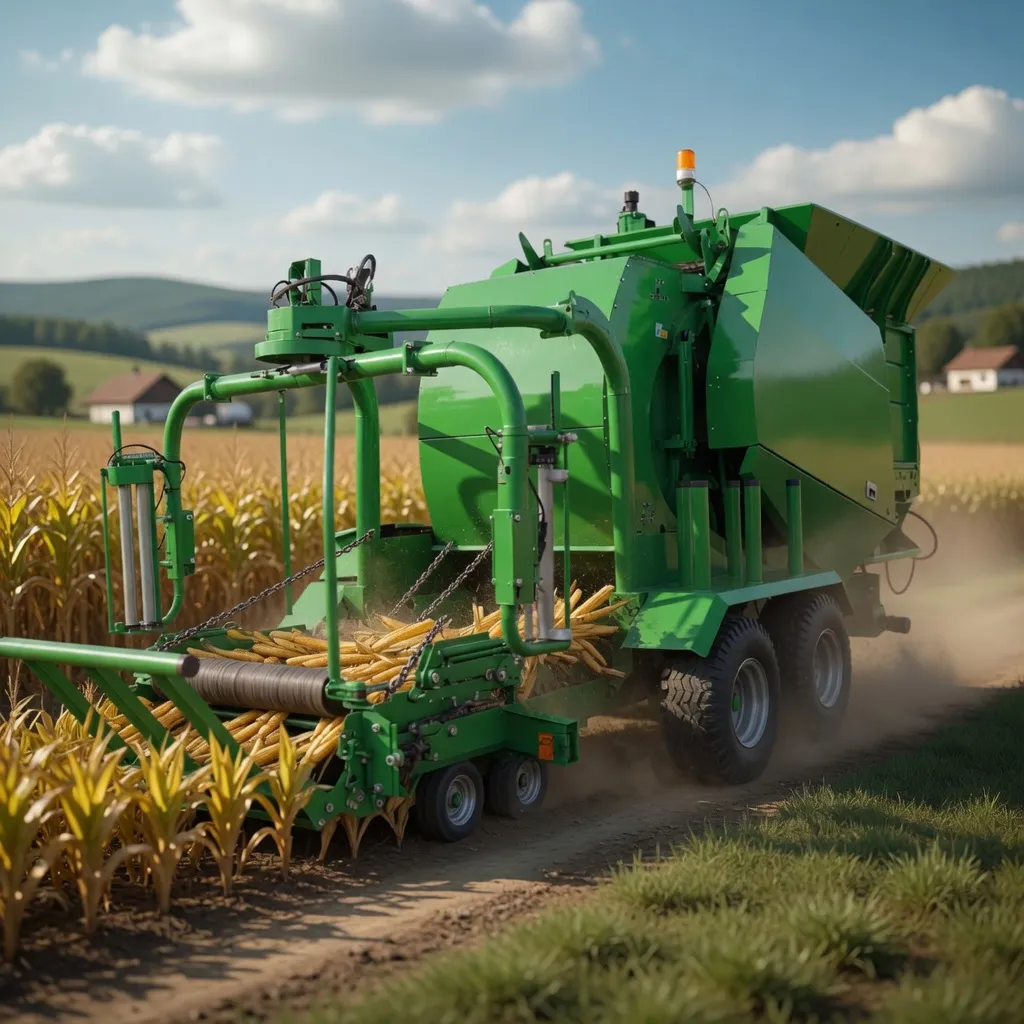
The management response is bale placement to allow simultaneous access from multiple points — placing multiple 1.0 m bales rather than a single 1.25 m bale ensures all animals can eat at once, regardless of social rank. The 9YCM-850 bundling film wrapping machine paired with a 1.0 m or 1.25 m baler allows the dairy to produce appropriately sized silage bales for heifer groups of different sizes — smaller bales for young heifer pens of 10 to 20 animals where daily turnover of the full bale is required, larger bales for pre-calving heifer mobs of 30 to 60 animals where slower consumption over 2 to 3 days is acceptable.
Common Heifer Silage Management Mistakes
The logic of ‘save the best silage for the milking cows’ makes sense in isolation but fails when applied to 4 to 12 month heifers. Young heifers fed poor-quality silage through their critical rumen development period enter the milking herd with measurably lower peak lactation potential — a permanent production loss that outweighs any silage cost saving from the rearing period. Allocate your best silage batches to young heifers first.
Heifers entering their first calving with body condition score above 3.5 (on the 1-5 scale) have significantly elevated risk of calving difficulty, milk fever, and retained placenta compared to heifers calving at 3.0 to 3.25. In the final 3 months before calving, reduce silage quality and quantity to slow the rate of condition gain — or switch to lower-ME silage batches to achieve the same effect without reducing intake capacity. Monitor BCS monthly from 18 months onward.
Silage fermentation acids in the abomasum of pre-ruminant calves (below 6 to 8 weeks of age) cause abomasal pH disruption and increase the risk of abomasal bloat. Do not offer silage to calves below 8 weeks of age. From 8 to 12 weeks, offer small amounts of good-quality silage (pH below 4.5) alongside calf starter to support the rumen development process. Full silage inclusion is appropriate from 14 to 16 weeks onward.
Silage quality problems in heifer rearing are often not identified until mating — when the mob’s pregnancy rate reveals which heifers were cycling at the target age. By this point, 12 to 15 months of sub-optimal nutrition have already occurred and cannot be corrected. Weigh heifers monthly from 4 months and plot against the breed weight-for-age target. If actual weight is below target by 8%, investigate silage quality and allocation before the deficit accumulates further.
Frequently Asked Questions
Discuss Your Dairy Heifer Silage Programme
Tell us your heifer numbers, rearing system, and current silage quality outcomes — we’ll help plan the silage production and quality targets for your replacement heifer programme.