
Goat Dairy Farms and Silage: Getting Nutrition Right
Why dairy goats respond differently to silage than dairy cows — and the baling, fermentation, and feed-out management that makes silage work for high-producing does.
Goat Dairy Is Not Small-Scale Dairy — The Feed Demand Is Different
Australia’s dairy goat sector — concentrated in NSW’s Hunter Valley and Southern Highlands, Victoria’s Gippsland coast, and South Australia’s Adelaide Hills — produces milk for specialty cheese, drinking milk, and infant formula, with farm sizes ranging from 80 to 600 does. At first glance, a dairy goat operation looks like a scaled-down dairy cattle farm. In practice, the nutritional management is markedly different in ways that directly affect how silage is selected, made, and fed.
Dairy goats at peak lactation have dry matter intake capacity of only 3.5 to 5.5% of body weight — significantly higher than the 3.0 to 4.0% ceiling for dairy cows on a relative body weight basis. A 65 kg dairy doe in peak lactation needs 2.5 to 3.2 kg DM per day from all feed sources combined. Because total intake capacity is physically limited by rumen volume, every kilogram of DM must be nutritionally dense. Low-quality, high-NDF roughage that a dry cow can eat at maintenance occupies rumen space that a lactating doe cannot afford to waste on low-energy fill. This shapes every decision about silage quality on a goat dairy.
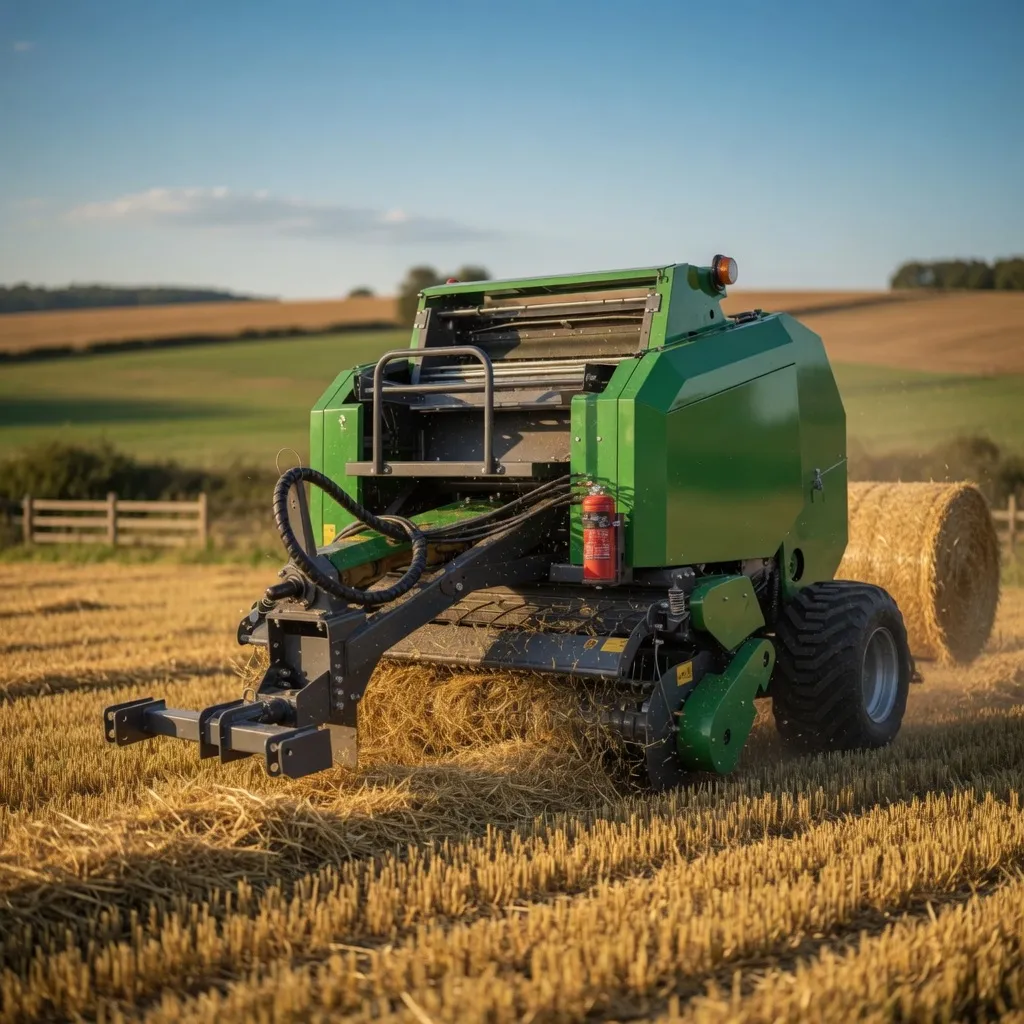
This article covers the specific silage management requirements for dairy goat operations: which forages produce the best fermented quality for high-producing does, what fermentation parameters matter most, how to manage feed-out from bales to minimise wastage in goat housing systems, and the scale of equipment that suits 80 to 300 doe operations. For the broader question of reducing dry matter losses across dairy operations, our article on reducing dry matter loss on dairy farms with a combined baler-wrapper covers the technical principles that apply across species.
What High-Producing Dairy Does Need From Silage
The Nutritional Specification for a Lactating Doe Ration
A 65 kg dairy doe producing 3.5 litres per day (a typical target for Saanen, Toggenburg, or British Alpine does in an Australian pasture-based system) requires a total daily ration of approximately: 11 to 12 MJ ME, 200 to 230 g crude protein, 400 to 500 g NDF, and adequate calcium and phosphorus for milk mineral output. When silage provides 40 to 60% of the total DM, the silage fraction needs to carry a proportionate share of this nutritional load.
| Silage Type | Crude Protein (DM) | ME (MJ/kg DM) | NDF | Suitable for Lactating Does? |
|---|---|---|---|---|
| Lucerne baleage (vegetative) | 20–26% | 9.5–10.8 | 38–46% | ✓ Excellent — high protein |
| Ryegrass silage (flag leaf) | 13–18% | 10.0–11.2 | 50–58% | ✓ Good — high ME |
| Mixed grass-legume | 14–20% | 9.5–10.5 | 48–56% | ✓ Good balance |
| Cereal silage (oat/barley) | 9–13% | 9.0–10.0 | 55–65% | △ Adequate — supplement protein |
| Mature hay (>50% heading) | 6–10% | 7.5–8.5 | 65–75% | ✗ Too low ME and protein |
Why Goats Are More Sensitive to Silage Quality Than Cattle
Goats have a stronger and more immediate refusal response to poor silage quality than dairy cattle. While a Friesian cow will often reluctantly consume mildly butyric silage (pH 5.0 to 5.5, ammonia-N above 12%) at reduced intake, a dairy doe will walk away entirely. Goats are more sensitive to butyric acid flavours and to the ammonia odour that characterises clostridially spoiled silage — their palatability threshold for these compounds is lower than cattle, and the intake depression from poor-quality silage in a goat herd is more abrupt and more complete.
The practical consequence: quality control in silage production is not optional on a goat dairy — it is the first management priority. A batch of clostridial silage on a cattle dairy causes intake depression and production loss; the same batch on a goat dairy may produce near-total silage refusal and a feed crisis that requires emergency purchased hay at short notice.
Making Silage for a Goat Dairy: The Production Priorities
Lucerne at Vegetative Stage — the Gold Standard
For NSW and Victorian dairy goat operations with access to irrigated or high-rainfall lucerne, cutting at the vegetative to early-bud stage (before 10% of plants show open flowers) produces silage with 22 to 26% crude protein and 9.5 to 10.8 MJ ME — the most nutritionally concentrated fermented roughage available. The fermentation challenge with high-protein lucerne (buffering capacity 3 to 5 times higher than ryegrass) requires rigorous management: wilt to 45 to 55% moisture, apply a homofermentative LAB inoculant at the baler pickup without exception, and use 8 film layers rather than the standard 6 for silage stored beyond 8 months.
Ryegrass for ME, Lucerne for Protein — The Combination Approach
Goat dairy operations that grow both ryegrass and lucerne often manage the two forages as complementary silage components. Ryegrass cut at flag leaf delivers the highest ME content (10.0 to 11.2 MJ/kg DM) of any common Australian silage crop, while lucerne delivers the protein. A TMR combining 50% ryegrass baleage and 50% lucerne baleage (by DM) produces a mixed silage ration of approximately 18 to 22% CP and 10.0 to 10.8 ME — close to the ideal specification for a lactating doe ration with a moderate concentrate top-up.
At 10% open flower, crude protein has already dropped 3 to 4 percentage points. For goat dairy, this cut timing is the most important quality decision in the production chain.
Lucerne’s buffering capacity means fermentation failure is the default outcome if baling occurs above 60% moisture without inoculant. Always measure, never estimate.
Not optional for lucerne or for any mixed legume-grass silage. The cost per bale (AUD $1.50 to $3.00) is less than 5% of the value of the silage DM in the bale.
Goat dairies with one or two silage-making windows per year often need silage to last 10 to 14 months. The 8-layer standard maintains film integrity through this period in Australian UV and temperature conditions.
Lucerne silage takes longer to reach stable pH than ryegrass — 28 to 35 days versus 14 to 21 days. Opening before this period produces material that is still in active fermentation, with elevated temperature, unstable pH, and poor palatability for the sensitive goat palate.
Feed-Out Management in Goat Housing — The Wastage Problem
Why Goat Silage Wastage Is Higher Than Cattle Silage Wastage
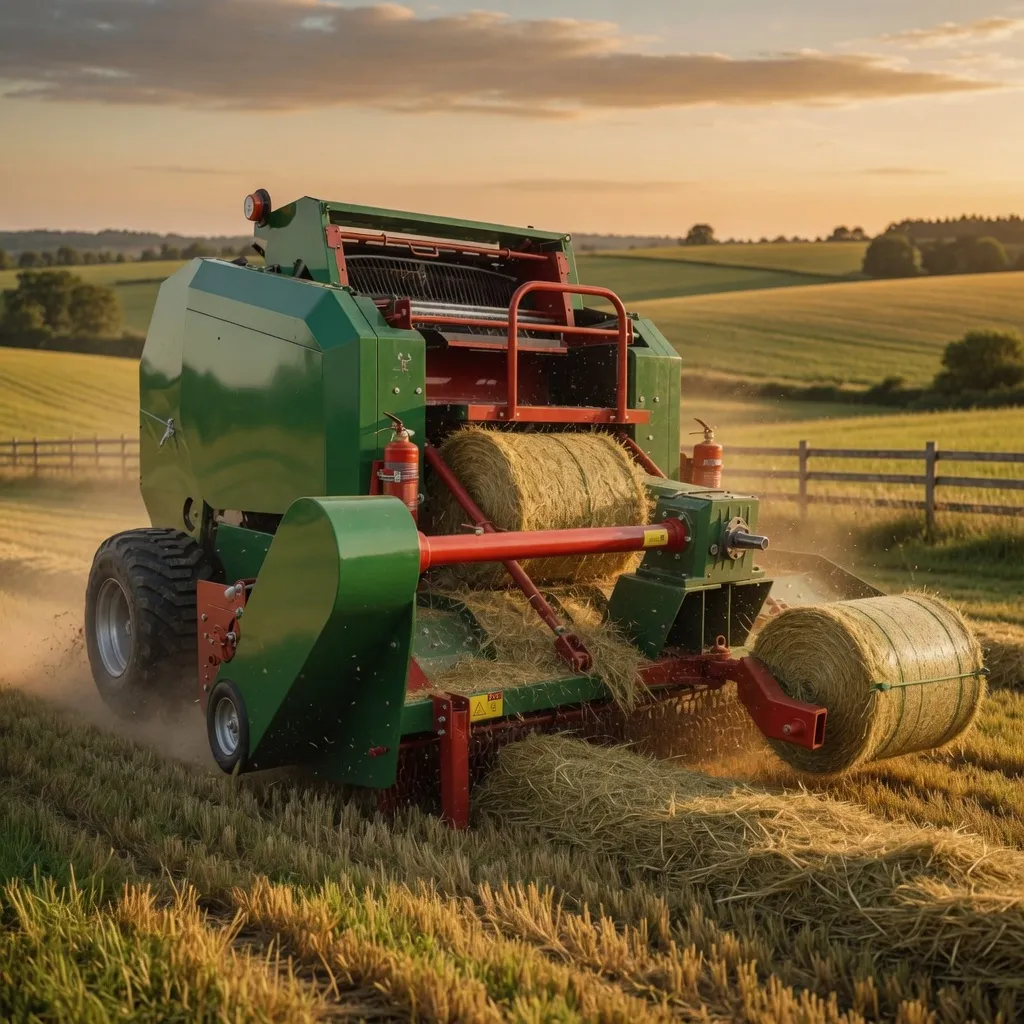
Dairy goats in housing systems (the standard management in NSW and Victorian dairy goat operations) eat from feed troughs or TMR bunks at head-height access. Unlike cattle that push their heads into a bale laid on the ground, goats require silage to be distributed in a trough format — which means the silage must be loaded mechanically from the opened bale into a trough or TMR mixer rather than allowing self-feeding from the whole bale. This extra handling step increases the aerobic exposure time between bale opening and consumption, and introduces the risk of trough-edge wastage from goats nosing material out of the trough (a characteristic feeding behaviour that is more pronounced in goats than cattle).
The management responses: open one 1.0 m bale (90 to 120 kg DM) per 80 to 100 does per day and feed it all within that day’s feeding cycle; do not leave loaded trough material overnight; and use covered, deep troughs (minimum 30 cm depth at the lip) that limit nose-out wastage. Operations that have moved to TMR mixing — combining silage, grain, and mineral premix before feeding — report 15 to 25% reductions in silage wastage per doe per day compared to separate roughage-and-concentrate feeding, because the mixing process distributes silage into a more homogeneous mass that goats are less able to selectively sort through.
The Right Bale Size for a Goat Dairy
A 1.25 m round bale of lucerne silage at 50% DM contains 200 to 260 kg DM — a 2 to 3 day supply for 80 does at 1.0 kg DM silage per head per day. The 1.0 m round bale at the same moisture contains 90 to 120 kg DM — approximately a 1-day supply for the same mob, which fits perfectly with the daily bale-opening management rhythm that minimises aerobic exposure. For goat dairies managing 80 to 200 does, the 1.0 m bale is the more practical silage format. The 9YG-1.0 round baler is the appropriate specification — compact enough for the small paddock sizes typical of NSW and Victorian specialty goat operations, and producing the 1.0 m bale format that suits daily feed-out management.
Equipment Scale for a 100 to 300 Doe Goat Dairy
Why the 1.0 m Baler Suits Goat Dairies Better Than the 1.25 m
Goat dairies in NSW’s Hunter Valley and Southern Highlands typically run 80 to 250 does on 20 to 60 hectares of mixed irrigated and dryland paddocks. Annual silage requirement at 1.0 kg DM silage per doe per day across a 180-day feeding period: 200 does × 1.0 × 180 = 36,000 kg DM, or approximately 360 to 450 bales at 1.0 m format (90 to 100 kg DM per bale). This volume — 400 to 450 bales per season — is well within the single-season capacity of a 1.0 m baler operated by one person.
The smaller bale format also suits the handling equipment available on specialty goat operations: a compact telehandler or tractor-front loader rated at 400 to 500 kg can handle 1.0 m bales safely, whereas 1.25 m silage bales at 450 to 600 kg fresh weight push the capacity of smaller telehandlers common on boutique farm operations. For goat dairies that already own smaller handling equipment sized for their property, matching bale weight to handler capacity is a practical consideration that the 1.0 m format resolves.
Common Silage Mistakes on Goat Dairy Farms
Unlike cattle, dairy goats do not meaningfully adapt to butyric or high-ammonia silage — they reduce intake dramatically and maintain the reduction. A does’ milk yield responds within 24 to 48 hours to a feed quality change. Feeding a poor batch of silage to 200 does for 10 days costs the equivalent of 200 × 0.5 litres × 10 days × $0.80/litre = $800 in lost milk income per poor-quality batch, before accounting for body condition losses.
Lucerne yield per cut increases by 15 to 25% between early bud and full flower. For cattle silage operations this trade-off (more tonnage at lower quality) is sometimes acceptable. For goat dairy, it is not — the 4 to 6 percentage point protein drop from early bud to full flower directly reduces doe milk protein output and increases the concentrate supplement required to compensate, typically costing more in supplementary feed than the yield gain from delaying the cut.
Silage quality testing costs AUD $35 to $60 per sample for a standard NIR analysis (pH, DM, CP, ME, ammonia-N). For a 200-doe goat dairy, this represents less than 30 cents per doe per season — the cheapest nutrition management decision available. Test one representative bale from each cut event before that cut enters the feeding programme, and use results to sequence feeding (best quality to peak-production does, lower quality to dry does).
At 20°C ambient, aerobic deterioration of an opened lucerne silage bale begins within 6 to 8 hours of exposure. Material left in troughs overnight from a morning opening reaches visible heating by the following morning in Australian summer conditions. Goats offered warmed, deteriorating silage at the next feeding will reduce intake sharply. Load troughs only with what can be consumed in 4 to 6 hours, and remove any unconsumed silage before the next feed cycle.
Frequently Asked Questions
Discuss Your Goat Dairy Silage Programme
Tell us your doe numbers, available forage area, and current feed management — we’ll spec the right baler and wrapper for your goat dairy operation.