
What Particle Size Actually Means in a Livestock Ration
Particle size in forage and feed is measured in millimetres and describes the length or diameter of the individual pieces of material that make up a ration. In a total mixed ration, particle size determines three things: how well the components stay mixed after blending, how animals consume the ration, and how the feed behaves in the digestive system. These three factors are directly connected to production outcomes — milk yield, average daily gain, feed conversion efficiency, and the incidence of metabolic disorders such as acidosis and sub-acute ruminal acidosis. Consistent particle size, produced by a well-maintained forage grinder running the correct screen, is not a secondary quality metric. It is the foundation on which every other nutritional decision in the ration rests, because a ration formulated on paper with precise energy, protein, and fibre values delivers those values to the animal only if the physical form allows the animal to consume the ration as formulated.
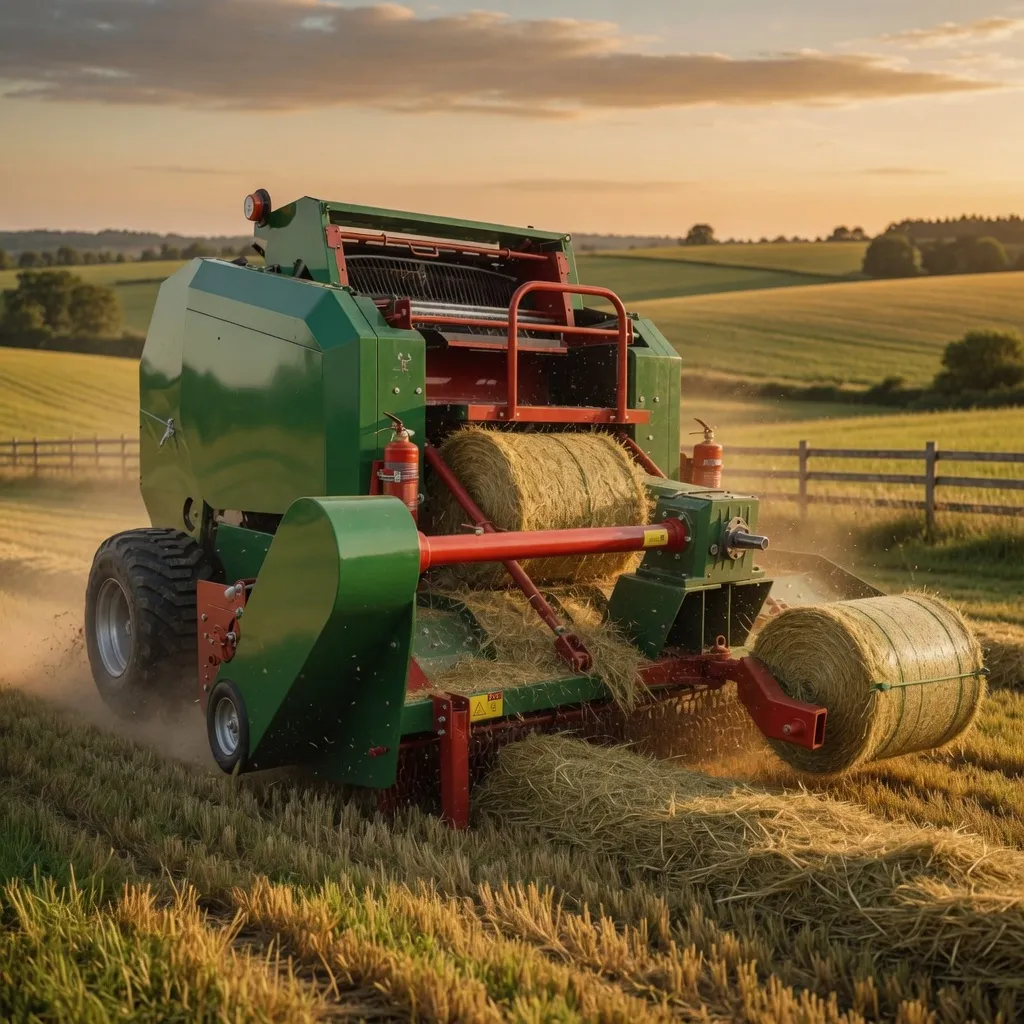
Consistent forage quality starts at baling — well-formed bales with uniform moisture dry evenly and grind to a more predictable particle distribution than poorly made or uneven bales.
How Particle Size Affects Feed Mixing and Sorting
A total mixed ration is a blend of roughage, grain, protein supplements, and minerals formulated to deliver a specific nutrient profile in every mouthful. The key word is every mouthful: a TMR only achieves its formulated outcome if the animal consumes the full blend in the proportions mixed. If any component can be physically selected and preferentially consumed, or conversely avoided, the animal’s actual intake diverges from the formulated intake and production responses become unpredictable.
Sorting behaviour in ruminants is driven by particle size difference. Cattle have prehensile tongues that are highly efficient at selecting long particles (above 20–25 mm) from a mixed ration and swallowing them without consuming the finer grain and supplement fraction mixed around them. Simultaneously, they can sort and refuse short particles below 5 mm if those particles are coated in something unpalatable. In both cases, the driver is particle size contrast: when all particles in the ration fall within a narrow size band (6–18 mm is a common target for beef TMR), sorting is mechanically difficult and animals consume a more uniform blend at each bite.
A forage grinder running a worn hammer set or a damaged screen produces a wider particle size distribution — more fines below 5 mm and more coarse outliers above 25 mm than the same machine with sharp hammers and an intact screen. This wider distribution directly increases sorting behaviour and degrades the effectiveness of the ration formulation. A nutritionist who formulates a ration assuming 8 mm average particle size is undermined if the grinder delivers a mix of 3 mm and 30 mm particles.
Particle Size and Rumen Function in Cattle
The rumen is a fermentation chamber that relies on a mat of long-fibre particles floating at the top of the rumen fluid to stimulate the chewing activity known as rumination. Rumination — the process of regurgitating a bolus of partially fermented material and re-chewing it — is essential for two reasons: it further reduces particle size to improve fermentation surface area, and it stimulates saliva production. Cattle produce 100–200 litres of saliva per day during active rumination, and this saliva has a pH of approximately 8.2 — it acts as a powerful natural buffer against the acid produced during rapid fermentation of starch and soluble sugars.
When forage is ground too fine — below 4–5 mm — the rumen mat does not form effectively because there are not enough long particles to create the buoyant fibre layer. Rumination time drops, saliva production falls, rumen pH declines, and the risk of sub-acute ruminal acidosis (SARA) increases. SARA suppresses feed intake, reduces milk fat percentage in dairy cows, and causes lameness through laminitis in both dairy and beef cattle. The economic cost is severe: a dairy herd with SARA affecting 20–30% of cows (which is common in high-grain systems without adequate long-fibre) loses 3–7% of potential milk yield and incurs elevated veterinary and reproductive costs.
Conversely, forage ground too coarsely (above 20–25 mm) reduces fermentation surface area, passes through the rumen before complete digestion, and reduces the energy value extracted from the fibre fraction. The optimal particle size for most beef TMR roughage components is 8–15 mm; for dairy TMR, 6–12 mm is the common target. A 6 mm or 8 mm screen in the 9F-70 consistently delivers material within these ranges from dry hay, straw, and crop residues.
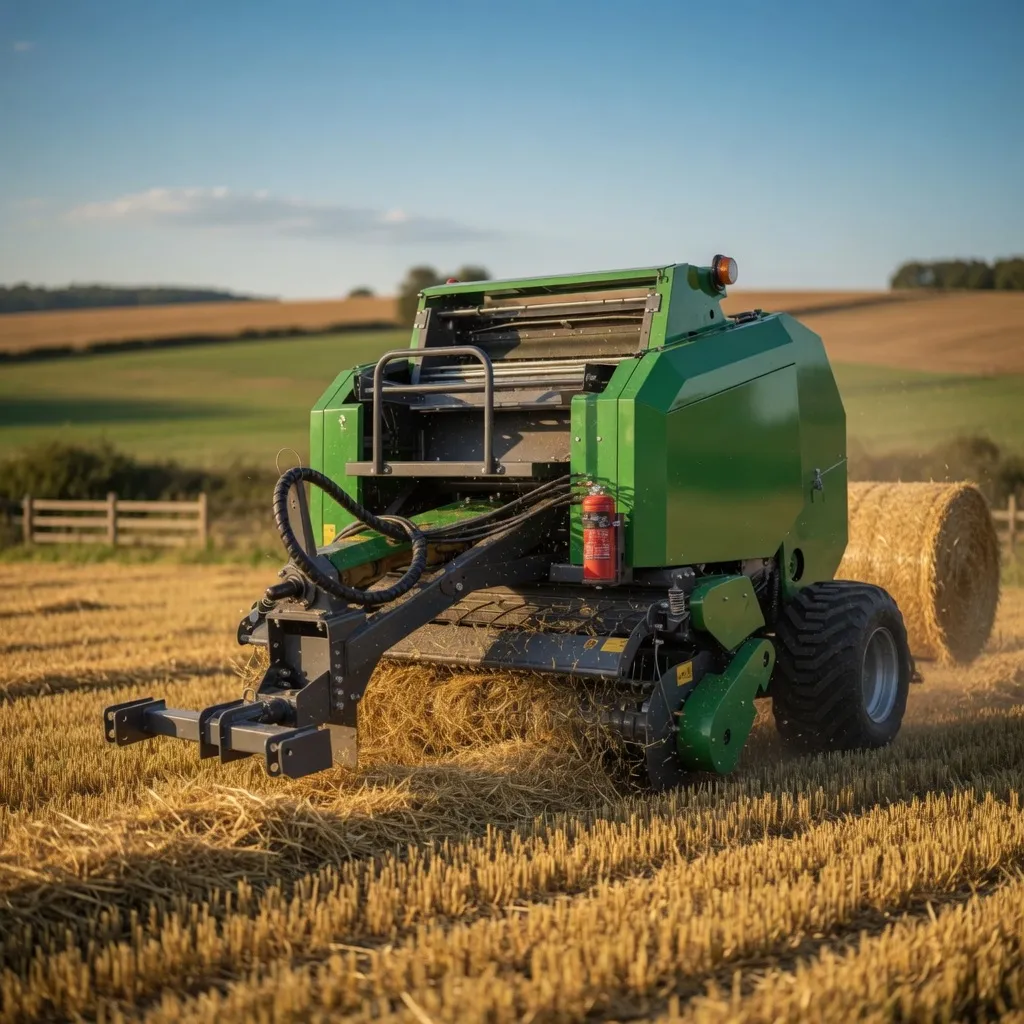
Consistent bale density and dry matter content means each bale fed into the grinder produces a predictable particle size output — reducing variation in TMR quality from batch to batch.
Particle Size Targets by Animal Class and Ration Type
How Inconsistent Particle Size Damages Production Economics
The financial impact of inconsistent particle size runs through four channels, each of which independently reduces profitability on a livestock operation.
Feed wastage
Very fine particles (dust fraction below 2 mm) are avoided by cattle and accumulate at the bottom of the feedbunk. Studies in Australian feedlots have measured dust fractions of 8–15% of ration dry matter in operations using poorly maintained grinders — this fraction represents paid-for feed that generates zero animal production.
Reduced feed conversion efficiency
When coarse particles pass through the rumen before adequate fermentation, the energy extracted from the fibre fraction falls by 10–20%. For an operation spending AUD $400/tonne on mixed ration ingredients, a 10% fermentation efficiency loss is equivalent to $40/tonne of ration — a directly avoidable cost.
Health costs from SARA
Sub-acute ruminal acidosis from over-fine grinding elevates veterinary costs, reduces reproductive performance, and in severe cases contributes to early culling. Each clinical laminitis case in a dairy cow carries a cost of AUD $300–$800 in treatment, reduced yield, and risk of permanent lameness.
Ration reformulation cost
When particle size is inconsistent, a nutritionist cannot accurately formulate the ration because the physical form of the feed changes from batch to batch. Operations that struggle to hit production targets often commission additional nutritionist consultations and reformulation work to compensate for a machine-maintenance problem that would cost far less to fix at the grinder.
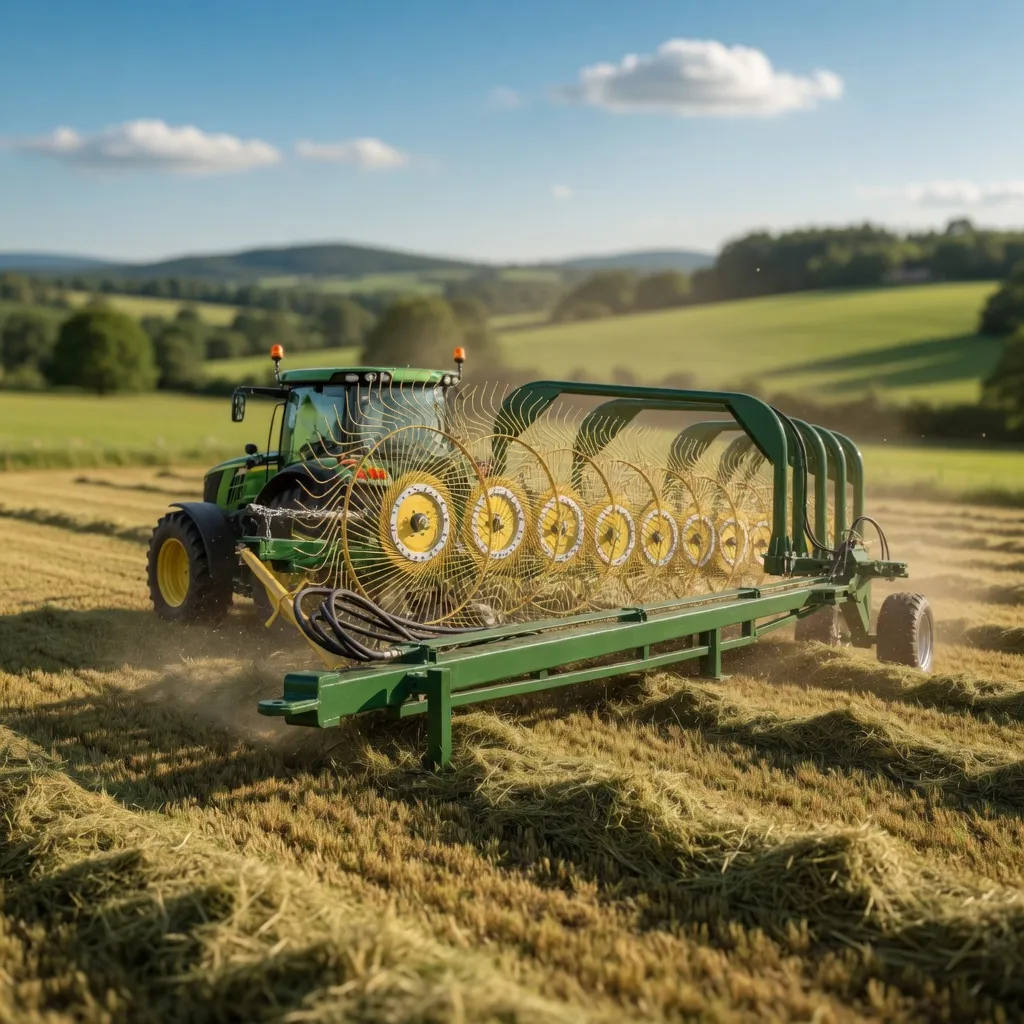
Uniform windrow formation produces even-drying bales — and even-drying bales produce consistent moisture content in the grinder, which directly affects particle size uniformity in the output.
How to Maintain Consistent Particle Size from the 9F-70
Achieving consistent particle size from a hammer-mill forage grinder is primarily a maintenance discipline, not a setup-and-forget outcome. Four practices keep the 9F-70 producing within target specifications throughout its operating life.
Monitor hammer condition on a hectare or hour basis, not on visual inspection alone. Worn hammers do not look dramatically different from sharp ones until wear is severe. Track operating hours since the last hammer flip or replacement and schedule based on hours rather than appearance. For dry hay in clean conditions, flip hammers at 100 hours and replace at 200 hours. For abrasive straw or contaminated material, shorten these intervals by 30–40%.
Inspect screens for distortion after any suspected stone or metal strike. A screen that has been deformed by a foreign object has irregular hole sizes that allow oversized particles through. Hold the screen flat and check for bulges or cracked holes around the perimeter of the damaged zone. A single damaged screen run for a full day’s grinding can contaminate thousands of kilograms of ration with oversized particles.
Feed material at a consistent, controlled rate. Overfeeding the chamber increases the proportion of particles that exit through the screen before reaching target size — the chamber pressure forces partly-reduced material through the screen holes at angles, allowing particles slightly larger than the hole diameter to pass. An optional feed-rate controller on the conveyor infeed eliminates this variable.
Grind at consistent moisture. Hay above 18% moisture grinds to a coarser, more variable particle size than dry hay through the same screen. If bale moisture varies significantly between batches, adjust screen size or accept that particle size output will vary, and account for this in ration formulation.
Recommended Product: 9F-70 Animal Feed Grass Grinder
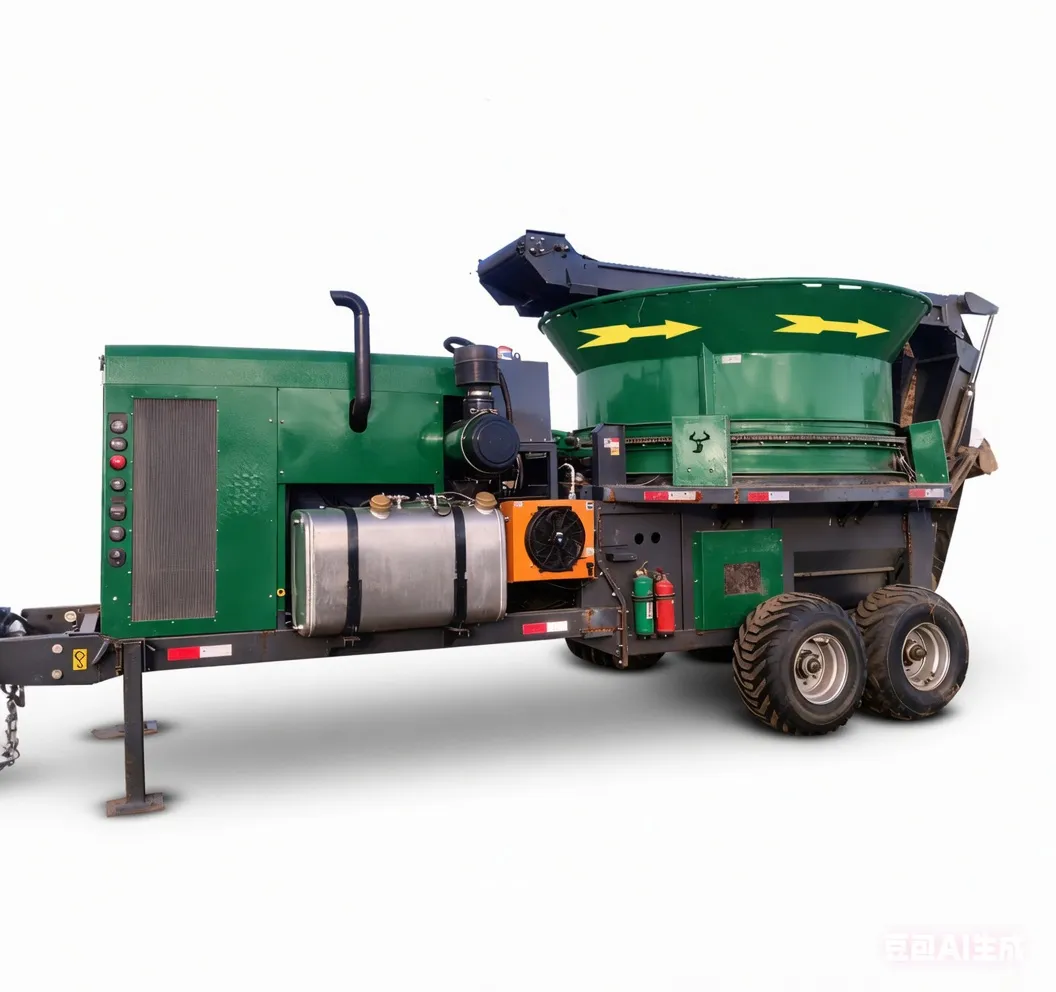
Consistent 4–15 mm particle size from dry hay, straw, and crop residues for TMR, dairy, and feedlot rations. CNC-punched screens in 4 mm, 6 mm, 8 mm, and 10 mm sizes allow precise particle size selection for every animal class. Through-hardened reversible hammers maintain tight particle size distribution over extended service life. Screens and hammer sets stocked at EverPower’s Condell Park NSW warehouse with Australia-wide dispatch.
Frequently Asked Questions
Tighten Your Particle Size. Tighten Your Feed Costs.
EverPower can advise on screen selection, hammer maintenance schedules, and 9F-70 configuration for your specific ration and herd size.
EverPower Baling Machinery Australia Pty Ltd | 27 Harley Crescent, Condell Park NSW 2200
📞 +61 2 9708 3322 | ✉️ [email protected]