
One Baler, Three Jobs: Why a Mixed Farm in the Riverina Can’t Use the Same Machine as a Hay Contractor
The specific demands of a cropping-and-livestock mixed operation — silage, hay, and straw in the same season from the same machine — and how to choose a round baler that handles all three without compromise.
The Mixed Farm Baling Problem Nobody Talks About
The Riverina region of southern New South Wales — the irrigated flats and dryland cropping belt from Wagga Wagga west to Griffith and south to Albury — runs some of Australia’s most complex farm enterprises. A single Riverina mixed farm might grow wheat, canola, and oats for grain; run a self-replacing Merino flock of 1,200 to 3,000 head; keep a small beef herd for backgrounding; and irrigate lucerne under pivots for dairy silage supply or export hay. These operations don’t want a baler — they want three balers in one.
The problem is that the round baler market divides into two clear product philosophies: contractors’ high-throughput machines designed for one crop at high volume and speed, and hobby-farm light-duty machines designed for very small operations with minimal capital. The mixed farm sits uncomfortably between these two poles. It needs a machine durable enough to handle 800 to 1,500 bales per season across three or four different crops; flexible enough to switch from 35% DM lucerne silage in October to 15% moisture oaten hay in November and then to 14% wheat straw in December; and compact enough for the smaller paddocks and tighter gateways that mixed cropping country involves.
This article maps exactly what those three baling jobs require from a machine — and where the key specification differences lie between silage, hay, and straw. If you’re currently running different contractors for different crops because you’ve assumed one machine can’t handle all three, this article challenges that assumption directly. For a practical guide to the oaten hay and straw baling tasks specifically, our article on baling oaten hay and straw on a mixed farm without a contractor covers the technique in detail — this article focuses on the machine selection decision that precedes the technique.
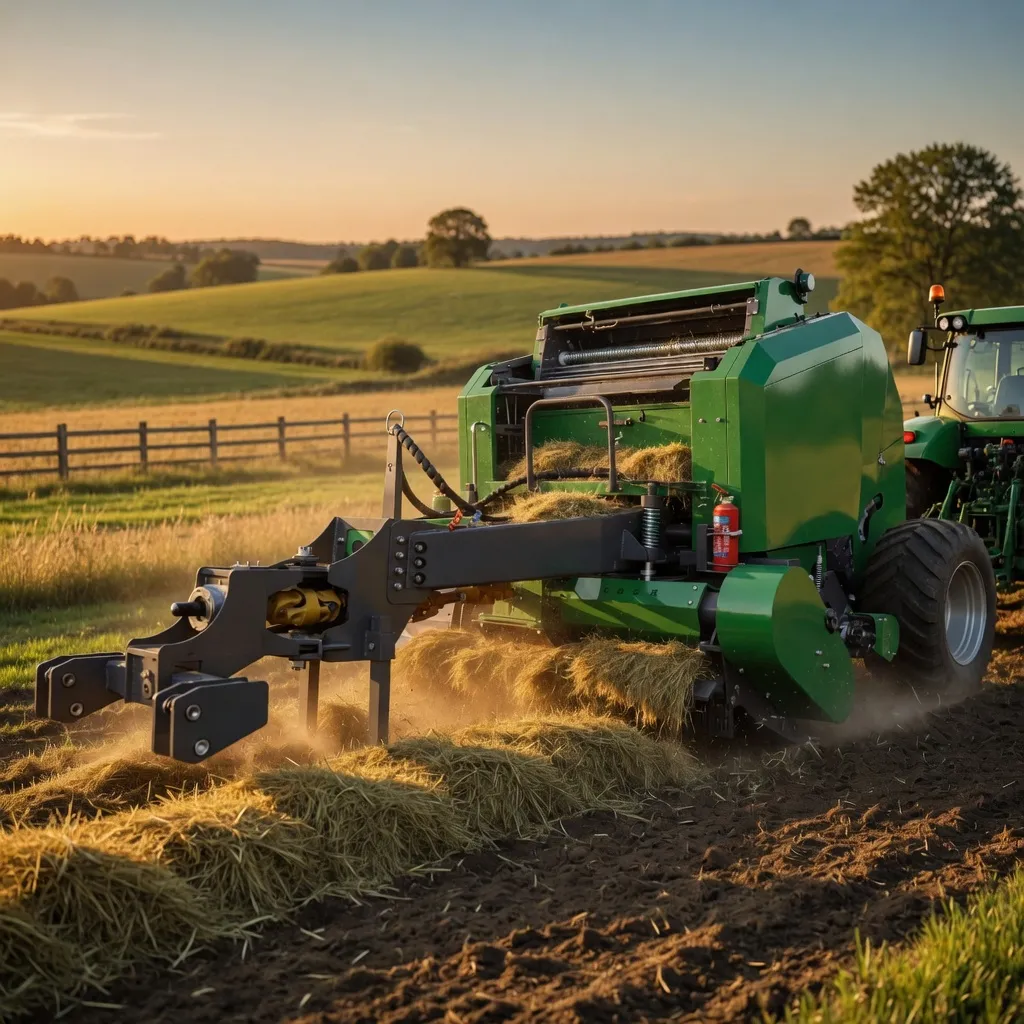
Three Distinct Jobs: What Each Demands From the Machine
Job 1 — Lucerne or Ryegrass Silage (October to December)
Silage baling on a Riverina mixed farm is the most technically demanding of the three jobs. The crop enters the baler at 60 to 70% moisture (30 to 40% DM), making it the heaviest material by volume that the machine handles. Correct silage baling requires: consistent chamber pressure to achieve 180 to 220 kg DM per cubic metre density (adequate for complete anaerobic conditions), a reliable net wrap application that seals the bale completely with no tail-end gaps, and a throughput rate compatible with the farm’s available baling windows between the afternoon mow and the afternoon wrap.
The chamber pressure issue is the critical one: a fixed-chamber baler set for standard hay density will under-compress silage bales, leaving air channels through the bale cross-section that prevent fermentation from completing in the core. Variable-chamber balers self-regulate to target density regardless of windrow weight variation — a significant operational advantage across the variable first and second cut lucerne windrows typical of Riverina irrigated production.
Job 2 — Oaten or Wheaten Hay (November to January)
Hay baling is the lightest-density job the machine handles — oaten hay at 14 to 17% moisture is approximately 30 to 40% of the volumetric density of silage at equivalent moisture, and the baler chamber load is correspondingly lower. The machine settings that produce a tight, well-formed 400 kg silage bale will produce a loose, under-compressed 180 to 220 kg hay bale — commercially unacceptable for sale and poorly preserved in outdoor storage. Variable chamber pressure that adjusts downward for hay is essential for mixed-crop operations.
The hay baling job also requires a different tine height setting than silage — hay picked up from a ground-lying windrow typically needs tines 3 to 5 cm above ground to avoid soil contamination, while silage baling from a fluffier wilted windrow needs 5 to 8 cm clearance. The few minutes it takes to adjust pickup height between crop types is worth the effort: soil contamination in a hay bale is a quality defect that reduces palatability and introduces grit that accelerates bale-end wear on feed troughs.
Job 3 — Wheat or Barley Straw (December to February)
Straw baling is the easiest job technically but presents unique wear considerations. Wheat straw contains silica phytoliths — microscopic silicon particles in the stem surface — that are more abrasive than grass or hay material. Operations baling significant volumes of cereal straw should expect pickup tine wear at 1.5 to 2 times the rate encountered in grass silage or hay. Budget for tine replacement at 600 to 800 bales of straw rather than the 1,000 to 1,400 bale interval typical for silage crops. Keep a tine replacement kit in the tractor toolbox and check tine condition every 150 to 200 bales during straw operations.
| Baling Job | Typical Moisture | DM at Baling | Chamber Pressure | Target Density | Key Risk |
|---|---|---|---|---|---|
| Lucerne/ryegrass silage | 60–70% | 30–40% DM | High | 180–220 kg DM/m³ | Under-compression → air pockets |
| Oaten/wheaten hay | 13–17% | 83–87% DM | Medium | 130–160 kg DM/m³ | Over-compression → moisture trap |
| Wheat/barley straw | 11–15% | 85–89% DM | Medium-High | 120–150 kg DM/m³ | Tine wear, dust contamination |
Fixed Chamber vs. Variable Chamber: The Decision That Matters Most
Why Mixed Operations Need Variable Chamber
A fixed-chamber round baler forms bales of a single fixed diameter regardless of incoming crop weight. The bale density adjusts by varying the net wrap tension and bale ejection timing, but the chamber itself cannot respond to the 3:1 difference in volumetric density between fresh silage and dry straw. In practice, a fixed-chamber machine set for silage density will either over-compress hay into bales that trap internal moisture and cause heating, or under-compress it into bales that are undersized and loose when the operator sets pressure correctly for hay.
Variable-chamber balers use a system of adjustable rollers or belts that expand to accommodate different crop volumes while maintaining a set pressure target. The same machine forms a 1.25 m silage bale at 520 kg and a 1.25 m hay bale at 260 kg — both at the correct density for their respective preservation requirements — without manual adjustment between crops. For a Riverina mixed operation that may transition between hay and silage in the same week during the October to December overlap period, this seamless adjustment is not a convenience feature: it is the operational requirement that makes one-baler multi-crop management work.
The Right Baler for the Riverina Mixed Farm
The 9YG-1.25 variable-chamber round baler is specified for exactly the multi-crop mixed farm use case. Its 1.25 m bale diameter is the commercial standard for Riverina fodder markets — both hay buyers and silage contractors in the region use 1.25 m as the baseline bale format for truck loading, contract pricing, and storage calculation. Smaller-diameter machines (1.0 m) produce bales that are economical in film per bale but require more bales per tonne — increasing handling, transport, and storage footprint for the same feed volume. Larger machines (1.5 m+) are efficient for volume but can exceed loader lift ratings on the tractors that dominate mixed farm fleets in the Riverina.
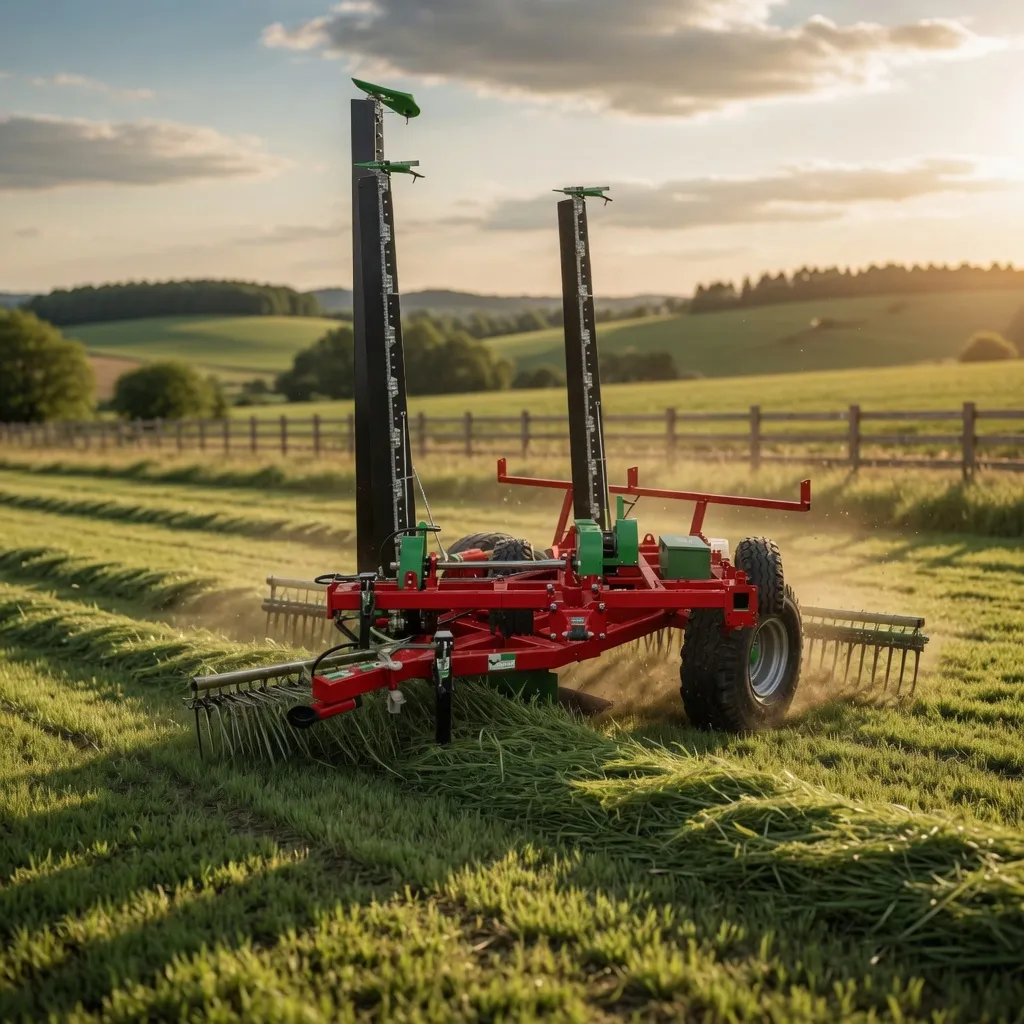
The Full Equipment Chain for a Riverina Mixed Operation
Mowing and Windrowing: One Set of Equipment, Three Crops
The same principles of equipment flexibility apply to the mowing and windrowing chain as to the baler. A disc mower-conditioner that handles lucerne and ryegrass for silage also handles oaten hay and wheat — the conditioning rollers simply need to be disengaged or set to minimum pressure for dry hay crops where conditioning is not needed and can cause excessive leaf shatter. Many Riverina mixed farmers run a separate disc mower for cereals (simpler, lower maintenance) and a mower-conditioner for legume and grass silage work, then merge both crop types with the same finger-wheel rake.
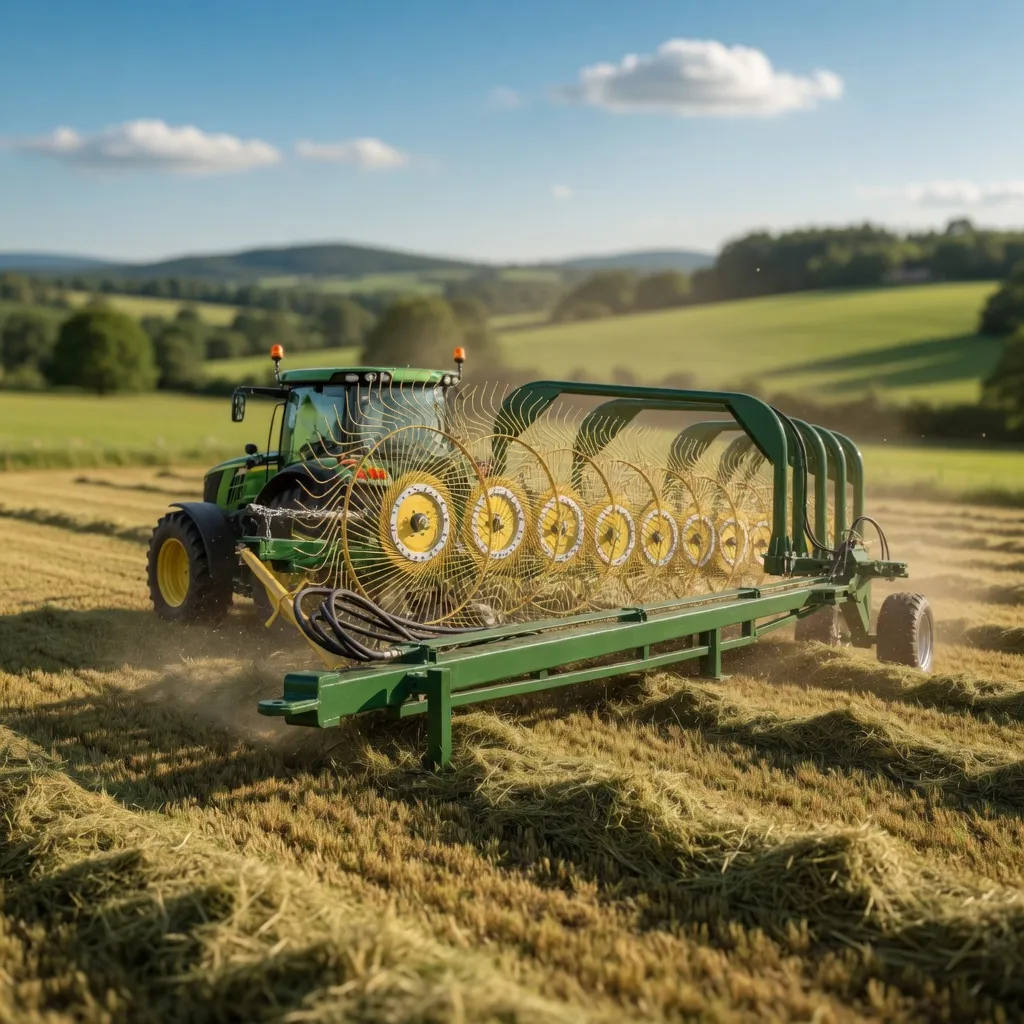
The rake is the single most versatile piece of equipment in the chain — a quality finger-wheel rake handles all three crop types without adjustment, merging the spread windrow into a consistent baling width whether it is a 35% DM lucerne mat or a 14% moisture oaten hay windrow. Picking the right forward speed for the rake is the main variable: fast (8 to 10 km/h) for lightweight straw, slow (5 to 7 km/h) for heavy green silage.
Film Wrapping on a Mixed Farm — What Changes Between Silage and Non-Silage Crops
Silage bales require film wrapping with silage stretch film applied within 2 hours of baling — 6 layers minimum, net wrap only (no twine), bales stored sealed until feeding. Hay and straw bales do not require film wrapping — they are finished with net wrap or twine only and stored uncovered or under open shed. This means the silage film wrapper is idle during the hay and straw baling periods, and the net wrap system handles all three crops.
For mixed operations making fewer than 300 silage bales per season, a film wrapper is often not worth owning — wrapping can be contracted out while the farm owns the baler for hay and straw year-round. For operations making 400+ silage bales, the wrapper earns its keep within 2 to 3 seasons. The 9YCM-850 wrapper — if owned — is compatible with 750 mm and 500 mm silage film rolls and handles the same 1.25 m bale format produced by the 9YG-1.25 baler.
Common Mistakes When Running One Baler Across Multiple Crop Types
The most common quality failure when transitioning between crops on a mixed farm. Silage chamber pressure settings applied to dry hay produce bales with internal moisture traps at the bale core — apparent externally as tight, dense bales but prone to internal heating from the moisture trapped in the compressed centre. Always reset chamber pressure when switching crop types and run 5 trial bales to confirm density before resuming full-speed operation.
Silage crop residue in the bale chamber — LAB inoculant, fermentation acids, high-moisture plant material — contaminates dry hay bales baled through a dirty chamber. The contamination introduces fermentation organisms into dry hay where they cause local heating and mould growth in the bale interior weeks after storage. Pressure wash the bale chamber, pickup, and net wrap mechanism between silage and hay operations at minimum.
Wrapping dry hay bales in silage film is not just unnecessary — it is counterproductive. Film-wrapped dry hay at 14 to 15% moisture develops condensation under the film in temperature-cycling conditions, raising local bale moisture and initiating mould growth that would not occur in the same hay bale stored without film. Net wrap hay, twine-tie straw, film-wrap silage — each to its appropriate binding.
Pickup tine wear from wheat straw is 1.5 to 2 times faster than from grass silage. Operators who service their baler on a grass-silage interval and use the same machine for 400 to 500 bales of straw find worn tines in the straw season that reduce pickup efficiency and cause windrow losses. Inspect tines at 150-bale intervals during straw operations and replace sets that have worn to 70% of original length.
Planning the Mixed Farm Baling Calendar
A typical Riverina mixed farm baling calendar for a 1,200-head Merino operation with 200 ha irrigated lucerne and 800 ha dryland wheat runs:
| Month | Crop | Baling Job | Est. Bales | Key Timing Driver |
|---|---|---|---|---|
| October | Lucerne (1st cut) | Silage — 6-layer wrap | 200–280 | Flag leaf to 10% heading |
| November | Oaten hay | Hay — net wrap | 180–240 | 12–16% moisture, 3 days post-mow |
| December | Lucerne (2nd cut) | Silage | 200–260 | Flag leaf — tighter window in heat |
| Jan–Feb | Wheat straw | Straw — twine or net | 250–400 | Dry, low dust, 5 days post-harvest |
| March | Lucerne (3rd cut) | Silage or hay (season) | 150–200 | Monitor DM carefully in autumn heat |
| Total | — | — | 980–1,380 bales | 3–4 month baling season |
At this volume and calendar spread, a single 9YG-1.25 variable-chamber round baler operating on a 75 to 90 hp tractor handles the full season without throughput bottlenecks — the 980 to 1,380 annual bale total is comfortably within the single-machine capacity at 40 to 60 bales per hour across all crop types. The constraint is typically operator availability and weather windows rather than machine throughput.
Frequently Asked Questions From Riverina Mixed Farm Operators
Discuss Your Mixed Farm Baling Requirements
Tell us your crop mix, annual bale volumes across hay, silage, and straw, and your tractor horsepower — we’ll specify the right baler configuration for your Riverina operation.