After the beans are harvested, what’s left is 10 to 16% crude protein roughage — and the right puller machine makes collecting it straightforward for Queensland and northern NSW grain legume producers.
Bean Vine Residue: The Legume Roughage Most Grain Farmers Leave Behind
Navy beans, kidney beans, and black-eyed peas (Phaseolus vulgaris and Vigna unguiculata) are grown on approximately 50,000 to 80,000 hectares of irrigated and dryland ground in Queensland’s Darling Downs and Lockyer Valley, and in northern NSW’s Liverpool Plains and Namoi Valley. After mechanical harvesting strips the pods from the plants, the above-ground vine material — stems, leaves, and empty pod husks — is left in the paddock in virtually all commercial operations. Like peanut vines, this material represents a high-protein legume residue that most producers currently incorporate or allow to decompose.
Bean vine dry matter typically carries 10 to 16% crude protein — higher than any cereal straw or average grass hay commercially available in these regions, and comparable to mid-grade lucerne hay at a fraction of the purchase cost. The nitrogen fixation from the legume root system adds a further agronomic benefit to any vine-residue management that leaves root biomass in place. For a beef backgrounding or sheep operation in southern Queensland, baling bean vines from 100 hectares of irrigated bean crop generates 250 to 400 bales of 11 to 15% CP roughage at a cost of AUD $60 to $100 per tonne DM — a significant feed cost saving against commercially purchased protein hay.
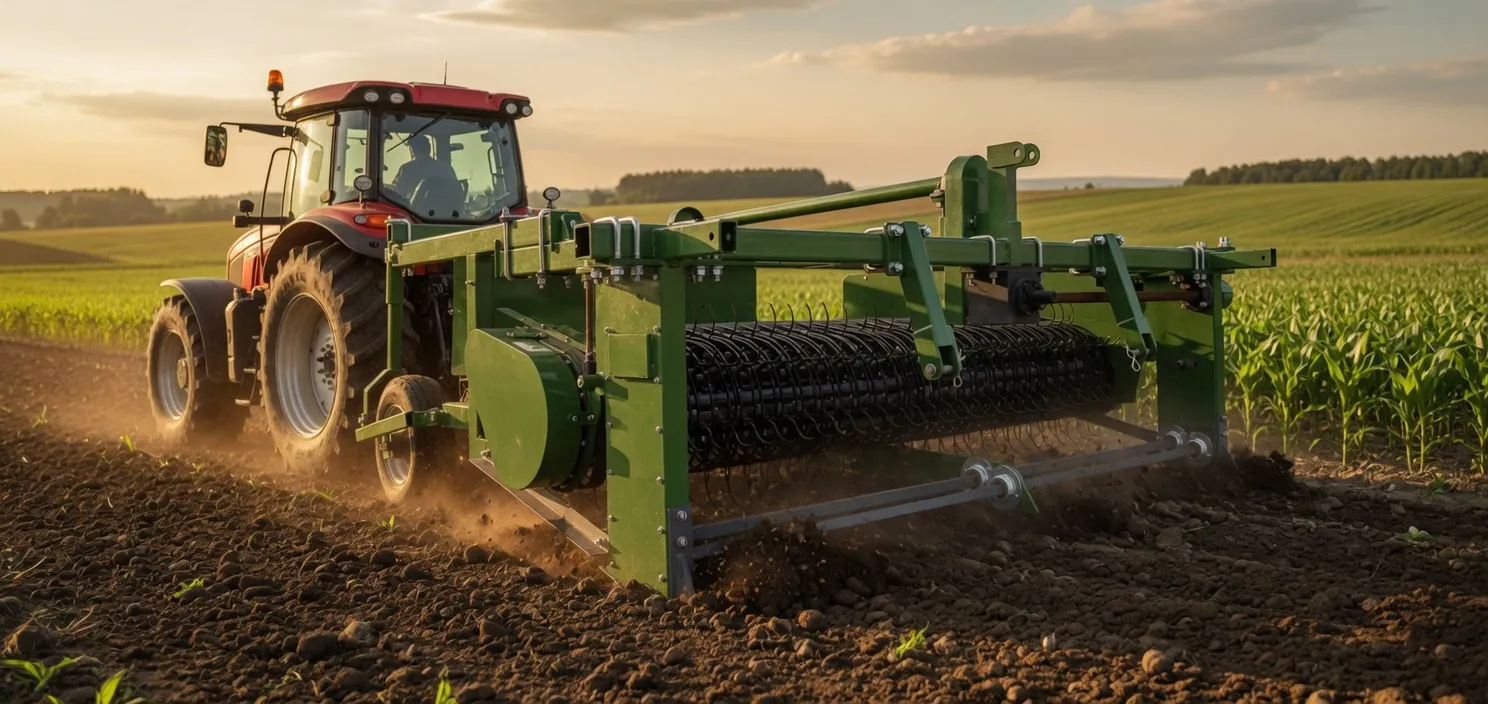
The enabling technology for bean vine baling is the kidney bean puller — a specialised machine that lifts the plant, separates the above-ground vine material from the soil, and deposits it in a windrow for raking and baling. Without a puller, attempting to bale bean vines directly from the paddock surface produces soil-contaminated, tangled material that clogs baler pickups. With a puller, the operation becomes straightforward: pull, rake, bale, wrap if needed. Our article on silage baling for beef cattle stations in drought covers the broader context of roughage production from crop residues for northern beef operations.
The Kidney Bean Puller Range: Which Machine for Which Operation
Understanding the Puller Mechanism
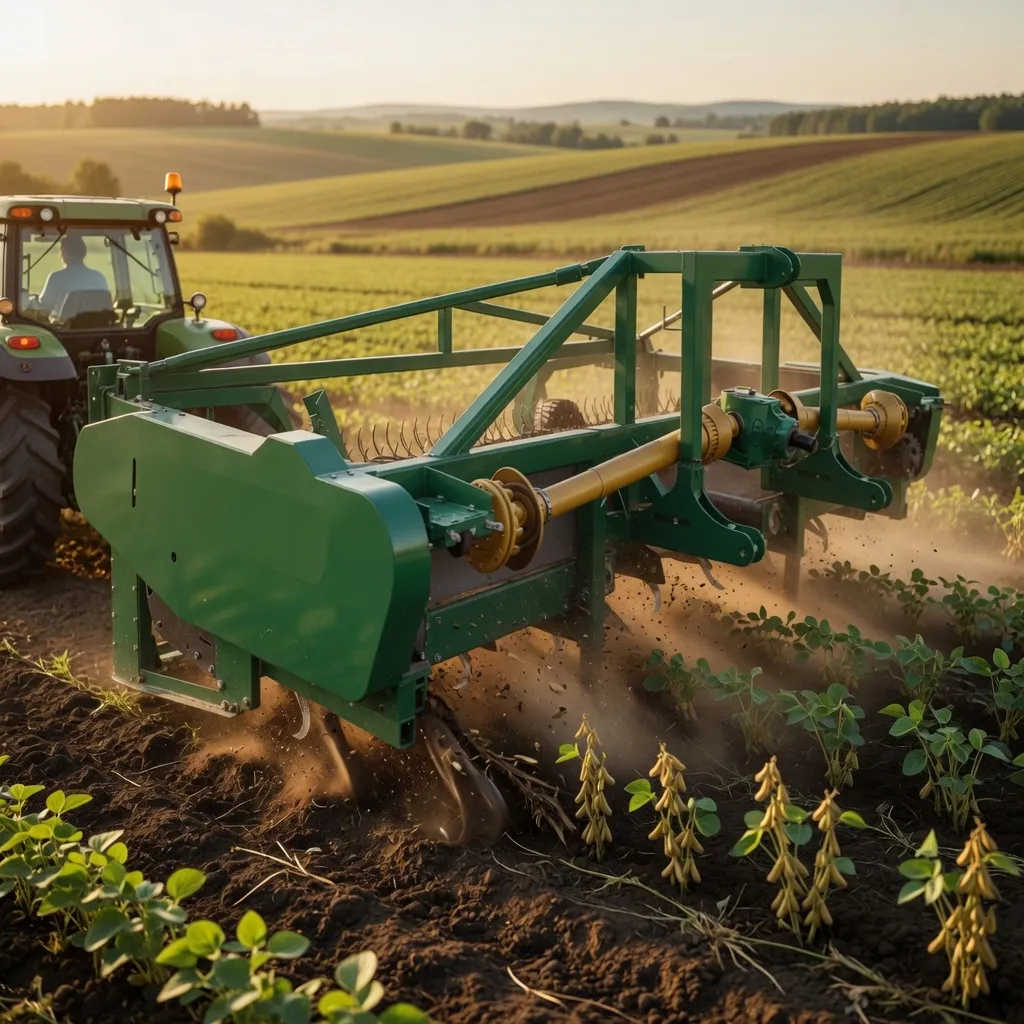
A kidney bean puller operates on a different mechanical principle to a combine harvester or peanut harvester. The machine runs parallel finger conveyor belts or gripping rollers at low height, gripping the bean plant at the stem base and pulling it upward and rearward through the machine. The root system is torn from the soil (leaving root biomass in place for decomposition and nitrogen release), and the above-ground vine — stems, leaves, and empty or partially filled pods — is deposited in a side windrow behind the machine. The vine material emerges from the puller with minimal soil contamination, in a consolidated windrow ready for raking and baling without further handling.
| Model | Row Coverage | PTO HP | Best For | Key Specification |
|---|---|---|---|---|
| 4BYH-1.3 | 1–2 rows | 25–35 hp | Small plots, market garden scale | Compact — tight paddock access |
| 4BYH-2.6 | 2–3 rows | 35–50 hp | Small-mid commercial bean producers | Most versatile — 50–200 ha/season |
| 4BYH-3.25 (4-ridge) | 4 rows | 50–70 hp | Mid-scale irrigated bean operations | Higher throughput — 200–500 ha/season |
| 4BYH-3.25 (5-ridge) | 5 rows | 55–75 hp | Large irrigated operations | Widest coverage in 3.25 m format |
| 4BYHD/S-3.9 (6-ridge) | 6 rows | 65–85 hp | Commercial-scale operations | Highest throughput — 500+ ha/season |
Choosing the Right Puller for Your Bean Area
The primary selection criterion is the scale of the bean operation in hectares per season — which determines throughput requirement and therefore machine width. A 50 hectare irrigated bean block in the Lockyer Valley (Darling Downs district) harvested over a 3 to 4 week window is well-served by the 4BYH-2.6 model — its 35 to 50 hp power requirement fits the mid-range tractor fleet common on irrigated vegetable and bean properties, and its throughput rate handles 50 to 80 hectares within the harvest window. A 300 hectare large-scale bean operation needs the 4BYHD/S-3.9 6-ridge puller to complete the operation within the same timeframe.
_0141_01-1.webp)
The Baling Workflow After Pulling
From Puller Windrow to Baled Product
The bean puller deposits vines in a side windrow at a width of 0.8 to 1.2 m — narrower than the working width, concentrated by the machine’s delivery mechanism. This windrow is suitable for direct raking and baling in most conditions without an intermediate drying period — bean vine material at the time of pulling typically carries 30 to 50% moisture, which falls to 18 to 25% within 24 to 48 hours of lying in the windrow under Queensland’s harvest season conditions (March to June).
The baling window for bean vines mirrors the peanut vine protocol: bale within 48 to 72 hours of pulling to capture maximum protein value before proteolysis reduces the crude protein from 12 to 16% toward 8 to 10%. Use a finger-wheel rake to merge adjacent puller windrows to baling width — do not use a rotary rake on bean vine material, which shatters the dry leaves and leaf petioles that carry the highest protein fraction.
For baling, the 9YG-1.25A variable-chamber round baler handles bean vine material effectively — the variable chamber compensates for the low-density, tangled vine windrow and produces consistent bale weights from material that would frustrate a fixed-chamber machine. Use net wrap rather than twine for all bean vine bales; the springy vine material does not hold bale shape under twine tension alone.
Silage or Dry Hay?
Baling bean vines as dry hay (allowing field drying to below 20% moisture) is appropriate where harvest conditions are dry and reliable — northern NSW in April and southern Queensland in May are generally suitable. Wrapping as baleage (baling at 40 to 55% moisture, film wrapping) is appropriate where the vine quality is high and the moisture window is uncertain. Baleage preserves slightly more of the crude protein fraction through the anaerobic fermentation process and eliminates the proteolysis race of extended field drying. Apply LAB inoculant at the baler pickup for all baleage-format bean vine production — the moderate WSC content of bean vines and the legume buffering capacity make inoculant use important for consistent fermentation quality.
Nutritional Value and Feeding Applications
| Vine Condition | Crude Protein (DM) | ME (MJ/kg DM) | NDF | Best Livestock Application |
|---|---|---|---|---|
| Promptly pulled and baled (<48h) | 12–16% | 8.5–9.5 | 55–65% | Beef growing, sheep supplement |
| Delayed baling (72–96h) | 9–12% | 8.0–9.0 | 58–68% | Beef maintenance, dry sheep |
| Baleage format | 13–17% | 9.0–10.0 | 52–62% | Dairy supplement, growing cattle |
| Over-dried or weathered | 6–9% | 7.5–8.5 | 65–75% | Low-grade roughage — backup only |
Bean vine roughage at 12 to 16% CP occupies the same nutritional space as peanut vine hay — above standard grass hay and below purchased protein supplements, making it a cost-effective partial protein supplement for beef growing and sheep breeding operations. Include at 20 to 35% of total DMI alongside energy supplement (grain or sorghum silage) for a cost-effective growing ration in southern Queensland and northern NSW beef operations where purchased hay prices run AUD $180 to $280 per tonne DM and bean vine hay can be produced at AUD $60 to $100 per tonne DM.
Common Mistakes in Bean Vine Baling
Bean vine material left flat on the soil surface after harvester operation — without a dedicated puller — is soil-contaminated, tangled, and lying at random orientation across the paddock. Attempting to bale this material with a round baler produces soil-contaminated bales with 5 to 12% ash content (versus 3 to 5% for cleanly pulled and baled vines), baler pickup jams from the tangled growth habit, and highly variable bale weight. A bean puller is not optional — it is the first step in the production chain.
Bean vine proteolysis under warm Queensland conditions (25 to 35°C) reduces crude protein from 14% to below 9% in 96 hours of field exposure. The baling window is narrow — treat it as urgently as peanut vine. Equip the baling operation with a portable moisture meter, confirm moisture before baling, and complete the operation within 72 hours of pulling for premium protein-value product.
Bean vine material at any useful moisture (15 to 25%) is too springy to hold bale shape under twine tension. Bales tied with twine open and flatten within 1 to 2 weeks, making stacking and transport impractical. Net wrap is the correct binding for all bean vine hay; film wrap for baleage format. Budget net wrap into the production cost from the start.
Frequently Asked Questions
Discuss Your Bean Vine Collection and Baling Setup
Tell us your bean crop area, harvest timing, and target market — we’ll specify the right puller model and baler configuration for your legume vine roughage programme.