
Two Names for Bale Wrapping — and the Differences That Actually Matter
Australian farmers and rural suppliers use several terms for film-wrapping machines — bundling wrapper, bale wrapper, silage wrapper, round bale wrapper — sometimes interchangeably and sometimes to describe genuinely different machine configurations. The confusion is understandable because most of these machines perform the same basic function: applying pre-stretched polyethylene film to a round bale in overlapping layers to create an oxygen-excluding barrier. The differences between machine types are real, however, and affect purchase suitability for specific operations. The 9YCM-850 is a tractor-mounted table-type bundling wrapper — a specific configuration that has practical advantages over trailing satellite wrappers, inline combo baler-wrappers, and standalone stationary wrappers in certain operating contexts. This comparison explains the key differences between the main wrapper types available in Australia, and clarifies where the 9YCM-850’s configuration excels and where alternative configurations are better suited.
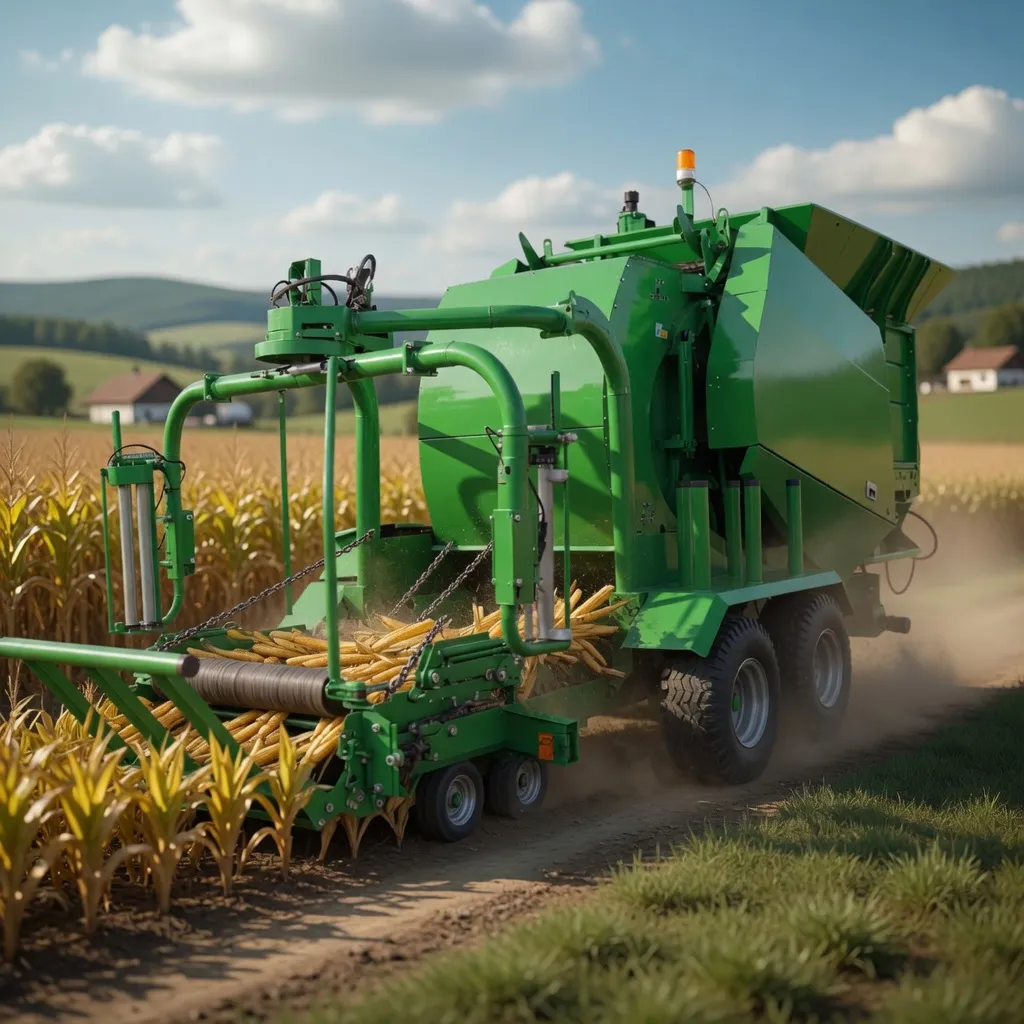
The 9YCM-850 is a tractor-mounted table-type wrapper — a versatile configuration that suits the majority of Australian farm-scale silage and hay-preservation operations.
Type 1: Table-Type Tractor-Mounted Wrapper (9YCM-850)
The table-type wrapper — exemplified by the 9YCM-850 — mounts on the tractor’s 3-point linkage and carries the bale on a rotating table during wrapping. The film arm orbits a fixed circle around the bale while the table rotates the bale on its horizontal axis. The tractor is stationary during wrapping. After wrapping, the bale is discharged and the tractor moves to the next bale location.
Advantages: Simple mechanical design with few moving parts; uses standard 3-point linkage on any compatible tractor; can wrap bales in the paddock, in the yard, or next to the shed; minimal setup time between fields. Film arm orbit is precisely controlled, producing consistent layer count on every bale. Maintenance is straightforward — the hydraulic drives and the film dispenser are the primary service items.
Limitations: Operator must individually move each bale onto the table — either with a front-loader spike or by rolling. For large-scale operations wrapping 100+ bales per day, this individual handling step becomes a labour constraint. Wrapping is done in-paddock, so the tractor must travel the full paddock to wrap each bale before the bale can be moved to its storage site.
Best suited for: Farm-scale operations wrapping 20–80 bales per day; operations that wrap multiple crop types across different paddocks in the same day; operations that need a versatile wrapper that can be used for both silage and hay preservation in the same season.
Type 2: Trailing Satellite (Orbital) Wrapper
A trailing satellite wrapper is towed behind the tractor on its own drawbar. The bale sits on two or three support rollers on the wrapper frame while the film arm orbits around it — the same principle as the table-type but mounted on a tow-frame rather than the 3-point linkage. The bale does not rotate during wrapping; instead, the film arm travels in a full circle around a stationary bale and the bale is turned 90 degrees part-way through the cycle to achieve coverage on all faces.
Advantages: Leaves the tractor’s 3-point linkage free for other implements during wrapping season; can be towed to the bale’s location and left running while the tractor does other work (if the wrapper has an autonomous drive system). Frame-mounted design is slightly more stable than linkage-mounted on uneven ground.
Limitations: Bale turning requirement adds cycle time and mechanical complexity. Coverage on the bale ends (the flat faces) is less uniform than on a table-type wrapper where rotation is continuous. Towing and manoeuvring is more complex than a linkage-mounted machine in tight paddock layouts.
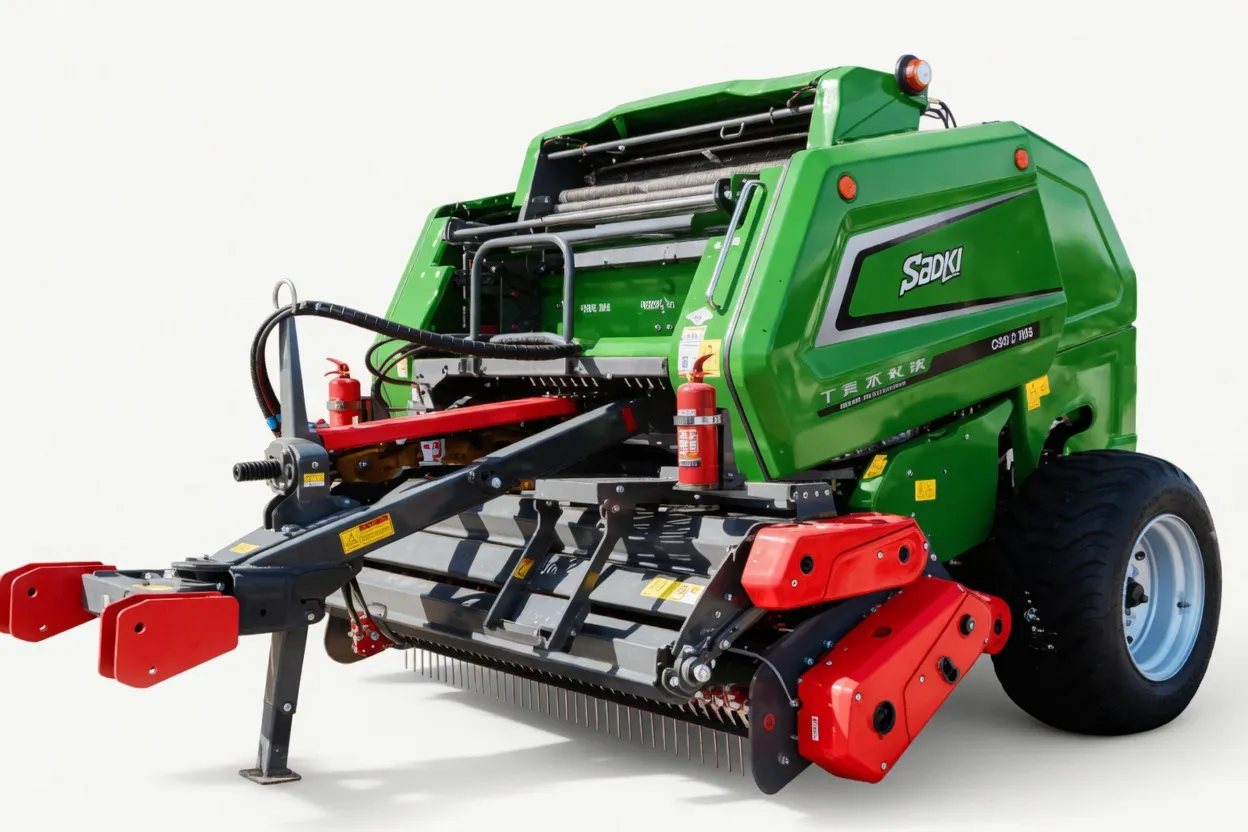
Choosing the right wrapper type for your operation depends on daily wrapping volume, baler output rate, paddock layout, and whether you need to wrap in the paddock or at a centralised location.
Type 3: Inline Combo Baler-Wrapper
A combo baler-wrapper integrates the baling and wrapping functions in a single machine that trails behind the tractor. The baler forms the bale, transfers it directly to an integrated wrapping chamber, wraps it, and ejects the finished wrapped bale in one continuous pass. The operator never stops — the machine produces wrapped bales as fast as it can bale the crop.
Advantages: Fastest possible wrapping — there is zero delay between baling and wrapping, which is critical for high-moisture crops where aerobic losses in unwrapped bales are highest. No separate wrapping operation or additional tractor required. Bales are ejected directly to their storage position without additional handling. For operations wrapping 150+ bales per day of high-moisture silage, a combo unit is the most productive configuration available.
Limitations: Significantly higher purchase price (AUD $60,000–$150,000+) versus a standalone wrapper. Mechanical complexity is much higher — if either the baling or wrapping section requires maintenance, the entire system is down. Suited to large commercial silage operations rather than farm-scale hay preservation.
Head-to-Head Comparison
Why the 9YCM-850 Is the Right Choice for Most Australian Farm Operations
The majority of Australian farm-scale silage and hay-preservation operations wrap 20–100 bales per day across a season of 20–60 operating days. This volume does not justify a combo baler-wrapper investment, and the flexibility to use the wrapping tractor for other farm tasks during the day makes a trailing satellite less practical than a linkage-mounted machine that can be removed and re-attached in minutes. The 9YCM-850 fills this role: low purchase price, low mechanical complexity, flexibility across crop types and bale sizes, and a simple hydraulic drive system that any farm workshop can service. Contact EverPower at +61 2 9708 3322 or [email protected] to confirm the 9YCM-850 suits your tractor and daily wrapping requirements.
Recommended Product: 9YCM-850 Bundling Film Wrapping Machine
Table-type 3-point linkage wrapper for farm-scale silage and hay preservation. Simple hydraulic table and arm drive. 40–60 bales per hour capacity. 4–6 adjustable layers. Handles 1,000–1,600 mm round bales. Low mechanical complexity, easy workshop maintenance. AUD $6,000–$12,000 purchase range. Stocked at EverPower’s Condell Park NSW warehouse with Australia-wide delivery.
Frequently Asked Questions
Choose the Right Wrapper Type for Your Operation.
EverPower can confirm tractor compatibility and daily wrapping capacity for the 9YCM-850 on your property.
EverPower Baling Machinery Australia Pty Ltd | 27 Harley Crescent, Condell Park NSW 2200
📞 +61 2 9708 3322 | ✉️ [email protected]