
Silage, Carbon, and Soil Health: What the Research Shows
The evidence on how silage production — mowing, baling, and residue management — interacts with soil carbon, soil biology, and long-term pasture productivity across Australian farming systems.
Why Silage Producers Are Asking About Carbon
Since the establishment of the Australian Carbon Credit Unit (ACCU) market and the expansion of the Emissions Reduction Fund (ERF) into agricultural soil carbon projects from 2019 onwards, Australian dairy and beef producers have been asking a question that was not on anyone’s farming agenda 10 years ago: does the way I manage my silage programme help or hurt my soil carbon credit potential?
The question is legitimate and the answer is more nuanced than the marketing from some carbon project developers suggests. Silage production — specifically the act of cutting and removing above-ground biomass from a paddock rather than incorporating it — does reduce the organic matter input to the soil from that paddock in that season. This is a real carbon dynamic that silage producers should understand honestly rather than having it obscured by optimistic framing. At the same time, the soil carbon story in a well-managed silage system involves compensating factors — roots left in place, manure returned from silage-fed livestock, improved water infiltration from perennial grass stands, and the soil biology stimulation from regular cutting — that partially offset the above-ground removal effect.
This article covers what the Australian and international research actually shows about silage production’s interaction with soil carbon and soil health — without oversimplification in either direction. For how the baling and wrapping equipment that produces silage fits into the production chain upstream of these soil dynamics, our article on how dairy farmers use round balers to secure year-round silage supply covers the production context.
What the Research Shows: The Carbon Dynamics of Silage Systems
Above-Ground Removal: The Real Trade-Off
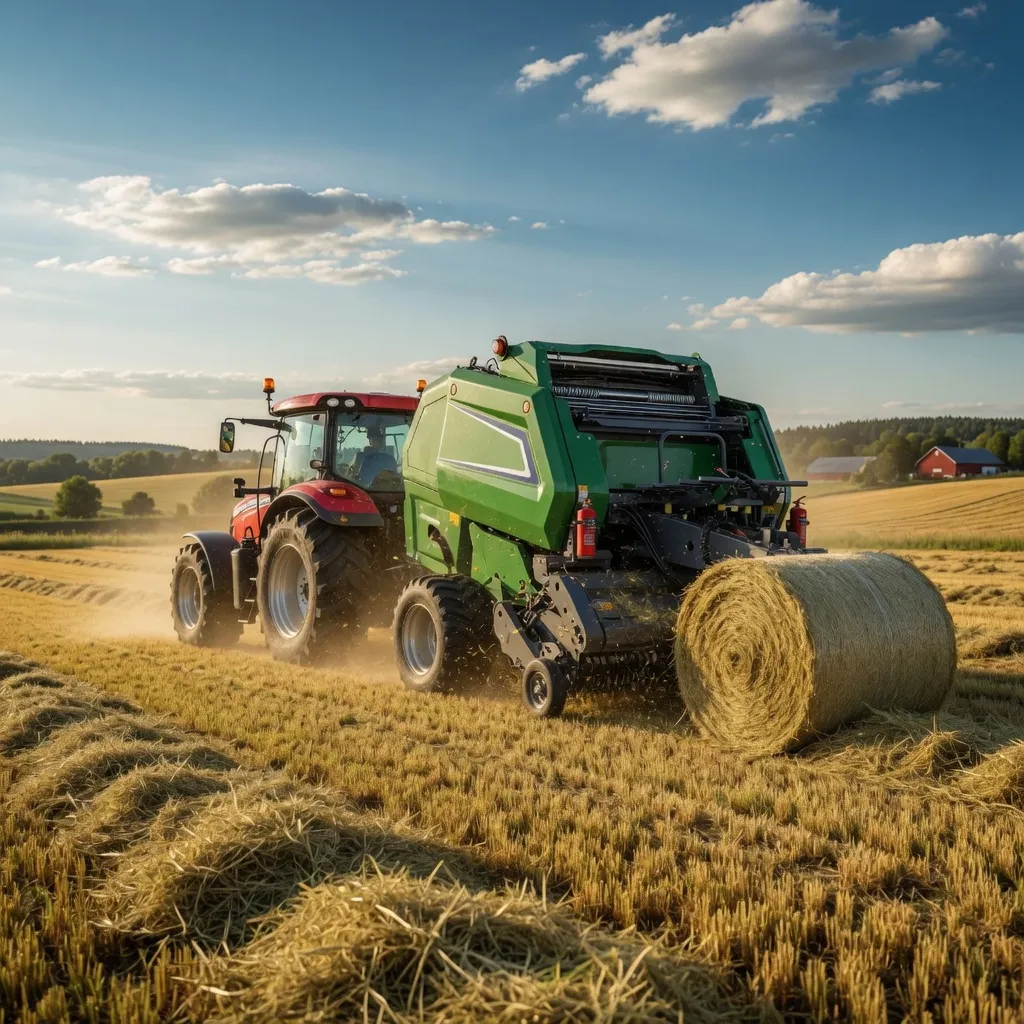
Independent meta-analyses of silage and hay-making systems in temperate agricultural regions — including studies from CSIRO, the University of Melbourne, and comparable European research — consistently show that removing above-ground biomass by baling reduces the annual carbon input to the soil by 1.2 to 2.5 tonnes CO₂-equivalent per hectare per year compared to an equivalent pasture that is grazed rather than cut. This is the silage system’s primary carbon deficit relative to grazed pastures, and it is real — not an artefact of measurement methodology.
The Compensating Factors
Three factors partially offset the above-ground removal effect in well-managed silage systems:
| Factor | Carbon Credit Mechanism | Estimated Offset (tCO₂e/ha/yr) | Confidence Level |
|---|---|---|---|
| Root biomass accumulation | Perennial grass roots deposit 40–60% of plant carbon below ground regardless of cutting | 0.5–1.2 | High — well documented |
| Manure return from silage-fed stock | Silage fed to stock generates manure returned to paddocks — 25–35% of carbon ingested is excreted | 0.3–0.8 | Medium — depends on return rate |
| Improved soil moisture from perennial cover | Perennial silage stands maintain better soil structure and water infiltration than annual crop rotations | 0.1–0.4 | Medium — site-specific |
| Reduced tillage under silage stands | Established silage pastures require no annual cultivation — reducing tillage-related carbon loss | 0.2–0.6 | Medium |
The net effect: a well-managed silage system that returns manure from silage-fed stock to the silage paddock, maintains perennial grass stands without tillage, and cuts at flag-leaf rather than post-seed stage (maximising root biomass relative to above-ground material) has a carbon deficit relative to grazed pasture of approximately 0.5 to 1.2 tCO₂e per hectare per year — significantly smaller than the gross above-ground removal figure suggests.
Where Silage Systems Are Carbon-Positive
In two specific scenarios, silage production systems have been shown to achieve net positive soil carbon outcomes relative to comparable land use alternatives: (1) conversion from annual cropping to perennial grass silage, where the perennial root system accumulates carbon faster than the annual crop rotation it replaces; and (2) integration of silage paddocks into intensive rotational grazing systems where the silage cut replaces a grazing rotation that would otherwise have over-grazed root reserves during a dry period. In both cases, the soil carbon gain from improved root system management exceeds the carbon loss from above-ground biomass removal.
Soil Biology: What Cutting Does to the Microbial Community
The Short-Term Disruption and the Longer-Term Response
Each silage cut — particularly if followed immediately by raking and baling without a post-cut rest period — temporarily reduces the photosynthetically active leaf area and slows the flow of root exudates (sugars, amino acids, and organic acids) that feed soil microbial communities. This post-cut reduction in root exudate supply causes a measurable short-term (7 to 14 day) decline in soil microbial activity measured by CO₂ respiration and enzyme activity. The decline reverses as the pasture regrows and resumes exudate production — typically within 14 to 21 days in actively growing temperate grass stands.
The key soil biology management implication: post-cut rest periods of at least 21 days before the next grazing or cutting event allow soil microbial communities to recover their activity levels between harvest events. Silage operations that cut at 21 to 28-day intervals without any grazing rest in between — common in high-productivity irrigated dairy systems — show consistently lower soil biological activity than systems with 35 to 42-day rest intervals. This soil biology trade-off is worth factoring into the decision about optimal cut frequency in high-intensity silage systems.
Cover Crops and Silage: A Soil Health Combination
The most consistently positive soil health outcome from silage-producing operations comes from integrating cover crops into the rotation. A winter cereal-vetch cover crop baled as silage before the summer cash crop builds soil biology through the diverse root system it establishes in the 10 to 14-week growth period before baling — even when the above-ground material is completely removed. This represents a genuine both-and outcome: feed value captured by baling, soil biology benefit delivered by root systems that remain and decompose after baling. For farms combining cropping and livestock, the cover crop silage approach is the strongest available strategy for maintaining soil health while building feed reserves.
Silage and Carbon Credit Eligibility in Australia
The Australian Soil Carbon Method: What Silage Producers Need to Know
The Australian Carbon Credit Unit (ACCU) soil carbon method (Measurement of Soil Carbon Sequestration in Agricultural Systems, Version 1.2) allows landholders to earn carbon credits for increases in soil organic carbon measured through before-and-after soil sampling. Silage producers can participate if: they change their management in a way that is expected to increase soil carbon (e.g., converting from annual cropping to perennial grass silage, adopting minimum-tillage silage establishment, or increasing manure return rates to silage paddocks), they commit to the management change for a minimum 25-year permanence period, and they engage an eligible project developer who manages the measurement and verification process.
Silage-only operations that continue existing management without a documented management change do not qualify for carbon credit payments — the ACCU scheme requires a measurable transition from a baseline, not a continuation of existing practice. The scheme is financially viable for operations making significant land use changes; it is not a passive income stream for existing well-managed silage systems.
The 9YCM-850 bundling film wrapping machine and the broader EverPower baling range do not in themselves qualify as eligible management changes for carbon credit purposes — they are production tools, not soil management interventions. The management decisions upstream of the baler (cover crop integration, perennial establishment, reduced tillage, manure return programmes) are the carbon-relevant variables.
Frequently Asked Questions
Discuss Silage Production in the Context of Your Farm’s Sustainability Goals
Tell us about your land use, current silage system, and any carbon farming interest — we’ll share the production context and equipment that supports both productivity and soil health objectives.