Length and Stack Height Are the Same Calculation
When evaluating a hay baler conveyor, operators often ask about length as if it were a feature specification to compare between models — longer is better, or shorter is more portable. In practice, the required conveyor length is determined by a single operational variable: the maximum height you need to stack bales to. Length and stack height are connected by simple geometry, and getting the calculation right before purchasing ensures the conveyor you buy can actually reach the top of your stack without needing to be positioned at an impractically steep angle that causes bales to slide back. The 9JYY-4.5’s 4.5-metre length was chosen to cover the full height range of standard Australian hay shed stacking — approximately 2.0–2.8 metres at operating angles of 25–35 degrees — without being so long that the machine is unwieldy for a 2-person farm operation to reposition between stacking runs. This guide explains the geometry, shows how to calculate whether 4.5 metres suits your shed, and identifies the situations where a different length would be justified.
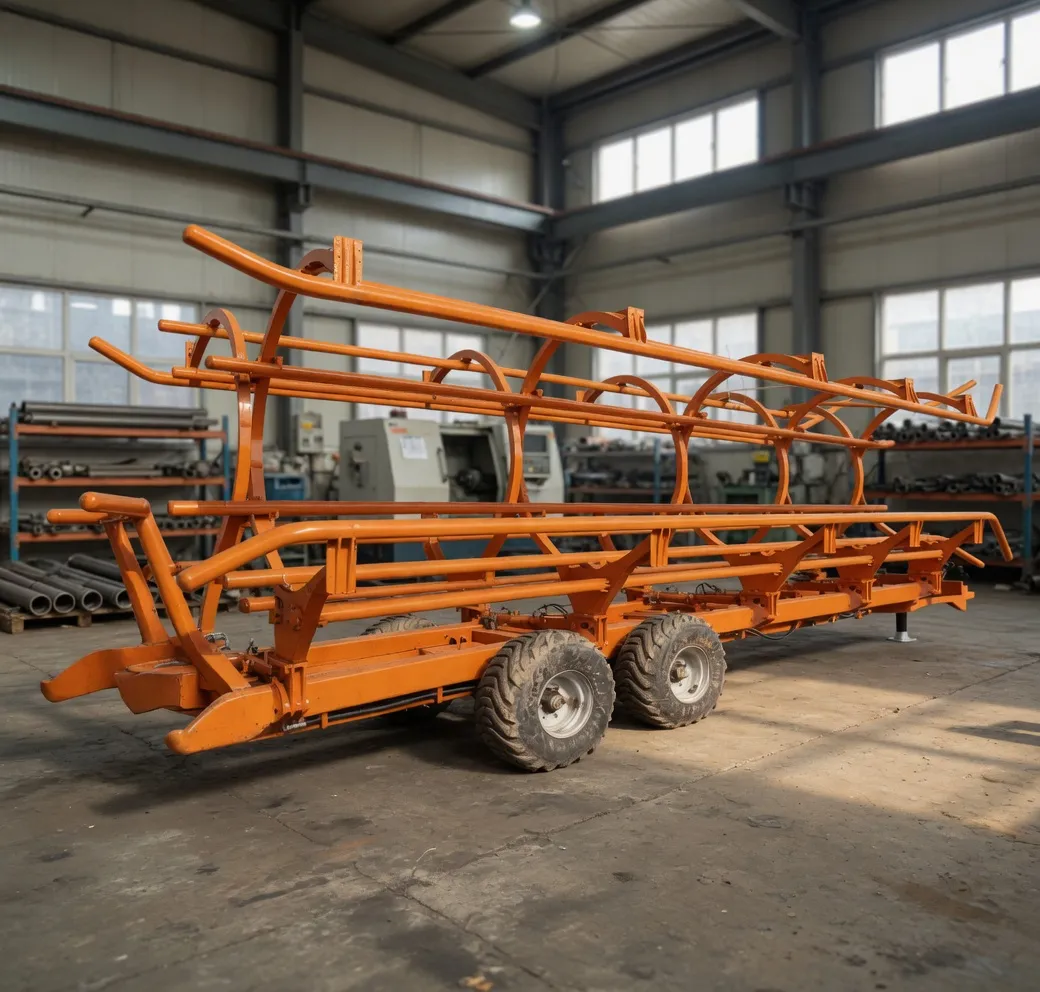
Conveyor length determines the maximum stack height achievable at a usable operating angle — the 9JYY-4.5’s 4.5-metre length covers standard Australian hay shed stacking heights at comfortable 25–35 degree angles.
The Geometry: How Length Translates to Height
A conveyor is essentially a hypotenuse — the belt runs along the inclined length, with the height reached at any given angle determined by: Height = Belt Length × sin(angle). For the 9JYY-4.5 at 4.5 metres:
Note that these heights are measured from the infeed level — add the infeed height (typically 400–500 mm above ground) to the table figures for the total height above floor level at the top of the belt. For example, a 30-degree angle with 400 mm infeed height delivers bales at 2.25 + 0.40 = 2.65 m above floor level — well within the 2.4–2.7 m range of a 3-high stack of 460 mm bales in a standard Australian hay shed.
Why Angle Matters as Much as Length
A conveyor operated at too steep an angle creates a bale-sliding problem. Small square bales have a relatively smooth surface — twine or net wrap does not provide much grip on a moving belt above approximately 38–40 degrees. At these angles, the bale’s tendency to slide back against the belt direction becomes significant, particularly for lightweight hay (under 18 kg per bale) which has less friction mass and accelerates down the belt quickly if the belt stops momentarily. The practical operating limit for the 9JYY-4.5 with standard hay bales is 35–38 degrees — beyond this, bale-sliding incidents increase and the stacker at the top must manage bales arriving erratically rather than at a consistent rate.
If your stack height requires an angle above 38 degrees for the 4.5-metre belt, the correct solution is a longer belt — not operating beyond the safe angle. A 6-metre belt reaches the same height at 28 degrees that a 4.5-metre belt reaches at 38 degrees, well within the safe operating range and with better bale stability throughout.
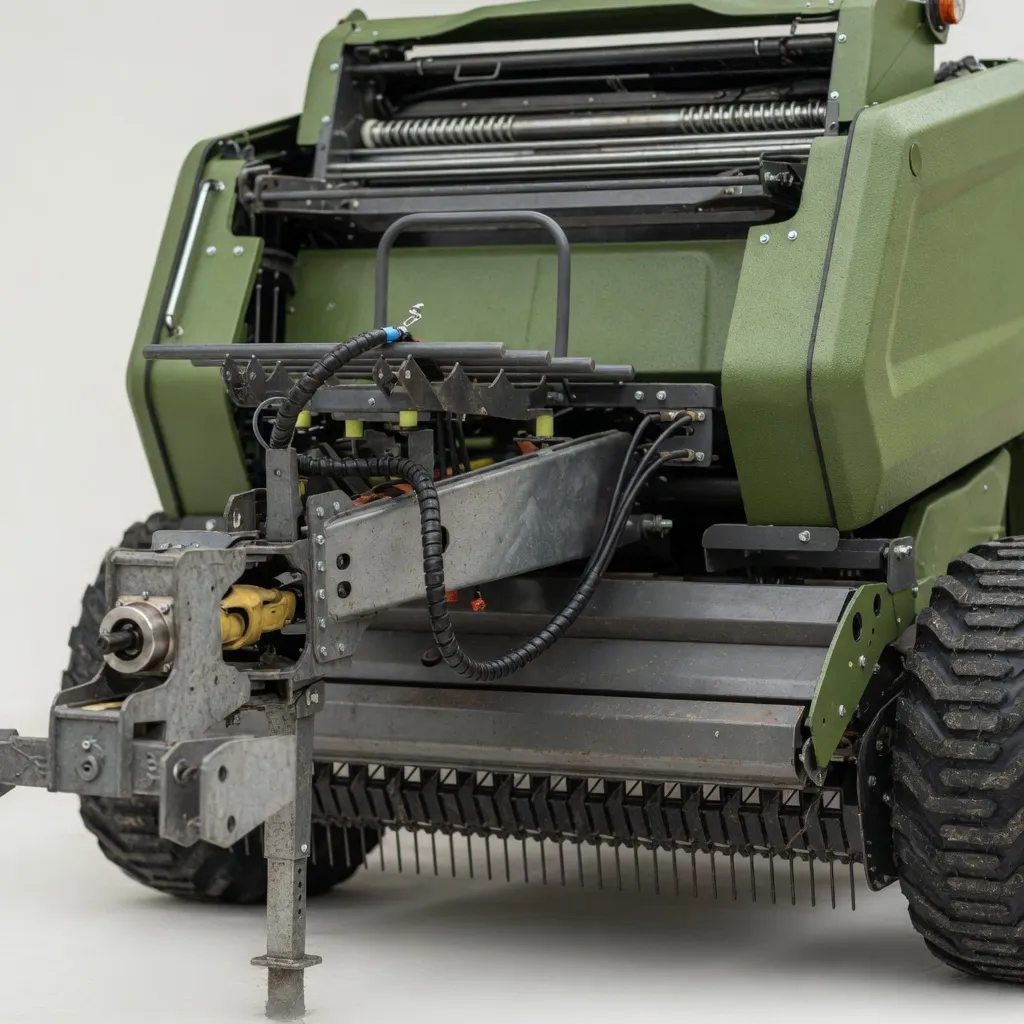
The height your baler produces — determined by the bale format and stacking pattern — is the starting point for calculating which conveyor length you need. Measure your required stack height first, then select the conveyor length that achieves it within a 25–35 degree working angle.
Is the 9JYY-4.5 (4.5 m) the Right Length for Your Shed?
The 4.5-metre belt covers 95% of Australian small square bale shed applications. Standard Australian hay sheds are built to accommodate 3-high small square bale stacks, with a clearance height of 2.8–3.5 metres. The top of a 3-high stack of 460 mm bales is 3 × 0.46 = 1.38 m above the stack base — at the shed floor, the top of the stack is at 1.38 m. The stacker standing on top of the second layer is at approximately 0.92 m above the floor. The belt must deliver bales to the stacker at approximately 0.92 + 1.0 = 1.92 m, or at the stacker’s chest height when standing on the second layer. The 9JYY-4.5 at 30 degrees delivers at 2.25 + 0.40 (infeed height) = 2.65 m above floor — somewhat higher than the minimum, but this gives the stacker good overhead clearance to position bales and means the angle can be reduced slightly as the stack builds to maintain the comfortable working height range throughout the session.
The 4.5-metre belt is insufficient only for: (a) sheds with 4-high or higher stacking requirements above 2.9 m; (b) operations stacking onto the top deck of a semi-trailer or B-double trailer above 3.2 m; or (c) applications where the infeed point is significantly below ground level (loading a basement or sunken storage). For all three scenarios, contact EverPower to discuss a longer conveyor option.
Portability: Why 4.5 Metres Is Also the Practical Transport Limit
A 4.5-metre conveyor weighing 65–80 kg fits in the tray of a standard long-wheelbase ute (2,200 mm tray) without overhanging by more than 2.3 metres, and in a standard single-axle box trailer. Two people can lift it on and off a tray without lifting equipment. A 6-metre belt weighs 95–120 kg and requires either a trailer or a ute with a tray extender — and two people can manoeuvre it, but it requires more care at the hinge point to avoid damage during transport.
For operations that transport the conveyor between farms (contractors, operations with multiple sheds), the 4.5-metre length is the practical optimum — it covers the full height range of standard Australian sheds and is light enough to be handled comfortably by 2 people without mechanical assistance. Longer conveyors trade portability for height capacity, which is the right trade-off only if your stacking height actually requires it.
Recommended Product: 9JYY-4.5 Hay Baler Conveyor
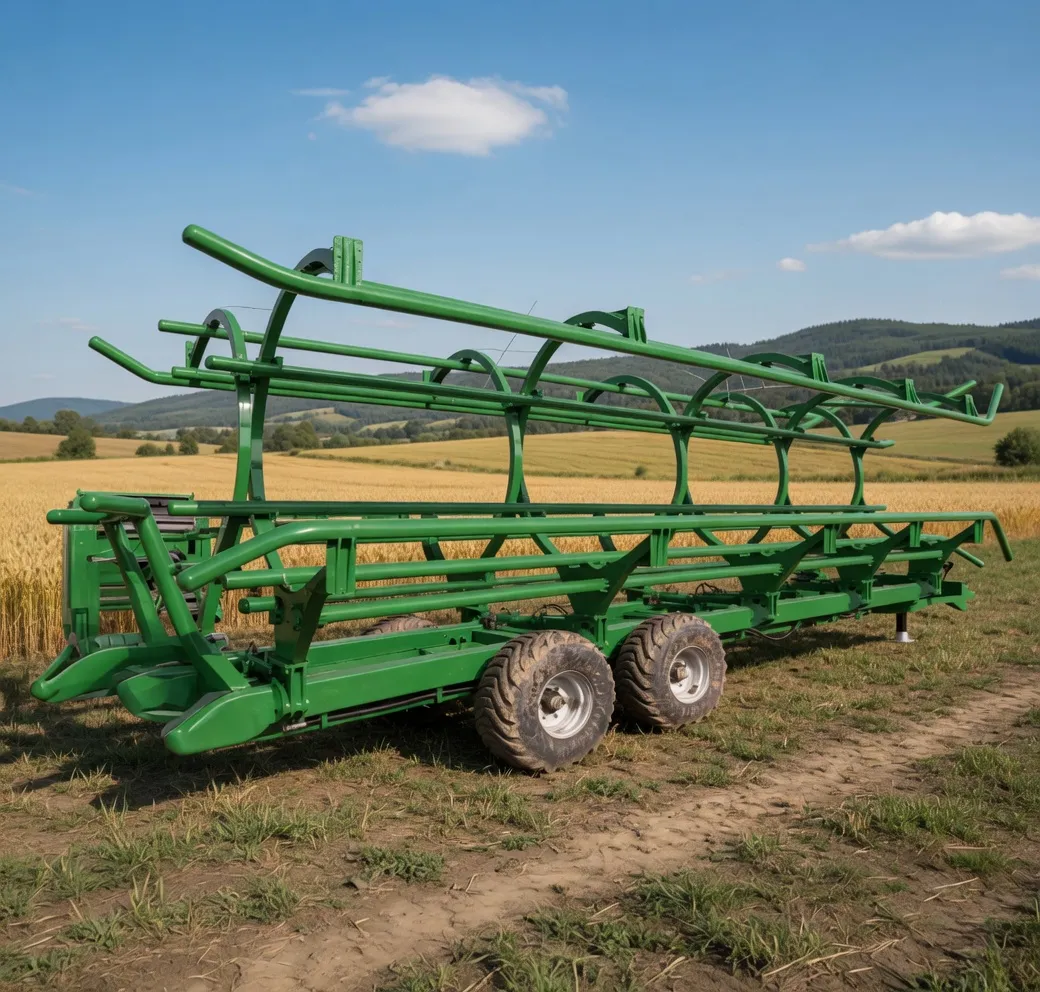
4.5-metre working length covers standard Australian hay shed stacking heights of 2.0–2.8 m at 25–35 degree operating angles. Adjustable angle via support legs for any stack height within range. 65–80 kg — fits in a ute tray, 2-person lift without equipment. 240 V single-phase motor, no 3-phase infrastructure required. Available from EverPower’s Condell Park NSW warehouse with Australia-wide delivery.
Frequently Asked Questions
Measure Your Stack Height First. Then Choose Your Conveyor.
EverPower can confirm whether the 9JYY-4.5 reaches your stack height before you purchase — provide your shed dimensions and stack height for a definitive answer.
EverPower Baling Machinery Australia Pty Ltd | 27 Harley Crescent, Condell Park NSW 2200
📞 +61 2 9708 3322 | ✉️ [email protected]