
The Fundamental Problem With Storing Unwrapped Bales
A round bale sitting in a paddock or hay shed is not inert. From the moment the crop is cut, biological processes are running continuously: plant cells respire, consuming carbohydrates; aerobic bacteria and fungi on the crop surface ferment sugars in the presence of oxygen; and in wet conditions, mould colonies establish and spread from the outer layers inward. The rate at which these processes consume the bale’s nutritional content is determined primarily by one variable — how much oxygen the bale surface is exposed to. An unwrapped bale stored outdoors is continuously exposed to atmospheric oxygen at every point on its surface and through the thousands of inter-stem gaps that give the bale structure. Dry matter losses in the outer 100–150 mm of an unwrapped round bale stored outdoors for 12 months commonly range from 15–35%, with higher losses in wet or humid climates. A film-wrapped bale eliminates atmospheric oxygen contact at the bale surface within minutes of wrapping and, once fermentation is established, maintains an internal oxygen concentration below 0.5% — the threshold at which aerobic spoilage organisms cannot survive. The result is a fundamentally different storage outcome: consistent nutritional preservation from the outer layer to the core across a 12–24 month storage period.

Film wrapping immediately after baling creates the oxygen-free environment required for fermentation — the longer the gap between baling and wrapping, the greater the aerobic dry matter losses before preservation begins.
What Happens Inside an Unwrapped Bale Over Time
The deterioration of an unwrapped round bale follows a predictable sequence driven by moisture and temperature. In the first week after baling, aerobic bacteria on the crop surface ferment residual plant sugars rapidly — this is visible as heating, where the bale’s core temperature rises above ambient by 10–25°C. Heating drives moisture out through the bale surface and causes protein binding reactions (Maillard reactions) that reduce the digestibility of the nitrogen fraction — the nitrogen is still present in a chemical analysis but is no longer available to rumen microbes. This heating phase is often mistaken for “curing” but represents a genuine nutritional loss.
After the heating phase subsides as fermentable sugars are depleted, the bale enters a colonisation phase where mould species — primarily Aspergillus, Penicillium, and Fusarium — establish in the outer layers. Mould growth requires moisture and oxygen; in dry conditions above 20% relative humidity, moulds grow slowly. In Australian coastal and high-rainfall regions, bales stored outdoors absorb moisture through rain penetration and dew condensation cycles, and mould colonisation progresses several centimetres per month. By six months, an unwrapped bale in a 600 mm+ annual rainfall zone may have 10–15 cm of visibly moulded outer material that must be discarded before feeding — representing 15–25% of total bale mass on a standard 1.2 m diameter bale.
In drier inland areas, outer-layer losses are lower but still significant. UV radiation degrades the lignin and cellulose structure of the outer 5–8 cm of hay bales stored in direct sunlight, bleaching the material and reducing its energy value. Colour change (yellowing or whitening) on the bale exterior is the visible indicator of UV degradation — a bleached outer layer has lower energy content than the same hay freshly cut and stored in shade.
What Happens Inside a Film-Wrapped Bale Over Time
A film-wrapped bale undergoes a completely different biological sequence. Within 24–48 hours of wrapping, residual oxygen inside the bale is consumed by aerobic bacteria and plant cell respiration, dropping internal oxygen concentration to below 2%. As oxygen depletes, aerobic bacteria die off and facultative anaerobes take over. Within 7–14 days of wrapping (faster in warm conditions), lactic acid bacteria (LAB) dominate the internal environment, fermenting plant sugars to lactic and acetic acids. The acids drop the internal pH of the bale to 3.8–4.5, a range at which almost all spoilage organisms — moulds, yeasts, Clostridia — are inhibited.
Once pH stabilisation is complete, the wrapped bale enters a stable preserved state that can persist for 18–36 months without significant further dry matter loss, provided the film remains intact. The bale is effectively pickled in its own fermentation acids. The outer layer, in direct contact with the film rather than exposed to air, retains its original nutritional composition rather than undergoing the mould-driven degradation that characterises unwrapped bale exteriors.
The practical result at feeding time is striking: unwrapping a well-preserved silage bale reveals consistent green-gold colour from exterior to core, a characteristic pleasant acid smell, and a feeding value that matches the nutritional analysis of the original crop at harvest. There is no discarded outer layer, no moulded material to separate, and no variability in dry matter concentration between the outer flakes and the bale core.
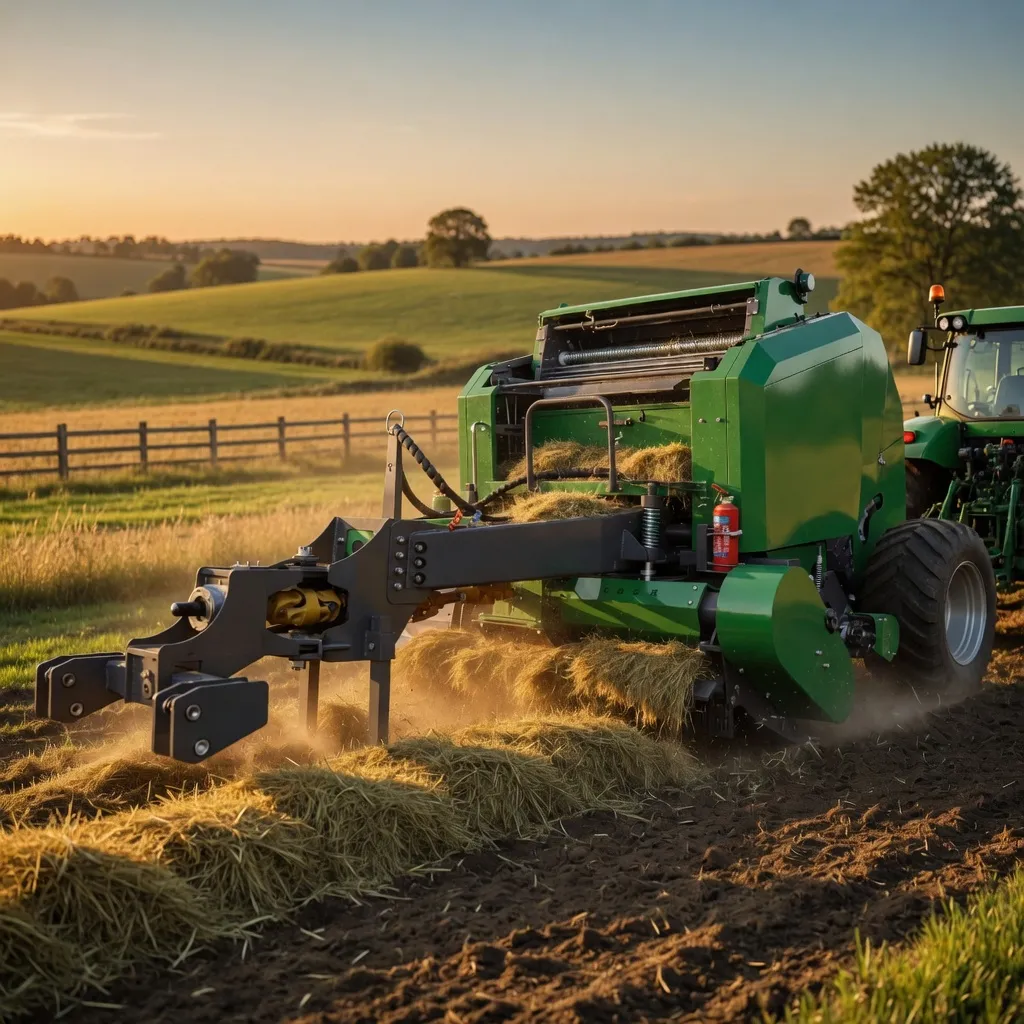
Dense, uniform bales produced by a high-performance baler ferment more consistently under film — the compressed material has less air space, faster oxygen depletion, and a more uniform fermentation environment than loose or variable-density bales.
Dry Matter Loss Comparison: Wrapped vs Unwrapped Storage
The Financial Case for Wrapping: A Practical Example
An operation storing 300 round bales of ryegrass hay for 8 months in a 600 mm annual rainfall zone. Hay valued at AUD $220 per bale (approximately AUD $360/tonne at 1.5 t/bale as-fed). Unwrapped outdoor storage: 15% DM loss at 8 months = 45 bales equivalent lost → AUD $9,900 in feed value lost to storage deterioration. Film-wrapped storage: 4% DM loss at 8 months = 12 bales equivalent lost → AUD $2,640 in fermentation losses. Net saving from wrapping: AUD $7,260 for 300 bales.
Film cost for 300 bales at 4 layers: approximately 12–15 rolls at AUD $120–160/roll = AUD $1,440–$2,400. Net financial benefit of wrapping after film cost: AUD $4,860–$5,820 for a single 300-bale storage lot. At these margins, a 9YCM-850 that costs approximately AUD $6,000–$9,000 pays for itself in one to two seasons on a 300-bale annual storage programme.
Recommended Product: 9YCM-850 Bundling Film Wrapping Machine
Reduces outdoor bale storage DM losses from 15–35% (unwrapped) to 3–6% (wrapped) by creating an oxygen-free fermentation environment. 60–90 second cycle time. 4–6 layer wrap with 55–70% pre-stretch. Handles 1,000–1,600 mm round bales. 3-point linkage mount for 45–75 HP tractors. Stocked at EverPower’s Condell Park NSW warehouse with Australia-wide delivery.
Frequently Asked Questions
Stop Losing Feed Value in the Paddock. Wrap and Preserve.
EverPower can advise on the 9YCM-850 configuration for your bale size, storage conditions, and annual wrapping volume.
EverPower Baling Machinery Australia Pty Ltd | 27 Harley Crescent, Condell Park NSW 2200
📞 +61 2 9708 3322 | ✉️ [email protected]