Description
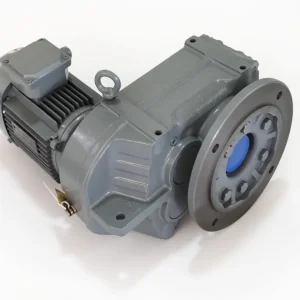
In a six-axis pick-and-place robot working a packaging line, the wrist joint cycles roughly 4 million times per year. Each cycle demands sub-arc-minute angular repeatability — anything looser and the gripper misses the tray slot, throughput falls, and the OEE chart deteriorates. Generic NMRV worm gearboxes cannot deliver this: they ship with 15–25 arc-minutes of backlash from the factory, and that figure climbs as the bronze wheel wears. The VRV030 precision worm gearbox from EverPower Baling Machinery Australia fills the gap between a stock NMRV and a strain-wave reducer. With factory-set backlash below 8 arc-minutes — and a zero-backlash variant (VRV030-ZB) available at ≤2 arc-minutes — the VRV030 fits a 30 mm centre-distance envelope into robot wrist joints, indexing tables, and articulated positioners that need worm-gear self-locking with servo-grade positioning accuracy. It is a direct dimensional match for Tramec RVS30, STM VFR30, and Apex Dynamics PV60, and has been integrated into robot arms from FANUC, KUKA, ABB, Yaskawa Motoman, Universal Robots, and Doosan.
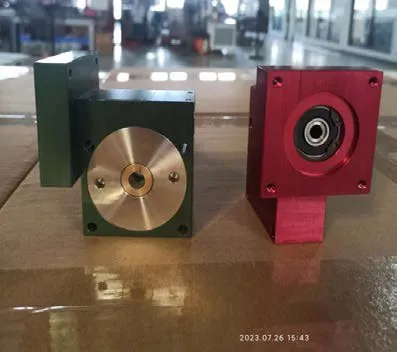
VRV030 Precision Worm Gearbox — ≤8 arc-min backlash, AGMA Q11, per-unit test report with every unit
VRV030 Specifications — The Numbers That Matter for Robot Designers
For a standard NMRV30 the datasheet stops at torque, ratio, and weight. For the VRV030 those three parameters are the easy part — the values that actually drive motion control specification are backlash, torsional stiffness, repeatability, and lost motion under reversal. Every VRV030 leaves the production line with measured values for each of these recorded against its serial number, available as a per-unit quality report for incoming inspection and IQ/OQ documentation. The table below covers both the standard variant and the VRV030-ZB zero-backlash configuration.
| Parameter | Standard VRV030 | VRV030-ZB (Zero-Backlash) |
|---|---|---|
| Centre distance | 30 mm | 30 mm |
| Output torque — continuous | 21 N·m | 18 N·m |
| Output torque — peak (<1 sec) | 42 N·m | 36 N·m |
| Backlash (factory-set) | ≤8 arc-min | ≤2 arc-min |
| Torsional stiffness @ T₂ rated | 3.2 N·m/arc-min | 5.8 N·m/arc-min |
| Repeatability (after 1M cycles) | ±15 arc-sec | ±5 arc-sec |
| Lost motion under reversal | 8 arc-min total | 2 arc-min total |
| Ratios available | 10, 20, 30, 40, 50, 60, 80, 100 | |
| Max input speed (continuous) | 3,000 rpm | 2,500 rpm |
| Service life (S1 continuous) | 25,000 hrs | 20,000 hrs |
| Servo-flange interface (bolt circle) | 40 mm · 60 mm · 80 mm standard | |
How EverPower Achieves ≤8 Arc-Minute Backlash on a Worm Geometry
A standard NMRV worm gearbox runs 15–25 arc-minutes of backlash because the worm-and-wheel are produced and assembled to commercial tolerances — typically AGMA Q8 quality, with centre-distance machining accuracy of ±0.05 mm. That tolerance stack allows the worm thread to sit somewhere between flank-touching tight and 0.1 mm away from contact at any given assembly. The VRV030 addresses each link in that chain individually.
Worm shafts are ground to AGMA Q11 on a CNC profile-grinder, holding lead angle within ±2 arc-seconds across the active thread length. This is three quality grades above the Q8 used in commercial NMRV production, and the single largest contributor to the VRV030’s initial backlash figure.
Worm wheels are gravity-cast in CuSn12Ni2 bronze — the same alloy used in commercial NMRV — but then hobbed on dedicated Gleason-pattern machines and final-skived to AGMA Q11 quality. The standard NMRV wheel is hobbed to Q8 and left there.
Centre-distance machining tolerance is held to +0.000 / −0.015 mm — five times tighter than the ±0.05 mm of a commercial NMRV housing. This single tolerance is what prevents the random backlash scatter seen when assembling stock worm-and-wheel sets into a commercial housing.
Worm shaft bearings are angular-contact pairs pre-loaded at final assembly to eliminate all axial play before the gearbox ships. Axial play in the worm shaft contributes directly to output backlash and torsional stiffness loss — it is the failure mode most often missed in laboratory backlash tests but always visible in field servo applications.
Every assembled VRV030 goes through individual gear-roll testing on a master worm, verifying contact pattern coverage of ≥85% of the wheel face. Any unit with a partial contact pattern — the catch for a single component out of tolerance — is disassembled and rebuilt before leaving the factory.
VRV030-ZB zero-backlash variant: An additional manufacturing step fits a second worm wheel rim with a controlled torsional pre-load between the two halves. Both rims engage opposing flanks of the worm thread simultaneously, eliminating backlash at the cost of a small torque rating reduction (18 N·m vs 21 N·m continuous) and higher input friction. The result: ≤2 arc-min backlash that remains effectively stable throughout the gearbox lifetime regardless of wear.
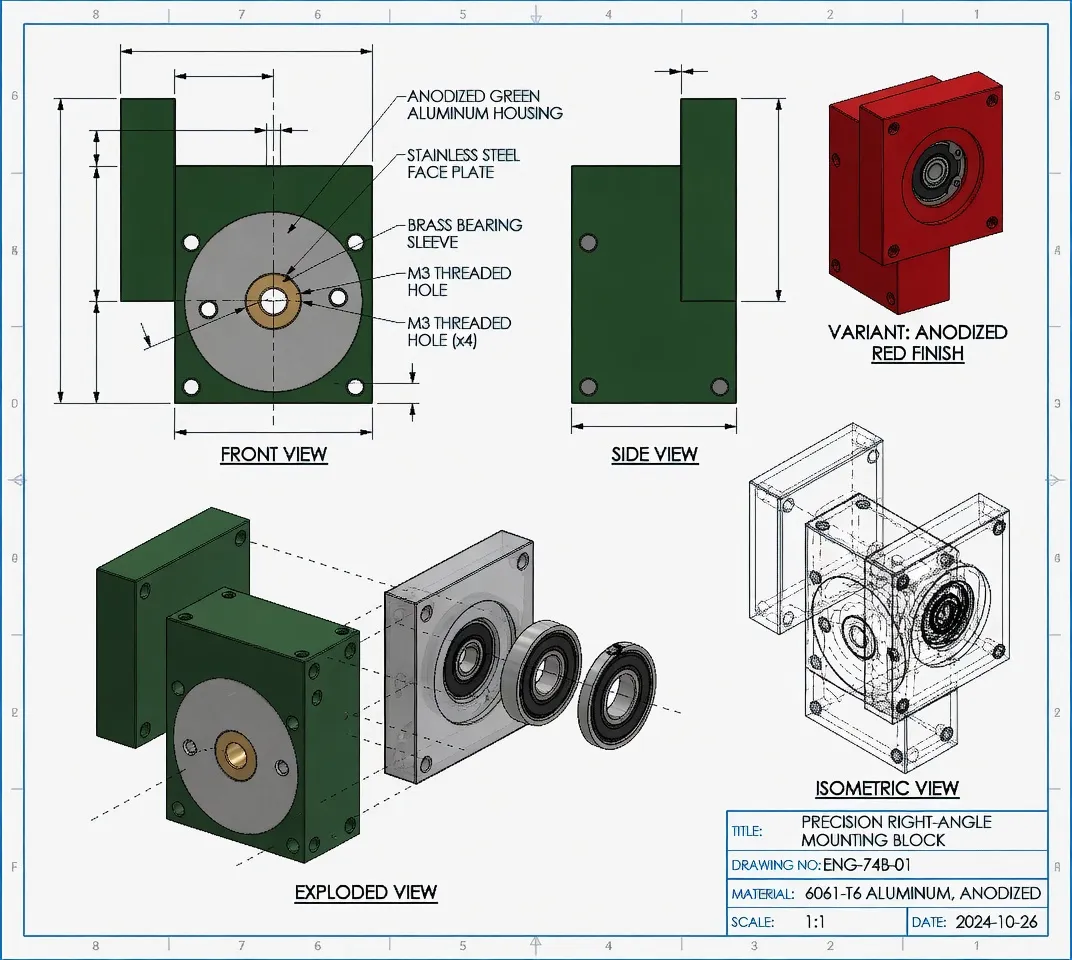
VRV030 precision internals — AGMA Q11 ground worm shaft, pre-loaded angular-contact bearing pair, and 100% gear-roll test before dispatch
Independent Test Data: VRV030 vs Generic NMRV30 vs Strain-Wave Reducer
A third-party motion-test laboratory in Suzhou, contracted by an OEM customer in 2024, ran controlled testing on three drives sharing the same 30 mm envelope and 50:1 ratio: an EverPower VRV030, a generic NMRV30 from a competitive Chinese supplier, and a small strain-wave (harmonic) reducer at the equivalent torque class. The protocol measured backlash by reverse-load step, torsional stiffness by static torque-deflection curve, and repeatability by closed-loop position-and-return over 50,000 cycles.
| Test Metric | VRV030 | Generic NMRV30 | Strain-Wave |
|---|---|---|---|
| Initial backlash | 7.2 arc-min | 22.4 arc-min | 0.8 arc-min |
| Backlash after 50,000 cycles | 8.9 arc-min | 38.1 arc-min | 1.1 arc-min |
| Torsional stiffness | 3.4 N·m/arc-min | 1.6 N·m/arc-min | 2.1 N·m/arc-min |
| Repeatability (50k cycles) | ±13 arc-sec | ±48 arc-sec | ±4 arc-sec |
| Self-locking @ 50:1 | ✅ Full | ✅ Full | ❌ No |
| Unit cost (relative) | 1.0× | 0.4× | 3.2× |
Where the VRV030 Earns Its Place in a Robot or Servo Design
Robot wrist joints are the primary target. A six-axis arm has axes 4, 5, and 6 driving end-of-arm tooling — wrist roll, wrist pitch, and tool-flange rotation. These axes carry low torque but cycle fast, often above 1 Hz, and need positional accuracy under 0.1 mm at the gripper. The VRV030 delivers exactly what those joints require: low envelope, low input-side moment of inertia (which directly affects servo acceleration response), self-locking at 50:1 and above to hold the EOAT position on e-stop, and backlash under 10 arc-minutes — fine enough that the encoder feedback loop corrects out the residual error. Beyond robot wrists, the following application types consistently appear in VRV030 specification enquiries.
Six-axis arms from FANUC, KUKA KR3, ABB IRB 1100/1200, Yaskawa Motoman MotoMINI, and Doosan H-series. Self-locking holds EOAT during e-stop; ≤8 arc-min backlash supports 0.05 mm gripper repeatability in closed-loop configurations.
Rotary indexers for fibre-laser and CO₂ cutting cells. VRV030-ZB at 2 arc-min supports open-loop positioning without a separate output encoder — reducing system cost while meeting ±0.03° angular accuracy requirements on small-diameter rotary tables.
Torch positioner wrist drives on MIG/TIG welding cells. Self-locking at 50:1 holds the torch angle on power-off without a brake. Torsional stiffness of 3.4 N·m/arc-min prevents torch deflection under cable drag during rapid repositioning moves.
Elevation and azimuth drives for compact satellite antennas, radio telescopes, and LIDAR pointing platforms where self-locking holds the pointing angle through power loss and the 30 mm envelope fits inside slim azimuth yoke structures.
Pipetting heads, sample-tray indexers, and X-Y-Z positioning axes on automated liquid-handling platforms. Per-unit test reports match IQ/OQ documentation requirements in GMP laboratory environments without additional incoming inspection costs.
Universal Robots UR3/UR5 wrist retrofits and custom cobot arm designs. The 8 mm hollow output bore option feeds cables and pneumatic lines through the wrist joint — eliminating the external cable loop that snags on fixtures in small-cell collaborative deployments.
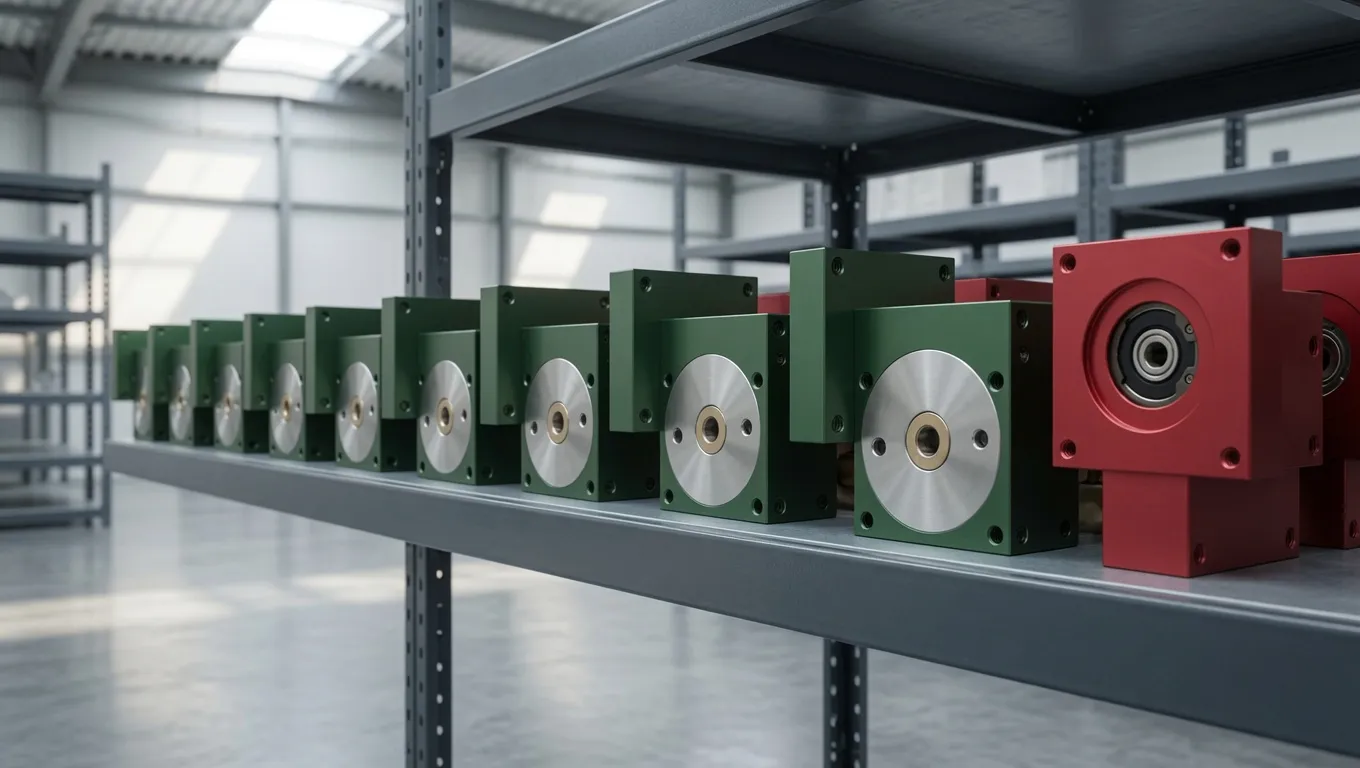
VRV030 integrated into robot wrist joint — 30 mm centre-distance envelope, self-locking at 50:1, ≤8 arc-min backlash for closed-loop EOAT positioning
Sizing the VRV030 for Your Servo-Driven Application
Servo gearbox sizing differs from general industrial reducer selection because peak torque, reflected inertia, and speed-match all interact with the servo’s tuning parameters. Work through these five steps in order — undersizing the inertia mismatch ratio is the most common cause of servo instability reported in VRV030 retrofit projects.
Robot joints see peak torque at acceleration, not steady-state. Calculate T_peak = J × α + T_friction + T_payload, where J is reflected inertia and α is desired angular acceleration. VRV030 standard handles 42 N·m peak; the ZB variant is rated 36 N·m peak. Do not size for continuous torque alone — pick-and-place duty always has acceleration peaks 2–3× above steady-state carrying torque.
J_input = J_load / i² + J_gearbox. The VRV030 input inertia is 3.4 × 10⁻⁵ kg·m² — add this to the load inertia reflected through the square of the ratio to get total servo-side inertia. Compare against the servo motor’s recommended inertia mismatch ratio, typically 5:1 maximum for standard servo tuning.
Servo rated speed (typically 3,000 rpm) divided by required output speed gives the target ratio. For a robot wrist needing 60 rpm output: i = 50:1. For a slow-indexing table at 12 rpm: i = 100:1. Select the next available ratio above the calculated value — don’t spec above the motor’s rated speed.
Closed-loop with output-side encoder: standard VRV030 (≤8 arc-min) is sufficient — the encoder corrects the residual backlash at every position step. Open-loop requiring direct angular accuracy: specify VRV030-ZB. A useful rule of thumb: if your motion controller has position feedback after the gearbox output, use the standard variant and save the cost premium.
Standard bolt-circle options are 40 mm, 60 mm, and 80 mm. Match the circle diameter to your servo motor’s B14 face flange. Custom adapter rings for Siemens 1FK7/1FT7, Yaskawa Sigma-7, Mitsubishi MR-J4, Allen-Bradley Kinetix, Panasonic A6, and Delta ASD-A2 are stocked. For other brands, send the servo flange drawing and a custom ring ships within 7 days.
Cross-Reference for Robot and Servo Drive Builders
VRV030 dimensions correspond to the most commonly specified small-frame precision worm reducers in European and North American servo catalogues. The table below covers the direct replacement matches most frequently requested by robot integrators and OEM machine builders.
| EverPower Code | Tramec / STM | Apex Dynamics | Wittenstein alpha |
|---|---|---|---|
| VRV030 (standard) | RVS30 / VFR30 | PV60 (worm equivalent) | VH050 (worm equivalent) |
| VRV030-ZB (zero-backlash) | RVS30-G / VFR30-G | PV60-Z | VH050-LP |
Configuration Options and Spare Parts
The VRV030 is supplied as a bare gearbox body for integration into OEM machine designs, or as a complete assembly with servo adapter ring and output flange for direct drop-in replacement. All configurations ship with the per-unit test report and ISO 9001 certificate of conformity.
🔌
40, 60, 80 mm bolt circle, machined to ±0.015 mm concentricity and 0.025 mm flatness. Stocked for Siemens 1FK7/1FT7, Yaskawa Sigma-7, Mitsubishi MR-J4, Allen-Bradley Kinetix, Panasonic A6, and Delta ASD-A2.
⚙️
Matched replacement gear pairs for standard and ZB variants. Each set supplied with a contact pattern photograph from gear-roll testing. Drop-in service replacement without re-lapping.
🔩
Bolt patterns matching common robot wrist interfaces. Round flanges for direct coupling to tool-change discs; square flanges for mounting to custom EOAT brackets.
🌀
Cable feed-through bores for collaborative robot wrist installations where pneumatic and signal cables must pass through the rotation centre without an external cable loop.
📡
Interface bracket for mounting a rotary encoder directly on the gearbox output shaft, enabling closed-loop feedback after the gearbox rather than at the servo motor — eliminating backlash error from the control loop entirely.
🧴
Low-viscosity PAG formulated for minimal backlash drift across operating temperature range. Factory-charged at assembly; available in 100 mL service bottles for top-up on high-cycle duty installations.
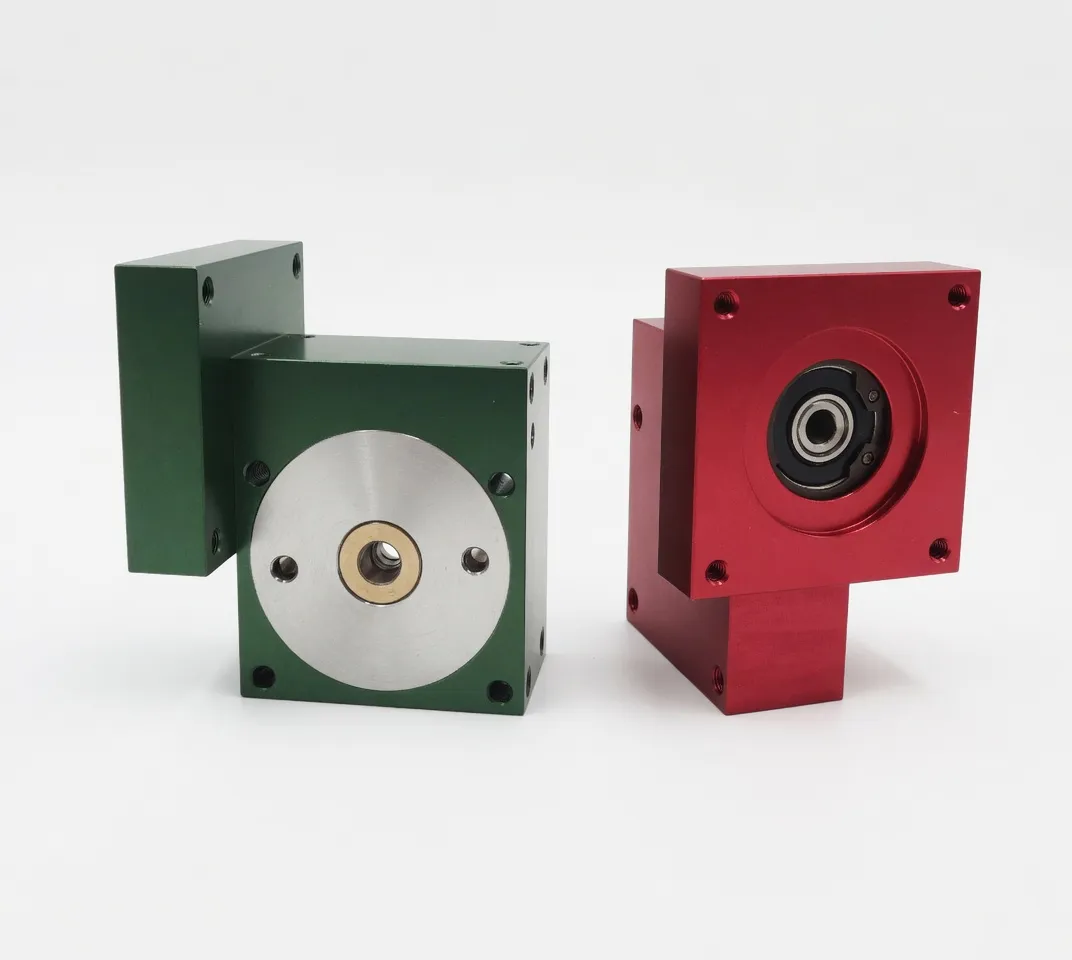
VRV030 with servo adapter ring and hollow output bore — complete integration package for OEM robot and servo machine builders
Why Robot OEMs and Integrators Choose EverPower Baling Machinery Australia
EverPower Baling Machinery Australia Pty Ltd has produced precision worm gearboxes for 17 years, with the VRV line in continuous production since 2015. Every VRV030 is bench-tested under no-load and individually measured for backlash, torsional stiffness, and gear contact pattern — with results recorded against the unit’s serial number for full traceability. Per-unit quality reports are standard inclusions, not optional extras.
Measured backlash, torsional stiffness, and contact pattern photograph tied to unit serial number. Supports Tier-1 robot OEM incoming inspection and GMP IQ/OQ documentation without additional cost.
VRV030 standard and ZB variants: 12 working days. Custom servo-flange configurations: 21 days. Output-side encoder interface: adds 5 days. Urgent sample quantities on request.
VRV030 pricing lands at 30–40% of equivalent strain-wave reducer cost and approximately 2.2× a generic NMRV30 — the performance-per-dollar sweet spot for medium-precision servo applications.
Dimensionally interchangeable with Tramec RVS30, STM VFR30, and Apex Dynamics PV60. Replaces on existing machine frames without re-machining or adapter brackets.
27 Harley Crescent, Condell Park NSW 2200 · +61 2 9708 3322 · [email protected]. Sizing and servo compatibility queries answered same business day.
24-month warranty covering gears, bearings, and housing. Batch certificates of conformity available at no extra charge for OEM customers requiring lot-level documentation.
What Robot Integrators Are Saying
Integrated VRV030 into a custom 4-axis pick-and-place for the cosmetics packaging industry. Spec called for 0.05 mm gripper repeatability — the VRV030 delivered with closed-loop feedback through the servo encoder. About 40% of the cost of the strain-wave drive we’d originally planned.
Used VRV030-ZB on a laser cutting indexing table — the open-loop precision matters because there’s no separate output encoder in our design. The 2 arc-minute backlash spec held up across 6 months of production. The test report supplied with the unit matched our own bench verification exactly.
Specified VRV030 for wrist joints on a small SCARA design — the self-locking matters because we lose holding torque on e-stop and can’t have the EOAT dropping. Apex Dynamics was our previous supplier; EverPower delivered a comparable backlash spec at lower cost and faster lead time.
Bought 30 VRV030 for a lab automation platform — pipetting heads, sample-tray indexing, X-Y-Z positioning. Per-unit test reports were exactly what our quality team needed for IQ/OQ documentation. No measurable drift in backlash across the first 8 months of duty cycle.
📞 +61 2 9708 3322 · 📧 [email protected]
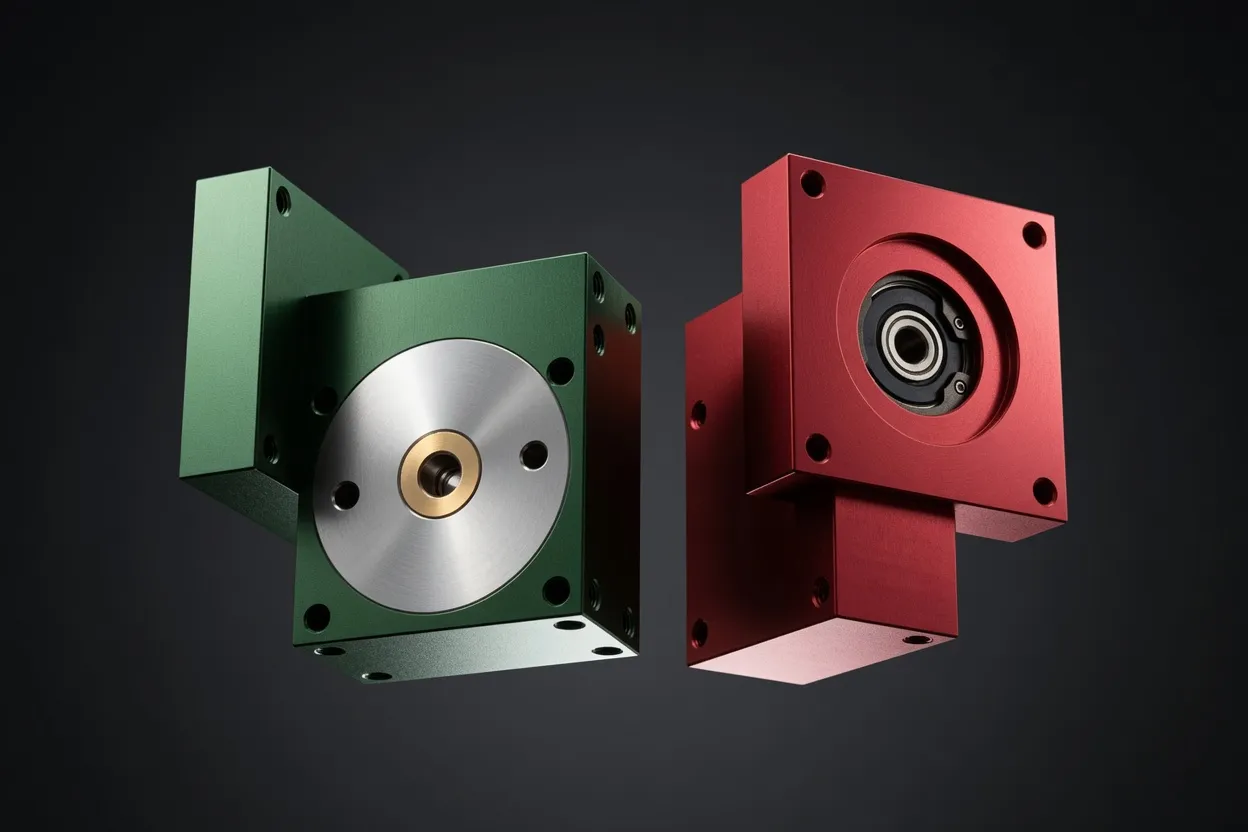
VRV030 in production since 2015 — every unit individually measured for backlash and torsional stiffness before dispatch