
Cover Crop Silage: Turning Fallow Into Feed
How Riverina, Darling Downs, and Eyre Peninsula cropping farmers are baling cereal-vetch mixes and oat covers before the cash crop season — improving soil and building feed inventory simultaneously.
The Fallow That Feeds: What Cover Crop Silage Actually Delivers
The term ‘cover cropping’ has been used in Australian farming for decades — planting a temporary crop between cash crops to protect soil structure, fix nitrogen, and suppress weeds. What has changed since around 2018 is the recognition that the cover crop need not simply be mulched back into the soil. Baling cover crops for silage or dry hay converts what was previously a soil management cost (seed, establishment, termination) into a dual-function investment that also produces storable, usable livestock feed.
The economics that make cover crop silage interesting are specific to mixed cropping-livestock enterprises — properties in the Riverina and central NSW that run sheep or beef cattle alongside wheat, canola, and oat cropping; Darling Downs operations integrating beef backgrounding with sorghum and grain legume rotations; and Eyre Peninsula mixed farmers who run Merino flocks on the same land that grows wheat and barley. For these operations, a cereal-vetch or oat-legume cover crop baled at the flag-leaf to early-pod stage in July or August produces 1.5 to 3.5 tonnes DM per hectare of 12 to 18% crude protein silage or hay — feed that arrives precisely when the previous season’s stored inventory is running low and purchased hay prices are at their seasonal peak.
This article covers the specific management of cover crops for silage production: species selection, cutting timing relative to cash crop planting schedules, baling moisture targets, and the soil health outcomes that continue even when the crop is removed as feed rather than incorporated. For how combining baleage with conventional hay production across the same season is managed on a mixed farm, our article on why cattle farmers are switching to combined baler-wrapper machines covers the equipment integration that makes multi-use baling systems work across a cropping calendar.
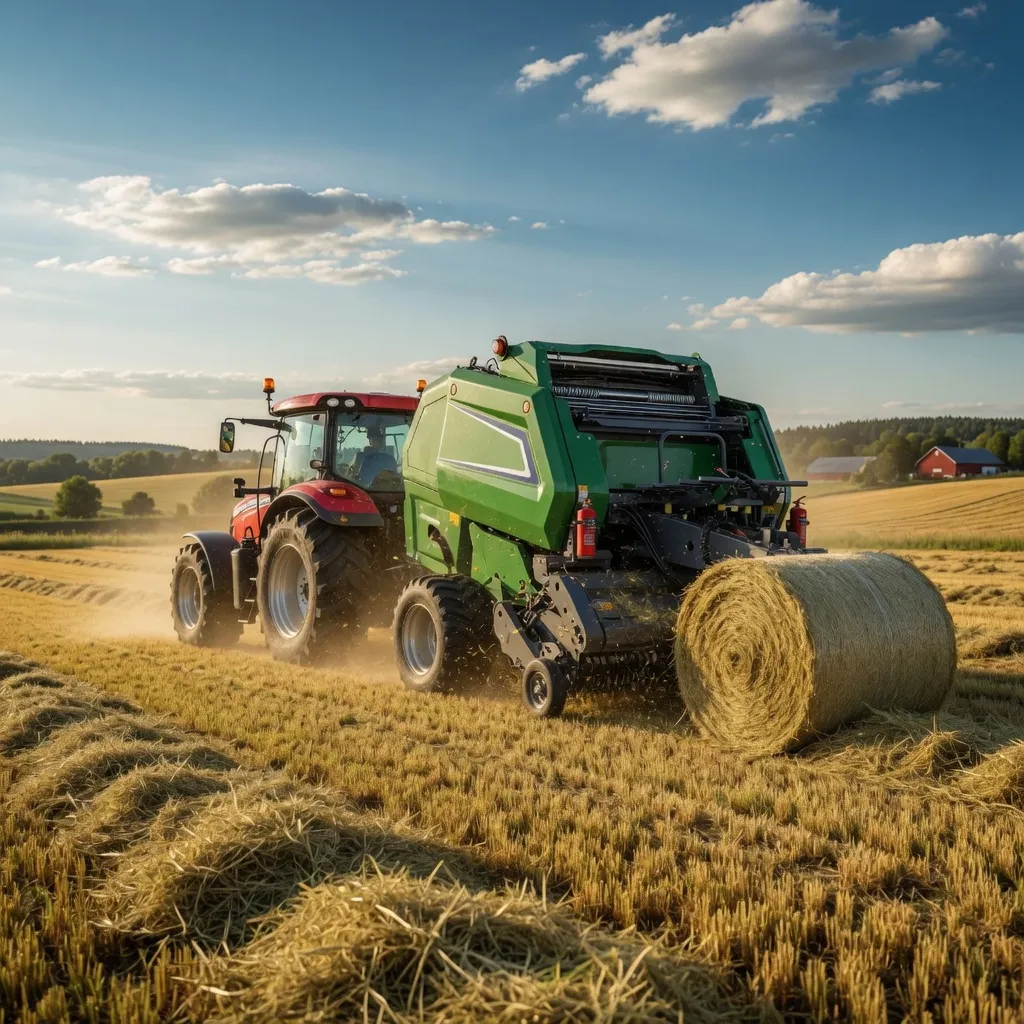
Cover Crop Species and Their Feed Value at Baling Stage
| Species Mix | CP at Baling (DM) | ME (MJ/kg DM) | DM Yield (t/ha) | Best Baling Stage |
|---|---|---|---|---|
| Oat–vetch (50:50) | 14–20% | 9.5–10.8 | 1.8–3.5 | Flag leaf on oat, early pod on vetch |
| Cereal rye–hairy vetch | 15–22% | 9.2–10.5 | 2.0–4.0 | Flag leaf, before rye heads |
| Oat monoculture | 9–13% | 9.5–10.8 | 2.5–4.0 | Flag leaf stage — not after heading |
| Field pea–oat | 16–22% | 9.8–11.0 | 1.5–3.0 | Early pod, 50% flowering |
| Barley–berseem clover | 13–18% | 9.5–10.5 | 2.0–3.2 | Flag leaf on barley, early clover |
| Phacelia monoculture | 15–20% | 9.0–10.0 | 1.5–2.5 | Full flowering — before seed set |
Why Legume Inclusion Transforms Cover Crop Silage Value
A pure cereal cover (oat monoculture, barley monoculture) baled at flag leaf produces decent hay at 9 to 13% crude protein — comparable to commercial grass hay. Adding a legume component (vetch, field pea, berseem clover) at 30 to 50% of the seed mix raises crude protein to 14 to 22% without meaningfully increasing seeding cost (vetch seed is relatively inexpensive at AUD $1.80 to $3.20 per kg). This protein premium — worth AUD $30 to $80 per tonne DM in livestock ration cost savings relative to cereal-only hay — is the financial justification for the legume addition in a mixed cropping system where nitrogen fixation from the legume also credits the following cash crop’s nitrogen requirement.
The Nitrogen Cycling Benefit That Continues Even After Baling
The common objection to baling cover crops rather than incorporating them is that removing the biomass removes the soil organic matter and nitrogen benefit. This is partially true for the carbon-adding function — incorporated residue feeds soil biology in a way that removed biomass does not. However, the nitrogen benefit of a legume cover crop is primarily delivered through the root system and root nodule decomposition, not through the above-ground biomass. A well-nodulated vetch or field pea cover crop that is baled rather than incorporated still fixes 40 to 80 kg of atmospheric nitrogen per hectare through root nodule decomposition — nitrogen that is released to the following cash crop without requiring any biomass incorporation.
Timing the Cover Crop Cut: The Cash Crop Planting Constraint
The Baling Window and the Next Crop Planting Date
The single most important constraint in cover crop silage production is the cash crop planting calendar. The cover crop must be terminated (either by baling, herbicide, or rolling) in time to allow adequate soil moisture recovery and residue management before the next cash crop is seeded. In southern NSW Riverina winter cropping systems, this means cover crops seeded in May to June are baled in late July to early August — a 10 to 12 week growth period that corresponds closely to optimal nutritional maturity for oat-vetch mixes.
| Region | Cover Seeding Month | Target Baling Month | Cash Crop Planting | DM Yield Potential |
|---|---|---|---|---|
| Riverina NSW (winter wheat) | April–May | July–August | Late April (following year) | 2.0–3.5 t/ha |
| Darling Downs QLD (winter) | April–June | July–September | May–June (following year) | 1.8–3.0 t/ha |
| Eyre Peninsula SA | April–May | July–August | May–June (following year) | 1.5–2.5 t/ha |
| Victorian Wimmera | April–May | July–August | April–May (following year) | 1.8–3.0 t/ha |
Baling vs. Herbicide Termination: The Feed-Value Argument
Herbicide termination of cover crops (glyphosate burndown before cash crop seeding) is the standard commercial practice where cover crops are grown primarily for soil health benefits. Baling before herbicide termination — or using baling as the termination method — captures the feed value at a cost equal to or less than herbicide application on most properties. At AUD $18 to $28 per hectare for glyphosate application costs on a cover crop, and AUD $20 to $40 per tonne DM value of the captured hay or silage, baling a 2-tonne DM cover crop generates AUD $40 to $80 per hectare in feed value while performing the same termination function as the herbicide. The economic case for baling rather than burning or spraying is straightforward on operations with baling equipment available.
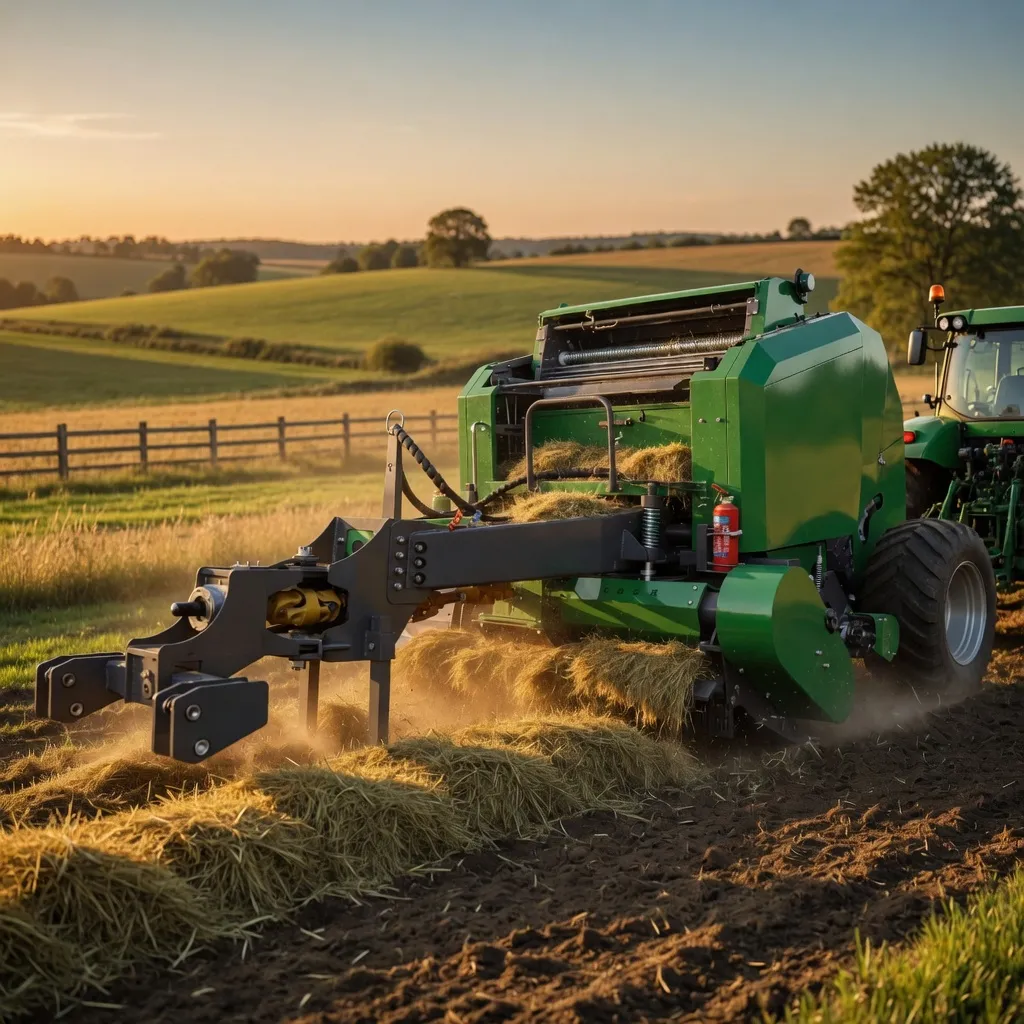
Baling Management for Cover Crop Silage
Moisture Targets: Silage or Hay?
Cover crop silage production (baling at 40 to 55% DM, wrapping with film) is preferred over dry hay production when: the baling window falls in a period of unreliable drying weather (June to August in high-rainfall zones of the Riverina and Wimmera), the legume inclusion is high (above 40% vetch or field pea, which are difficult to dry adequately without excessive leaf loss), or the feed is needed quickly (silage can be fed from 21 days post-baling; hay requires full drying before storage). Dry hay from a cover crop is preferred when the weather window is reliable, the operation already has barn storage for quality hay, and the buyer or user requires a dry product.
Inoculant for High-Legume Cover Crops
Oat-vetch and cereal rye-hairy vetch mixes with above 35% legume inclusion have a buffering capacity intermediate between pure grass silage and pure lucerne silage. LAB inoculant is recommended (not optional) for these mixes at any baling moisture above 45% DM — the legume fraction raises the buffering capacity enough to make reliable fermentation without inoculant support inconsistent. Apply at the standard 1 × 10⁶ cfu/g fresh matter rate at the baler pickup for all legume-containing cover crop silage.
The 9YG-1.25A variable-chamber round baler handles the variable windrow density of oat-vetch and cereal cover mixes — lighter in early-establishment stands, heavier in fully developed 3 to 4 month stands — without manual chamber pressure adjustment between paddocks. The variable chamber’s pressure-target operation ensures consistent bale density across the range of cover crop stands typical of a mixed cropping rotation.

Soil Health: What Baling Removes and What Stays Behind
The Carbon Removal Trade-Off
Removing above-ground biomass by baling does remove carbon and nutrients that would otherwise be incorporated into the soil organic matter pool. This is a real trade-off that should be acknowledged, not dismissed. The practical question is: how significant is the carbon trade-off relative to the feed value captured, and are there management practices that mitigate the loss?
A 2.5 tonne DM cover crop removed by baling exports approximately 2.5 tonnes of carbon from the paddock — equivalent to about 40% of the annual carbon input from a well-managed cover crop incorporation cycle. Over a 5-year rotation that includes 3 cover crop years, baling 2 of those 3 and incorporating 1 (allowing the root biomass from all three years to decompose) maintains a positive soil organic matter trajectory on most cropping soils while capturing feed value in the baled years.
Independent soil carbon research in NSW and SA cropping systems consistently shows that root biomass decomposition accounts for 40 to 60% of the soil carbon input from a cover crop — the same or more than above-ground incorporation. Since baling removes only the above-ground fraction, and roots remain to decompose regardless of baling, the actual soil carbon penalty of baling a cover crop is 40 to 60% less severe than removing the full biomass by burning or cutting and removing without incorporation.
Common Cover Crop Silage Mistakes
Vetch and field pea at full seed-set have finished their nitrogen fixation cycle and the legume fraction has transferred most of its protein value to the seed. Baling at this stage captures seed pods but at significantly lower leaf protein than earlier cuts. More importantly, baling at or after seed-set creates a volunteer legume weed problem in subsequent cash crops — the seed survives baling and germinates in the following wheat or canola paddock. Always cut before 70% seed fill on the legume component.
Baling at correct height (10 to 12 cm stubble) leaves a low residue load that does not impede direct-drill seeding of the following cash crop. Not baling — or baling too high and leaving tall stubble — requires additional management (rolling, flailing, or heavy harrowing) before cash crop seeding. Confirm the seeder’s trash clearance specification before deciding on baling height; most precision air seeders need fewer than 3 tonnes of surface residue for clean establishment.
A well-nodulated vetch or field pea cover baled before seed set delivers a soil nitrogen credit of 40 to 80 kg N per hectare through root decomposition. At AUD $1.80 to $2.20 per kg of urea-N equivalent, this is worth AUD $72 to $176 per hectare — a credit that should be included in the nitrogen budget for the following cash crop. Many cover crop farmers who bale their covers forget to reduce the following crop’s fertiliser allocation accordingly, spending money on purchased nitrogen that the legume root system has already delivered.
Frequently Asked Questions
Discuss Your Cover Crop Silage Programme
Tell us your cover species mix, cash crop rotation, and livestock system — we’ll help plan the baling window and equipment setup that captures maximum feed value from your fallow periods.