Why Throughput Is the Number That Matters Most
When evaluating a forage grinder, the specification that determines whether the machine fits your operation is not price, not power rating, and not brand — it is throughput expressed as tonnes per hour. Throughput tells you whether the machine can grind your daily or weekly feed requirement within the time available. A grinder that costs 30% less than the competition but runs at half the throughput may require double the operating hours to process the same feed volume, consuming more labour, more fuel or electricity, and leaving less margin for breakdown or bad weather delay. Getting throughput right before purchasing avoids the two common mistakes: buying a machine too small and creating a daily bottleneck in the feed preparation chain, or buying a machine too large and paying for capital and power capacity that sits idle most of the time.
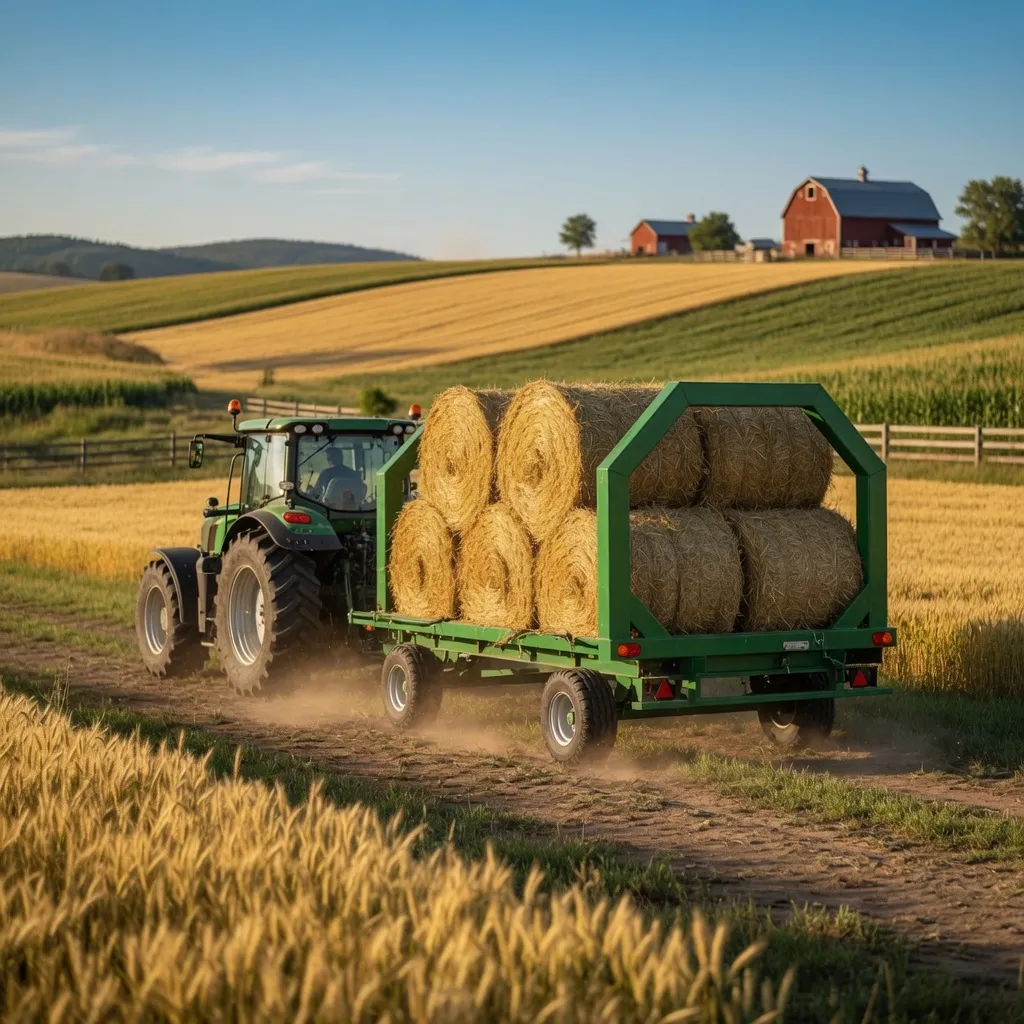
Forage logistics — moving bales from storage to grinder and then to the mixer or feedbunk — sets the practical upper limit on daily grinding throughput just as much as the machine’s rated capacity does.
Step One: Calculate Your Daily Grinding Requirement
Daily grinding requirement is simply the dry matter tonnage of ground roughage your animals need per day. Start with headcount, dry matter intake per head, and the proportion of the ration that comes from ground roughage. A worked example clarifies the calculation:
100 beef cattle at an average liveweight of 400 kg in a finishing programme consume approximately 2.8% of bodyweight as dry matter per day — 11.2 kg DM/head/day. The ration is 35% roughage on a dry matter basis, so roughage dry matter per head is 3.9 kg. For 100 head, total roughage DM per day is 390 kg. Roughage in this example is hay baled at 85% dry matter, so as-fed tonnage is 390 / 0.85 = 459 kg/day. The grinder must process 459 kg of hay per day for this operation.
Now factor in operating time. If the grinder runs for 2 hours per day during morning feed preparation, the required throughput is 459 / 2 = 230 kg/hour. The 9F-70 rated at 500–800 kg/hour on dry hay comfortably handles this requirement with significant capacity to spare — or allows the operator to complete the task in under one hour, freeing the rest of the morning for other work.
How Feed Material Affects Real-World Throughput
Rated throughput figures are measured on dry hay at 10–12% moisture under controlled laboratory conditions. Real-world throughput varies significantly depending on five material characteristics that every operator encounters in practice.
Use the figure for your primary feed material when calculating whether the 9F-70 meets your daily requirement. If you grind multiple materials, use the lowest throughput figure in your mix as the planning baseline, and treat higher-throughput materials as a buffer that allows you to complete the daily task faster.
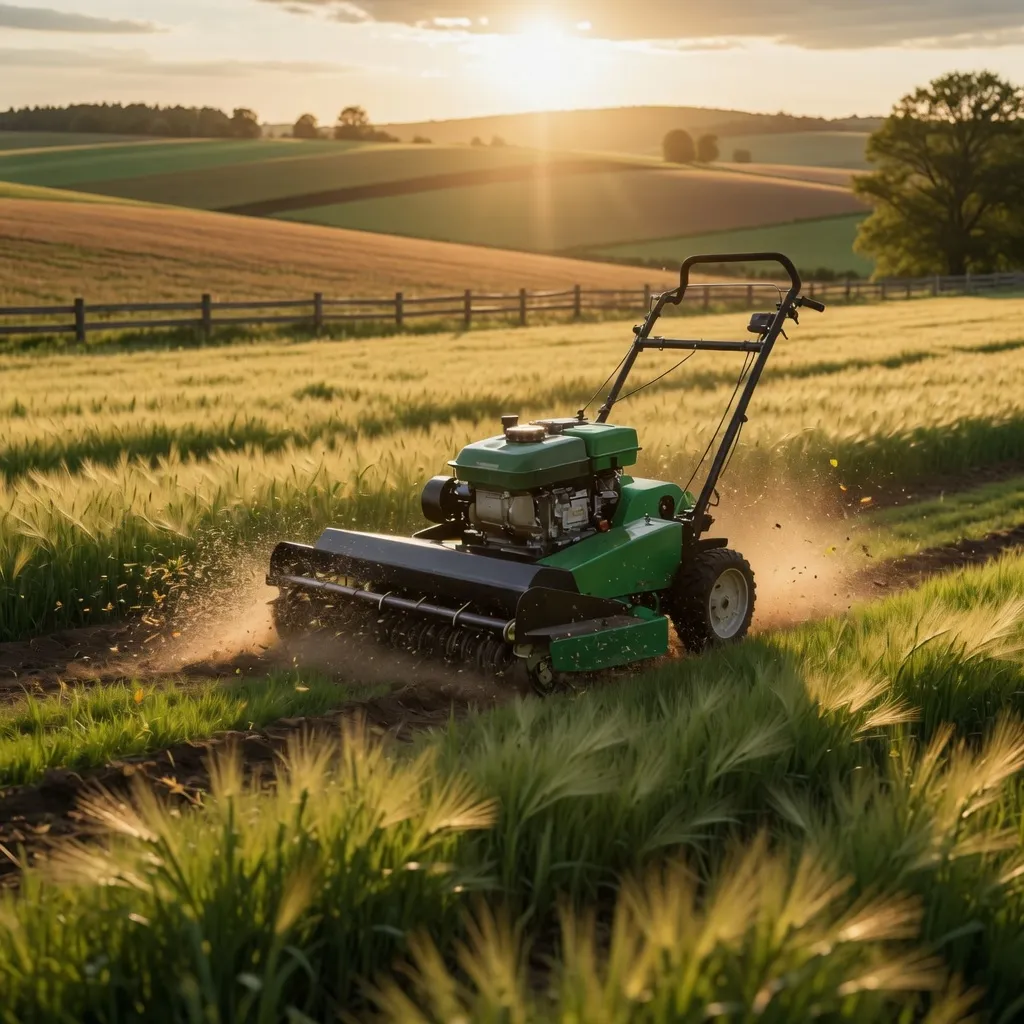
High-volume forage production requires matched throughput at every step — from cutting and windrowing to grinding — to avoid bottlenecks that delay feeding programmes.
How Screen Size Affects Throughput
Screen hole diameter has a direct and significant effect on throughput. Smaller holes require more particle recirculation inside the grinding chamber before material passes through, increasing the average time each particle spends in the machine and reducing the mass flow rate out. As a rough guide for the 9F-70 on dry ryegrass hay, moving from an 8 mm screen to a 6 mm screen reduces throughput by approximately 20–30%. Moving to a 4 mm screen reduces it by 40–55% compared to the 8 mm baseline. This is not a flaw — it reflects the additional energy input required to achieve finer particle size — but it must be factored into throughput planning.
Practical implication: if your operation requires 6 mm particle size for dairy TMR and your daily grinding requirement is 600 kg at 6 mm output, plan for an effective throughput of 350–500 kg/hour rather than the peak 800 kg/hour figure. At 400 kg/hour average, you need 1.5 hours of grinding to meet your daily requirement — a manageable operating window for most operations.
Throughput Planning for Different Operation Sizes
Small operation: 30–80 head cattle or 150–400 sheep/goats
Daily roughage DM requirement: 100–350 kg. At 8 mm screen, the 9F-70 processes this in 10–35 minutes. Grinding every second or third day and storing pre-ground material is viable for these scale operations, reducing daily labour to a minimum while maintaining fresh ground material in the feedbunk.
Mid-size operation: 80–250 head cattle or small dairy herd
Daily roughage DM requirement: 350–1,100 kg. The 9F-70 processes this in 45–165 minutes at 8 mm on dry hay. Daily grinding fits within a 2-hour morning preparation window for the upper end of this range. One machine is sufficient; a second is not needed until headcount exceeds 250 head.
Large operation: 250–600 head cattle or commercial feed mill
Daily roughage DM requirement: 1,100–2,600 kg. The 9F-70 processes this in 1.4–3.3 hours at 8 mm on dry hay. One machine in continuous operation covers this range but leaves minimal buffer. Two 9F-70 units run in parallel is the recommended configuration above 400 head, providing redundancy if one machine requires maintenance.
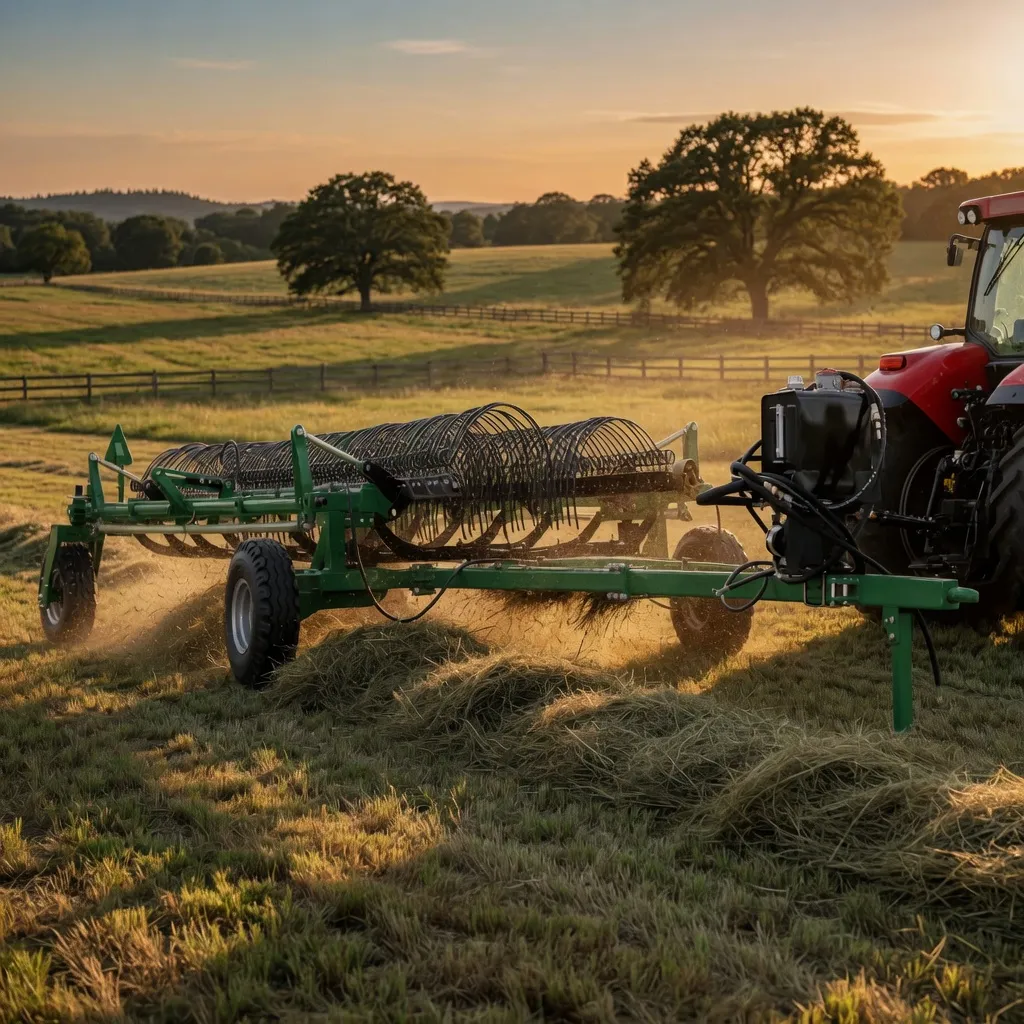
The full forage production chain — raking, baling, storing, grinding — must be sized together. A high-capacity rake and baler feeding into an undersized grinder creates a daily bottleneck that undermines the investment in field equipment.
What Reduces Throughput Below Rated Capacity
Five conditions commonly reduce real-world 9F-70 throughput below the rated figure. Identifying and addressing these keeps the machine running at its design capacity through the full feeding season.
Worn hammers: As hammer edges round off, fracture efficiency drops. The machine still grinds but recirculates material longer before it passes the screen, reducing mass flow. Schedule hammer flips at 100 hours and replacements at 200 hours as a preventive measure rather than waiting for visible throughput loss.
Screen blockage: Moist material coats the screen holes, reducing open area and restricting material exit. Clean screens between shifts when grinding material above 15% moisture. A blocked screen is often mistaken for insufficient motor power when the real issue is reduced screen open area.
Uneven feed rate: Intermittent overfeeding followed by gaps leaves the chamber alternately overloaded and idling. A controlled, consistent feed rate — either by operator habit or by an infeed conveyor with a speed controller — maximises throughput and reduces peak current draw.
V-belt slip: A stretched or worn V-belt between the motor and rotor reduces rotor RPM below design speed, cutting tip velocity and fracture energy. Check belt tension monthly and replace when elongation exceeds the manufacturer’s specified limit.
High-moisture feed: Every 5 percentage points of moisture above 12% reduces throughput by approximately 10–15%. If bale moisture varies seasonally, plan grinding time on the assumption of higher-moisture conditions and treat dry-weather performance as a bonus.
Recommended Product: 9F-70 Animal Feed Grass Grinder
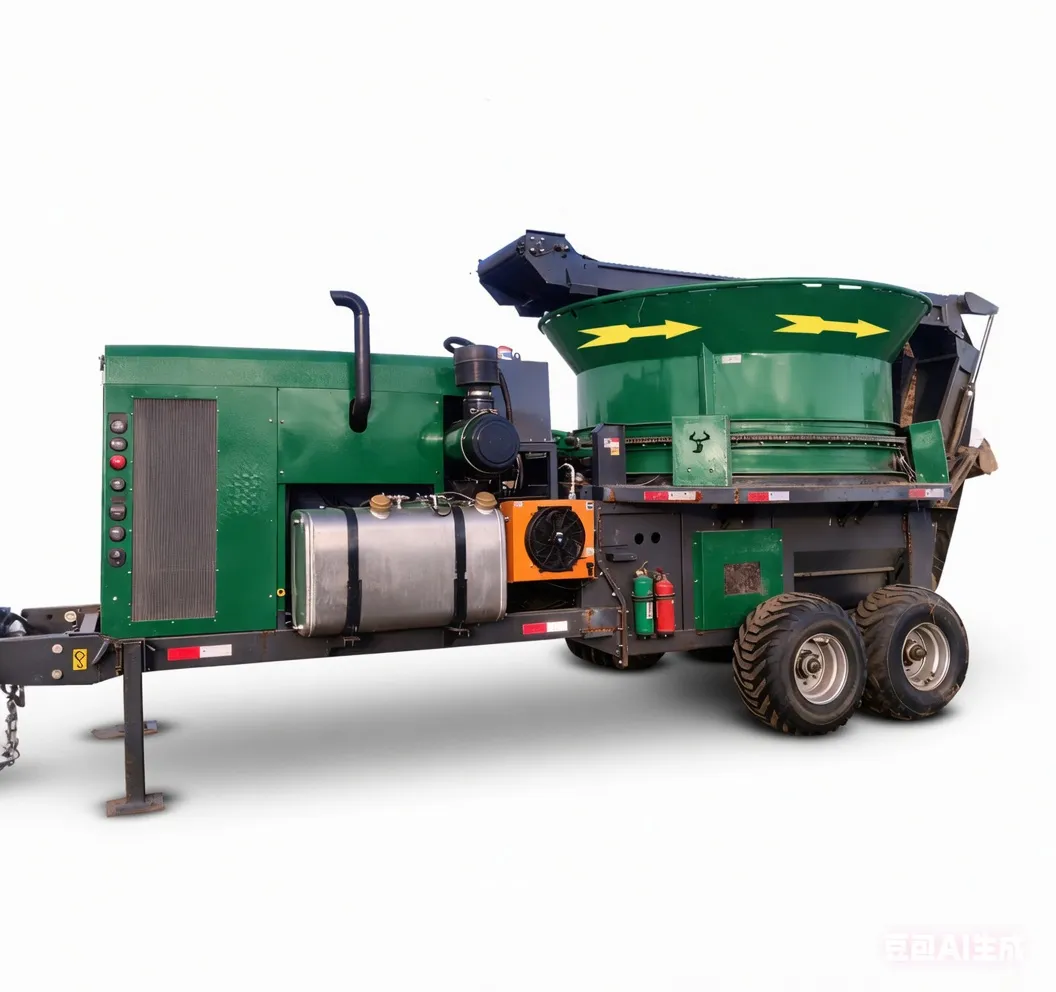
500–800 kg/hour on dry hay with an 8 mm screen. Rated 11–15 kW. Handles hay, lucerne, straw, corn stover, and mixed crop residues. CNC-punched screens in four hole sizes allow throughput and particle size to be balanced for your specific feed material and daily requirement. All wear parts — hammers, screens, belts, bearings — stocked at Condell Park NSW for fast dispatch across Australia.
Frequently Asked Questions
Match Your Grinder to Your Herd. No Bottlenecks.
EverPower can help you calculate the throughput you need and confirm whether the 9F-70 fits — before you buy.
EverPower Baling Machinery Australia Pty Ltd | 27 Harley Crescent, Condell Park NSW 2200
📞 +61 2 9708 3322 | ✉️ [email protected]