Smooth Bale Flow Is an Engineering Problem, Not a People Problem
An operator who sets up the 9JYY-4.5 correctly will achieve smooth, uninterrupted bale flow from infeed to stack from the first bale of the day. An operator who sets it up incorrectly — wrong angle, wrong infeed position, wrong belt tension — will spend the day managing interruptions: bales jamming at the infeed, sliding at the upper end, arriving bunched or gapped at the stacker, or drifting off the belt edge. None of these problems require more effort from the workers to fix; they require better setup decisions before the belt starts running. This guide covers every setup parameter in the order you should address them, explains what each setting does to bale flow, and identifies the specific failure modes that incorrect setup produces so you can diagnose and correct problems quickly if they appear during the day.
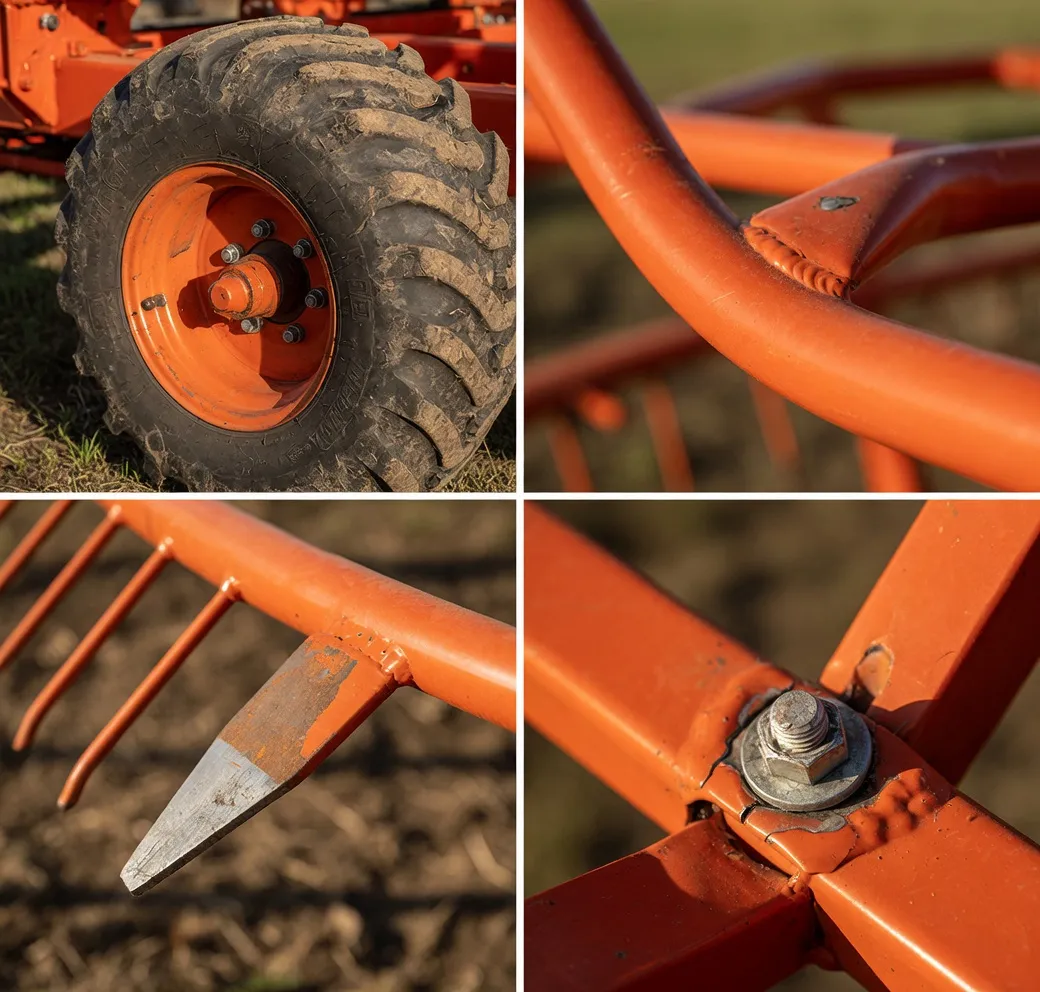
Correct setup before the first bale is placed on the belt determines whether the day runs smoothly or stops and starts — every setup parameter has a direct effect on bale flow consistency.
Setup Parameter 1: Ground Surface and Conveyor Stability
The 9JYY-4.5 must sit on a stable, non-shifting surface during operation. A conveyor that moves laterally or rocks when bales are loaded disturbs the belt tracking, changes the infeed angle relative to the bale source, and creates a safety hazard if the upper end loses contact with its support. On concrete or sealed surfaces, rubber-soled support feet provide adequate grip. On soil, gravel, or uneven paddock surfaces, use timber chocks or rubber mats under each support foot to distribute the load and prevent the feet from sinking into soft ground during operation.
Check stability by applying lateral pressure to the conveyor frame by hand before starting the motor. The frame should not rock or shift. If it does, adjust the support feet, add chocking material, or reposition to firmer ground. This check takes 15 seconds and is worth doing every time the conveyor is repositioned during the stacking day.
Setup Parameter 2: Infeed Height and Angle
The infeed height — the height of the lower end of the belt above the ground — determines how much the feeder must lift each bale before placing it on the belt. The 9JYY-4.5’s infeed end is adjustable via the support legs between approximately 300 mm and 700 mm above ground level. Set the infeed height so that the feeder can slide a bale onto the belt with minimal vertical lift — the belt surface should be at approximately the same height as the top of the bale stack on a truck tailgate, or at the height where bales are naturally resting if loading from a ground pile. For most average-height adults, the ideal infeed height is 400–500 mm — the bale can be slid forward and slightly upward onto the belt without an overhead component.
The overall elevation angle is then set by adjusting the upper end height via the upper support structure or by leaning the upper end against a solid shed structure. Confirm the angle is within 25–35 degrees by measuring the upper end height and the belt length: angle = arcsin(upper height / belt length). Note the angle before starting so it can be reproduced when repositioning for subsequent stack layers.
Setup Parameter 3: Belt Tension
Belt tension affects two things simultaneously: grip on the drive roller (too loose = slipping under load) and load on the roller bearings (too tight = accelerated bearing wear). The correct tension setting is a belt that deflects 20–30 mm under moderate hand pressure on the return (lower) run, midway between the two main rollers. Adjust using the tension bolts on the lower (tension) roller end — turning them equally on both sides to maintain the roller parallel to the drive roller.
A belt that has been in storage since the previous season will often be tighter on first deployment because rubber contracts slightly in cold storage temperatures. Check tension after the belt has been running for 10–15 minutes at operating temperature — the belt may need a small re-tension after it warms to working temperature, as rubber expands slightly and reduces the tension set at ambient temperature.
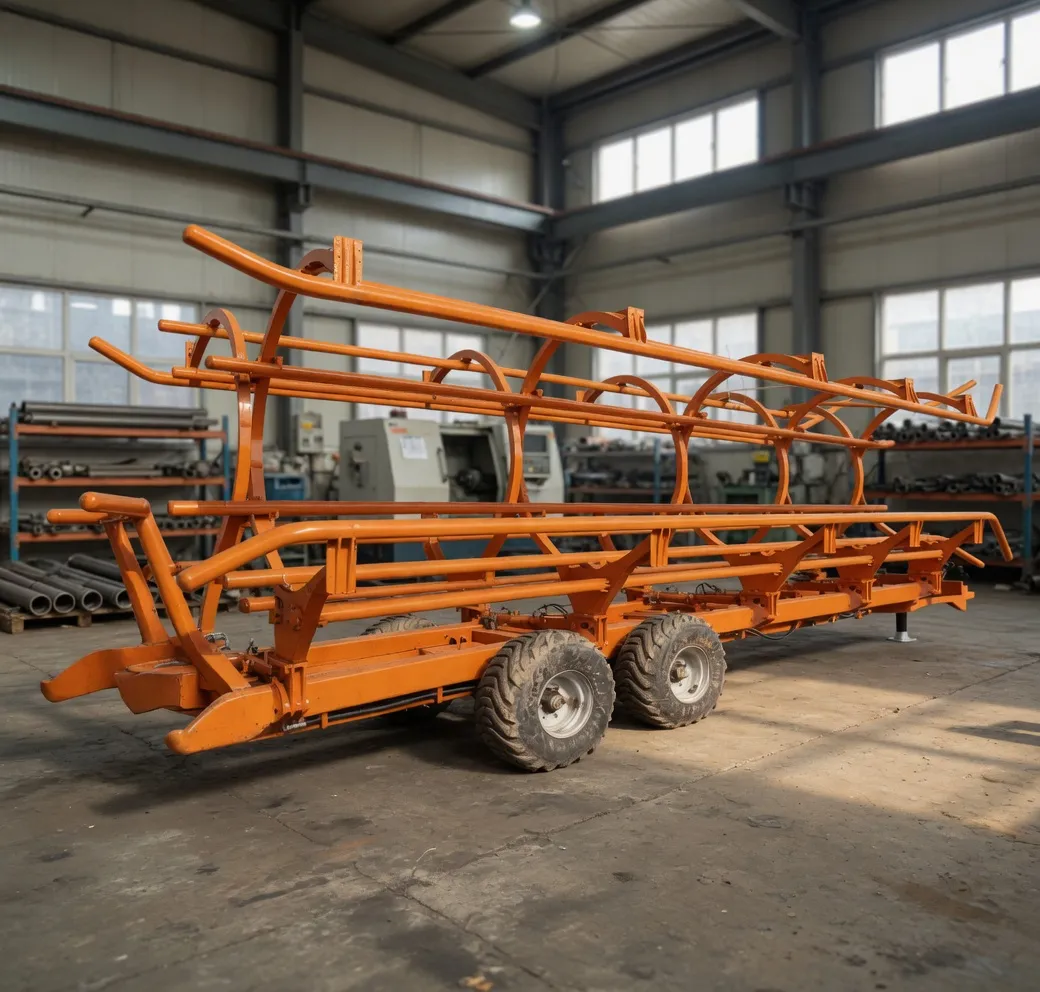
Belt tension and tracking are the two setup parameters that most directly affect bale flow consistency — both are checkable in under 2 minutes before each use session and should be verified every time the conveyor is repositioned.
Setup Parameter 4: Belt Tracking
A belt that tracks off-centre causes two problems: uneven wear on the belt edges and, in severe cases, the belt overhanging the frame rail on one side — which can cause the belt to catch on the rail and either tear the edge or stop the belt entirely under full bale load. Check tracking by running the belt empty for 30 seconds and observing from directly above the upper end. The belt should run with equal clearance on both sides of the frame rails. Adjust using the same tension bolts as for tension adjustment — turning one side’s bolt without the other causes the tension roller to angle slightly, which steers the belt toward the side with the longer bolt setting. Make small adjustments, run empty for 15 seconds, and re-observe. Avoid large corrections that overshoot and require counter-correction in the opposite direction.
Setup Parameter 5: Bale Orientation and Spacing on the Belt
The feeder controls bale orientation and spacing on the belt — two variables that significantly affect flow smoothness at the top. Bale orientation: place bales flat (broadest face down) for standard angles below 30 degrees. At steeper angles, bales placed on the narrow face (on edge) are more stable because the lower centre of gravity reduces tipping tendency, but the narrower footprint means the bale contacts only the centre of the belt width, which can cause sideways drift. For most operations, flat orientation at 25–30 degrees produces the best combination of stability and centre-belt tracking.
Bale spacing: the stacker needs approximately 3–4 seconds to position each bale before the next arrives. At belt speed of 0.4 m/s and a standard bale length of 450 mm, the minimum gap between bales for 3-second arrival spacing is: (0.4 m/s × 3 s) − 0.45 m = 0.75 m of clear belt between bale trailing edge and next bale leading edge. The feeder should maintain this gap rhythm rather than loading bales continuously with no gap — a cluster of bales arriving simultaneously at the top end forces the stacker to manage two or three bales at once, which is unsafe at height.
Diagnosing Flow Problems Mid-Session
Recommended Product: 9JYY-4.5 Hay Baler Conveyor
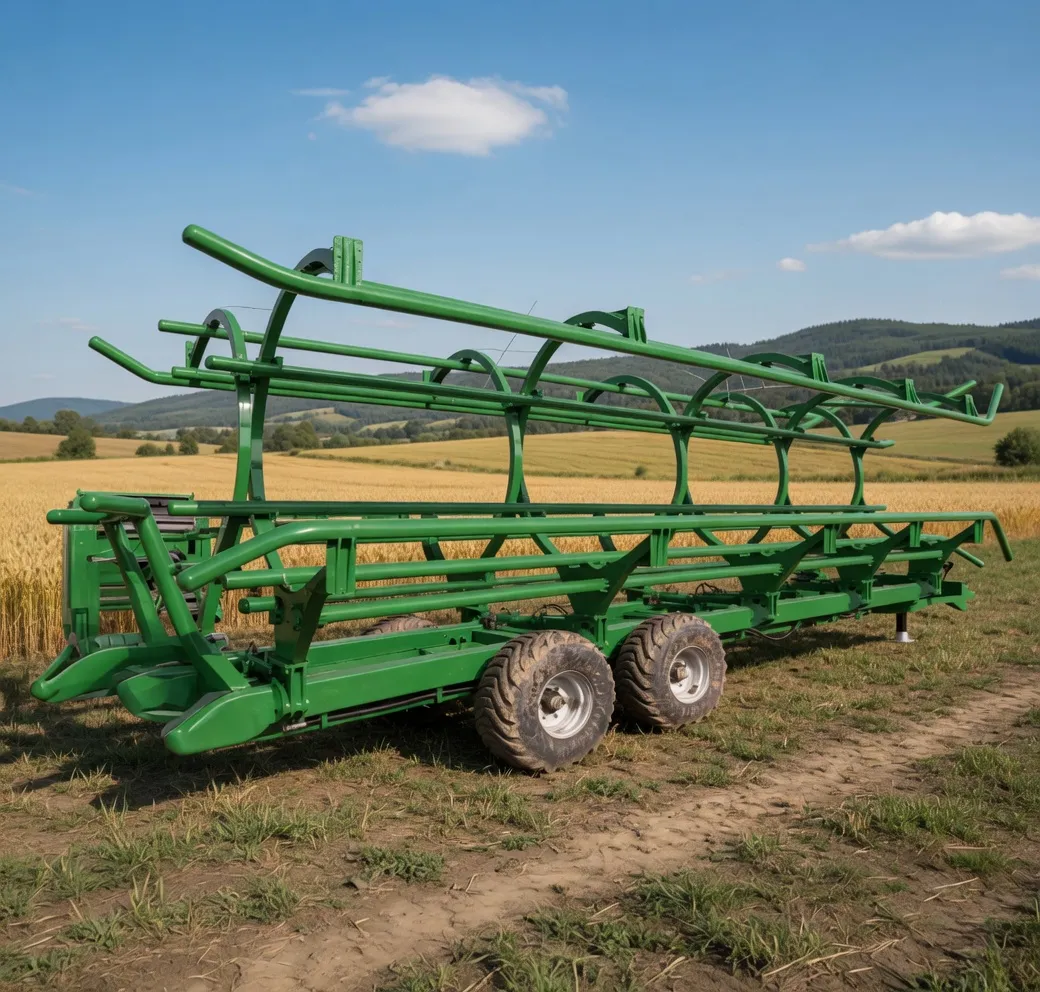
Adjustable angle 20–40°, adjustable infeed height, belt tension and tracking adjustment via standard tension bolts. Full setup from delivery position to first-bale-on-belt takes under 15 minutes. All setup parameters are accessible without tools for in-session adjustments. Available from EverPower’s Condell Park NSW warehouse with Australia-wide delivery.
Frequently Asked Questions
Set Up Right. Run Smooth. Stack Fast.
EverPower can advise on angle, tension, and tracking setup for the 9JYY-4.5 in your specific shed layout.
EverPower Baling Machinery Australia Pty Ltd | 27 Harley Crescent, Condell Park NSW 2200
📞 +61 2 9708 3322 | ✉️ [email protected]