
Small Beef Herds: When a 1.0 m Baler Makes More Sense
The economic and practical case for right-sizing your round baler — why 50 to 150 head beef operations often waste money running a 1.25 m machine they don’t need.
The Over-Investment Problem in Small Herd Baling
The 1.25 m round baler has become the de facto standard machine across Australian hay and silage production, and for operations above 200 head or 700+ bales per season, the specification makes sense. But there is a significant cohort of Australian beef operations — 50 to 150 head beef cattle on 200 to 800 hectares in WA’s Great Southern, Tasmania’s midlands and northwest, Victoria’s high country, and coastal NSW — where the 1.25 m baler is demonstrably the wrong machine, and the operators running one are paying a higher per-bale cost than necessary while simultaneously producing bales that are too large for their feeding and handling equipment.
The right machine for a 100-head beef operation making 250 to 450 bales per season is not the 1.25 m standard — it is the 1.0 m round baler, which produces a 200 to 320 kg bale that a 50 to 65 hp tractor can safely handle with a standard three-point linkage bale spike, that two people can roll by hand in an emergency, and that a mob of 80 to 120 cattle consumes in 1 to 2 days without the excessive aerobic deterioration exposure that occurs when a mob takes 4 to 6 days to consume a full 1.25 m silage bale. This article makes the right-sizing argument in detail.
For the broader question of how to manage feed supply through drought conditions — the primary silage challenge for small beef operations — our article on silage baling for beef cattle stations in drought covers the strategic planning context.
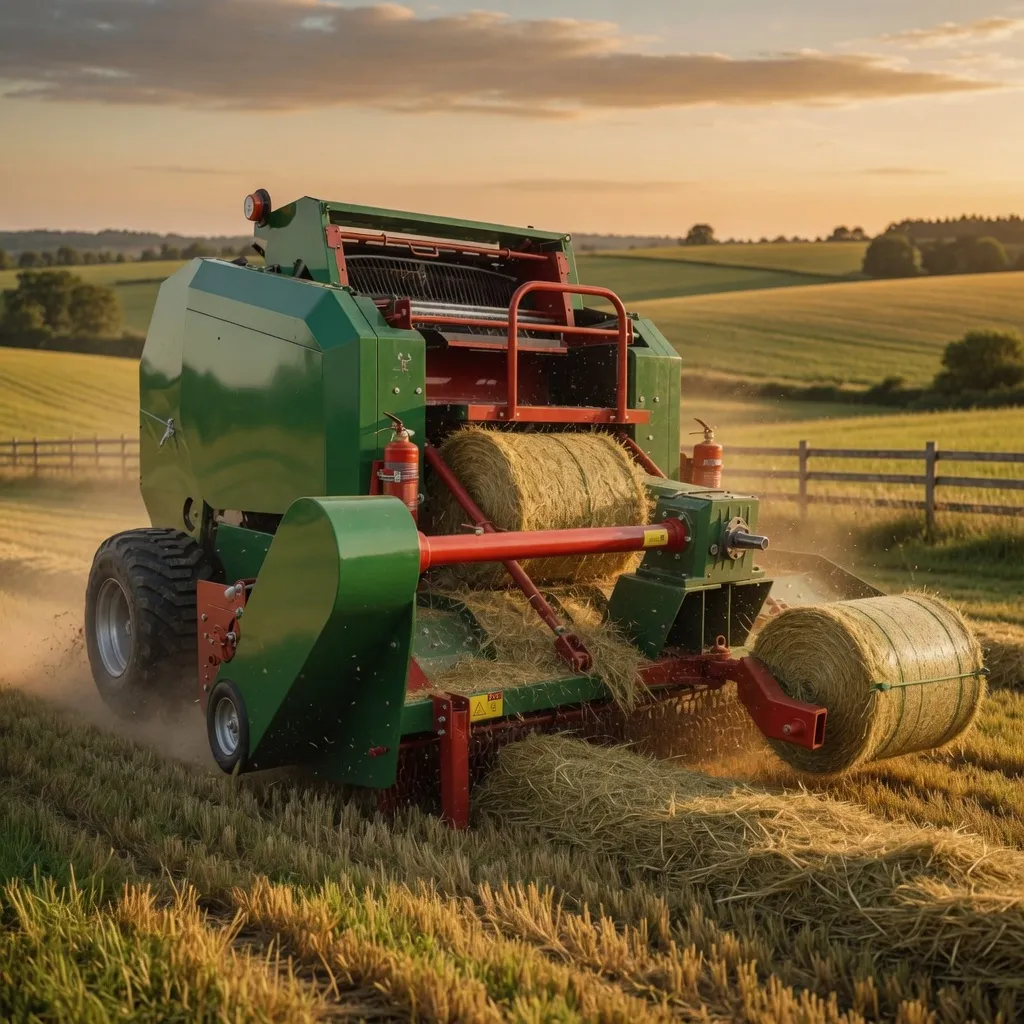
Bale Size Economics: What Changes When You Go From 1.25 m to 1.0 m
Feed-Out Match — The Most Important Factor for Small Herds
The fundamental principle of bale sizing is feed-out match: a bale should be consumed by the feeding mob within 2 to 3 days of opening in summer (3 to 4 days in winter) to minimise aerobic deterioration exposure on the opened bale face. A 100-head beef herd eating 8 kg DM silage per head per day consumes 800 kg DM per day — enough to eat through a 1.0 m bale (90 to 110 kg DM) in approximately 2 to 3 hours. This is the ideal feedout rate: the bale is consumed before aerobic deterioration can establish on the exposed face.
The same 100-head mob takes approximately 4 to 5 days to consume a full 1.25 m silage bale (200 to 260 kg DM). In warm conditions (above 18°C ambient), the exposed face of a silage bale begins aerobic heating within 12 to 24 hours of opening — and after 3 to 4 days of exposure, the deterioration zone can extend 10 to 20 cm into the bale. For a mob that takes 4+ days to consume a 1.25 m bale, a material fraction of the bale is fed in a deteriorated state, with reduced palatability and elevated yeast activity.
| Metric | 1.25 m Bale | 1.0 m Bale | Better for 100 Head? |
|---|---|---|---|
| Fresh weight (silage) | 420–580 kg | 200–300 kg | — |
| DM content (45% DM) | 190–260 kg DM | 90–135 kg DM | — |
| Days to consume (100 head, 8 kg DM/day) | 2.4–3.25 days | 1.1–1.7 days | ✓ 1.0 m |
| Aerobic exposure risk | Moderate–High | Low | ✓ 1.0 m |
| Tractor required to handle | 75–100 hp | 50–65 hp | ✓ 1.0 m |
| Film cost per bale | $8–$14 | $5–$9 | ✓ 1.0 m |
| Film cost per tonne DM | $35–$65/t | $40–$75/t | Similar — 1.25 m slight edge |
| Bales per tonne DM | 3.8–5.3 | 7.4–11.1 | 1.25 m ahead on handling count |
Tractor Compatibility — A Real Constraint on Small Properties
Tasmania’s beef operations on 300 to 600 hectare hill country farms and WA’s Great Southern beef properties typically run tractors in the 55 to 75 hp range — appropriate for the farm’s primary tillage, cultivation, and feeding tasks. A 1.25 m silage bale at 480 to 580 kg fresh weight on a bale spike pushes the hydraulic lift capacity of a 65 hp tractor to its safe operating limit, particularly when lifting over a fence or stacking two layers high. A 1.0 m bale at 220 to 300 kg is safely within the lift capacity of the same tractor with meaningful safety margin — allowing confident, safe operation rather than the cautious low-speed movement that characterises operating at the edge of hydraulic capacity.
The Right Machine: 9YG-1.0 vs 9YG-1.0C for Small Beef
Standard 1.0 m vs C-Type — What the Difference Means Practically
EverPower’s 1.0 m round baler range includes two variants: the 9YG-1.0 round baler (standard configuration for hay and silage across a broad range of crops) and the 9YG-1.0C type round baler (a reinforced configuration for heavier crop loading conditions). For small beef operations making primarily silage from dense ryegrass or mixed pasture, the 1.0C type’s heavier-duty chamber components handle the sustained high-moisture loading of silage crops without the accelerated wear that lighter construction produces. For operations making primarily hay with occasional silage, the standard 1.0 m is the appropriate specification.
PTO Requirements and Typical Farm Tractor Fleet
The 9YG-1.0 and 1.0C require 35 to 55 hp at the PTO — placing them within the operating range of the 50 to 70 hp tractors that dominate small-to-mid beef operation fleets in Tasmania and WA’s Great Southern. This compatibility is not trivial: a small beef property running a 65 hp tractor as its primary unit can run the 1.0 m baler, the mower, the rake, and the front-end loader without a dedicated second tractor. Scaling to a 1.25 m baler typically requires either a larger tractor (additional capital cost) or accepting reduced forward speed and throughput (which extends baling time in weather-constrained windows).
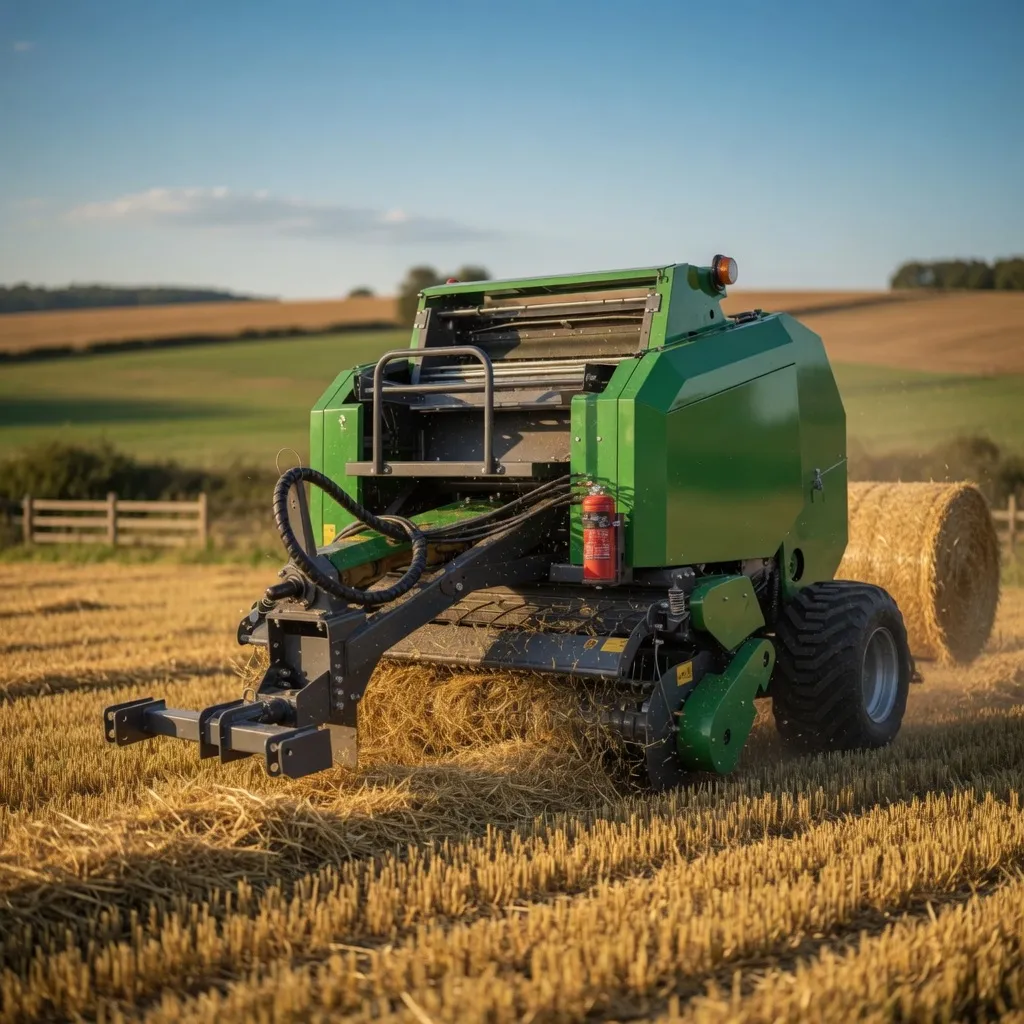
When to Upgrade: The 1.0 m to 1.25 m Transition Point
The right time to step up from a 1.0 m to a 1.25 m baler is when two conditions are simultaneously met: annual bale production exceeds 600 to 700 bales per season (the throughput efficiency advantage of the 1.25 m format becomes meaningful above this volume), and the farm’s tractor fleet has been upgraded to 80+ hp to manage cattle numbers above 150 to 200 head. Below these thresholds — which describe the overwhelming majority of small beef operations in Tasmania, WA’s Great Southern, and high-country Victoria — the 1.0 m format is the operationally and economically correct choice.
| Herd Size | Annual Silage Bale Need | Recommended Format | Reason |
|---|---|---|---|
| 30–80 head | 100–200 bales/season | 1.0 m | Tractor fit; feedout match; lower capital |
| 80–150 head | 200–450 bales/season | 1.0 m or 1.0C | Same logic; silage loading favours 1.0C |
| 150–250 head | 450–750 bales/season | 1.25 m viable | Volume and throughput justify the step up |
| 250+ head | 750+ bales/season | 1.25 m preferred | Film cost per tonne DM becomes more important |
Common Mistakes When Small Beef Operations Buy Balers
The most common capital allocation mistake for small beef operations entering baling. A 1.25 m baler bought for a 100-head herd ‘in case numbers grow’ costs 30 to 50% more in purchase price, requires a larger tractor, and produces bales that the current herd takes too long to consume — generating real aerobic deterioration losses today while waiting for a future herd expansion that may or may not occur on the anticipated timeline.
Many small beef operators calculate bale size requirements on the basis of total DM in the bale versus daily intake, without accounting for the aerobic deterioration losses that occur over a 4 to 6 day feedout period from a bale that’s too large for their mob. Actual DM delivered from a 1.25 m silage bale consumed over 5 days in 25°C conditions is typically 10 to 18% less than the DM the bale contained at opening — this waste is real and exceeds the film cost saving from the larger format.
The 1.0 m round baler produces silage of identical fermentation quality to the 1.25 m format — the bale diameter does not affect fermentation chemistry. The density achievable in a 1.0 m bale (160 to 210 kg DM/m³) is in the same range as the 1.25 m format. The quality difference between formats is entirely a function of the operator’s management — moisture control, inoculant use, film layers, and wrapping timing — not of bale size.
Frequently Asked Questions
Discuss Right-Sizing Your Baling Equipment
Tell us your herd size, annual bale target, and tractor horsepower — we’ll advise whether a 1.0 m or 1.25 m machine is the right investment for your operation.