Why Feed Grinding Is the Leverage Point in Livestock Nutrition
Every kilogram of hay, straw, corn stover, or pasture grass that enters a livestock operation carries nutritional value — but only a fraction of that value reaches the animal if the feed is presented in long, coarse form. Ruminants sort long-stemmed roughage, selecting grain-rich fractions and leaving behind stalks. Monogastrics cannot digest coarse fibres at all without mechanical pre-processing. A forage grinder converts raw roughage into a uniform, particle-sized material that animals cannot sort, that mixes evenly in a total mixed ration, and that delivers consistent dry matter and energy intake at every feed. The 9F-70 Animal Feed Grass Grinder from EverPower Baling Machinery is a hammer-mill forage grinder designed for Australian feedlot and small-to-mid-scale livestock operations. This guide covers what the 9F-70 does, how to evaluate whether it fits your operation, what to compare when purchasing a hammer-mill grinder, and how to get accurate pricing from the Australian importer.
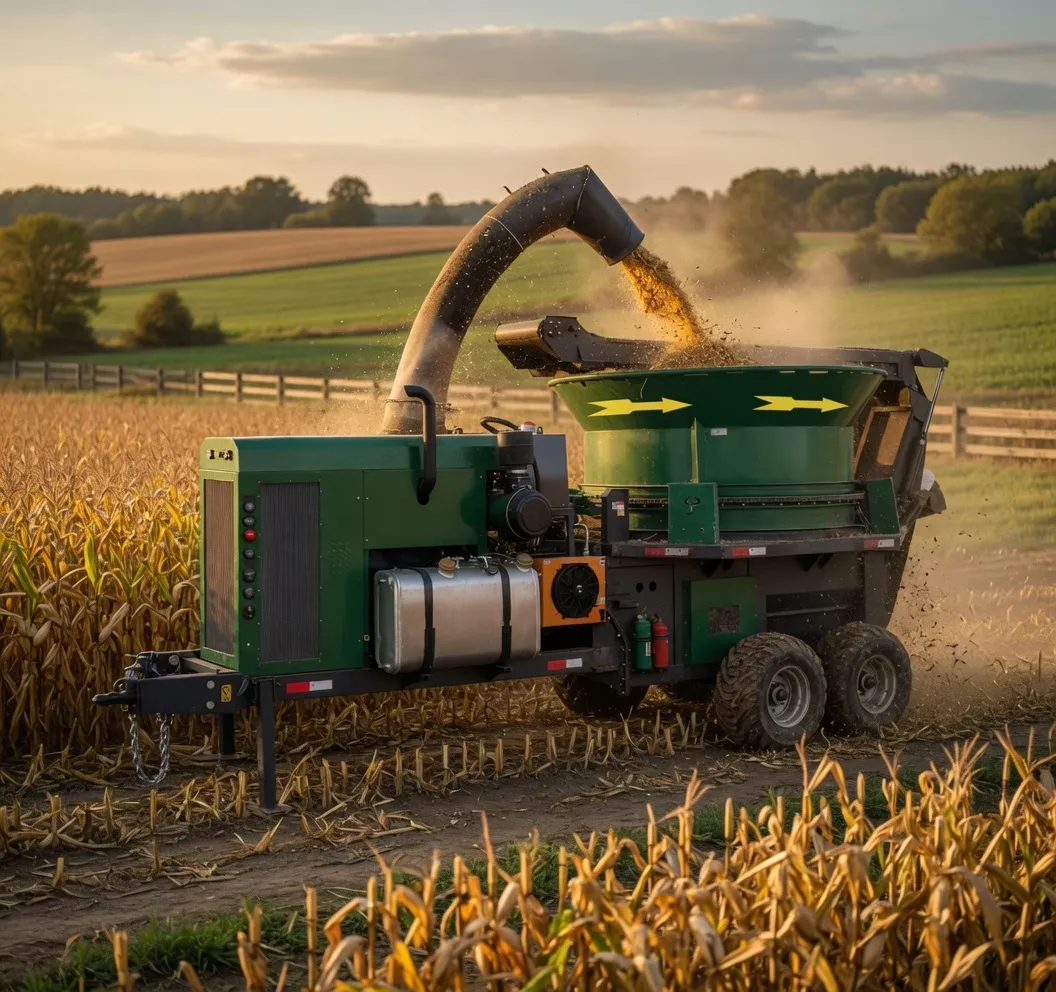
The 9F-70 Grass Grinder processes hay, straw, corn stover, and mixed roughage into consistent particle sizes suitable for TMR and direct feeding.
What Is a Hammer-Mill Forage Grinder?
A hammer-mill forage grinder processes roughage by passing raw material through a chamber where a high-speed rotor carries rows of hardened steel hammers. As material enters the chamber, the hammers strike it repeatedly at tip speeds of 60–90 m/s, fracturing long stems into short, consistent particles. The ground material is forced outward by centrifugal force against a perforated screen that surrounds the lower half of the rotor. Particles small enough to pass through the screen exit into the collection system; oversized particles are recirculated and struck again until they reach the target size. The screen hole diameter determines output particle size — smaller holes produce finer material, larger holes produce coarser chop. Swapping screens takes 10–15 minutes and allows a single machine to produce fine grind for pellet mill infeed, medium grind for TMR, or coarse chop for roughage supplementation without modifying any other part of the machine.
The 9F-70 uses this hammer-mill principle with a 70 cm rotor diameter — the figure that gives the machine its model designation. Rotor diameter directly affects throughput capacity and power draw: larger rotors accommodate more hammers, generate higher centrifugal force, and process material faster. The 9F-70 is rated for throughput of 500–800 kg/hour on dry hay and 300–500 kg/hour on denser materials such as corn stover and dry straw, making it well-matched to operations running 50–200 head of cattle or a small to mid-size feed-mixing operation.
Key Specifications of the 9F-70
What Feed Materials Does the 9F-70 Process?
The 9F-70 is designed for dry and semi-dry roughage. Feed materials it handles well include dry hay (ryegrass, lucerne, pasture mix), wheat straw, barley straw, oat straw, corn stover (dried stalks and leaves after cob removal), sorghum stover, dried sugar cane bagasse, rice straw, and mixed crop residues. The machine processes round bales or square bales fed manually from the top inlet, or continuous-feed operation with an optional conveyor that draws material in at a controlled rate to prevent overloading the rotor.
Material moisture content affects both throughput and output quality. At below 15% moisture, most dry roughages flow freely through the screen and grind at maximum rated throughput. Between 15% and 25% moisture, throughput drops 20–35% and screen blockages become more frequent — clearing the screen every 30–60 minutes of operation is normal. Above 25% moisture, the 9F-70 is not the appropriate tool: wet silage and green chop require a dedicated forage harvester with a cutting mechanism rather than a hammer mill. Using a hammer mill on wet material causes matting on the hammers, accelerated screen wear, and poor particle size consistency.
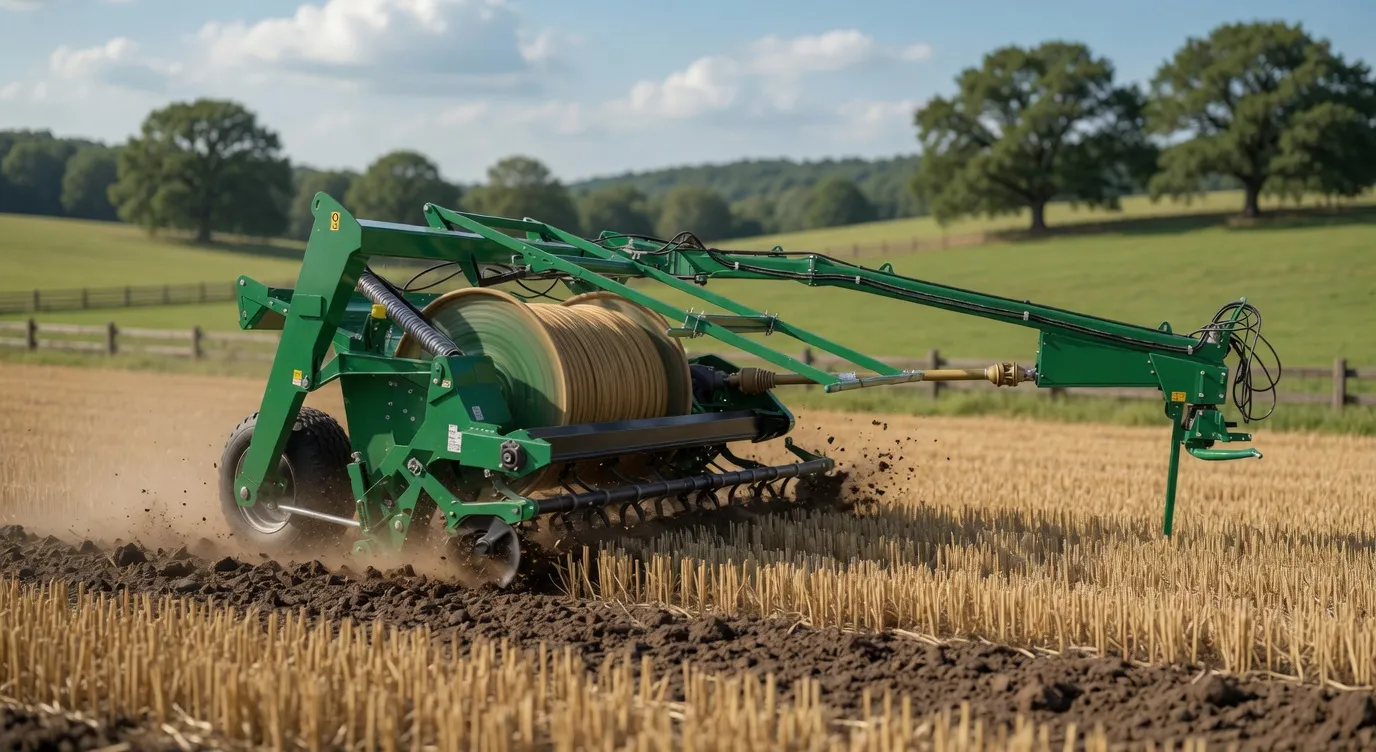
Proper forage preparation before grinding — cutting, conditioning, and drying — ensures the grinder operates at peak throughput and produces consistent particle sizes.
Who Buys the 9F-70? Five Typical Use Cases
Feedlot and backgrounding operations (50–500 head)
Grinding straw, hay, and crop residues for inclusion in a total mixed ration (TMR). The 9F-70 produces the 5–15 mm particle size required for effective TMR mixing, where particles must be short enough to stay blended without sorting but long enough to maintain effective rumen fibre function.
Small-scale pellet mill operators
Pellet mill dies require infeed material at 3–5 mm particle size. The 9F-70 fitted with a 4 mm screen pre-grinds hay and straw to this specification before the pellet press. One 9F-70 can keep a small-to-mid pellet mill (200–500 kg/hour output) continuously supplied without becoming the throughput bottleneck.
Goat, sheep, and deer farms
Small ruminants and deer struggle to consume and digest long hay efficiently. Ground hay at 8–12 mm reduces refusal and wastage. Farms running 200–600 small ruminants can process a season’s hay supply in a few days of grinding, storing bagged ground hay for daily feeding.
Crop residue utilisation
Grain growers with livestock often have surplus straw bales after harvest. The 9F-70 converts these into a marketable or usable feed product rather than burning or incorporating them. Corn stover ground to 10–15 mm is a cost-effective energy source for dry cows and growing cattle.
Custom feed-grinding contractors
Mobile grinding contractors mount the 9F-70 on a trailer and provide on-farm grinding services to neighbours who cannot justify owning a grinder. The machine’s compact footprint (approximately 1.2 m × 0.9 m base) and relatively low weight make trailer mounting practical.
What to Compare When Buying a Forage Grinder
The forage grinder market includes machines from multiple countries at a wide range of prices. Before comparing prices, compare these five factors that determine long-term operating cost and reliability.
Hammer steel grade
Hammers in budget grinders are often stamped from mild steel with surface hardening only. After 50–80 hours of operation, the hardened surface wears through and the mild steel core wears rapidly. The 9F-70 uses through-hardened manganese steel hammers that maintain their hardness profile through the full cross-section — expected life is 150–250 hours before replacement is needed.
Screen material and hole precision
A screen with poorly drilled holes produces inconsistent particle sizes even with fresh hammers. The 9F-70 screens are CNC-punched from 2 mm plate with hole-diameter tolerance of ±0.2 mm, ensuring the particle size you set is the particle size you get.
Rotor bearing specification
The rotor runs at 2,800–3,200 RPM under load and is the highest-stress component in the machine. Under-specified bearings fail without warning and can cause rotor seizure. Verify that the rotor bearings are sealed-type, heavy-duty spherical roller bearings rated for the operating RPM and radial load.
Spare parts availability in Australia
A grinder running 8 hours/day will need hammer sets every 2–4 months and screen replacement every 6–12 months. If these parts are not stocked in Australia, a breakdown during the feed-preparation season means days or weeks of delay waiting for international freight. EverPower stocks hammers, screens, bearing sets, and V-belts for the 9F-70 at the Condell Park NSW warehouse.
Power supply compatibility
An 11–15 kW motor requires a 3-phase 415 V supply in Australia. If your property has single-phase power only, confirm the diesel engine option before purchasing. The 9F-70 is available with either power source — specify at the time of order.
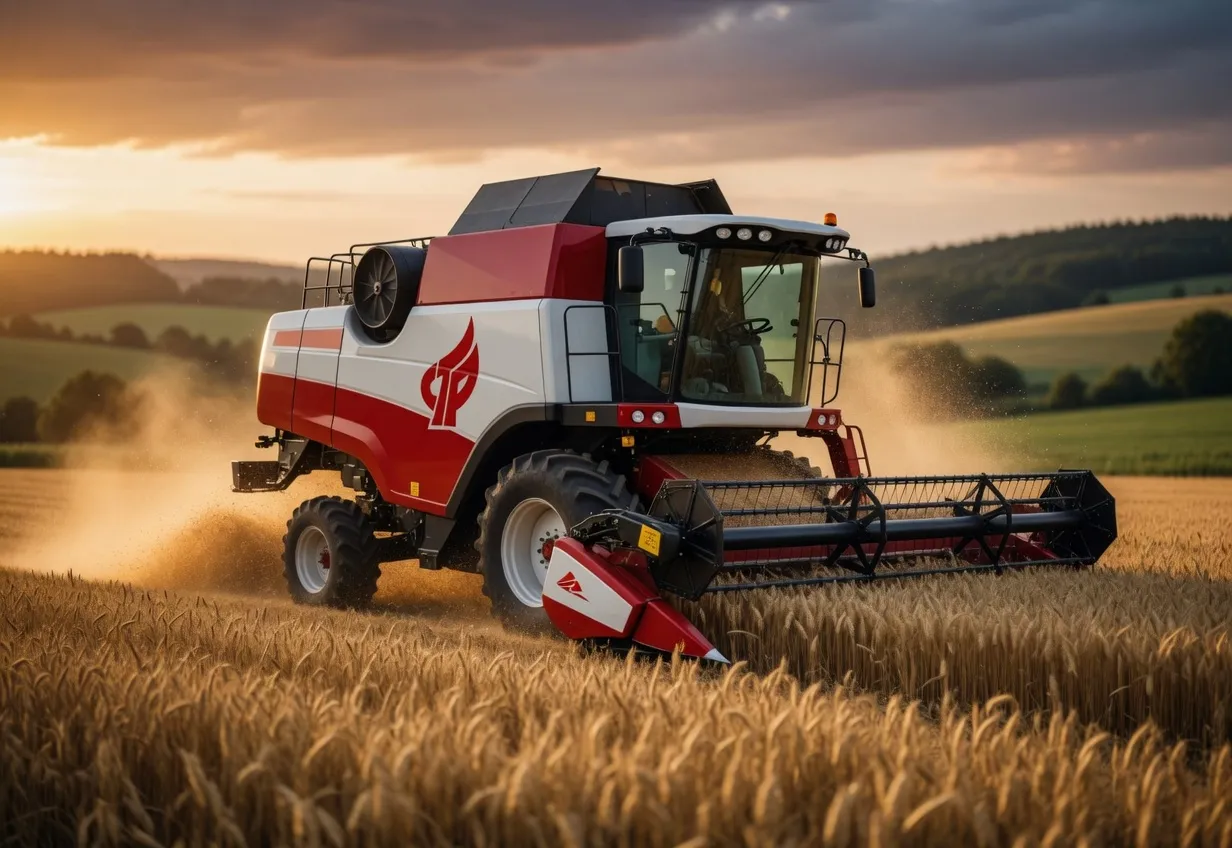
A complete forage system — baling, storing, and grinding — gives livestock operators full control over feed quality and cost from paddock to feedbunk.
9F-70 Forage Grinder Price: What to Expect
Forage grinder pricing in Australia spans a wide range. Import-quality hammer mills with local spare-parts support and full documentation for Australian electrical compliance (where applicable) sit at a higher price point than grey-import units with no local support, but the total cost of ownership over 3–5 years typically favours the supported option significantly. Contact EverPower for current 9F-70 pricing — the figure depends on configuration (electric motor vs diesel, discharge system, screen set included), volume, and delivery location.
When evaluating price, calculate cost per tonne processed over the machine’s expected life rather than purchase price alone. A machine that processes 600 kg/hour for 300 hours per year over 5 years processes 900 tonnes. Divide total cost of ownership (purchase + parts + power + labour) by 900 and compare that per-tonne figure against the cost of buying pre-ground feed or contracting the work out. For most operations running more than 100 tonnes per year, ownership of a 9F-70 is the lowest-cost option.
Recommended Product: 9F-70 Animal Feed Grass Grinder
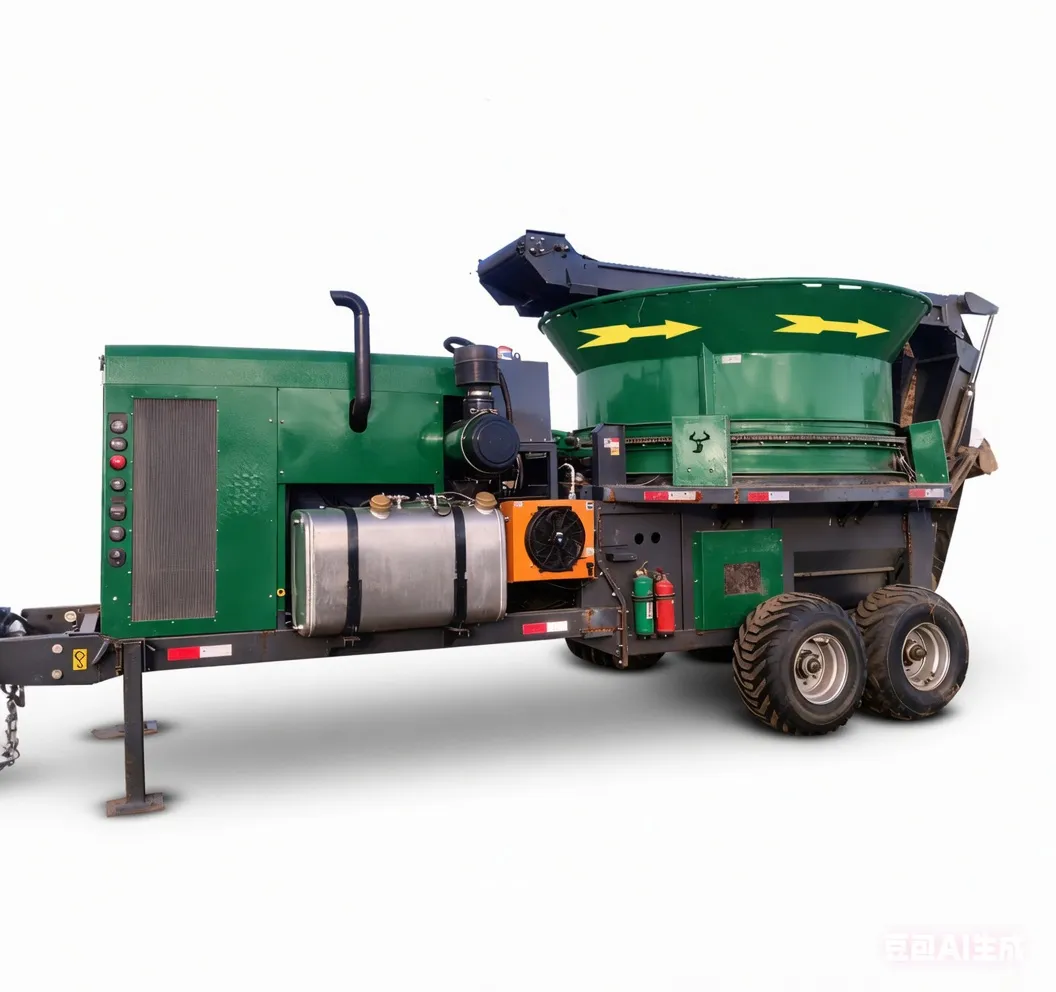
The 9F-70 processes dry hay, straw, and crop residues at 500–800 kg/hour into consistent 4–15 mm particles for TMR, direct feeding, or pellet mill infeed. Through-hardened manganese steel hammers, CNC-punched screens, and sealed heavy-duty rotor bearings deliver reliable operation through demanding Australian feed-production seasons. Electric and diesel power options available. Hammers, screens, and bearing sets stocked at EverPower’s Condell Park NSW warehouse for same-day dispatch.
Frequently Asked Questions
Ready to See the 9F-70 Specifications?
EverPower’s team can advise on screen selection, power options, and throughput requirements for your specific feed material and operation size.
EverPower Baling Machinery Australia Pty Ltd | 27 Harley Crescent, Condell Park NSW 2200
📞 +61 2 9708 3322 | ✉️ [email protected]