
Why Cut Quality Is the Starting Point, Not an Afterthought
Every hay producer eventually faces the same question: does my mower cut cleanly enough? The answer affects everything downstream — drying speed, leaf retention, bale density, and ultimately the dollar-per-tonne value of the finished product. A torn or bruised stem loses moisture unevenly, extends field curing time by 6–12 hours according to NSW Department of Primary Industries field observations, and shatters the protein-rich leaf fraction that export buyers pay a premium for. Two mower architectures dominate the sickle-bar category: single-blade and double-blade. Both use reciprocating knife bars rather than spinning discs, so they belong to the same mechanical family, but the way they shear the crop differs in meaningful ways. This article breaks down each design in practical terms — mechanics, cut result, maintenance burden, cost, and suitability for different crops — so you can decide which one actually belongs on your farm rather than relying on dealer claims or forum opinions.
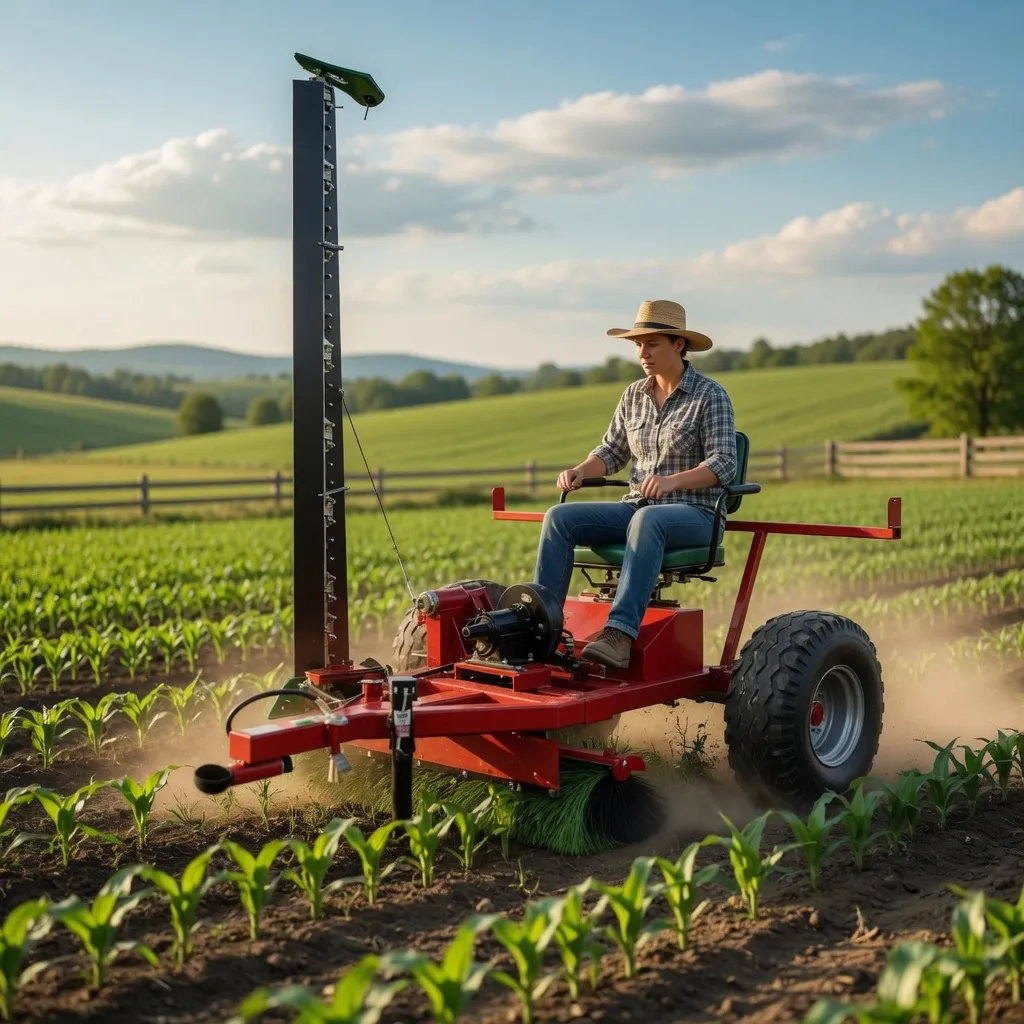
A single-blade traction mower — one reciprocating knife bar shears crop against stationary guard fingers.
How a Single-Blade Cutter Bar Works
A single-blade mower contains one reciprocating knife rail fitted with triangular hardened-steel blade sections at standard 76.2 mm (3-inch) centres. The rail slides back and forth over a row of stationary guard fingers bolted to the cutter bar frame. Each guard finger has a machined ledge plate on its upper surface, and as the blade section passes over that ledge, any crop stem caught between the two is sheared — identical in principle to a barber’s clipper or a pair of hedge shears. Power comes from the tractor PTO (typically 540 rpm), which drives a pitman arm that converts rotation into the linear reciprocating motion of the knife. The entire mechanism involves very few moving parts: PTO shaft, gearbox or eccentric hub, pitman arm, connecting rod, and knife bar. That simplicity translates directly into lower purchase cost, fewer failure points, and shorter repair times. The 9GD-2.5, for example, uses a sealed pitman bearing rated for 500+ hours and a bolt-on blade section design that allows individual sections to be swapped in the paddock in under two minutes each.
How a Double-Blade Cutter Bar Works
A double-blade mower replaces the stationary guard fingers with a second reciprocating knife rail. Both rails move simultaneously in opposite directions, creating a scissors-like cutting action along the entire width of the bar. Because both edges are moving, the crop is trapped and sheared between two converging blades rather than between one moving blade and one fixed ledge. This produces an exceptionally clean cut at low forward speeds — the dual shearing action means each blade section only needs to travel half the distance to complete a cut, which reduces the minimum ground speed at which clean cutting is achieved. Guard fingers are still present on most double-blade designs, but their role is primarily to protect the knife rails from ground contact and to guide the crop into the cutting zone, rather than to serve as the stationary shearing surface.
The trade-off for that superior low-speed cut is mechanical complexity. A double-blade mower has roughly twice the number of blade sections, an additional knife rail with its own set of wear guides, and a more complex drive mechanism (often a counter-rotating crankshaft or dual pitman arrangement). Every one of those extra components adds to the purchase price, the spare-parts inventory, and the maintenance schedule.
Head-to-Head: Cut Quality Under Real Field Conditions
The cleanness of a mower cut is determined by three factors working together: blade sharpness, the speed of the blade relative to the forward travel (stroke-to-speed ratio), and the rigidity of the shearing gap. Understanding how each design handles these factors is the key to choosing the right machine.
At Low Forward Speeds (Under 6 km/h)
This is where the double-blade design holds a genuine advantage. Because both knife rails are moving, the relative blade velocity at the cutting point is roughly double that of a single-blade design at the same PTO speed. That higher relative velocity produces a cleaner shear even when the tractor is barely crawling. European forage-machinery trials published by the German Agricultural Society (DLG) measured stem-end bruising on ryegrass cut at 4 km/h and found double-blade mowers produced 12–18% less tissue damage compared to single-blade units of equivalent width. However, the practical question is: when does an Australian hay producer actually mow at 4 km/h? The answer, in most cases, is almost never. Normal working speeds on broadacre hay operations sit between 8 and 12 km/h — a range where both designs produce comparable cut quality.
At Normal Working Speeds (8–12 km/h)
Once forward speed exceeds roughly 7 km/h, the stroke-to-speed ratio on a well-maintained single-blade mower is high enough to shear stems cleanly without measurable quality loss. The DLG data showed no statistically significant difference in stem bruising or leaf retention between single-blade and double-blade mowers operating above 8 km/h in the same crop and conditions. This finding aligns with decades of practical experience in Australian hay production — producers running sharp single-blade traction mowers at standard speeds consistently report hay quality equivalent to that from double-blade machines, at a substantially lower cost per hectare.
In Heavy or Tangled Crop
Thick lucerne, dense sorghum-sudan, or lodged (wind-flattened) crop presents a challenge for any sickle-bar mower. In these conditions, the double-blade’s scissors action can handle tangled stems slightly better because both cutting edges are active. A single-blade mower may need to slow down by 1–2 km/h in the same crop to achieve a comparable cut. That said, slowing down is a minor adjustment — not a disqualifying limitation — and the single-blade mower compensates with its lower risk of plugging (fewer moving parts means fewer places for debris to jam).
Maintenance and Spare-Parts Burden: The Hidden Cost Multiplier
Purchase price gets the most attention at the point of sale, but running costs over a five-year ownership cycle often dwarf the initial outlay difference. This is where the single-blade design pulls decisively ahead.
Blade Section Inventory
A 2.5-metre single-blade mower carries approximately 33 blade sections. A double-blade mower of the same width carries roughly 66. Blade sections are consumables — they wear, chip, and need periodic replacement. At an average cost of AUD $2–$4 per section, a full single-blade replacement costs $66–$132. A full double-blade replacement costs $132–$264. Over a 200-hectare season where sections are replaced every 30–50 hectares, the annual blade cost for a single-blade mower sits in the $200–$450 range; for a double-blade unit, $400–$900. Across five seasons, that difference alone can exceed $2,000.
Drive Mechanism Complexity
The single-blade pitman drive is mechanically straightforward: one eccentric hub, one connecting rod, one knife rail. Servicing involves greasing the pitman bearing, checking the connecting rod for play, and ensuring the knife-head bolts are torqued correctly. Total time: 15–20 minutes at each service interval. The double-blade drive requires either a counter-rotating crankshaft or a twin-pitman arrangement, both of which introduce additional bearings, timing gears, and alignment tolerances. A misalignment of even 1–2 mm between the two knife rails can cause uneven wear, increased vibration, and premature bearing failure. Rebuilding a double-blade drive assembly is a workshop job, not a paddock-side task, and labour costs for agricultural mechanics in regional NSW and Victoria typically run $90–$130 per hour.
Field Repair Time
When a blade section chips or a finger bends mid-paddock, the operator needs to get back to cutting as quickly as possible. On a single-blade mower like the 9GD-2.5, swapping a damaged section takes under two minutes with a socket wrench. The entire knife bar can be removed and replaced with a pre-built spare in 10–15 minutes. On a double-blade unit, the same repair takes longer because both knife rails must be separated, the damaged section located (which rail is it on?), and the rails re-timed during reassembly. What would be a five-minute stop on a single-blade machine can become a 20–30 minute delay on a double-blade — and in a tight hay window, those minutes add up across a full season.
Vibration, Noise, and Operator Comfort
One area where the double-blade design holds a legitimate ergonomic advantage is vibration. Because two knife rails move in opposite directions, their inertial forces partially cancel each other out, reducing the vibration transmitted through the drawbar and into the tractor chassis. A single-blade mower generates more reciprocating vibration because the knife mass moves in one direction with no counterbalance. On older tractors without cab suspension, this vibration is noticeable over a long mowing day and can contribute to operator fatigue. Modern traction mowers — including the 9GD-2.5 — mitigate this with rubber-bushed drawbar mounts and balanced pitman assemblies, but the physics of a single reciprocating mass means some vibration is inherent. For operators mowing 8+ hours daily across multiple weeks, this is a factor worth considering, although most producers in the 200–600 hectare annual range report that the vibration is well within tolerable limits, especially on tractors equipped with air-ride seats.
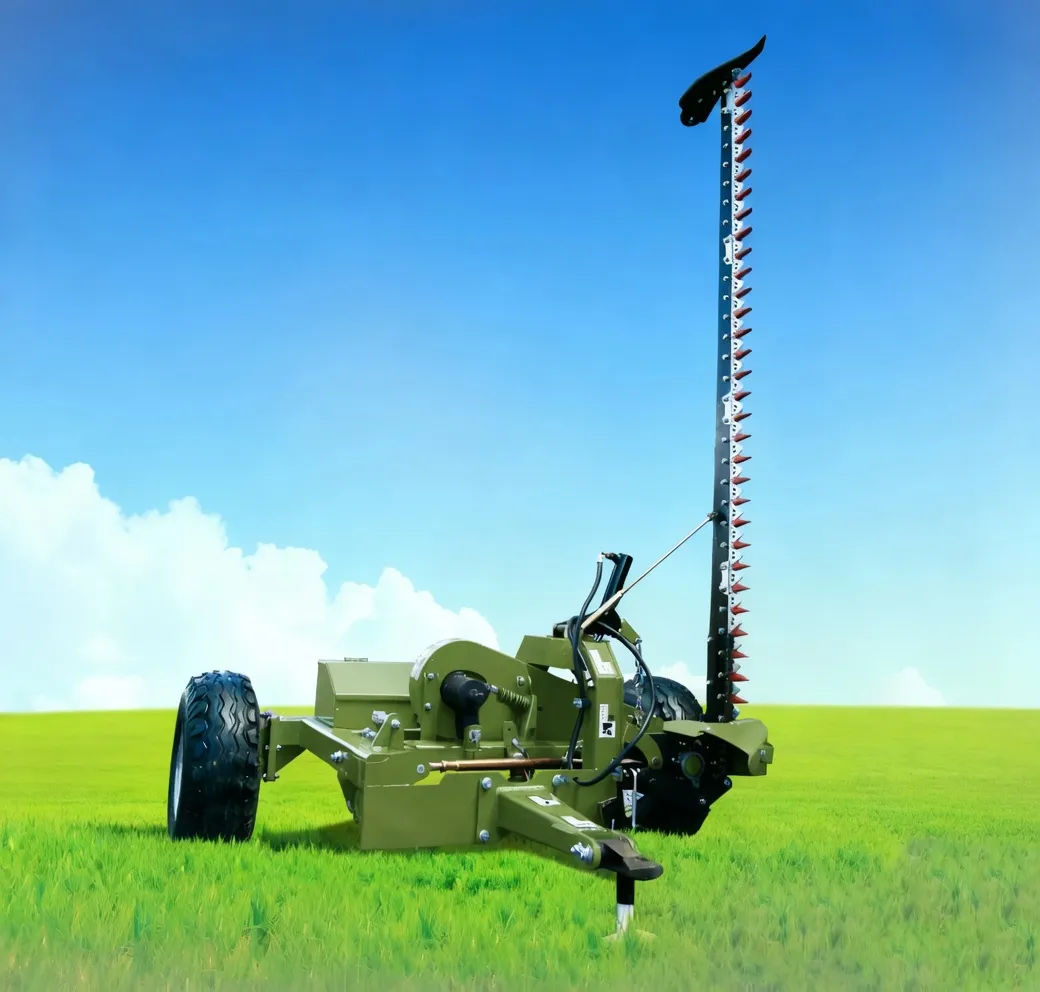
The 9GD-2.5 uses rubber-bushed drawbar mounts to reduce vibration transmitted to the tractor.
Which Design Suits Which Farming Scenario?
Rather than declaring an outright winner, the practical approach is to match the mower design to the specific conditions and priorities of each operation. The following scenarios reflect common Australian farming situations and the logic behind each recommendation.
🌾 Broadacre Hay Producer (200–800 ha/year)
Mowing at normal speeds across large paddocks of ryegrass, oaten hay, or mixed pasture. Priority is daily output and low running cost. Recommendation: single-blade traction mower. The cut quality difference at standard speeds is negligible, and the lower blade cost, simpler maintenance, and faster field repairs add up to significant savings across a full season.
🐄 Small Dairy or Beef Farm (50–150 ha/year)
Mowing smaller paddocks, sometimes on steep or tight country where forward speed drops below 6 km/h. Budget-conscious, limited workshop resources. Recommendation: single-blade traction mower. Even at lower speeds, a sharp single-blade mower produces adequate cut quality, and the cost savings are proportionally more impactful on a smaller operation. A double-blade mower adds cost without a proportionate quality gain at this scale.
🏔️ Premium Lucerne for Export
Cutting high-value lucerne where every percentage point of leaf retention directly affects sale price (premium lucerne trades at AUD $500–$650/tonne vs $300–$400 for lower grades). Willing to invest in higher upfront and running costs if the return justifies it. Recommendation: consider double-blade if consistently mowing below 7 km/h in thick stands. Otherwise, a well-maintained single-blade mower with frequent section changes delivers comparable leaf retention at working speeds above 8 km/h.
🚜 Hay Contractor
Mowing 1,000+ hectares per season across multiple client properties. Uptime is everything — a machine sitting broken costs money every hour. Recommendation: single-blade traction mower for the sickle-bar category. The faster field repair times, cheaper consumables, and simpler drive train minimise downtime and per-hectare cost. Many contractors running sickle bars carry a complete spare knife assembly for instant swaps — far more practical with a single-blade design.
Five-Year Cost Comparison: A Worked Example
Numbers clarify decisions faster than opinions. Below is a side-by-side cost estimate for owning a 2.5-metre single-blade traction mower versus a 2.5-metre double-blade traction mower over a five-year period, based on 200 hectares of mowing per season (1,000 ha total) in medium-density ryegrass. Figures use mid-range Australian market pricing as of 2025.
The single-blade mower’s total cost of ownership sits approximately 20–25% below the double-blade equivalent over the same period and hectarage. For operations where cut quality at normal working speeds is equivalent — which, as the data above shows, covers the vast majority of Australian hay scenarios — the single-blade design offers a clear financial advantage.
What About Disc Mowers? A Brief Comparison
Some readers will be weighing sickle-bar mowers (single or double blade) against rotary disc mowers. The disc mower is a fundamentally different tool: it uses rapidly spinning discs with free-swinging impact knives to cut by momentum rather than shearing. Disc mowers achieve higher forward speeds (up to 15–18 km/h), handle rocky and stony country better (the free-swinging knives deflect rather than break on impact), and produce a very aggressive cut. However, they are substantially more expensive (AUD $12,000–$25,000 for a 2.5–3.0 m unit), their disc bearings and gearboxes are costly to service ($400–$800 per bearing set), and the aggressive impact cut causes more leaf shatter in delicate crops like lucerne. For producers on relatively clean country (few rocks) cutting hay or silage crops, the sickle-bar mower — single blade in particular — remains the more economical and crop-friendly choice. Disc mowers earn their place on rocky properties, large contractor operations above 1,500 ha/season, or farms that prioritise speed above all else.
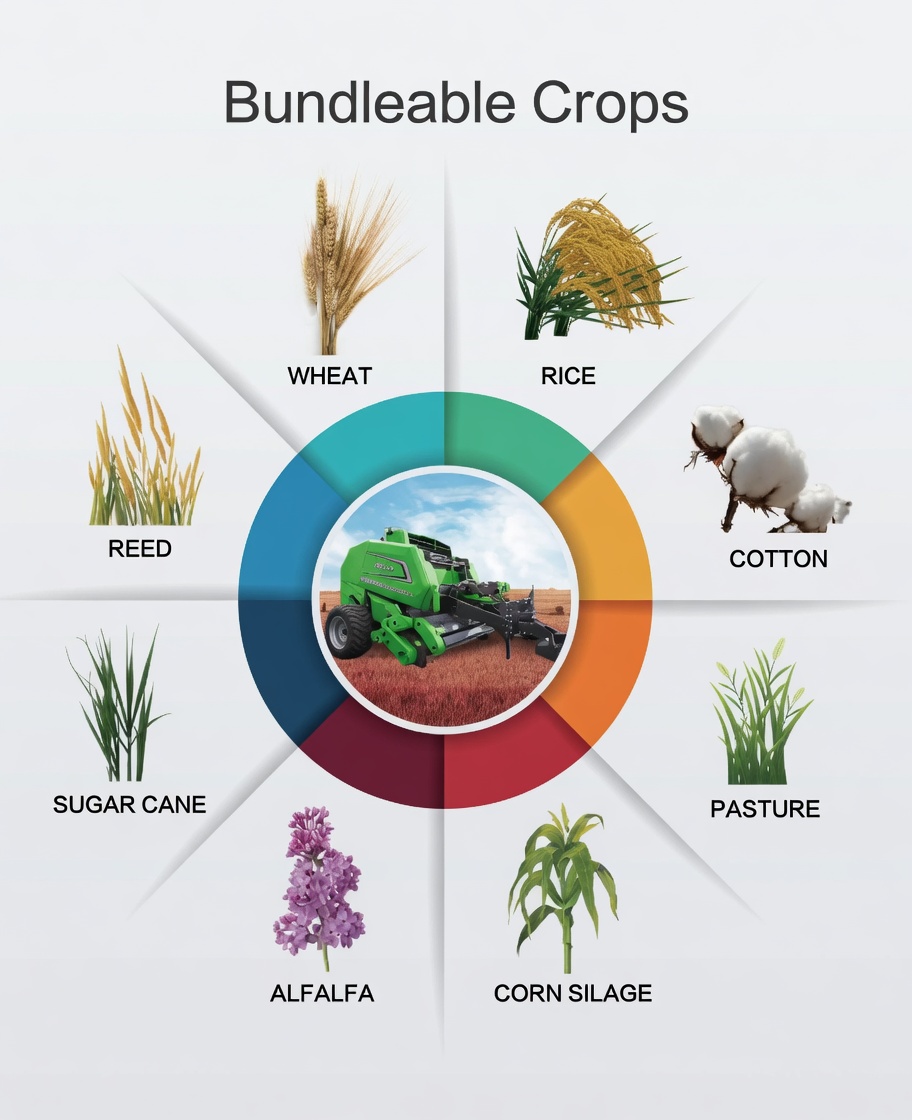
The mower type chosen shapes every step of the hay-making chain that follows.
The Verdict: Which Mower Cuts Cleaner for Your Operation?
If your mowing consistently happens below 6 km/h in very thick, tangled crop, a double-blade mower produces a measurably cleaner cut. In every other common Australian hay-making scenario — broadacre ryegrass, oaten hay, mixed pasture, and even lucerne at standard working speeds — a sharp single-blade traction mower delivers equivalent cut quality at 20–25% lower total cost of ownership. The 9GD-2.5 represents that single-blade philosophy: a 2.5-metre cutting width, 540 PTO compatibility with 50+ hp tractors, towed ground-following chassis, and a parts list deliberately kept short to minimise downtime and running costs. For the majority of Australian hay producers — from family farms cutting 100 hectares to mid-scale operations running 600+ — the single-blade traction mower remains the most practical and cost-effective way to get a clean, consistent cut onto the ground.
Recommended Product: 9GD-2.5 Traction Single-Blade Mower
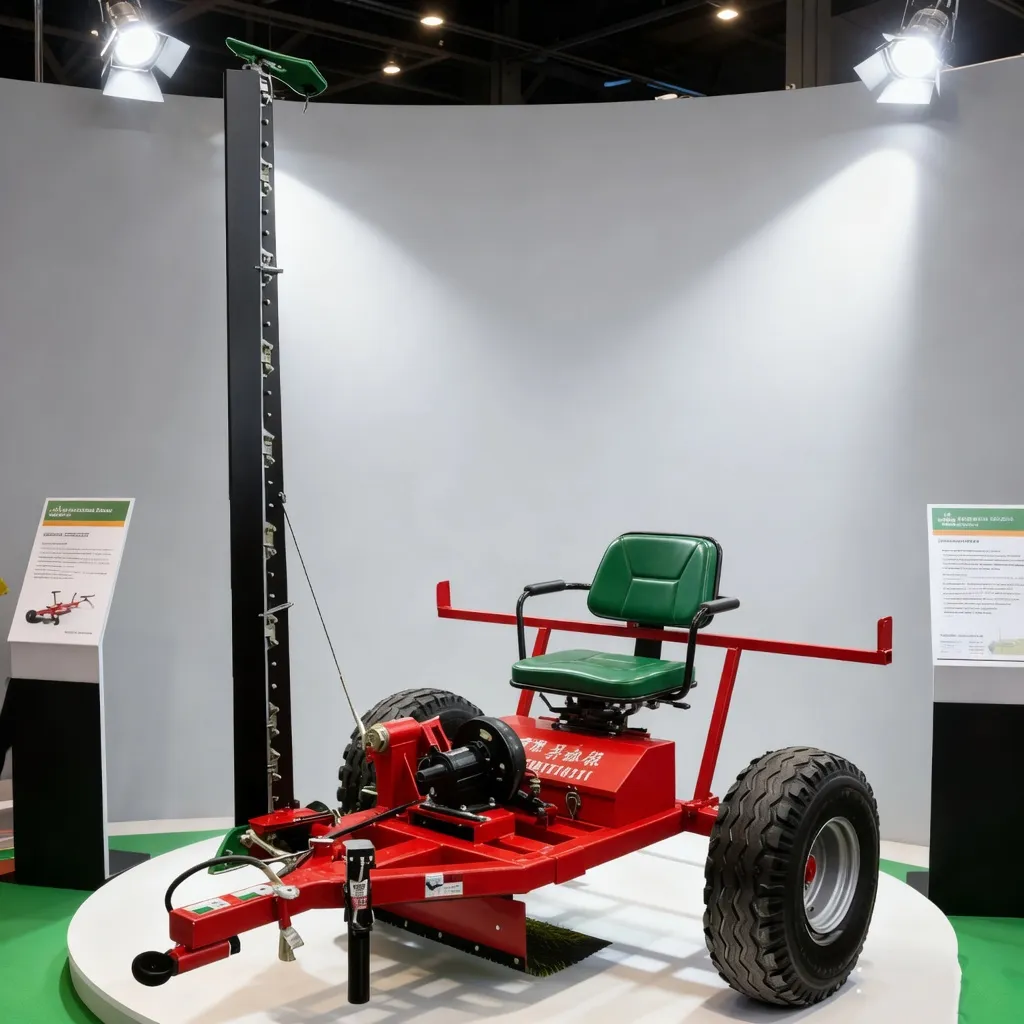
A 2.5-metre traction single-blade mower built for Australian conditions. The 9GD-2.5 pairs 540 PTO compatibility with a towed, ground-following chassis that maintains consistent stubble height on rolling terrain. Bolt-on blade sections swap in under two minutes, and the sealed pitman bearing runs 500+ hours between services. Full spare-parts support and technical assistance available through EverPower Baling Machinery Australia.
Frequently Asked Questions
Still Comparing Mower Options?
EverPower’s team can walk you through the specs, match a mower to your tractor and crop type, and provide a delivered quote to your region — no obligation.
EverPower Baling Machinery Australia Pty Ltd | 27 Harley Crescent, Condell Park NSW 2200
📞 +61 2 9708 3322 | ✉️ [email protected]