
Why Horsepower Matching Matters More Than Most Farmers Realise
Pairing a traction mower with the wrong tractor is one of the most common — and most expensive — equipment mistakes in Australian hay production. An underpowered tractor forces the engine to lug constantly, burning excess diesel, overheating the clutch, and producing a ragged cut that extends drying time by up to half a day. An overpowered tractor wastes capital: a 120 hp machine pulling a 2.5-metre sickle bar is hauling 50 surplus horsepower that does nothing except consume more fuel per hour. The goal is to land in the productive middle — enough PTO horsepower to keep the blade stroking at full speed through the heaviest crop you will encounter, with 10–15% headroom for unexpected conditions, and no more. Getting this calculation right before you buy avoids regret after the first season. This article walks through the specific power requirements for a 2.5 m traction single-blade mower like the 9GD-2.5, with real-world tractor pairings, fuel data, and adjustment guidance for different crop types across Australian farming regions.
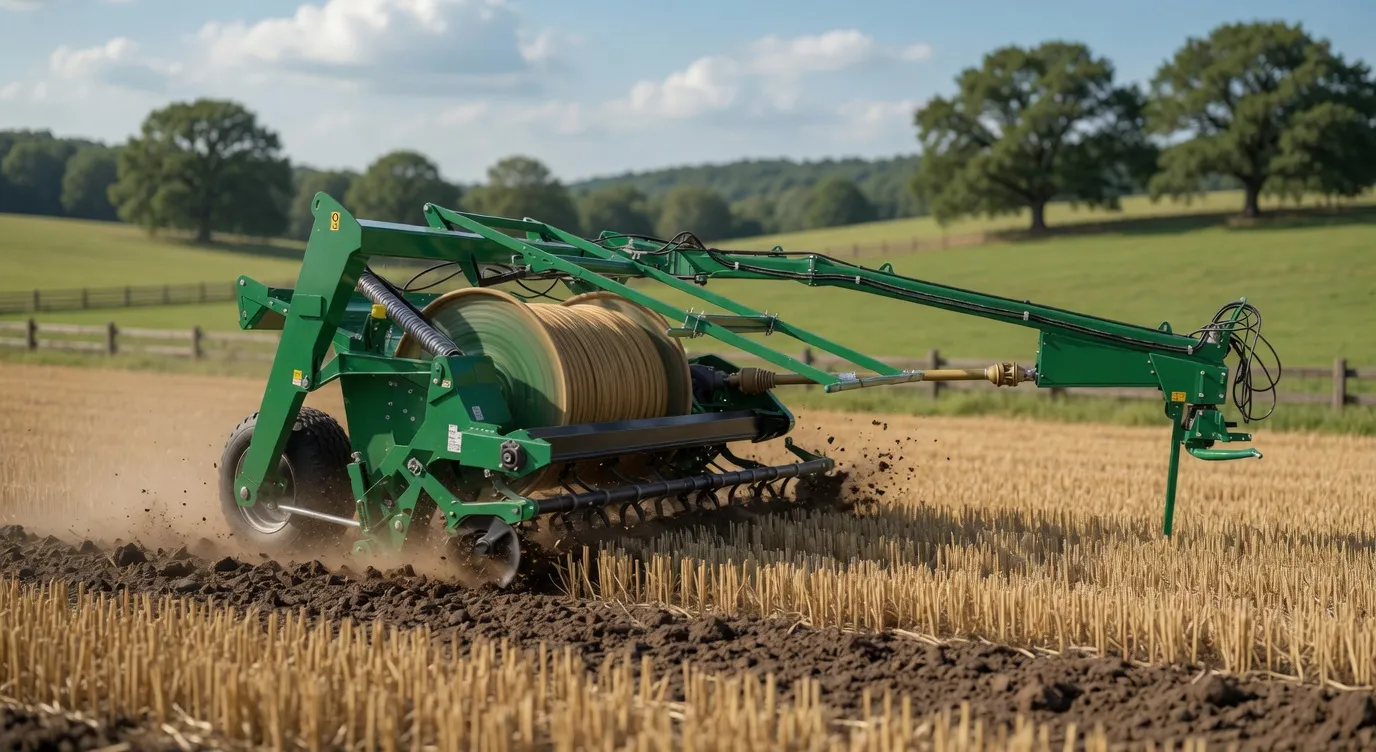
Correct tractor-to-mower matching is the foundation of efficient hay production on any scale.
Engine HP vs PTO HP: Understanding the Difference
Every tractor has two horsepower numbers that matter, and confusing them leads to undersized setups. Engine horsepower (sometimes called flywheel horsepower) is the total power produced at the crankshaft. PTO horsepower is the power actually delivered at the rear PTO shaft after drivetrain losses — transmission friction, hydraulic pump draw, cooling fan load, and alternator demand. On a typical utility tractor, PTO horsepower is 15–20% lower than the advertised engine figure. A tractor marketed as “75 hp” usually delivers 60–64 hp at the PTO. Some manufacturers publish both numbers; many do not. When a mower like the 9GD-2.5 specifies a minimum of 50 PTO horsepower, that means 50 hp measured at the PTO shaft — not 50 hp on the bonnet sticker. In practice, you need a tractor rated at approximately 60–75 engine horsepower to reliably deliver that 50 hp where the mower actually uses it. Nebraska Tractor Test Laboratory (NTTL) data provides independently verified PTO horsepower for most tractor models sold in Australia, and checking these figures before purchasing is a step that pays for itself in avoided frustration.
The 20–22 HP Per Metre Rule for Sickle-Bar Mowers
Agricultural machinery advisors in NSW and Victoria commonly use a simple guideline: budget 20–22 PTO horsepower per metre of cutting width for reciprocating sickle-bar mowers. This rule accounts for the energy required to drive the knife bar at full stroke speed (540 strokes per minute at 540 rpm PTO), overcome crop resistance across the full bar width, and pull the machine’s own rolling weight. For the 9GD-2.5 at 2.5 metres, the calculation yields 50–55 PTO hp — aligning precisely with its factory-rated minimum of 50 hp. This guideline applies specifically to single-blade sickle-bar mowers. Disc mowers, which use high-speed rotating discs, demand considerably more power — typically 28–35 PTO hp per metre — because they cut by impact rather than shearing and must spin heavy disc assemblies at 2,800–3,000 rpm. That higher power requirement is one reason disc mowers are paired with larger, more expensive tractors, and one reason single-blade traction mowers remain the economical choice for mid-scale hay operations.
Tractor Models That Pair Well with a 2.5 m Traction Mower
Knowing the horsepower range is useful; seeing specific models confirms the practicality. Below are tractors commonly found on Australian hay farms that fall within the ideal pairing window for the 9GD-2.5. All figures reference published or NTTL-verified PTO horsepower.
Tractors below 55 engine hp — such as compact utility models in the 40–50 hp class — will technically drive the 9GD-2.5 in light pasture, but they lack the reserve for dense ryegrass or lucerne. The blade speed drops under load, the cut quality degrades, and the engine runs at or near its thermal limit for extended periods.
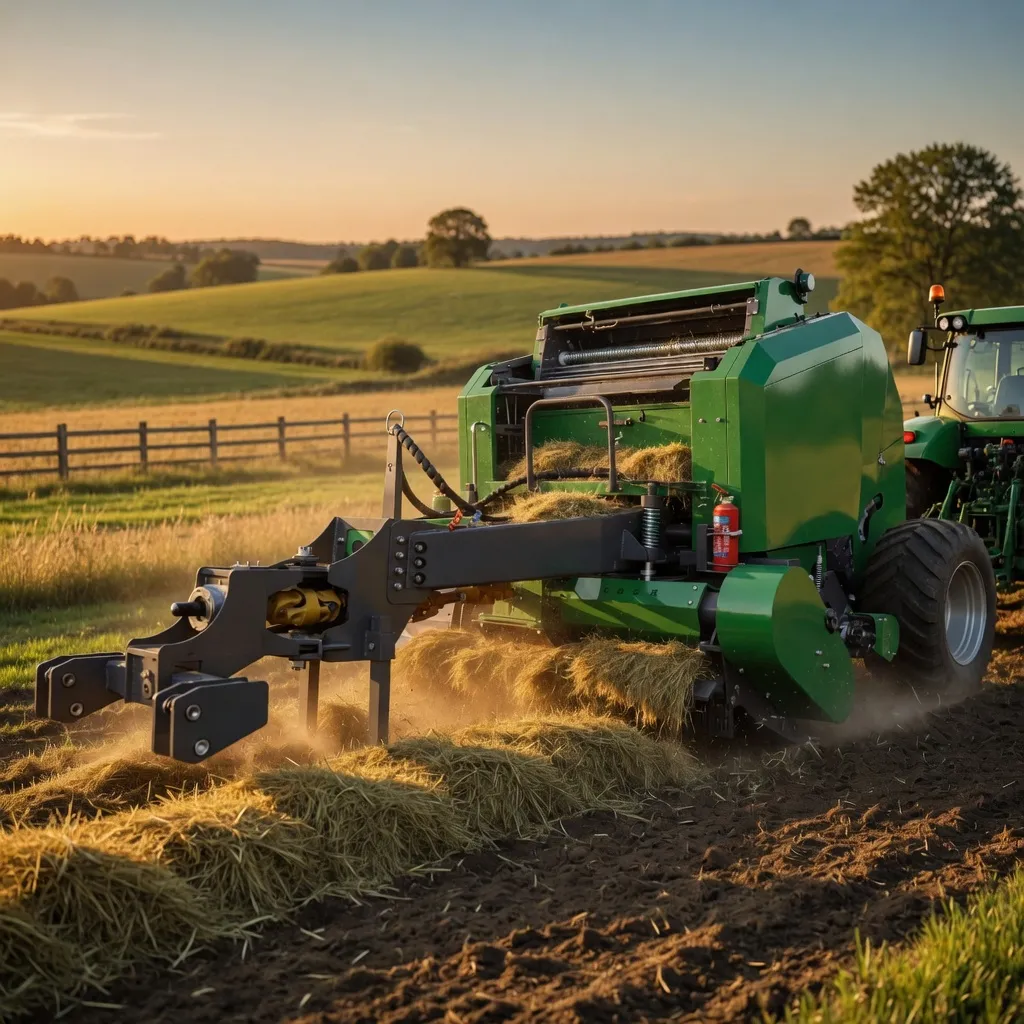
Matching your tractor to every implement in the chain — mower, tedder, rake, baler — prevents bottlenecks during harvest.
How Crop Type Changes the Power Equation
The 50 PTO hp minimum assumes average crop density. Real paddocks are rarely average. The resistance a reciprocating blade encounters varies significantly with crop species, maturity stage, and moisture content.
Light Pasture and Oaten Hay
Oaten hay is typically cut at the soft-dough stage when stems are dry and stiff but not dense. In these crops, the knife bar encounters relatively low resistance, and 50–55 PTO hp drives the 9GD-2.5 comfortably at working speeds of 10–12 km/h. Fuel consumption on a 70 hp tractor sits around 6–7 litres per hour — the lower end of the operating range.
Medium-Density Ryegrass
Perennial and annual ryegrass in irrigated or high-rainfall zones can produce 8–12 tonnes of dry matter per hectare across a season. At first cut, standing biomass is thick and the stems carry more moisture. A tractor delivering 55–65 PTO hp handles this range well, maintaining full blade speed at 8–10 km/h. Fuel consumption rises to 7–9 litres per hour. Dropping below 55 PTO hp in dense ryegrass forces a speed reduction to 6–7 km/h — cutting daily output by 15–20%.
Dense Lucerne and Sorghum-Sudan
Lucerne at peak growth before first cut produces thick, woody stems that generate the highest blade resistance of any common Australian forage crop. Sorghum-sudan hybrids grown for silage can stand 1.5–2.0 metres tall with stem diameters exceeding 10 mm. In these crops, 65–75 PTO hp provides the headroom needed to maintain blade speed at 6–8 km/h without engine strain. Fuel consumption reaches 9–11 litres per hour.
What Happens When You Run Too Little Power
Understanding the failure mode makes the power guideline more than just a number on a spec sheet. When PTO horsepower falls below the demand of the cutting load, a predictable cascade occurs.
Blade Speed Drops
The PTO cannot maintain 540 rpm under load. Crop stems fold between guard fingers instead of being cut, producing a torn, bruised stem end that leaks cell sap and extends field drying time.
Drying Time Extends
A ragged cut may need 36–48 hours to cure instead of the 24–36 hours a clean cut allows. That extra field exposure increases rain-damage risk — costing AUD $40–$100 per tonne in downgraded hay value.
Engine and Clutch Wear Accelerates
Sustained full-throttle operation raises engine temperature, burns 10–15% more fuel per hectare, and stresses the PTO clutch pack. Early clutch service runs AUD $1,500–$3,500 depending on tractor brand.
Daily Output Falls
Dropping from 10 km/h to 7 km/h reduces hourly output from ~2.2 ha to ~1.5 ha — a 30% productivity loss that stretches a 3-day mowing job into 4+ days.
Fuel Consumption Benchmarks by Power Class
Fuel is the largest variable cost in any mowing operation and scales directly with tractor horsepower utilisation. These figures are based on ~0.12–0.15 litres per PTO hp per hour at full load, cross-referenced with field reports from NSW and Victorian hay operations.
*Based on AUD $1.70–$1.75/litre diesel, regional NSW mid-2025.
Fuel efficiency improves when the tractor operates within its optimal PTO load range rather than at sustained full throttle.
540 vs 1000 PTO: Which Output Does the 9GD-2.5 Need?
The 9GD-2.5 operates exclusively on a 540 rpm PTO output — the most common standard across utility and mid-range agricultural tractors worldwide. Some larger tractors offer both 540 and 1,000 rpm PTO modes via a selectable gearbox. If your tractor has a dual-speed PTO, ensure it is set to the 540 rpm position before connecting the mower. Running a 540 rpm implement on a 1,000 rpm PTO shaft — even briefly — will drive the knife bar at nearly double the designed stroke speed, causing catastrophic stress on the pitman arm, connecting rod, and knife-head bolts. This mismatch is the single most common cause of new-mower warranty claims, and it is entirely preventable by checking the PTO setting before the first engagement. Tractors with economy PTO (ePTO) modes that deliver 540 rpm at reduced engine speed (typically 1,400–1,600 rpm instead of 1,900–2,100 rpm) are compatible and will reduce fuel consumption by 10–15% in lighter crops without affecting blade performance.
Terrain and Gradient: Hidden Power Demands
Flat-paddock power calculations fall short on hilly country. When a tractor pulls a traction mower uphill, a portion of engine power goes to overcoming gravity rather than driving the PTO. On a 10% gradient (roughly a 1-in-10 slope), the additional traction demand can consume 8–12 hp depending on combined tractor and mower weight. That means a tractor delivering 55 PTO hp on flat ground may only have 43–47 hp available for the mower on a moderate slope — potentially below the 9GD-2.5’s effective operating threshold in heavier crop. Producers mowing on rolling or hilly country in regions like the Southern Tablelands, Gippsland, or the Adelaide Hills should size up by one tractor class: if the flat-land recommendation is 65 hp engine, select 75–80 hp for hilly terrain. The extra capital cost of a slightly larger tractor is minor compared to the productivity loss and engine wear caused by running undersized on slopes across an entire hay season.
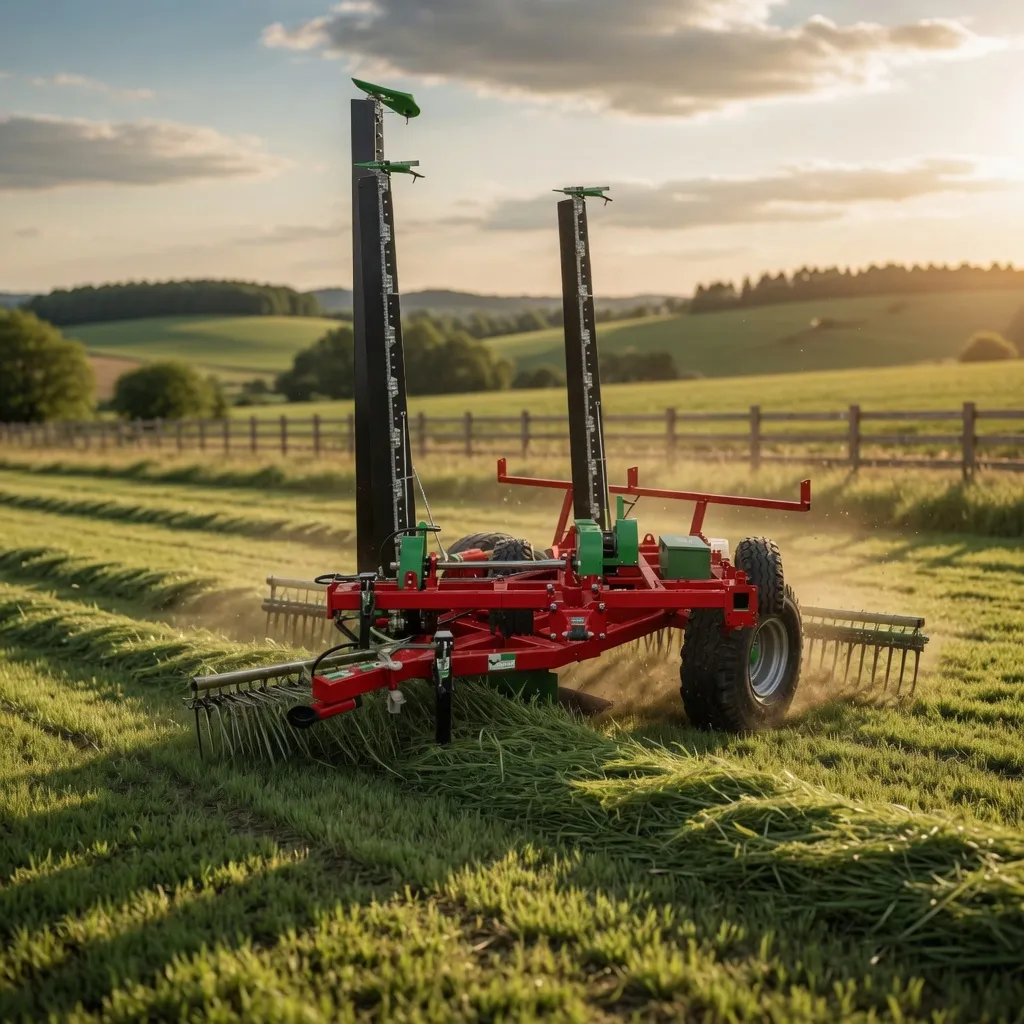
Rolling terrain adds hidden power demand — upsize the tractor if your paddocks have more than modest gradient.
Quick-Decision Guide: Matching Your Tractor to the 9GD-2.5
If you already own a tractor and want a fast answer on compatibility, use the following reference.
Below 55 Engine HP — Not Recommended
PTO output below 45 hp. Will function in very light grass but lugs in anything denser. Consider a narrower mower (1.6–2.0 m) for this tractor class.
55–65 Engine HP — Workable with Limitations
PTO output 45–53 hp. Adequate for light and medium crops on flat ground. Reduce speed in heavy stands and avoid sustained uphill runs in dense lucerne.
65–80 Engine HP — Ideal Range
PTO output 53–66 hp. Handles all crop types at full working speed with 10–15% reserve. The target range for purchasing a new tractor to pair with the 9GD-2.5.
Above 80 Engine HP — Functional but Overkill
The mower will work perfectly, but you carry surplus horsepower that burns extra diesel. Fine if you already own the tractor — just do not buy it specifically for this mower.
Get the Right Match: EverPower’s Technical Support
Choosing the right mower-to-tractor combination should not involve guesswork. EverPower Baling Machinery Australia provides free pre-purchase consultation to match the 9GD-2.5 to your specific tractor, crop mix, and terrain. Based at 27 Harley Crescent, Condell Park NSW 2200, the team cross-references your tractor’s published PTO figures, assesses your typical crop types, and confirms compatibility before you commit. For producers building a full hay or silage line — mower, rake, round baler, bale wrapper — EverPower also checks that every implement in the chain matches the tractor’s power and hydraulic output. Reach out via phone (+61 2 9708 3322) or email ([email protected]).

EverPower’s Condell Park facility provides warehouse stock, technical support, and rapid parts dispatch across Australia.
Recommended Product: 9GD-2.5 Traction Single-Blade Mower
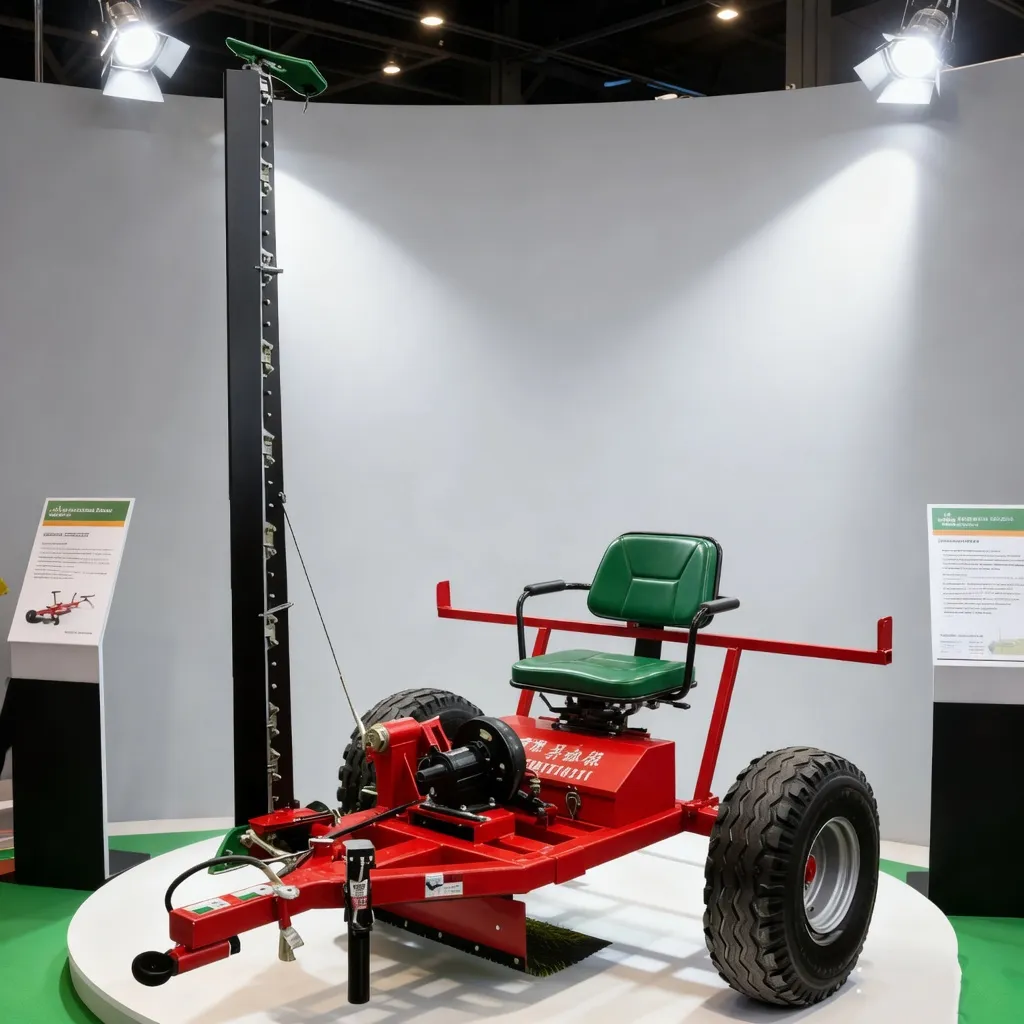
Designed for tractors in the 60–80 engine hp range with a standard 540 rpm PTO. The 9GD-2.5 delivers a 2.5-metre clean cut across ryegrass, lucerne, and oaten hay. Towed ground-following chassis suits flat and undulating terrain. Full spare-parts stock and pre-purchase tractor-matching support available through EverPower’s Sydney warehouse.
Frequently Asked Questions
Not Sure If Your Tractor Fits?
Send EverPower your tractor model and crop details — the team will confirm compatibility and recommend the right mower setup at no charge.
EverPower Baling Machinery Australia Pty Ltd | 27 Harley Crescent, Condell Park NSW 2200
📞 +61 2 9708 3322 | ✉️ [email protected]