
Starting From Zero: What It Actually Costs to Launch a Silage Contracting Round in Regional Victoria
The honest numbers behind equipment, pricing, client acquisition, and the first 12 months — from someone who hasn’t done it yet and needs to know if it pencils out before signing anything.
The Contracting Opportunity Nobody Is Talking About Honestly
There is no shortage of advice for established silage contractors wanting to increase throughput or improve ROI — the industry has produced plenty of content on high-capacity machines, dual-baler setups, and premium pricing strategy. What barely exists is honest guidance for the person at the beginning of the journey: the 28-year-old farm worker who has spent five years driving a baler for someone else and is thinking about putting their own machine in the paddock; the retiring dairy farmer who wants to convert their experience into a service business; the young family that owns a prime mover and sees hay contracting as a more controllable income than contract harvesting.
This article is for those people. It covers what a silage and hay contracting round in regional Victoria actually costs to start, what you can realistically charge, how many clients you need to make year one viable, and what the first 12 months looks like operationally — including the parts that the machinery brochures don’t mention. None of this is investment advice — it is a framework for thinking through the numbers before committing to a purchase. For a broader picture of how established Victorian contractors manage profitability once they are up and running, our article on running a profitable hay contracting business with the right baler provides the ongoing management perspective.
Step 1: Understanding the Victorian Silage Contracting Market Before You Buy Anything
Where the Work Is — and Isn’t
Victorian silage and hay contracting demand is concentrated in three geographic corridors: the Goulburn Valley and Shepparton region (irrigated dairy, high-frequency multi-cut lucerne and ryegrass silage, longest season), the Wimmera and Mallee (dryland cereal hay and straw, shorter season, price-sensitive), and the Western District and Otways (dryland dairy, sheep hay, mixed silage demand). Each corridor has different work volume, price expectations, and seasonal timing — and a contracting business based in one corridor can rarely access the others efficiently because travel time eats margin rapidly.
Before purchasing any equipment, spend 4 to 6 weeks in your target corridor doing two things: counting how many active contractors are already working the area (drive past farms during harvest season and count the machines you see), and talking directly to 15 to 20 dairy and beef farmers about their current contractor arrangements. The questions that matter are: Do you have an established contractor? Are you happy with them? Would you consider switching if someone offered [your proposed service]? What do you currently pay per bale? The answers will tell you more about market opportunity than any business plan template.
Realistic Season Length by Victorian Region
| Region | Primary Crops | Season Length | Peak Months | Bale Potential (Solo Op) |
|---|---|---|---|---|
| Goulburn Valley (irrigated) | Lucerne, ryegrass silage | Oct–Apr (7 months) | Oct, Nov, Mar | 2,500–4,000/season |
| Western District (dairy) | Ryegrass silage, hay | Sep–Jan (5 months) | Oct–Dec | 1,500–2,500/season |
| Wimmera/Mallee (cereal) | Oaten hay, wheat straw | Nov–Feb (4 months) | Nov–Jan | 1,200–2,000/season |
| High Country (mixed) | Grass hay, lucerne | Nov–Mar (5 months) | Dec–Feb | 1,000–1,800/season |
The Goulburn Valley is the most attractive market for a startup contractor by volume, but it is also the most competitive — multiple established contractors with multi-machine operations and 10+ year client relationships. Breaking into the Goulburn Valley as a startup requires a compelling differentiation: responsiveness, specialist niche (small farms the big contractors don’t prioritise), or equipment capability that fills a gap. The Western District dairy corridor is the second-best startup market — consistent demand, mid-size farms where one-machine contracting is appropriate, and enough client turnover each year from farm sales and retirements to allow new relationships to form.
Step 2: The Equipment Decision — What You Actually Need vs. What Salespeople Recommend
The Minimum Viable Equipment List for a Victorian Startup
The temptation when starting a contracting business is to buy the full-size, high-capacity setup immediately — two tractors, large round baler, separate wrapper, bale transporter, and a truck for bale moving. The capital commitment required for this configuration runs AUD $180,000 to $320,000 new, or AUD $90,000 to $160,000 well-used. For a startup operation making 1,200 to 1,800 bales in year one, this capital level generates a debt-service burden that cannot be covered unless clients materialise on day one of the season at the expected volume. They rarely do.
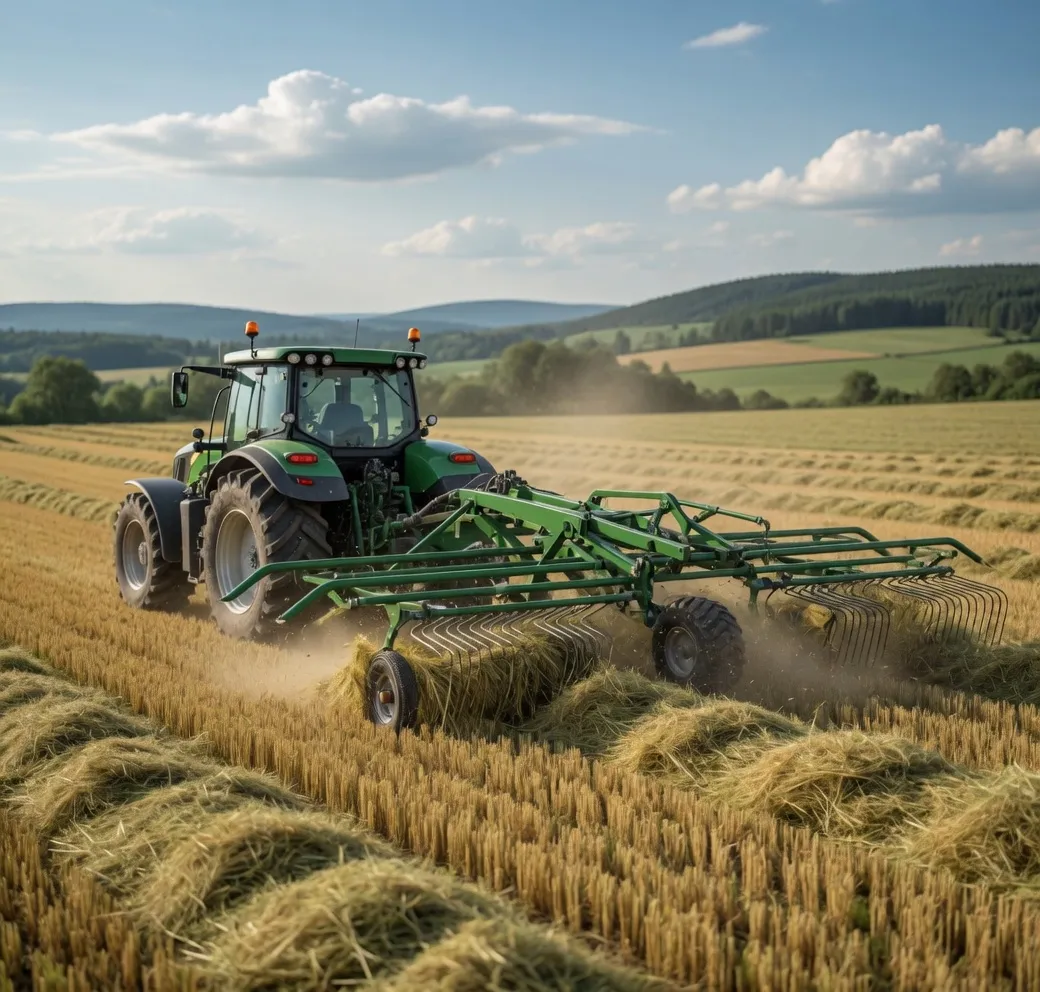
The practical startup configuration for a Victorian silage contractor making 1,200 to 2,000 bales in the first season is: one tractor (80 to 100 hp, four-wheel drive), one mid-capacity round baler, one silage film wrapper, and a disc mower or mower-conditioner. The baler should be capable of handling the region’s primary crops (ryegrass silage and lucerne hay) with the density and consistency that commercial farm clients expect — but it does not need the throughput capacity of a 1,500-bale-per-day contractor operation.
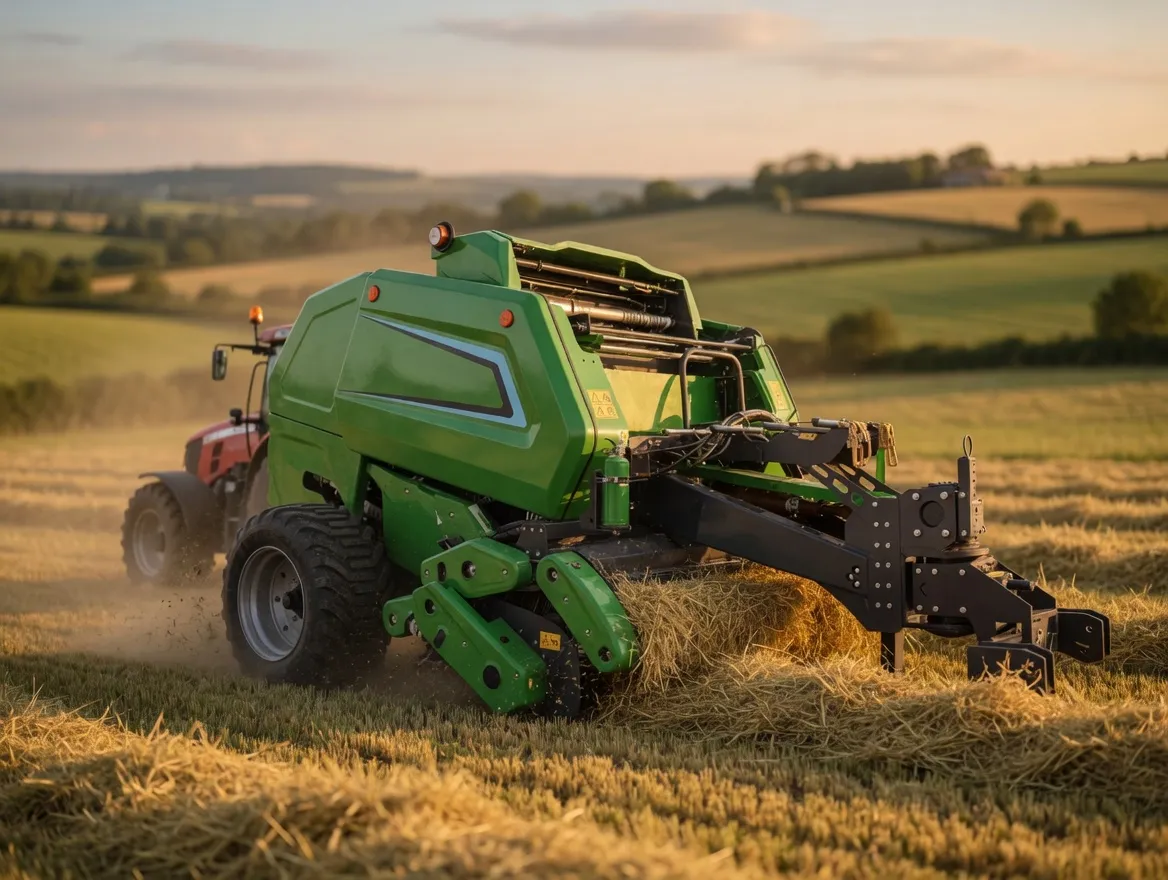
The 9YG-2.24D S9000 round baler sits at the right specification point for a Victorian startup: sufficient throughput (60 to 85 bales per hour in good ryegrass silage conditions), the 1.25 m bale diameter that Victorian dairy and beef farms expect, and a capital cost that allows the debt-service to be covered from year-one contract revenue without requiring maximum season utilisation from the first week. The step up to the S9000 Beyond configuration is available when volume growth in year 2 or 3 justifies higher throughput.
Owned Mowing vs. Subcontracting Mowing
Many startup contractors in Victoria begin without owning a mower — they arrive at the farm after the farmer or another contractor has already mown and the material is wilting in windrows. This arrangement simplifies the startup (no mower purchase, no mower tractor) but creates a timing dependency on whoever mowed: if the mower was late, the silage is over-wilted by the time the baler arrives, and if the mower was early and the weather turned, the baler operator gets blamed for wet bales that aren’t their fault. Owning the mowing step eliminates this timing ambiguity and is the operational configuration that most successful Victorian contractors converge on by year 2 or 3.
Step 3: Pricing — What to Charge Without Pricing Yourself Out of the Market
The Current Rate Landscape in Victorian Silage Contracting
Silage baling contractor rates in Victoria’s dairy regions (Goulburn Valley, Western District) for combined bale-and-wrap service currently run AUD $14 to $22 per bale, with the Goulburn Valley at the higher end of this range reflecting the higher-volume, premium-quality demands of irrigated dairy operations. Hay-only baling (no wrap) runs AUD $7 to $12 per bale. Straw baling is the most price-sensitive segment — AUD $5 to $9 per bale for wheat and oaten straw, often with the farmer providing and running the mower and rake.
New entrants to the market typically need to start 10 to 15% below established contractor rates to win initial clients — a reasonable trade for relationship building in year one, provided the discount is explicitly temporary. Position it as an introductory rate for the first full season, with a clear transition to market rate in year two based on demonstrated performance. Farmers respond well to contractors who are direct about pricing structure; they are wary of operators who seem to be discounting because they’re desperate.
| Service | Current Market Rate | Startup Target Rate (Year 1) | Year 2+ Target |
|---|---|---|---|
| Silage bale + wrap (1.25 m) | $14–$22/bale | $13–$18/bale | $15–$22/bale |
| Hay bale only (1.25 m) | $7–$12/bale | $7–$10/bale | $8–$12/bale |
| Mow + bale + wrap (full service) | $22–$32/bale | $20–$28/bale | $22–$32/bale |
| Straw bale (wheat/oaten) | $5–$9/bale | $5–$8/bale | $6–$9/bale |
Building Your Cost-Per-Bale Floor
Before you set any price, calculate your cost per bale. For a startup with a new mid-capacity baler at AUD $65,000, a used tractor at AUD $45,000, and a wrapper at AUD $25,000, total equipment capital is AUD $135,000. At a 7-year repayment schedule with 6% finance cost, annual repayment runs approximately AUD $24,000. Add insurance ($3,500/year), maintenance and consumables ($8,000/year), film and net wrap ($45,000/year at 1,800 bales), fuel ($18,000/year at 1,800 bales), and operator wages (yourself — calculate an opportunity cost of AUD $80,000 per year or your realistic comparable wage). Total annual cost at 1,800 bales: approximately AUD $178,500, or AUD $99 per bale. At AUD $18 per bale average rate, revenue at 1,800 bales is AUD $32,400 — clearly not enough to cover costs if you’re paying yourself a market wage.
The resolution to this arithmetic is that 1,800 bales per season in year one should be the floor target, not the ceiling. At 3,000 bales per season — achievable in year 2 or 3 in a productive Victorian dairy corridor — the same cost structure produces AUD $54,000 revenue at AUD $18/bale average, with operator cost still uncovered. The realistic path to viability involves: scaling to 3,000 to 4,500 bales within 3 seasons, operating without a market-wage salary draw in years 1 and 2 (replacing it with sweat equity), and adding the mowing service to increase revenue per farm visit.
Step 4: Client Acquisition — How to Get the First 10 Farms
Large established contractors in the Goulburn Valley prefer clients with 300+ bales per season who can commit to a fixed date window. Small dairy farms (30 to 80 cows making 150 to 250 bales per season) often get bumped to the end of the contractor’s schedule. These farms are the startup contractor’s ideal entry point — they want reliability and responsiveness more than they want the lowest price.
Not completely free — cover your film and fuel cost — but zero service margin. These five farms become your testimonials, your word-of-mouth network, and your silage quality reference sites. Choose farmers who are well-connected in their local community and who are willing to tell their neighbours what they thought of your work. In rural Victoria, personal recommendation from a known farming family is worth more than any advertising spend.
The most powerful differentiation for a startup contractor in Victoria is availability at 6:30 AM on a Tuesday when a farmer has a closing weather window and their usual contractor isn’t answering. Answer every call. Return every text within 30 minutes during harvest season. Show up when you say you will. These are basic operational standards that surprisingly few contractors maintain consistently, and the farms that have been let down by no-show contractors are actively looking for someone reliable.
The operators who grow fastest in Victorian silage contracting are the ones who know something useful about feed quality that the farmer doesn’t. If you can assess a paddock at flag leaf, advise on optimal cutting timing, assess windrow moisture by squeeze test, and discuss fermentation outcomes with the farmer after opening the first bales — you are not just a machine operator, you are a trusted adviser. This positioning commands better rates and makes client relationships sticky.
Tell a farmer you’ll arrive on Wednesday. Arrive on Tuesday evening. Leave the bales tight, even, and well-wrapped. Follow up two weeks later to ask how the film is looking. These interactions — before the first invoice is paid — create the foundation of relationships that last 10 to 15 years. The contractors who last in regional Victoria are almost all known personally by every farmer they work with.
Step 5: The First 12 Months — What to Expect
Month-by-Month Reality Check
| Period | Expected Activity | Likely Challenges | Key Actions |
|---|---|---|---|
| Jul–Sep (setup) | Equipment delivery, test baling, market outreach | Finance approval delays, farm contact cold calls | Lock in 5–8 confirmed clients; order film stock |
| Oct (season opens) | First silage cuts — high demand, pressure on timing | Unfamiliar client paddocks, machine bedding-in | Do fewer farms, do them well; track every bale |
| Nov–Dec (peak) | Maximum demand — silage and hay overlap | Scheduling conflicts, equipment wear, fatigue | Maintain 6-hour machine service intervals; don’t overcommit |
| Jan–Feb (late season) | Straw and late hay — volume but lower margin | Price pressure on straw, long days in heat | Save cash reserve from peak months for lean quarter |
| Mar–Apr (wind-down) | Autumn silage cuts — secondary demand | Lower volume, client follow-up for next year | Invoice on time; collect all outstandings before winter |
Year-One Financial Benchmarks to Aim For
A realistic year-one performance target for a Victorian startup silage contractor in the Goulburn Valley or Western District dairy corridor: 1,200 to 1,800 bales completed across all crop types, AUD $20,000 to $32,000 gross revenue, AUD $12,000 to $18,000 net after consumables and direct costs (before equipment finance and your own drawings). You will not pay yourself a full wage in year one from contracting income alone unless you have very low capital costs or an unusually productive client base from day one. Plan your personal finances accordingly.
Frequently Asked Questions From Victoria’s Aspiring Contracting Operators
Talk to Us About Your Contracting Startup
Tell us your target region, first-season bale volume estimate, and available capital — we’ll help you spec the right machine to start without over-capitalising on equipment before the client base is established.