Description
Roll Drum Round Baler with Dual-Stage Feeding and the Widest Power Range in Its Class
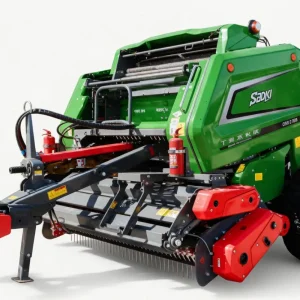
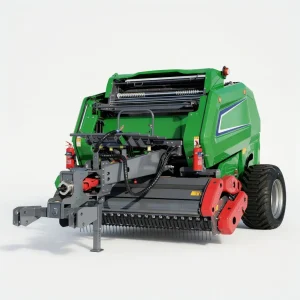
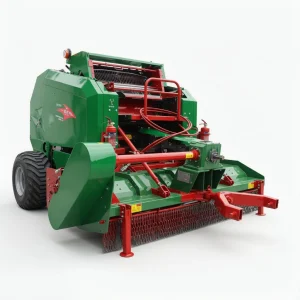
The 9YQ-1950 is a trailed roll drum round baler built around two design decisions that set it apart from other machines in EverPower’s round baler range. First, it uses a dual-stage feeding system — a shift fork feeding mechanism paired with a screw continuous feeding mechanism operating in sequence — delivering more consistent crop flow into the compression chamber across a wider range of crop types and field conditions than either feeding approach achieves alone. Second, its power requirement spans an exceptionally broad range: 36.7 to 110.3 kW (approximately 50 to 150 hp), making the 9YQ-1950 compatible with tractors from small two-wheel-drive farm units through to large four-wheel-drive machines, without requiring a dedicated high-horsepower tractor for baling duty.
The compression chamber is a fixed-diameter roll drum design — 18 rollers of Φ190 mm arranged around the Φ1000 mm compression zone within a 1250 mm chamber width. Like the 9YG-2.2’s larger drum chamber, the roller array applies consistent radial compression on the forming bale at every point of contact, producing bales with uniform density from core to surface. At 2385 kg, the 9YQ-1950 is substantially lighter and more compact than the 9YG-2.2 (3800 kg), making it easier to transport between properties, more manoeuvrable on smaller paddocks, and suitable for a wider tractor range without requiring a dedicated high-horsepower machine.
With a 1950 mm spring-tooth pickup reel and automatic net-wrapping, the 9YQ-1950 suits a broad range of Australian hay and silage operations — from sheep and mixed farms that need a capable baler without the power and weight demands of the heaviest machines, through to dairy operations and silage contractors wanting roll drum chamber quality at a more accessible scale. For context on how round balers fit into a full silage production workflow, see our guide on what a silage baler is and how it works.
Complete Technical Specifications
Full technical documentation including PTO shaft configuration, roller maintenance schedule, and spare parts diagrams available on request — contact our team.
Dual-Stage Feeding: Shift Fork + Screw Continuous — Why Two Mechanisms Beat One
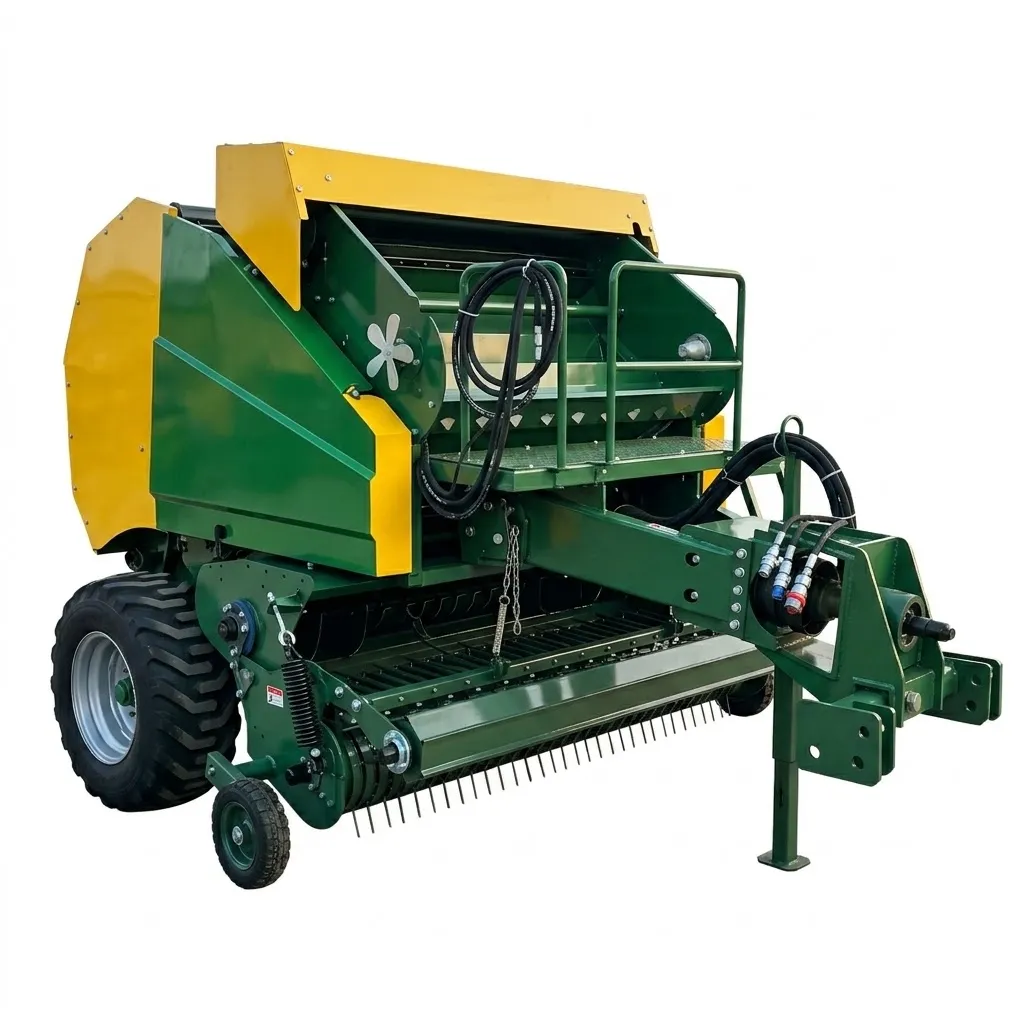
Most round balers use a single feeding approach between the pickup reel and the compression chamber. The 9YQ-1950 combines two complementary feeding mechanisms in sequence — a shift fork stage followed by a screw continuous stage — addressing the crop-type trade-offs that make any single-mechanism feeder a compromise in variable field conditions.
Handles Diverse Crop Types Without Reconfiguration
The dual-stage system handles fine-stemmed pasture grass, medium-weight ryegrass silage, bulky corn silage, and coarser hay crops without the operator needing to adjust feeder settings between crop types. The fork stage adapts its metering action to the material density presented by the pickup, and the screw delivers a consistent downstream flow regardless of what the fork receives.
More Consistent Bale Density Across Variable Windrows
Variable windrow density — thicker sections where the reel picks up more material per metre of travel, thinner sections where the windrow tapers — is one of the most common causes of density variation between bales in the same field run. The fork pre-metering stage absorbs this variation before it reaches the screw, producing a more uniform material stream into the chamber and more consistent bale weight across the full paddock.
Reduced Blockage Risk in High-Moisture Conditions
High-moisture silage crops — ryegrass at 60–70% moisture, green pasture, freshly cut lucerne — are sticky and tend to clump on the pickup, presenting clumped masses rather than even flow to the feeder. The shift fork’s oscillating action breaks up these clumps before they enter the screw stage, significantly reducing the blockage risk that occurs when clumped high-moisture material is fed directly into a screw or single-mechanism feeder inlet.
18-Roller Drum Chamber at Φ1000 mm and a Power Range That Suits Almost Any Tractor
Two further specifications define the 9YQ-1950’s position in the market: its roll drum compression chamber and the unusually wide operating power range of 36.7 to 110.3 kW. Together, these make it a machine that delivers roll drum chamber quality at a scale and power requirement accessible to farms that would be excluded from the heavier 9YG-2.2.
18-Roller Roll Drum Chamber — Φ1000 mm Fixed Bale Diameter
The compression chamber uses 18 Φ190 mm hardened steel rollers arranged around the Φ1000 mm compression zone within a 1250 mm chamber width. The fixed-diameter roller array produces every bale at the same Φ1000 mm diameter, applying consistent radial compression on the forming bale at all 18 roller contact points simultaneously throughout the compression cycle. This produces the same core-to-surface density uniformity that distinguishes roll drum balers from variable-chamber belt designs — within a bale scale suited to farms working with 50–150 hp tractors.
Φ1000 mm bale size in storage and handling practice
The Φ1000 mm diameter bale is smaller and lighter than the Φ1220 mm bales from the 9YG-2.2 — which matters significantly for operations handling bales with smaller loaders, in tighter shed spaces, or where bale weight per unit is a practical consideration for handling and transport. A 1000 mm diameter bale also presents a smaller surface area per unit of stored dry matter, which can modestly reduce film wrapping cost per kilogram of stored silage when the wrapping setup accounts for bale diameter.
Power Range 36.7–110.3 kW — The Widest Tractor Compatibility in the Roll Drum Range
The 9YQ-1950’s power specification is exceptional in a round baler at this specification level: a minimum of 36.7 kW (approximately 50 hp) and a maximum of 110.3 kW (approximately 150 hp). This three-to-one power range means the same machine can be used productively with a compact 50 hp two-wheel-drive tractor on lighter dry hay baling, and then paired with a 130–150 hp four-wheel-drive on high-moisture silage days without operating outside the machine’s design parameters.
What this means for farms with mixed tractor fleets
Mixed farms with tractors of varying horsepower ratings often need to allocate their largest tractor to priority cultivation or spreading tasks during the same period as silage baling. The 9YQ-1950’s broad power range means it can be run with a medium-horsepower machine when the primary tractor is committed elsewhere — delivering productive baling output rather than requiring the operation to wait for the right tractor to become available before baling can begin.
1950 mm Spring-Tooth Pickup — Wide Coverage, Ground-Following Tine Action
The 1950 mm spring-tooth pickup reel captures medium-to-wide windrows in a single pass — suited to the windrow widths produced by 4–5 metre mower-conditioners and combine header discharge patterns common across Australian dairy and grain farm cutting operations. Spring-loaded tines follow ground surface irregularities without snapping, maintaining consistent crop flow into the fork stage feeder even across drainage ridges, slight slope changes, and the uneven paddy or pasture surfaces that characterise much of Australia’s silage-producing country.
Hydraulic pickup height adjustment
Pickup height is adjusted hydraulically from the tractor cab, allowing the operator to respond to changing ground conditions across the paddock without stopping the machine. For a 1950 mm wide reel operating at field working speed, even small height changes across the width of the pickup can significantly affect crop recovery rates and soil contamination risk — cab-controlled hydraulic height adjustment allows continuous fine-tuning rather than stop-and-adjust corrections.
Automatic Net Wrapping — Full Cycle Without Operator Intervention
When the bale reaches the preset formation target, the automatic net-wrapping system initiates the tie cycle without any manual input from the tractor operator. Net wrap completes the binding cycle in a defined number of passes around the bale before the automatic cut-and-clamp mechanism releases the bale for ejection. The operator can continue forward motion or pause — the net-wrap cycle completes independently of tractor position, keeping the machine’s field throughput rate as high as possible.
Net wrap vs twine for silage applications
Net wrap is the correct tie choice for silage round bales — it compresses the outer crop layer more evenly than twine ties, creating a more uniform bale surface for the subsequent stretch film application. An uneven outer surface from loose twine-tied bales creates air pockets under the stretch film that compromise the anaerobic seal and increase surface spoilage risk. The 9YQ-1950’s automatic net-wrap system ensures this optimal tie format is applied consistently on every bale through the full field run.
9YQ-1950 vs 9YG-2.2 — Two Roll Drum Balers, Different Scales and Capabilities
Both machines share the roll drum chamber technology and automatic net-wrapping. The differences come down to scale, feeder design, power requirement, and the operational context each is built for.
✓
✓
✓
✓
✓
→
→
→
→
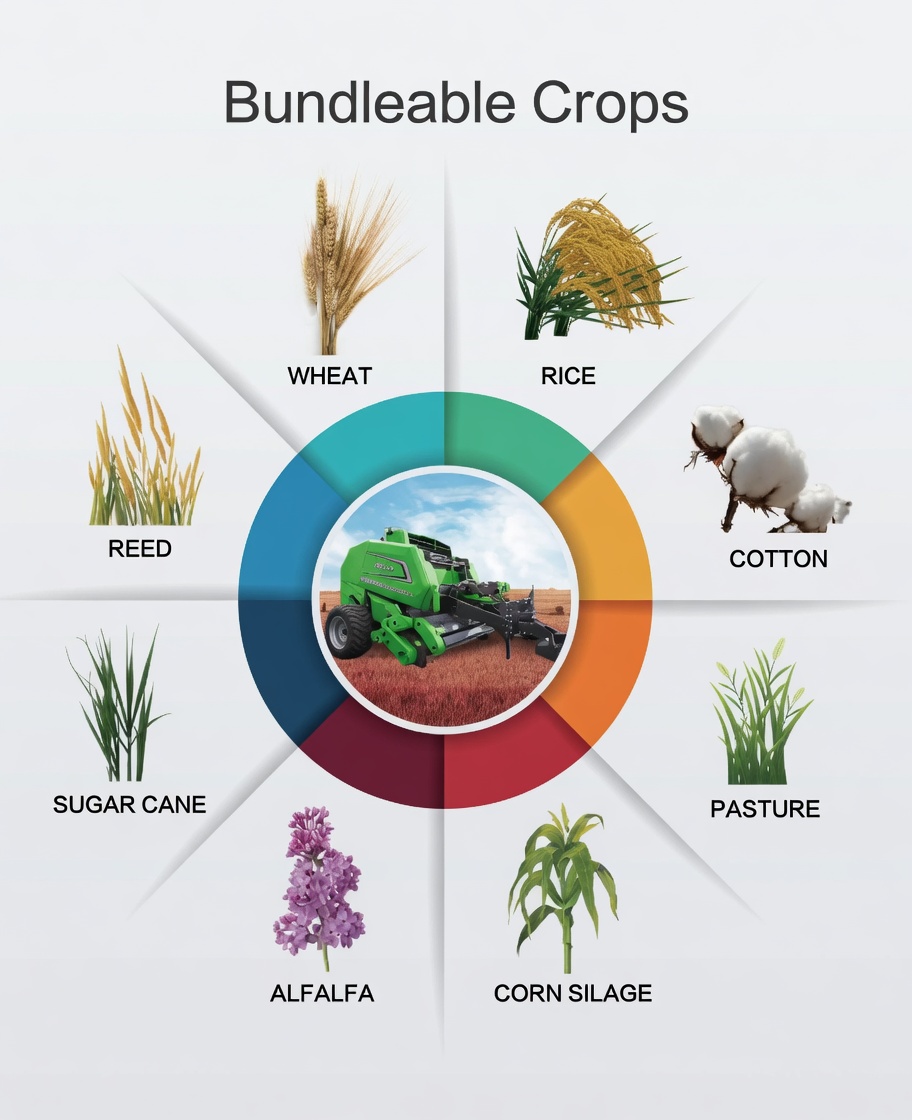
Crops, Farm Types, and Conditions Where the 9YQ-1950 Performs Best
The dual-stage feeder and broad power range make the 9YQ-1950 genuinely versatile across crop types. The following outlines the primary application scenarios and crop conditions where it delivers consistent results.
Ryegrass & Pasture Silage
High-moisture ryegrass silage at 60–70% moisture content is where the dual-stage feeder most clearly earns its design advantage. The fork stage handles the sticky, clumped pickup characteristic of green ryegrass without stalling, and the screw delivers a consistent flow into the roll drum chamber. Bales produced in green ryegrass conditions are dense, well-formed, and present a uniform surface for stretch film application — critical for achieving the anaerobic seal that silage fermentation requires.
Lucerne & Oaten Hay
Lucerne at 16–20% moisture and oaten hay at 14–18% moisture are lighter, drier materials that the 9YQ-1950 handles efficiently with a 50–80 hp tractor — well within the lower end of its power range. The fork feeder’s portioning action keeps lucerne windrows from bunching at the feeder inlet, where the fine leafy material tends to accumulate on the leading face if presented as an unmetered mass to a screw-only inlet.
Corn & Sorghum Silage
Whole-plant corn and sorghum silage at the heavier end of the 9YQ-1950’s crop range benefits from the fork stage’s ability to break up the coarser, heavier material charge before the screw stage. For operations running corn silage through this machine, a 100–110 hp tractor (upper end of the power range) is the appropriate pairing — maintaining PTO speed and feeder throughput through the denser material without overloading the drive system.
Dairy Farm Silage Supply
Mid-scale dairy farms needing consistent, well-formed silage bales for winter feeding — but not at the output volumes that justify the 9YG-2.2’s larger format and higher power demand — are the natural home of the 9YQ-1950. The roll drum chamber’s density uniformity supports consistent silage fermentation quality across the bale batch, which in turn supports consistent daily milk production across the herd through the winter feeding period.
Sheep & Mixed Livestock Farms
Sheep farms and mixed livestock operations baling oaten hay, vetch, and mixed pasture for feed reserves through dry periods benefit from the 9YQ-1950’s lower minimum power requirement — allowing it to be run with a 50–70 hp tractor that may be the most powerful machine available on a smaller property. The automatic net wrap and roll drum chamber quality are available at this scale without requiring a 150 hp tractor that smaller mixed farms typically do not own.
Small Silage Contractors
Smaller contracting operations serving sheep farms, small dairy blocks, and mixed properties benefit from the 9YQ-1950’s combination of roll drum quality, dual-stage feeding reliability, and compact transport dimensions. At 3200 mm long and 2385 kg, it is significantly easier to move between properties on a trailer than the 4100 mm, 3800 kg 9YG-2.2 — a practical consideration for contractors moving between multiple small-farm clients in a single day.
Running the 9YQ-1950 at Peak Efficiency Across Crop Types
The dual-stage feeder gives the 9YQ-1950 flexibility that single-mechanism balers lack — but realising that flexibility in practice depends on setting up the machine correctly for the crop and power combination in front of you on each field day.
Match Tractor Power to Crop Density
The 9YQ-1950’s 36.7–110.3 kW range is a design capability, not a constant — the right tractor for a given day depends on the crop. Light dry hay at 50–70 hp is efficient and well-matched. High-moisture corn silage or thick ryegrass needs 90–110 hp to maintain PTO speed and feed rate through the dual-stage system without reducing feeder throughput. Running a light crop with an oversized tractor wastes fuel; running a heavy crop with an underpowered tractor risks PTO speed drop and feeder stalls.
Observe the Fork Stage Clearance Interval
The shift fork mechanism has moving components that require periodic inspection for wear, debris accumulation, and correct timing relative to the screw stage. In high-moisture silage conditions where sticky material can accumulate on the fork face and reduce its clearing action, inspect the fork stage at each fuel stop rather than once per day. A fork stage with reduced clearing efficiency reduces the pre-metering benefit and allows the screw to receive uneven material charges.
Inspect Rollers Pre-Season and at Mid-Season
Check all 18 compression rollers before the first bale of the season and again at mid-season in high-throughput operations. Look for bearing play, surface wear, and any debris lodged between rollers that could affect rotation. A single roller with elevated bearing play creates a repeating low-density band in the bale at its angular position — detectable by running a hand around the ejected bale surface looking for a consistent soft band around the circumference.
Set Pickup Height at Every Field Change
The hydraulic pickup height adjustment is cab-controlled — use it actively at each new field or when surface conditions change noticeably across a large paddock. Too low on level, clean paddocks drives spring tines into the soil. Too high on paddy surfaces or undulating pasture misses the lower half of windrow material. For silage applications where ground contamination of the bale increases effluent and can introduce clostridia, correct height setting is a direct silage quality input rather than just a machine protection measure.
Set Net Wrap Count for Moisture Content
Adjust net wrap count when switching between dry hay and high-moisture silage applications. High-moisture silage bales at Φ1000 mm need enough net coverage to maintain bale shape as they cool and settle after ejection — more wrap loops in high-moisture conditions prevents the outer bale surface from slumping and creating an irregular shape that causes air pockets under the subsequent stretch film application. Dry hay bales at lower moisture hold their shape with fewer loops and do not need the same wrap coverage level.
Grease All Points at Every Fuel Stop
The 2385 kg machine carries bearing and pivot fittings across the pickup reel, dual-stage feeder, roller bearings, PTO shaft, and net-wrap mechanism. Greasing at every refuelling stop maintains protection across all points simultaneously — the most practical approach on a machine with this many lubrication points. Summer silage harvest temperatures accelerate grease breakdown at the exposed pickup and feeder fittings. Missing a lubrication cycle on these points under peak load conditions is the most common path to an unplanned field stoppage.

Roll Drum Baler Technology Direct from EverPower Baling Machinery Australia
The 9YQ-1950 is available directly from EverPower Baling Machinery Australia Pty Ltd, 27 Harley Crescent, Condell Park NSW 2200. Learn more at silage-baler.com/about-us.
Factory-Direct Pricing
The 9YQ-1950 is manufactured by EverPower and supplied directly to Australia without distributor margin inflation. Dual-stage feeding combined with a roll drum chamber is a specification combination that commands a premium price in European brand channels — EverPower’s direct supply model makes this technology accessible at a price that reflects production cost rather than product tier positioning.
NSW Spare Parts — Fast Dispatch
Spring pickup tines, shift fork components, screw feeder parts, roller bearings, and net-wrap mechanism parts for the 9YQ-1950 are held at our Condell Park NSW facility. Parts for the dual-stage feeder — the unique feature of this machine — are stocked locally rather than sourced on international freight timelines that would leave the machine off-line for weeks during a silage season.
Technical Support for Dual-Stage Feeder Setup
Our Sydney-based team provides first-season setup support specific to the dual-stage feeding system — including fork clearance adjustment, screw timing, and matching ground speed to crop density for optimal feeder performance. Contact us at 61 2 9708 3322 or [email protected]. All documentation is in English.
Frequently Asked Questions
Common questions from farmers and contractors evaluating the 9YQ-1950 Round Hay Baler.