
Silage Baling in Wet Weather: Managing the Unplanned Cut
The forecast changed. The windrow is wetter than planned and rain is 18 hours away. Here is how experienced Australian silage producers make the damage-limitation decisions that matter.
The Weather Call That Every Silage Producer Faces Eventually
Ask any dairy farmer in the Goulburn Valley or beef producer in the Darling Downs about their worst silage season and the story almost always involves weather. Not a catastrophic flood or once-in-a-generation drought — but the ordinary, repeating pattern of a forecast that changed overnight, a wilt period that was cut short by cloud cover and humidity, and the decision made at 7 AM about whether to bale paddock A at 55% moisture or wait for paddock B to dry further while the rain approaches from the southwest.
These decisions cannot be made from a textbook. They are made in the paddock, under time pressure, with incomplete information about exactly how wet the crop really is and exactly how many hours the weather window has left. This article is a practical framework for those moments — not a laboratory guide to optimal silage fermentation, but a field decision guide for Australian producers who need to know what to do when the plan stops working.
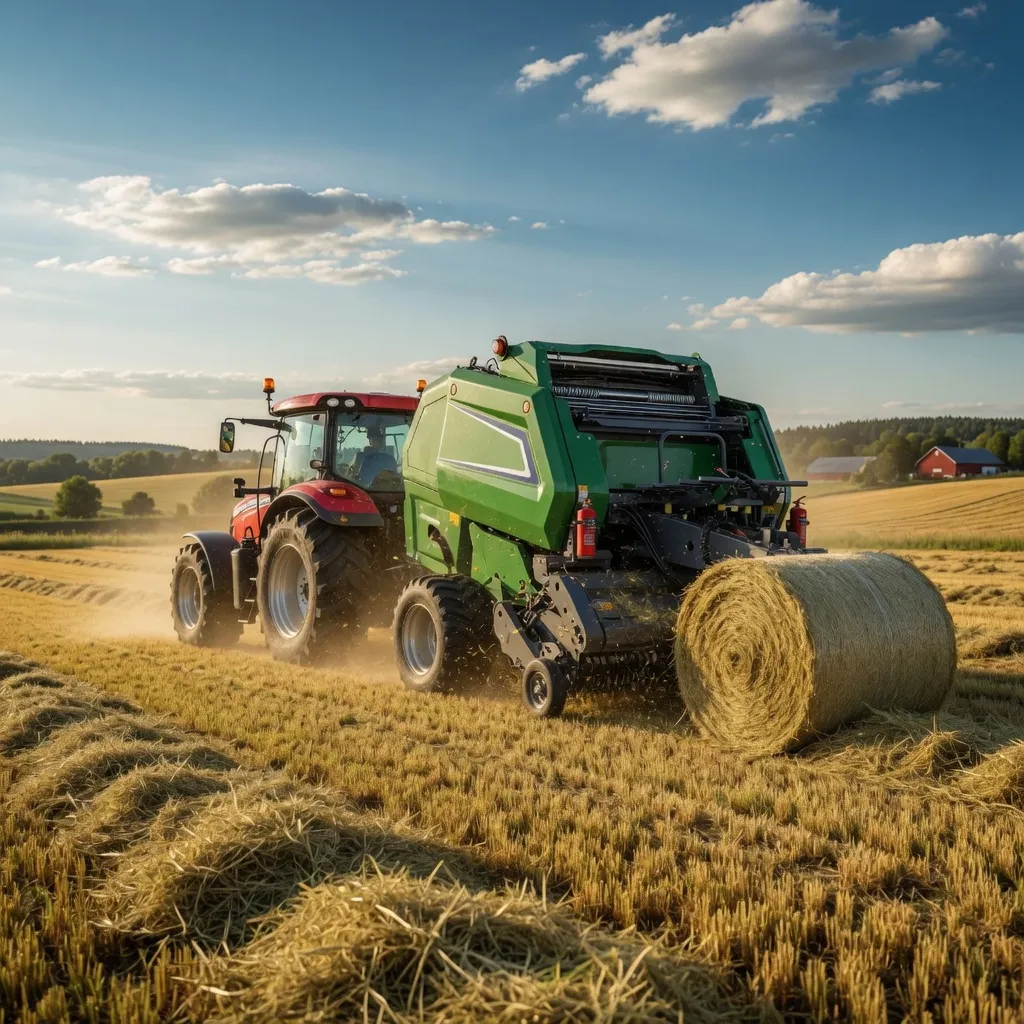
The foundational principle: baling silage at higher-than-ideal moisture is recoverable with correct management. Leaving a wilted crop in the paddock for another rain event is often not. The question is not ‘should I bale this at 55% DM instead of 40% DM?’ but ‘what specific management adjustments does baling at 55% DM require, and can I execute them in the time available?’ For a technical overview of how a combined baler-wrapper configuration changes the speed options available in a closing weather window, our article on reducing dry matter loss on dairy farms with a combined baler-wrapper covers the equipment side of the throughput equation.
Reading the Situation: The Three Variables That Drive the Decision
Variable 1 — Actual Windrow Moisture Right Now
The single most important input to any wet-weather baling decision is a confirmed moisture reading from the windrow base — not the surface, not an estimate based on the feel of the material, not ‘about the same as last cut’. The windrow base runs 4 to 8 percentage points higher moisture than the windrow surface in most Australian conditions because solar radiation dries the surface layer first. What feels like bale-ready 35% moisture on the surface is often 42 to 48% at the base layer, which is the moisture that determines actual bale quality.
Invest AUD $80 to $180 in a handheld conductance moisture meter and use it every time you make a baling decision, not just when the weather is uncertain. A moisture reading takes 90 seconds. Making a baling decision without one in a weather-uncertain situation is the equivalent of making a navigation decision without looking at a map.
Variable 2 — How Many Hours of Weather Window Remain
The second variable is the honest assessment of your remaining window — not the best case forecast, but the realistic expectation. If the Bureau of Meteorology shows rain arriving in 18 hours and the crop needs 10 more hours to reach 35% DM, you have 8 hours of buffer. If rain is 6 hours away and the crop needs 8 more hours, you are baling at current moisture or the crop gets rained on. Do not make the decision based on ‘it might miss us’ or ‘the shower might be light’. Make it based on the median expectation and build the decision around that.
Variable 3 — What Correction Tools Are Available Right Now
The third variable is the correction tools you have on hand and can deploy immediately: inoculant (the most important), additional film layers, and speed of wrapping after baling. Having a quality homofermentative LAB inoculant loaded in the baler applicator before the baling decision is made — not ordered after it — is the difference between a correctable situation and a loss. If you do not have inoculant on hand, add this as a mandatory pre-season readiness check to your programme.
| Scenario | Recommended Action | Inoculant | Film Layers | Priority |
|---|---|---|---|---|
| Crop at 35–40% DM, rain 6+ hrs away | Bale normally | Recommended | 6 | Green light |
| Crop at 40–48% DM, rain 6+ hrs away | Bale with inoculant | Essential | 6–8 | Bale now |
| Crop at 48–55% DM, rain 3–6 hrs away | Bale with inoculant, wrap immediately | Essential | 8 | Bale with care |
| Crop at 55–65% DM, rain <3 hrs away | Assess per paddock — bale small batches | Essential | 8 | Accept quality risk |
| Crop at >65% DM (below 35% DM) | Bale only if rain certain — expect loss | Essential + additive | 8 | Last resort |
Managing Higher-Moisture Baleage: What Changes
Inoculant: Not Optional Above 45% Moisture
A homofermentative LAB inoculant applied at the baler pickup is the single most effective corrective measure available when baling above the optimal moisture range. At 45 to 55% DM (45 to 55% moisture), the crop’s water-soluble carbohydrate concentration is adequate to support reliable lactic acid fermentation — but the natural LAB population on the fresh crop surface is too sparse and slow-establishing to acidify the bale mass quickly enough before clostridial bacteria establish their own fermentation pathway. An inoculant at 1 × 10⁶ cfu/g fresh matter seeds the lactic acid bacteria at concentrations 10 to 100 times the natural level, driving rapid pH drop that locks out the clostridial pathway.
The inoculant investment is AUD $1.50 to $3.50 per bale — less than 3% of the value of the silage DM in the bale. If you are baling in a weather emergency at above 45% moisture without inoculant, you are accepting a 30 to 60% probability of clostridial fermentation failure rather than spending AUD $2 per bale to reduce that probability to below 10%. This is the most consistently cost-effective quality investment in silage production.
Film Layers: Eight Minimum Above 50% Moisture
Higher-moisture baleage undergoes a more intense active fermentation phase — producing more CO₂ gas and generating more internal bale pressure during the first 14 to 21 days post-baling. This elevated internal pressure stresses the film seal at the bale-end overlap zones. Six-layer film that would hold comfortably on a 38% DM bale is more likely to develop seal gaps on a 52% DM bale under the same storage conditions. Use eight layers of silage stretch film on any bale made above 50% moisture (below 50% DM). The additional film cost is AUD $1.50 to $2.50 per bale — a fraction of the loss from a failed bale.
Wrap Immediately — Not Tomorrow Morning
At higher baling moisture, the aerobic phase between baling and wrapping is more damaging than at normal moisture because the wetter silage surface supports faster aerobic microbial growth. The same 2-hour wrapping delay that is acceptable at 38% DM becomes a quality compromise at 52% DM in ambient temperatures above 20°C. In a weather-emergency baling situation, the wrapper must keep up with the baler in real time — not catch up the following day. If your wrapper cannot keep pace with your baler, the priority in a weather emergency is slowing the baler to wrapper capacity rather than pushing baler speed and accumulating an unwrapped bale queue.
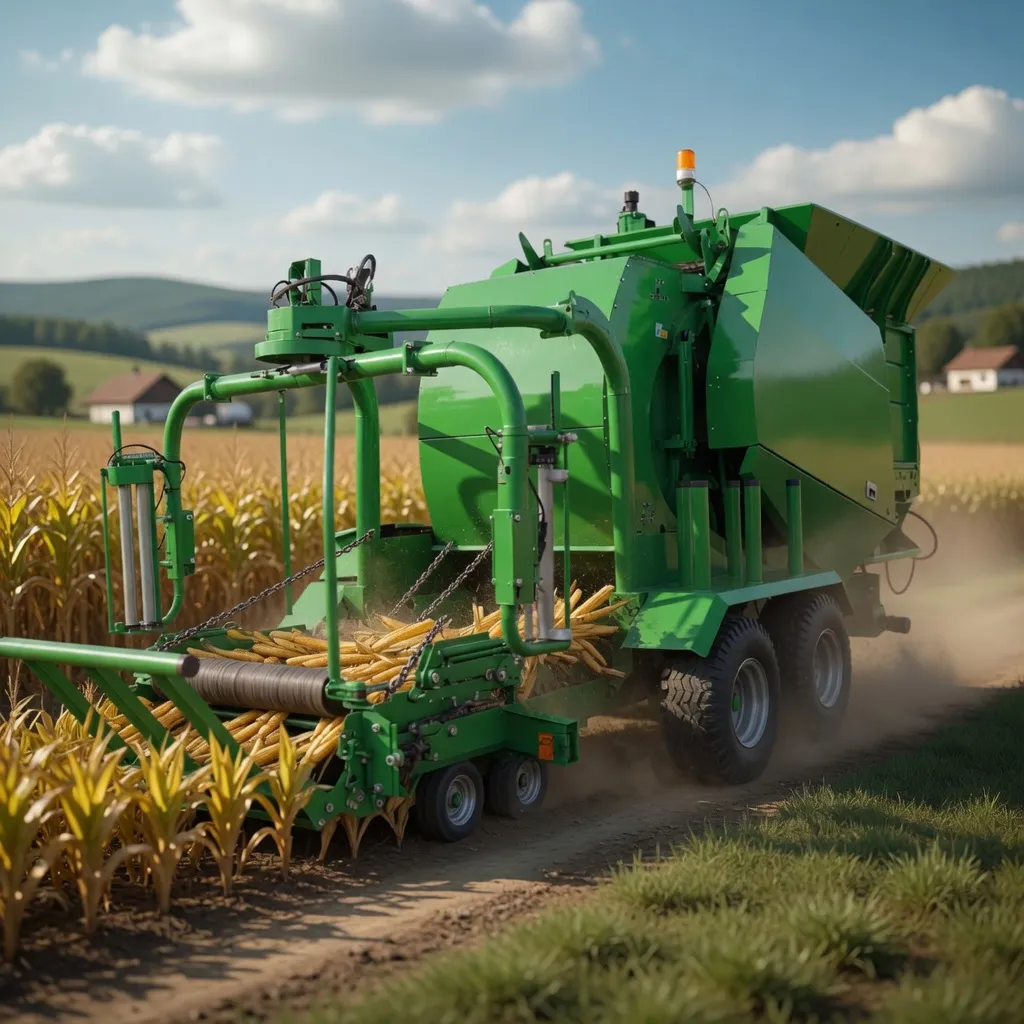
The 9YCM-850 bundling film wrapping machine processes bales at 55 to 75 per hour — matching the throughput of most 1.25 m round balers in emergency baling conditions. The programmable revolution counter applies 8 layers to each bale automatically without operator counting — which matters in the fatigue and time pressure of a closing weather window when manual counting errors produce under-wrapped bales that fail within weeks of storage.
What to Do After Baling High-Moisture Silage
The First 21 Days — Monitoring the Active Fermentation Phase
High-moisture baleage (below 45% DM) undergoes a longer and more active fermentation period than optimally-dried silage — typically 21 to 35 days to reach stable pH rather than the 14 to 21 days of well-made 38% DM baleage. During this period, the bales are generating more fermentation gas and building more internal pressure. Check stored bales every 3 to 4 days during this period for: film bulging at the bale ends (normal — reflects gas accumulation; do not pierce to release gas), film cracking or splitting at the bale equator (act on this immediately with repair tape), and any areas of the bale stack where individual bales appear to be settling into an unusual shape.
Feed Quality Assessment Before Feeding
Before feeding high-moisture emergency baleage to livestock — particularly to dairy cows or high-productivity animals — send a core sample from a representative bale to a forage laboratory for pH, ammonia-N, and DM confirmation. A batch made at 52% DM with inoculant in the correct protocol should achieve pH 4.0 to 4.6 and ammonia-N below 10% of total nitrogen. If the batch tests above pH 5.0 or ammonia-N above 12%, use it for lower-productivity stock first and assess the remainder of the batch before offering to peak-lactation cows or late-pregnancy heifers.
Pre-Season Readiness: Preparing for the Weather Emergency Before It Happens
An inoculant product stored correctly (cool, dry, out of direct sunlight) maintains viability for the shelf life stated on the label — typically 18 to 24 months unopened. Order enough for your planned season volume plus 30% buffer at the start of the season, not mid-harvest when the weather turns.
Confirm that your wrapper is loaded with a full-season supply of 750 mm silage film before the first cut begins. If your normal protocol is 6 layers, pre-programme 8 layers for the emergency setting and confirm operators know how to switch between settings. A 10-second setting change should not become a 30-minute decision in a weather emergency.
Calculate how many bales per hour your wrapper processes. This is your baling rate ceiling in any emergency where wrapping cannot fall behind. Brief your baler operator on this ceiling before the season and establish the protocol for slowing the baler when the wrapper is falling behind.
A moisture meter in the tractor toolbox, checked and calibrated at the start of each season, takes 90 seconds to use and provides the objective information that weather-emergency decisions must be based on. A farm without a working moisture meter during silage season is making all its quality decisions blind.
High-moisture baleage bales have a higher-than-average risk of film damage during the active fermentation phase. Repair tape (silage-specific self-adhesive film patch) costs AUD $20 to $40 per roll and lasts years in storage. Run out of repair tape mid-season and a puncture that takes 30 seconds to fix becomes a bale that loses 20 to 40 kg DM over the following weeks.
Common Wet-Weather Baling Mistakes
At below 35% DM (above 65% moisture), the WSC-to-buffering-capacity ratio in most Australian grasses and legumes falls below the threshold where reliable lactic acid fermentation can occur even with inoculant. At this moisture level without inoculant, clostridial fermentation is the expected outcome. The resulting silage is high in ammonia-N, butyric acid, and biogenic amines — compounds that depress voluntary intake in dairy cows and sheep by 15 to 30% and may cause clinical disorder in sensitive animals. Baling above 65% moisture is a last resort for crop rescue; it is not a silage production method.
LAB inoculant exposed to heat (above 30°C for extended periods) or UV radiation loses viability — the bacteria are dead before they reach the silage. An expired or heat-damaged inoculant at the baler pickup provides false assurance while delivering zero fermentation benefit. Check inoculant expiry date and storage history before the season and before any emergency application.
In warm conditions (above 22°C ambient), unwrapped silage bales made at 50 to 55% moisture begin aerobic heating within 3 to 4 hours of baling. Leaving them overnight before wrapping allows 12 to 16 hours of aerobic activity — establishing yeast populations that will cause aerobic deterioration at feedout even if the bale subsequently ferments well. Commit to same-day wrapping before you commit to baling above 45% moisture.
High-moisture baleage bales in the active fermentation phase generate more internal gas pressure and are more prone to film stress than normal-moisture bales. Mixed storage rows produce bale-to-bale variation in fermentation timing that complicates feedout quality management. Store high-moisture emergency bales in a separate section of the storage pad, labelled clearly with the baling date and moisture reading, so they can be assessed and fed separately.
Frequently Asked Questions
Discuss Your Silage Season Management
Tell us your primary silage crops, seasonal weather challenges, and current equipment — we’ll help plan a programme that reduces weather-emergency baling frequency and manages it better when it happens.