
The specific equipment, timing, and storage challenges of high-frequency multi-cut lucerne and ryegrass silage on centre-pivot or flood-irrigated dairy farms — and why the rules that work for dryland farms don’t apply here.
The Irrigated Dairy Silage System — Why It’s a Different Discipline
Dairy farms operating under irrigation in the Murray-Darling Basin — concentrated along the Murray River corridor from Echuca to Mildura in Victoria, along the Murrumbidgee Irrigation Area (MIA) around Griffith and Leeton in NSW, and through the Goulburn-Murray Irrigation District in northern Victoria — produce silage at a frequency and consistency that dryland farms cannot match. A centre-pivot irrigated lucerne stand cut at 28 to 35 day intervals produces 5 to 8 cuts per season; a flood-irrigated ryegrass-perennial blend under managed rotational grazing with silage inserts produces 4 to 6 silage cuts.
The operational implication is that an irrigated dairy farm producing 1,500 to 2,500 bales per season is doing so across 5 to 8 distinct cutting events rather than the 1 to 2 events of a comparable dryland operation. Equipment and process failures that a dryland farm can absorb once per season — a broken wrapper, a poor-quality batch from sub-optimal wilting — have 5 to 8 times the opportunity to occur on an irrigated operation. And the feed quality implications are correspondingly larger: a dairy herd fed from irrigated silage reserves eats silage that was made across 5 or more distinct cutting dates, and quality variation between batches directly impacts daily milk production in a way that’s more difficult to manage in a TMR system.
This article is specifically for irrigated dairy operators in the MDB who are managing or considering managing their own baling operation for the full multi-cut season. For the broader question of how high-volume dairy operations select their baling setup, our article on the best silage baler setup for high-volume dairy operations covers the machine selection framework — this article focuses on the specific operational management of five-plus cuts per season.
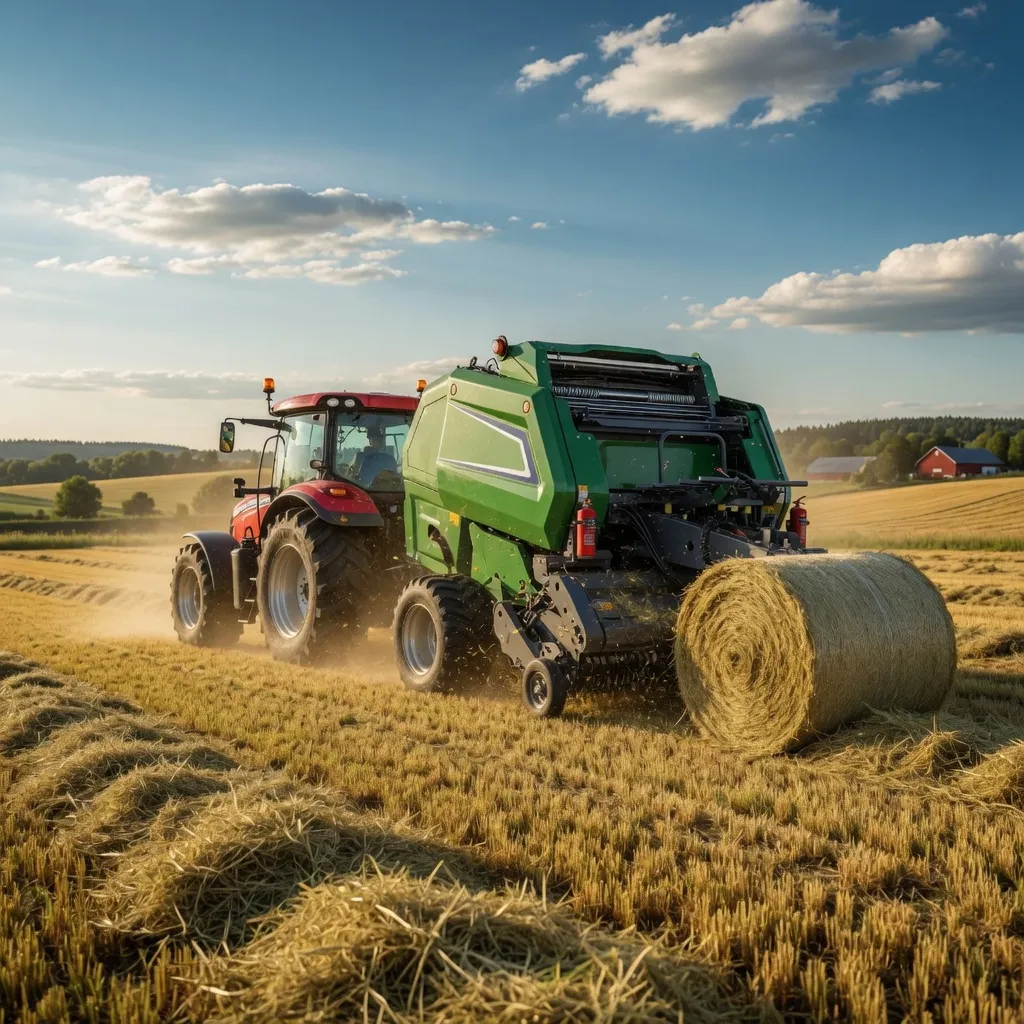
The Five-Cut Calendar: Timing, Moisture, and What Changes Each Cut
| Cut | Typical Month (MIA/Goulburn) | Regrowth Days | Moisture at Cutting | Key Challenge |
|---|---|---|---|---|
| 1st cut | September–October | Winter dormancy break | 68–78% | Highest volume, slow wilt in cool weather |
| 2nd cut | October–November | 28–35 days | 65–72% | Weather window narrows; wilt time 18–24h |
| 3rd cut | November–December | 25–32 days | 62–70% | Heat speeds wilt but raises aerobic risk |
| 4th cut | January–February | 28–35 days | 60–68% | Highest heat — wilt fast, bale same day |
| 5th cut | March–April | 30–38 days | 60–70% | Cooling temps slow wilt; autumn rain risk |
Why Cut 3 and Cut 4 Are the Most Critical — and Most Risky
First-cut lucerne in September and October benefits from cool wilting conditions — overnight temperatures of 10 to 15°C slow aerobic microbial activity in the fresh wilted windrow, allowing 24 to 36 hour wilt periods without significant quality loss from field heating. Third and fourth cut material in November to February faces the opposite problem: ambient temperatures of 28 to 40°C in the MIA and Goulburn Valley mean that a fresh lucerne windrow begins aerobic heating within 4 to 6 hours of cutting. Wilting material that has been on the ground for 24 hours at 35°C ambient has lost more dry matter to field respiration than material wilted for the same period at 15°C.
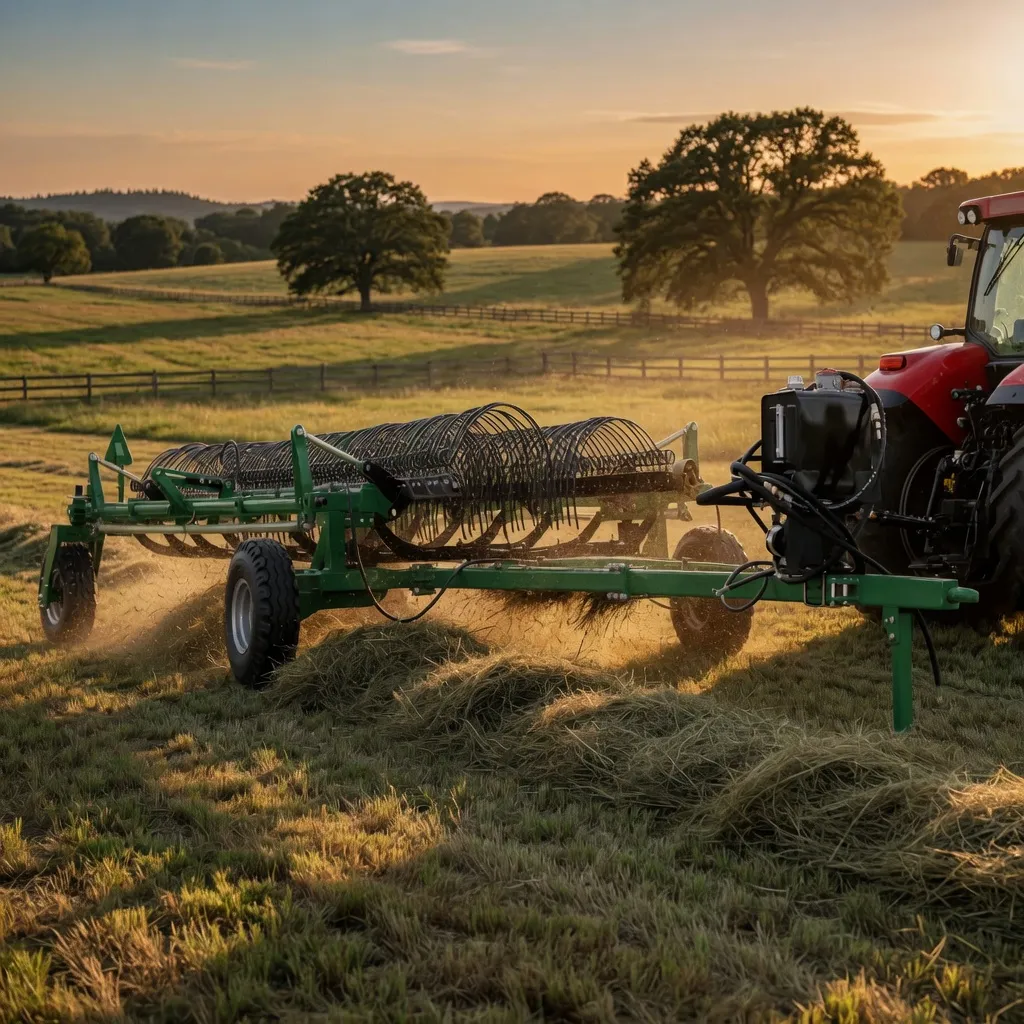
The operational response that experienced irrigated dairy farmers in the MIA have converged on for third and fourth cut silage is: cut in the late afternoon (3 to 5 PM), rake at dawn the following morning (6 to 7 AM) when dew on the surface has evaporated but the ambient temperature is still below 25°C, bale through the morning, and complete wrapping by early afternoon before peak heat returns. This 16 to 18 hour cut-to-wrap cycle is only feasible when the equipment is on-farm and the operator can manage the timing precisely — it is not achievable with a contractor who arrives when available.
Equipment Throughput Requirements: What Five Cuts Demands
The Wrapper Becomes the Throughput Bottleneck on a Multi-Cut Operation
On a dryland farm making 1 to 2 cuts per season with a 2 to 3 week baling window, the bottleneck is almost always the baler — the wrapper can keep up with any reasonable baling rate. On an irrigated five-cut operation where 300 to 400 bales need to be completed in a 4 to 6 hour weather window during the hottest part of the season, the bottleneck shifts to the wrapper. A standard single-unit wrapper processes one bale every 45 to 75 seconds — a throughput of 48 to 80 bales per hour when moving between bales is included. At the same time, a well-operated round baler in good lucerne windrows produces 60 to 90 bales per hour.
The rate mismatch means that at peak throughput, the baler is waiting for the wrapper. Two solutions exist: a combined baler-wrapper that eliminates the queue by integrating the operations, or a separate wrapper that operates in parallel with the baler on a second tractor — allowing the baler to continue producing while the wrapper catches up. For an irrigated dairy operation making 400 bales per cutting day in a 5-hour window, the separate parallel-operation approach (baler on tractor 1, wrapper on tractor 2) achieves the throughput target while the combined-unit approach falls short by approximately 30%.
The 9YCM-850 bundling film wrapping machine is the appropriate separate wrapper specification for MDB irrigated dairy operations: its programmable revolution counter applies exactly 6 layers without operator counting (eliminating the under-wrap error that occurs when operators are tired at hour 4 of a long harvest day), its 750 mm film roll format is compatible with the 1.25 m bale diameter standard across MDB dairy farms, and its throughput rate of 55 to 75 bales per hour closely matches the baler output in a parallel two-tractor configuration.
Baler: Variable Chamber for Variable Cut Conditions
Lucerne cut 1 in September from a winter-rested stand produces a significantly heavier windrow than cut 5 in March from a stand that has been cut 4 times without a moisture application interruption. A fixed-chamber baler set for the heavy first-cut windrow will under-fill on the lighter fifth-cut material; set for the lighter cuts, it over-stresses in the heavier first-cut. A variable-chamber baler self-adjusts to the windrow weight of each cut, maintaining the 180 to 220 kg DM/m³ density target regardless of cut number. For a five-cut irrigated dairy operation, the variable chamber is not a premium option — it is the specification requirement that delivers consistent bale quality across a season where windrow weight varies by 30 to 50% between cuts.
The 9YG-1.25A variable-chamber round baler handles the full range of MDB irrigated lucerne and ryegrass silage conditions across five cuts, producing consistent 1.25 m bales at target density from the heaviest first-cut windrow to the lightest late-season cut.
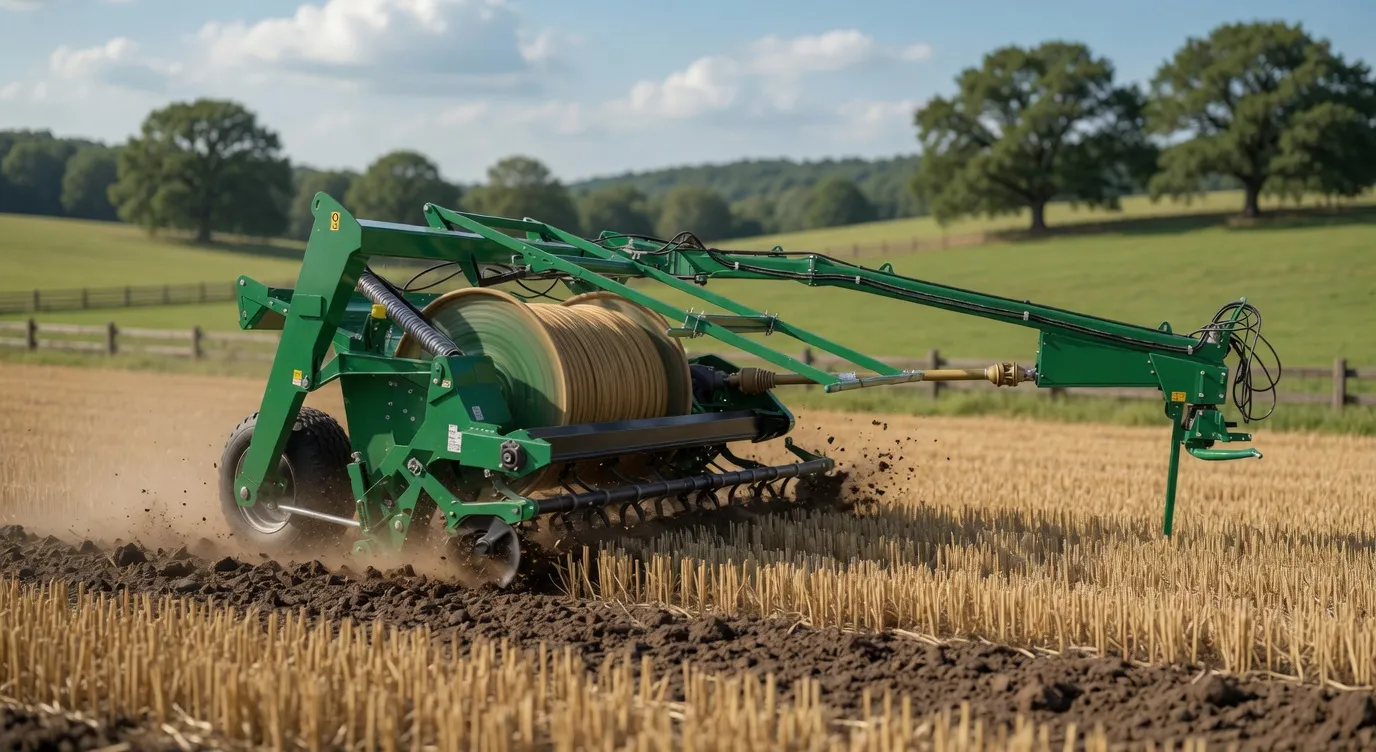
Managing Silage Quality Across Five Distinct Cuts
Why Multi-Cut Silage Needs Batch Tracking
A dairy farm feeding from a multi-cut silage inventory is mixing bales from 5 or more distinct fermentation batches, each made at slightly different moisture levels, different DM contents, and with different ambient fermentation temperature profiles. The nutritional profile of cut 1 September silage (cool ferment, slower pH drop, higher WSC preserved) differs measurably from cut 4 February silage (fast ferment, rapid pH drop, some aerobic DM loss during wilt). Feeding these bales interchangeably without knowing their relative quality introduces nutritional variation in the TMR that affects daily milk production.
Batch-tagging bales by cut number at wrapping — a strip of differently coloured tape, a spray paint code on the end face, or a simple bale numbering scheme logged against cutting date — allows the farm manager to sequence bale opening in a controlled way (feeding poorest-quality bales first, best-quality in peak lactation), and enables silage quality testing to be targeted at representative samples from each cut rather than random samples from a mixed inventory.
| Quality Metric | Cut 1 (Sept, cool) | Cut 3 (Nov–Dec, warm) | Cut 5 (Mar–Apr, cooling) |
|---|---|---|---|
| DM at baling (typical) | 35–42% | 30–36% | 32–38% |
| pH at 21 days | 4.0–4.5 | 3.8–4.3 | 4.0–4.6 |
| WSC preserved | Higher | Medium | Medium-High |
| Aerobic stability at opening | Good | Moderate — faster heating | Good |
| Crude protein (DM) | 19–24% | 21–26% | 20–25% |
Inoculant Use on a Multi-Cut Irrigated Operation
The case for LAB inoculant use on irrigated dairy silage is strongest in cuts 3 and 4, when high ambient temperatures during wilting and fast field moisture loss create conditions where the silage fermentation substrate (WSC content of the crop) may be lower than in spring cuts. In February and March, lucerne regrowth under heat stress has lower WSC (4 to 7% DM versus 7 to 11% in spring growth) — more challenging fermentation substrate precisely when the wilting conditions are most aggressive. Applying a homofermentative LAB inoculant at 1 × 10⁶ cfu/g fresh weight at the baler pickup in cuts 3 and 4 is standard practice on well-managed MDB irrigated dairy operations; it is optional but recommended for cuts 1, 2, and 5 where fermentation conditions are more favourable.
Water Management and Silage Timing — The Irrigation Interaction
Pre-Cut Irrigation Timing
Lucerne paddocks under flood or sprinkler irrigation should receive their pre-cut irrigation allocation 10 to 14 days before the intended cutting date — not in the 7 days immediately before cutting. Irrigation within 5 to 7 days of cutting raises the soil moisture content in the crown zone and increases the moisture content of the basal stem beyond what the plant’s natural physiology would produce at the same growth stage. This elevated stem moisture extends wilt time by 4 to 8 hours compared to paddocks where irrigation was timed correctly, compressing the baling window in summer cut conditions where time is the limiting resource.
Post-Cut Re-Entry Timing
After cutting, irrigated lucerne paddocks should not receive irrigation for 3 to 5 days to allow cut-surface healing and prevent soil splash contamination of windrow material lying on the ground. Irrigation driven onto a freshly cut paddock with windrows on the ground raises windrow moisture back toward cutting-stage levels and can add 18 to 24 hours to the wilt period — a significant scheduling problem in the compressed multi-cut calendar of a MDB irrigated dairy operation.
Frequently Asked Questions From MDB Irrigated Dairy Operators
Discuss Your Irrigated Dairy Silage System
Tell us your herd size, cut frequency, available irrigation hours, and current baling arrangement — we’ll help plan the right equipment configuration for your MDB dairy operation.