
Where the Time Actually Goes on a Hay Stacking Day
On a typical small square bale day in Australia, the baler runs for 8 hours and the stacking crew works for 10–12 hours. The baler finishes first. The stacking crew is the constraint — not because they are slow, but because the physics of carrying 25 kg bales over distance, lifting them above shoulder height, and repeating this motion 500–1,000 times per day imposes a biological limit on how fast humans can work before fatigue forces them to slow down. By midday, the crew that was stacking 80 bales per hour in the morning is managing 50. By late afternoon, 35. The day that should have finished at 5 PM is running until 7 PM, and the hay that was supposed to be fully under cover before the afternoon thunderstorm is not. A hay baler conveyor does not just add mechanical assistance — it changes the energy equation. The physical work shifts from lifting-and-carrying to sliding-and-positioning, which humans can sustain at consistent speed for far longer than the lifting equivalent. The 9JYY-4.5 specifically addresses this by eliminating the vertical lift component of stacking — the highest-energy, highest-injury-risk part of the manual operation.
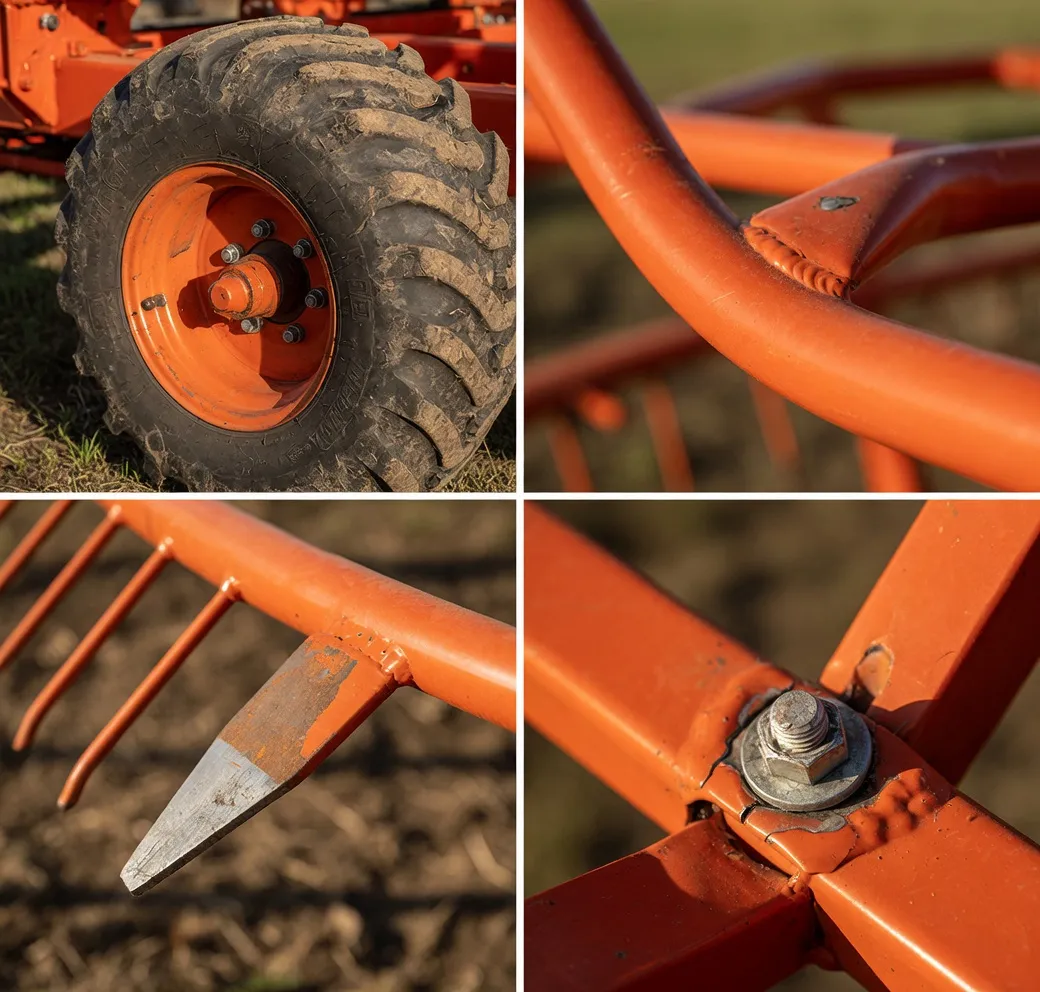
The 9JYY-4.5 eliminates the vertical lift from the hay stacking operation — the single highest-energy task in the manual chain — reducing fatigue and allowing the stacking crew to maintain throughput through a full working day.
The Manual Relay Chain: Why It Slows Down
The traditional small square bale stacking method uses a relay chain: a line of people spaced between the truck or accumulator and the shed stack, passing bales hand-to-hand along the chain. Each person in the chain is responsible for catching a bale from the person below them, turning to pass it to the person above, and repeating. The person at the top of the chain — the stacker — must also position each bale in the stack pattern, which requires lateral movement and at least a partial lift to place the bale on top of the previous layer.
This system works in short bursts. Over a full day, it fails consistently for three reasons. First, fatigue is uneven across the chain — the person at the highest position tires fastest because they are doing the most mechanical work (lifting against gravity), and the entire chain slows to match their pace. Second, timing coordination breaks down as fatigue sets in — the chain begins to bunch (bales accumulate at one person) or gap (pauses between bales as the chain recovers), creating an irregular rhythm that reduces average throughput below the theoretical maximum. Third, a relay chain requires a minimum of 3–4 people to function at any useful height — scheduling and retaining this many workers for a single operation day is increasingly difficult and expensive in the Australian rural labour market.
How the 9JYY-4.5 Changes the Energy Equation
The 9JYY-4.5 replaces the middle sections of the relay chain with a mechanically driven belt. The feeder at the bottom of the conveyor places each bale on the belt with a sliding motion — requiring roughly 15–20% of the energy of a full lift to stack height. The motor then carries the bale up the 4.5-metre incline, delivering it at the top at approximately 0.4 m/s — fast enough for continuous flow, slow enough for the stacker to position each bale with a push rather than a lift.
The energy savings are measurable. Lifting a 25 kg bale from ground level to 2.4 metres height requires approximately 588 joules of mechanical work. Sliding the same bale onto a conveyor at 400 mm height requires approximately 100 joules. Over 500 bales in a day, the total energy saved by the feeder alone is approximately 244,000 joules — equivalent to lifting 24,000 kg through one metre. For the stacker at the top, the work required drops from a full lift-and-position (approximately 200 joules per bale at top-of-stack height) to a push-and-place (approximately 40–60 joules per bale). Total stacker energy per day drops by approximately 70%, which is why stacker fatigue with a conveyor is so much lower than without one.
Throughput Comparison: Manual vs Conveyor
The productivity gain per person is approximately 2.7× — driven by both the reduced crew size and the sustained afternoon throughput that the conveyor enables by reducing fatigue. The total daily output is also higher (640 vs 480 bales) despite using half the workforce, because the morning peak and afternoon average are both higher when the lifting work is removed.
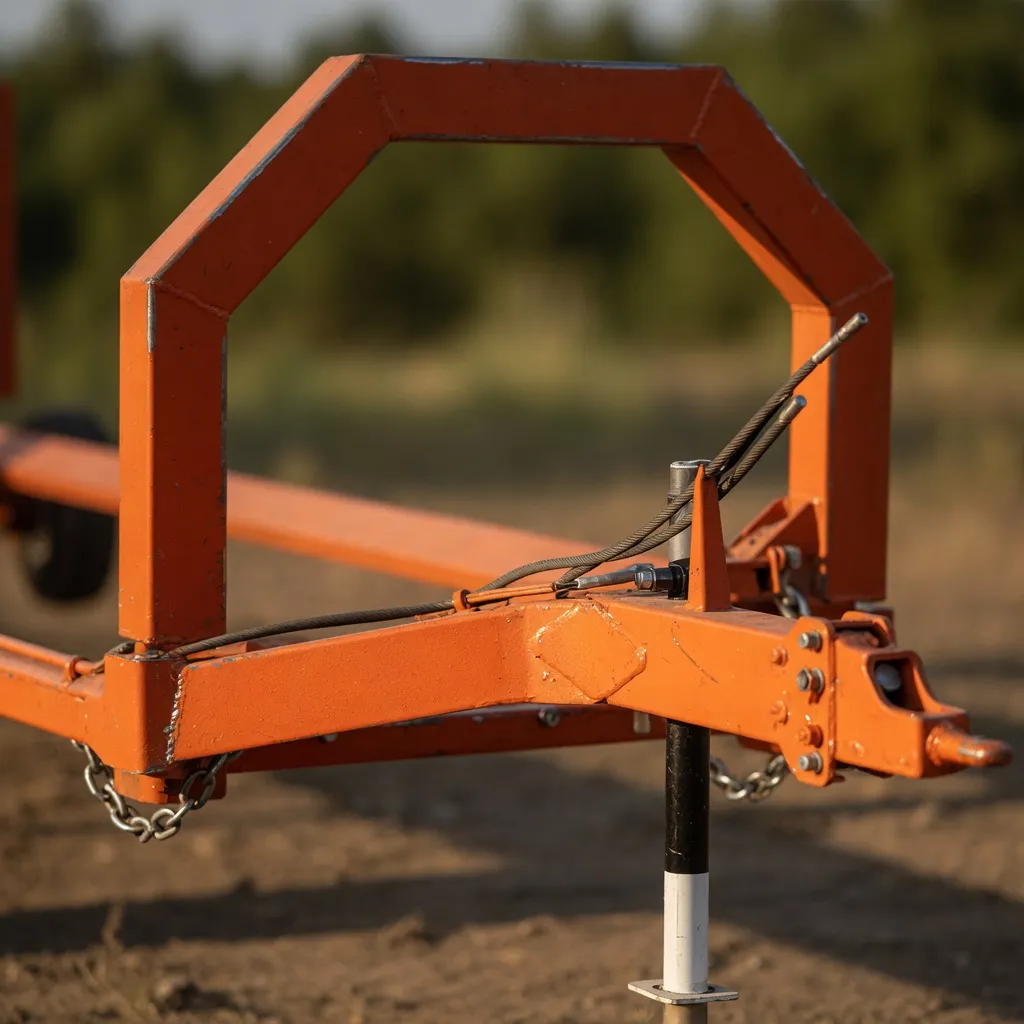
A complete hay handling system — baler, transporter, and conveyor — eliminates manual carrying at every stage of the operation, allowing a 2-person crew to complete what previously required 4–5 people.
Optimising Conveyor Position for Maximum Flow
The 9JYY-4.5’s throughput is limited not by belt speed but by how quickly the feeder can place bales onto the infeed end without gaps. A feeder who must walk more than 3–4 steps between the bale source (truck, accumulator, or ground pile) and the conveyor infeed loses 2–4 seconds per bale — at 80 bales per hour, this is 160–320 seconds of dead time per hour, reducing effective throughput by 5–10%. Position the conveyor infeed within 2–3 steps of where the bales arrive, or use a second person to transfer bales from the arrival point to the conveyor while the primary feeder focuses only on placing bales on the belt in a consistent rhythm.
The stacker at the top benefits from a consistent bale arrival interval — approximately 3–4 seconds between bales at standard belt speed. A rhythm that delivers bales faster than the stacker can position them creates a backup at the top end; one that delivers them slower creates waiting time. If the feeder is faster than the stacker, slow down slightly at the infeed rather than creating a backlog at the top that forces the stacker to rush and increases misplacement and injury risk.
When to Stack Bales Flat vs on Edge on the Belt
Bales can be loaded on the 9JYY-4.5 either flat (broadest face down, lying horizontally) or on edge (narrowest face down, standing upright). Flat loading is stable and requires no adjustment for standard operating angles below 30 degrees. On edge loading allows more bales per metre of belt length — useful when the feeder is working faster than the stacker and wants to create a small buffer queue on the belt — but requires the belt to be at the correct angle or bales will topple sideways. For most operations, flat loading on a belt set to 25–30 degrees is the optimal combination of stability and throughput.
Recommended Product: 9JYY-4.5 Hay Baler Conveyor
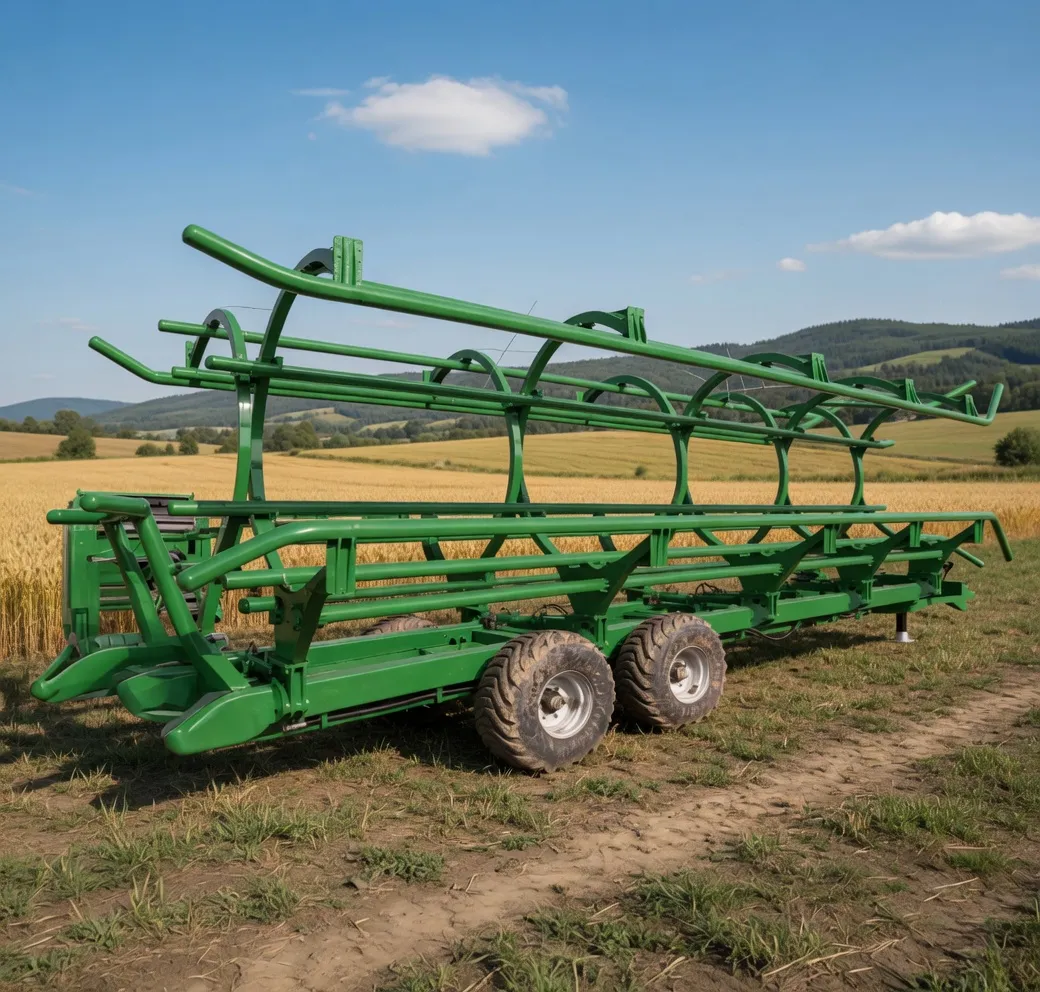
4.5 m motorised belt conveyor for small square bales up to 35 kg. Eliminates the vertical lift component of hay stacking — reducing feeder energy by 80% and sustaining afternoon throughput at near-morning levels. 2-person operation replaces 4-person relay chain at higher daily output. 240 V single-phase motor. Adjustable 20–40° elevation. Stocked at EverPower’s Condell Park NSW warehouse, Australia-wide delivery.
Frequently Asked Questions
Faster Loading. Less Labour. Same Two People All Day.
EverPower can advise on 9JYY-4.5 setup, positioning, and throughput planning for your hay stacking operation.
EverPower Baling Machinery Australia Pty Ltd | 27 Harley Crescent, Condell Park NSW 2200
📞 +61 2 9708 3322 | ✉️ [email protected]