
After the pods are harvested, what’s left in the paddock is some of the highest-protein roughage available in Queensland — and most of it gets ploughed back in.
Why Peanut Hay Is Northern Australia’s Most Under-Used Forage
Queensland grows approximately 70,000 to 90,000 hectares of peanuts annually, concentrated on the Darling Downs, the South Burnett, and in the Northern Territory’s Katherine and Douglas-Daly regions. After mechanical harvesting strips the pods from the plants, the remaining above-ground biomass — stems, leaves, and empty pod shells — is left in the paddock in most operations. It is either incorporated into the soil, grazed off casually by cattle that follow the harvester, or simply left to decompose.
What almost nobody in the peanut belt talks about publicly is the nutritional value of this material. Peanut hay — the dried above-ground vine and leaf material from the peanut plant — carries crude protein of 12 to 18% DM at the vegetative to early-pod stage, and 8 to 12% CP at full harvest maturity. Compare this to wheat straw at 3 to 5% CP, oaten hay at 7 to 10% CP, or commercial ryegrass hay at 10 to 14% CP, and the nutritional premium of peanut hay becomes immediately clear. For a Queensland beef finishing operation buying protein supplement at AUD $450 to $600 per tonne, a roughage source that delivers 10 to 14% CP at a harvest cost of AUD $60 to $100 per tonne DM represents a significant ration cost saving.
The reason most peanut hay goes unbaled is not economic — it is logistical. The harvest window is narrow, the vine material is tangled and awkward for standard pickup mechanisms, and there has historically been limited demand-side awareness that the product has market value. This article covers what peanut hay actually delivers nutritionally, the specific baling management that captures the value before it is lost to weathering and proteolysis, and the beef and sheep markets that make peanut hay baling worthwhile in Queensland and the Northern Territory. For context on how other high-protein residues from northern farming systems are managed for livestock value, our article on silage baling for beef cattle stations in drought covers the broader residue-to-feed value chain for northern beef producers.
Nutritional Profile: Why Peanut Hay Outperforms Most Queensland Roughage
Crude Protein Compared Across Northern Queensland Roughage Options
| Feed Source | Crude Protein (DM) | Cost Estimate (AUD/t DM) | Notes |
|---|---|---|---|
| Peanut hay (promptly baled) | 12–18% | $60–$100 | Zero purchased cost — harvest by-product |
| Peanut hay (delayed 7+ days) | 7–10% | $60–$100 | Protein lost to proteolysis |
| Rhodes grass hay | 7–11% | $160–$220 delivered | Standard northern QLD roughage |
| Oaten hay | 7–10% | $180–$250 delivered | Imported — freight adds to price |
| Commercial protein meal (SBM) | 44–46% | $450–$600 delivered | Purchased supplement |
| Sorghum silage | 7–9% | $80–$130 on-farm | Energy crop — lower protein |
| Wheat straw | 3–5% | $80–$140 delivered | Low quality — fill roughage only |
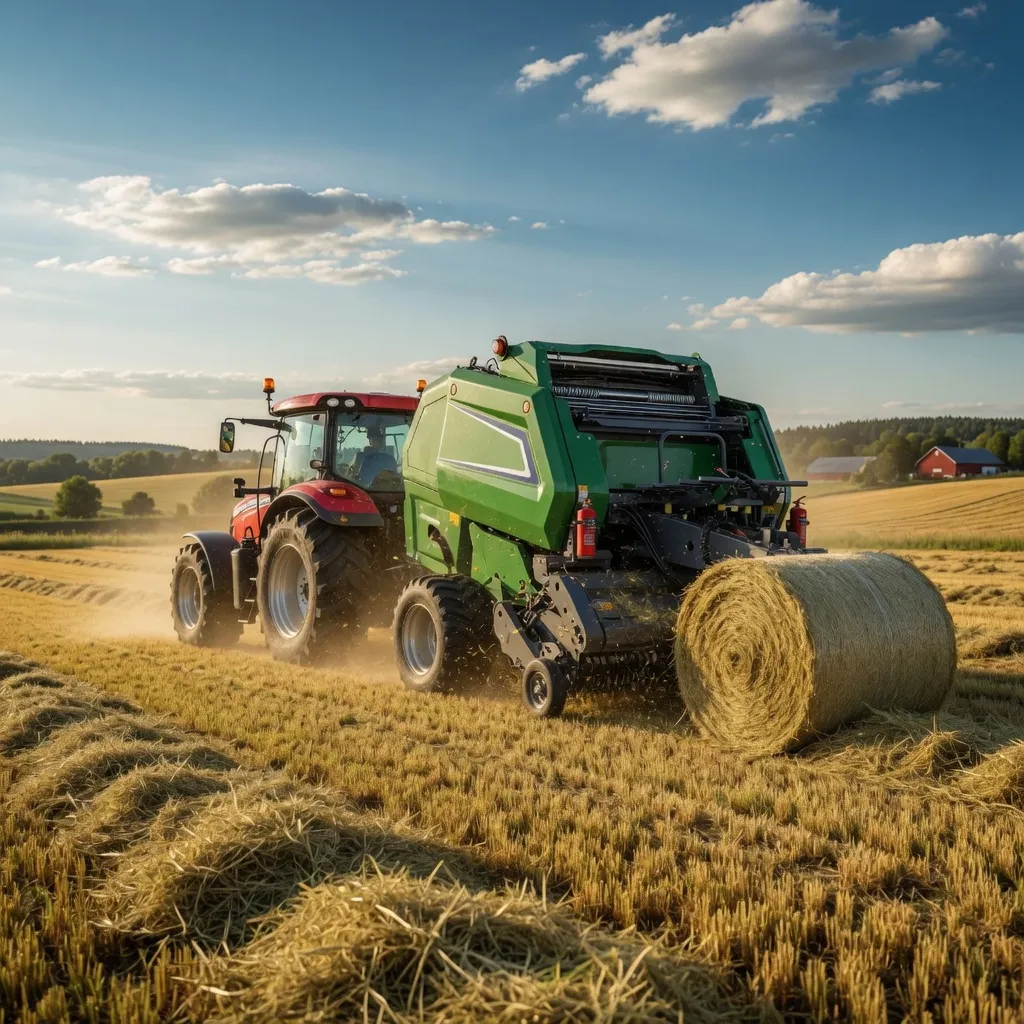
At 12 to 18% crude protein, promptly baled peanut hay occupies a nutritional position between a standard grass hay and a mid-grade protein supplement. For a beef operation running a growing ration for 12 to 24 month cattle, peanut hay at 15% CP fed at 8 kg DM per head per day delivers 1.2 kg CP per head per day — sufficient to support 0.7 to 0.9 kg daily weight gain alongside modest grain supplementation, without any purchased protein meal. The comparison to purchased rhodesgrass hay (7 to 11% CP, AUD $160 to $220 per tonne delivered) makes the value of peanut hay recovery obvious when the baling cost is the only incremental expense.
The Protein Degradation Problem — Why Speed Is Everything
Peanut vine protein degrades rapidly after mechanical harvesting. The cellular disruption from the harvesting machine — which separates pods from vines by mechanical agitation — damages leaf cells and begins enzyme-driven proteolysis within hours of harvest. At 28 to 35°C ambient temperature (typical of the QLD Darling Downs in March and April, the primary peanut harvest period), crude protein measured from vine samples at 0, 48, and 96 hours post-harvest drops by 2 to 4 percentage points per 48-hour interval. Material left 7 or more days before baling may test 6 to 9% CP — below the value of commercially purchased rhodesgrass hay.
| Hours After Harvest | Vine Condition | Crude Protein (DM) | Recommended Action |
|---|---|---|---|
| 0–24 hrs | Fresh, green, moist | 14–18% | Field-dry before baling — moisture typically 45–65% |
| 24–48 hrs | Wilting, still green | 12–16% | Target baling window — check moisture |
| 48–72 hrs | Yellowing begins | 10–14% | Bale immediately if dry enough |
| 72–96 hrs | Yellow-brown | 8–11% | Declining value — bale today or accept lower grade |
| >96 hrs | Browning, heating | 5–8% | Significant loss — low-grade roughage only |
Harvest Timing and the Baling Window
The Mechanical Harvester as the Starting Gun
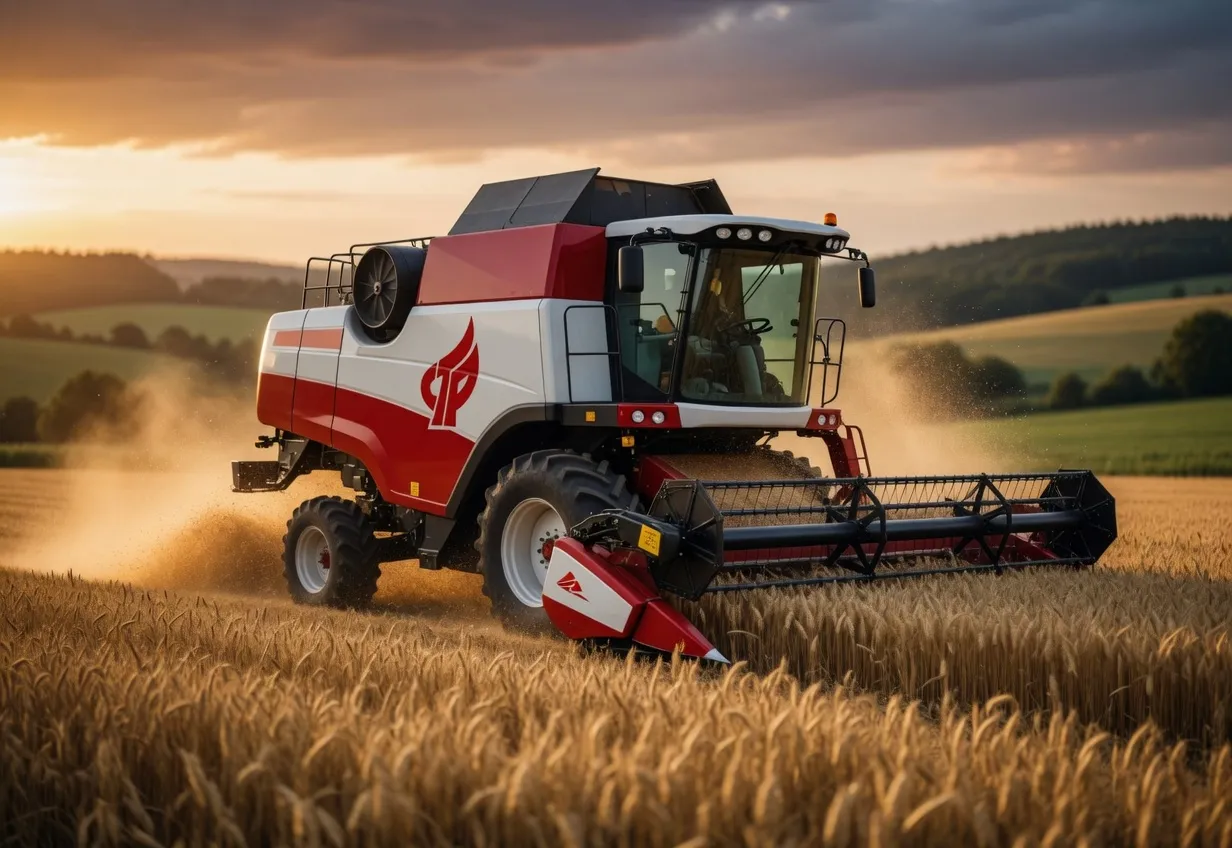
Peanut harvesting in Queensland is done with a dedicated peanut harvester that lifts the plant, inverts it for pod drying, then picks up and threshes the pods — leaving the vine material spread across the paddock in a loose, wide windrow pattern. In most operations, the vine material is left in this pattern for 7 to 14 days as the residual pod shells dry further and cattle graze through. This extended field exposure is the primary cause of protein loss in peanut hay.
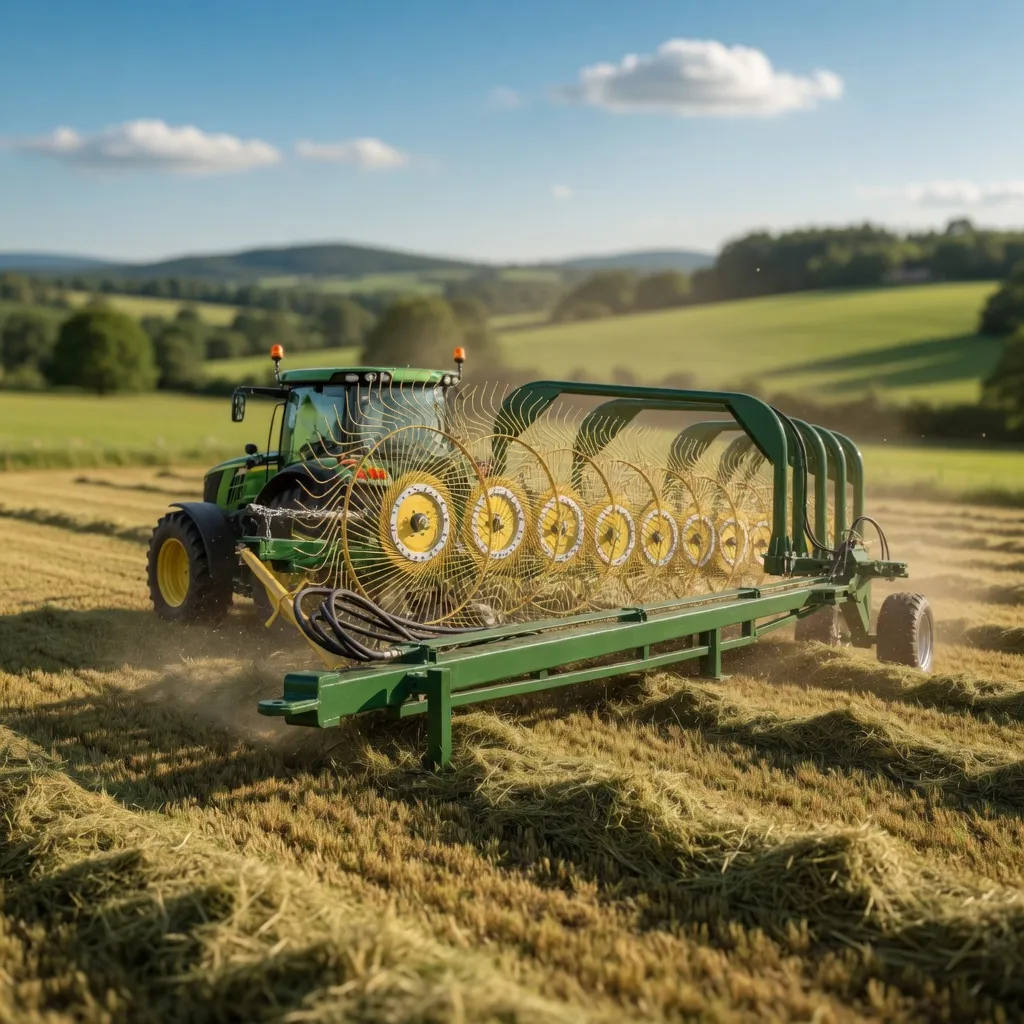
The correct harvesting management for peanut hay production is: treat the mechanical harvester as the starting point of a 48 to 72 hour baling clock, not the end of the farming operation. Within 24 hours of the harvester passing, the vine material should be raked into consolidated windrows using a finger-wheel rake (to avoid excessive soil pickup from the recently disturbed soil surface). At 36 to 72 hours post-harvest, confirm moisture in the windrow base is below 20% before baling — peanut vine material dries more rapidly than cereal hay because the leaf surface is large and the stems are thinner than cereal culms.
Use a finger-wheel rake at moderate forward speed (6 to 7 km/h) to avoid soil pickup from the recently disturbed paddock surface. Maintain rake tine height at 8 to 10 cm — the vine material is light and easily lifted, and higher tine clearance reduces soil contamination that is detrimental to livestock feeding value.
Probe the bottom layer of the formed windrow with a conductance moisture meter. Target baling moisture is 15 to 22% — low enough for dry baling without heating, high enough to avoid the brittle leaf shattering that occurs below 12% in peanut vine material. In QLD’s autumn harvest conditions, most padocks reach this range within 36 to 48 hours of raking on a clear day.
Unlike cereal hay where the baling window extends 2 to 4 days after target moisture is reached, peanut vine hay should be baled within 24 hours of confirming target moisture — the protein degradation clock continues regardless of moisture content. Do not delay baling for operational convenience once the moisture is right.
Peanut vine material is a tangled, relatively low-density crop that does not hold bale shape under twine tension alone. Net wrap provides the peripheral compression needed to maintain a cylindrical bale through transport and storage. Twine-tied peanut vine bales deform within days of storage, opening the bale structure and increasing handling difficulty.
Baler Setup for Peanut Vine Material
Why Variable Chamber Is Essential for Peanut Vine
Peanut vine material is one of the lowest-density crops that a round baler handles. The tangled, sprawling structure of peanut vines — stems of 4 to 8 mm diameter with numerous side branches and large leaf area — produces a windrow that looks bulky but weighs significantly less per metre of windrow length than a cereal hay or grass silage windrow at equivalent width. A fixed-chamber baler set for normal hay density will produce peanut vine bales at 30 to 50% of target weight — economically unacceptable for transport and commercially worthless as a market product.
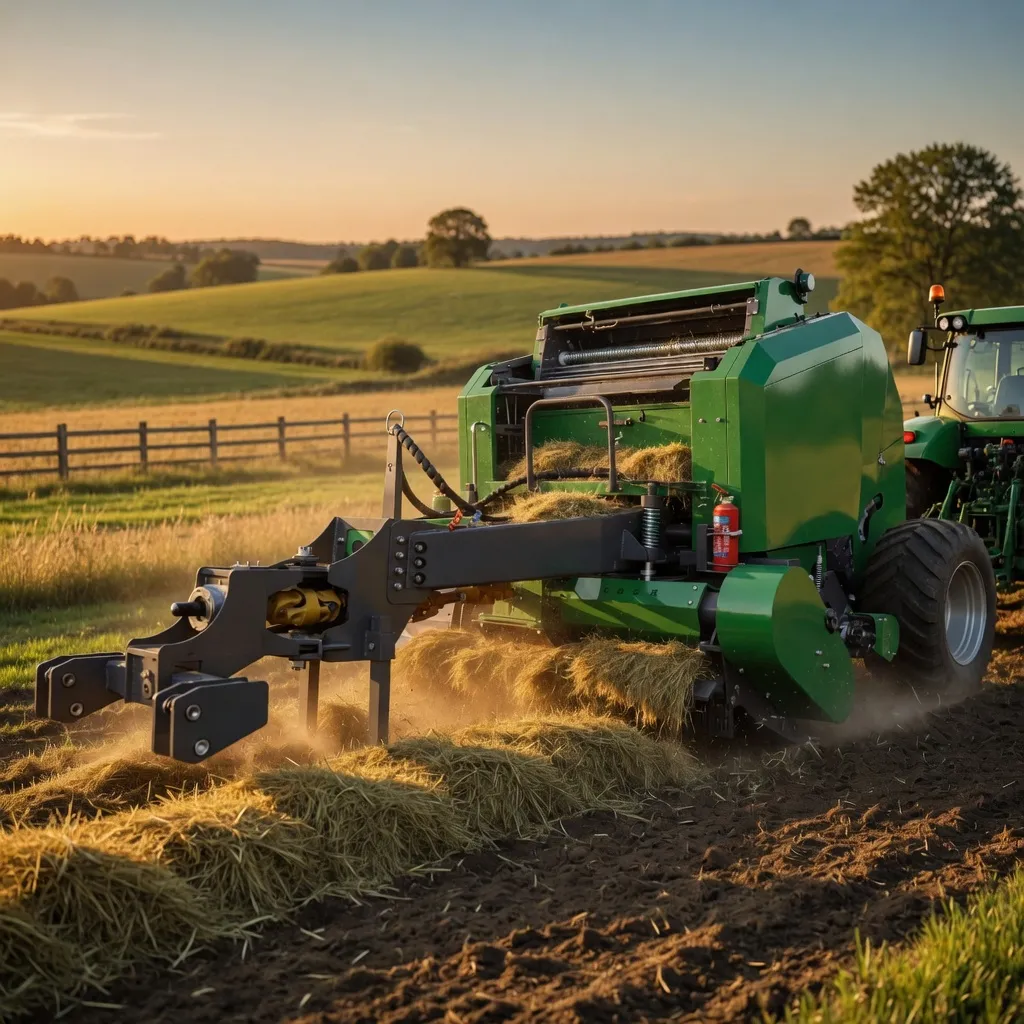
A variable-chamber baler compensates for the low windrow density by building to a pressure target rather than a volume target — the chamber continues accumulating material until the set pressure is reached, regardless of how many passes through the windrow are required to achieve it. The result is a consistently weighted bale even from the lightest windrow. The 9YG-1.25A variable-chamber round baler is the appropriate specification for commercial peanut hay production — its chamber pressure range accommodates the low-density peanut vine windrow and produces bales of consistent weight suitable for commercial sale and transport.
Forward Speed and Pickup Settings
Reduce baler forward speed to 4 to 5 km/h for peanut vine baling — significantly slower than the 7 to 9 km/h used for grass hay or cereal silage. The tangled vine structure enters the pickup more slowly than straight-stemmed crops and requires steady, consistent feed rate to avoid chamber plugging from material bridging across the pickup width. Set pickup tine height at 8 to 10 cm — higher than for most crops — because the vine material is loose on the ground surface and tines set too low scoop soil into the bale at the recently harvested peanut paddock surface.
Market Channels: Who Buys Peanut Hay in Queensland
Beef Finishing Operations — The Primary Buyer
Queensland beef finishing operations in the Lockyer Valley, the South Burnett, and the Darling Downs are the primary buyers of commercial peanut hay. Operations running 200 to 800 head through a winter finishing programme use peanut hay as a protein-contributing roughage at 20 to 35% of total DMI, reducing the purchased protein supplement (soybean meal, cottonseed meal) allocation by 30 to 50% compared to programmes using standard grass hay. At AUD $90 to $140 per tonne DM for peanut hay versus AUD $450 to $600 per tonne DM for soybean meal, the substitution economics are consistently positive in all price environments.
Sheep and Goat Operations in Southwest Queensland
Southwest Queensland sheep and goat operations on the channel country fringe and the Warrego country use peanut hay as a premium winter supplement — particularly for breeding ewes in late pregnancy and early lactation where the 12 to 15% crude protein content covers pregnancy and lactation demands without the cost of additional purchased protein supplement. Trucking peanut hay from the Darling Downs to southwest Queensland adds AUD $30 to $60 per tonne in transport cost, but even at AUD $160 to $180 per tonne DM delivered, the protein value at 12 to 15% CP makes it cost-competitive with rhodesgrass hay for ruminant protein supply.
| Market | Buying Price (Farm Gate AUD/t DM) | Volume Demand | Key Specification |
|---|---|---|---|
| Darling Downs beef feeders | $90–$140 | High — local | 12%+ CP, <20% moisture, net-wrapped |
| South Burnett cattle | $90–$130 | Medium | Same |
| Southwest QLD sheep stations | $110–$160 (+ freight) | Medium — seasonal | 14%+ CP preferred |
| NT Katherine beef operations | $100–$150 (local only) | Low — niche | Fresh season baling essential |
Common Mistakes in Peanut Hay Production
Every 24 hours of delay beyond 48 hours post-harvest removes 2 to 4 percentage points of crude protein from the product through proteolysis and field microbial activity. Material baled at 96+ hours may test 6 to 8% CP — the equivalent of moderate-quality cereal straw, not the high-protein forage that justifies the harvest effort. Treat the 48 to 72 hour baling window as the management constraint of the entire peanut hay operation and plan equipment availability accordingly.
Peanut vine leaf material becomes brittle and shatters below 12% moisture — the leaf fraction, which carries the majority of the crude protein value, is lost from the windrow during pickup and bale formation. Bales made from over-dried peanut vine are predominantly stem material at 7 to 9% CP rather than the mixed leaf-and-stem product at 12 to 16% CP that justifies the market premium. Monitor moisture actively and bale before the material over-dries.
Peanut vine bales tied with twine lose their shape within 1 to 2 weeks of storage as the low-density, springy vine material relaxes against the twine tension. Deformed bales are difficult to handle mechanically, load inefficiently onto trucks, and are rejected by buyers who specify round bale format for their feeding infrastructure. Net wrap is not optional for peanut vine hay — it is the binding method that makes the product commercially viable.
Peanut hay crude protein varies significantly between early-baled (12 to 18% CP), correctly timed (10 to 14% CP), and late-baled batches (6 to 10% CP). Buyers in the Queensland beef market price peanut hay on protein content — selling untested lots as ‘peanut hay’ without specifying CP allows buyers to assume lower quality and price accordingly. Test a representative sample from each bale run (AUD $35 to $55 for NIR analysis) and provide the result with each delivery to command the premium protein price.
Frequently Asked Questions
Discuss Your Peanut Hay Baling Programme
Tell us your paddock area, harvest timing, and target market — we’ll specify the right baler configuration for peanut hay production in Queensland or the Northern Territory.