
How Victoria and Tasmania’s deer farmers are managing winter silage programmes — the nutritional differences from sheep and cattle, bale sizing for mob management, and the crops that work best.
Deer Silage: Why the Standard Cattle Rules Don’t Apply
Australia’s deer industry — primarily Red deer (Cervus elaphus) and Fallow deer (Dama dama) for venison, and Red deer for velvet production — is concentrated in Victoria’s Western District and high country, Tasmania’s midlands, and parts of South Australia and NSW tablelands. Total farmed deer numbers in Australia are estimated at 200,000 to 280,000 head, managed on properties ranging from 50 to 1,500 head.
Deer silage management differs from cattle and sheep practice in three important ways. First, deer are highly selective feeders with a very strong refusal response to poor-quality or off-smelling silage — a herd of Red deer offered clostridially spoiled silage will walk away entirely and go hungry rather than adapt as cattle would. Second, deer’s seasonal nutritional requirements vary more dramatically than cattle through the year, driven by the antler cycle in stags and the strict seasonality of calving in hinds. Third, mob management in deer fencing systems often requires moving silage to feeding points in areas where conventional bale handling equipment cannot easily operate — making bale size and weight a genuine field logistics consideration.
This article covers the practical silage programme for a 100 to 400 head deer property in Victoria or Tasmania, including which forage crops produce the most acceptable silage for deer, how to manage bale size for deer mob feeding without excessive aerobic deterioration, and what fermentation quality standards deer actually require relative to cattle. For general baling solutions for sheep-scale mixed livestock properties with similar mob sizes, our article on round baler solutions for sheep and wool farms covers the equipment context for small ruminant-scale operations.
Deer Nutritional Requirements Through the Season
| Period | Hinds | Stags | Silage Role | Quality Priority |
|---|---|---|---|---|
| Jun–Aug (late winter) | Late pregnancy — peak ME demand | Antler drop — maintenance | Primary roughage + energy | High ME, ≥10 MJ/kg DM |
| Sep–Oct (calving/fawning) | Lactation — highest demands | Velvet growth begins | Supplement to spring pasture | High protein, ≥18% CP |
| Nov–Jan (summer) | Rearing fawns — moderate | Velvet hardening | Supplement only if dry | Moderate — back-up |
| Feb–Apr (weaning/autumn) | Hind recovery + re-breeding | Rut preparation | Body condition maintenance | ME important |
| May–Jun (early winter) | Early pregnancy — lower demands | Post-rut recovery | Main silage season begins | Acceptable quality |
The Late-Pregnancy Energy Critical Period
Hinds in late pregnancy (June to August in southern Australia) have the highest metabolic energy demand of their annual cycle — the foetal growth rate is maximal and the hind’s own body condition must be maintained for birth weight and milk production outcomes. At this stage, silage ME below 9.0 MJ/kg DM causes body condition score loss in late-pregnancy hinds that directly reduces fawn birth weights and post-partum hind milk output. Well-made grass-legume silage at 9.5 to 11.0 MJ ME and 14 to 18% CP covers this critical period well; lower-quality silage from mature or poorly fermented material does not.
Crop Selection and Silage Quality for Deer
What Deer Will and Won’t Eat — Palatability First
Deer are more palatable-selective than sheep or cattle. The smell of silage is the first acceptance or rejection trigger — deer approach a new silage bale cautiously, smell it at close range, and make an immediate decision. Well-made ryegrass or mixed grass silage with a clean lactic acid aroma and pH below 4.5 is generally accepted within 15 to 30 minutes of introduction. Silage with any butyric or ammonia odour — the hallmarks of clostridial fermentation — is rejected immediately and consistently by all deer age classes.
The most reliably acceptable silage types for deer in Victorian and Tasmanian conditions are: perennial ryegrass silage cut at flag leaf (clean fermentation, familiar grass smell), mixed ryegrass-clover baleage (protein boost from the clover fraction, high palatability), and oaten silage at the flag-leaf to early-head stage (moderate protein, high ME, familiar cereal smell). Avoid: pure legume silage at high inclusion rates as the primary forage (the more intense fermentation aroma from legume silage is less familiar to deer and causes greater initial refusal), and any silage made at above 70% moisture without inoculant (clostridial risk is significant and the consequences for deer intake are severe).
Fermentation Quality Standards for Deer Silage
| Parameter | Deer Standard | Cattle Standard | Why Stricter for Deer? |
|---|---|---|---|
| pH at opening | 3.9–4.5 | 3.8–5.0 | Deer reject silage above 4.8 — butyric smell |
| Ammonia-N (% of total N) | <7% | <10% | Ammonia odour triggers immediate refusal |
| Butyric acid | Not detectable | <0.3% DM | Strong refusal response at any detectable level |
| DM at baling | 32–45% | 28–50% | Narrower window — below 30% increases clostridial risk |
Bale Size: The Field Logistics Challenge on Deer Properties
Why the 1.0 m Format Suits Deer Mob Feeding Better
A mob of 80 to 120 deer eating 3.0 to 4.5 kg DM silage per head per day consumes 240 to 540 kg DM per day. A 1.25 m silage bale at 45% DM contains approximately 200 to 260 kg DM — 1 to 2 days of consumption for a mob of this size. In warm conditions (above 15°C ambient), a silage bale opened and consumed over 2 days shows measurable aerobic deterioration on the face from the second day onward — heating, visual mould colonies forming, and increased off-odours that deer detect and respond to with reduced intake.
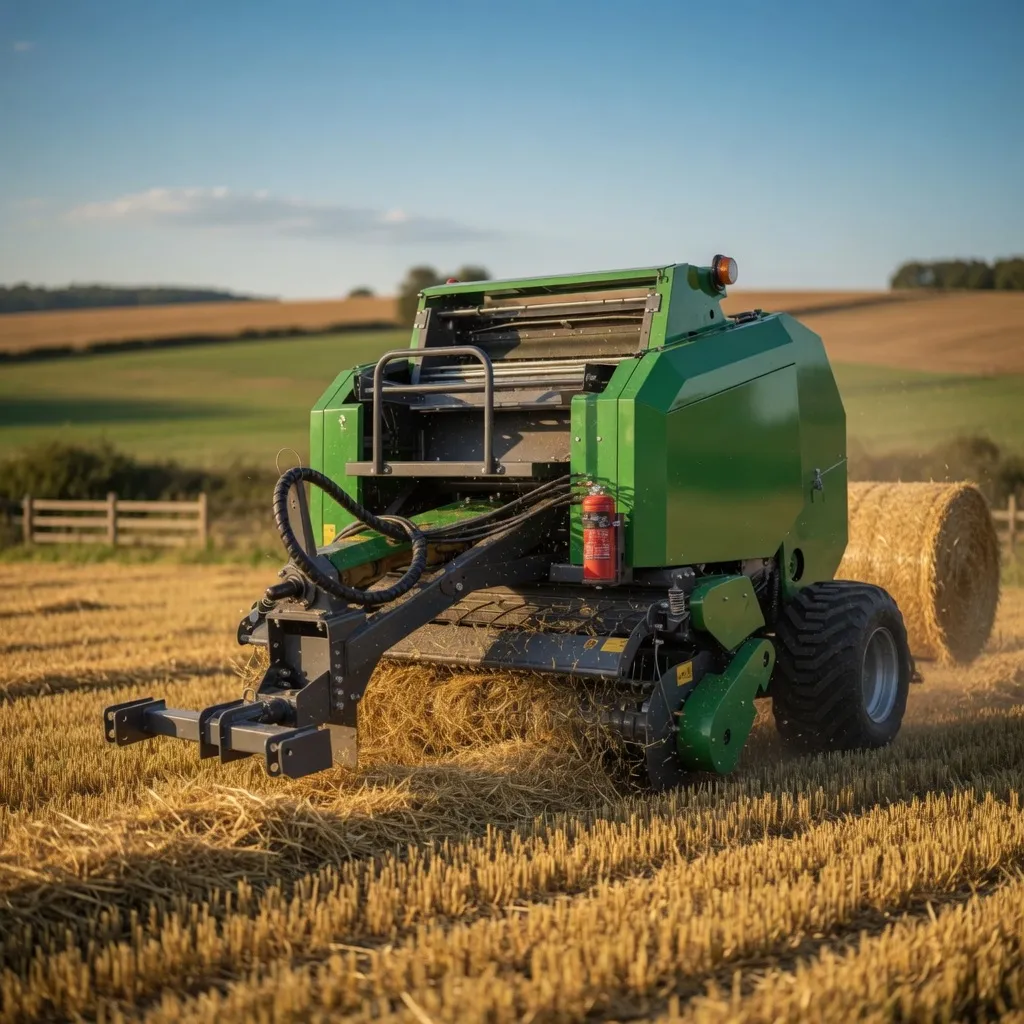
The 1.0 m bale at 90 to 120 kg DM is consumed by the same mob in less than a day — eliminating the aerobic deterioration window entirely. This smaller format also weighs 220 to 300 kg fresh weight, which is within the handling capacity of the compact farm quad-bike trailers and small telehandlers that are the standard handling equipment on deer properties where fencing constraints and hilly terrain prevent conventional tractor-loader access to all feeding points. The 9YG-1.0 round baler produces the correct format for deer property silage — compact, light enough for property handling equipment, and fermentation-appropriate for the quality standards deer require.
Common Silage Mistakes on Deer Properties
They won’t. Unlike cattle that reduce intake but persist, deer will go off feed entirely from clostridially spoiled silage and maintain the refusal for the duration of exposure to that batch. A herd that goes off silage in late pregnancy in June is a welfare and production emergency. Test every batch: pH above 4.8 and visible brown-black discolouration are the field indicators of a problem batch that should not be offered to deer.
A 1.25 m silage bale that fits a cattle operation’s daily intake pattern is too large for most deer mob sizes. The aerobic deterioration that occurs from the second day of exposure on a partially consumed bale is severe enough in warm Australian conditions to cause detectable palatability problems for deer — animals that will already avoid mildly off-smelling feed. Right-size your bales to your mob’s 24-hour intake capacity.
Mixed grass-clover silage has a more challenging fermentation profile than pure grass because the legume fraction raises buffering capacity and reduces WSC relative to pure grass. LAB inoculant is particularly important for grass-clover baleage at inclusion rates above 30% clover — without it, the risk of pH plateau above 4.8 is significant, and the resulting silage will be rejected by deer at first smell.
Frequently Asked Questions
Discuss Your Deer Farm Silage Programme
Tell us your herd size, feeding months, and available forage area — we’ll specify the right baler format for your venison or velvet operation.