
Why Cut Quality Determines Hay and Silage Value
A clean mower cut is not an aesthetic preference — it is the single largest controllable factor in preserving forage nutritional value from paddock to bale. When a blade shears through a ryegrass or lucerne stem in a single, precise stroke, the plant’s vascular tissue seals rapidly. Moisture escapes through the stomata at a predictable rate, and the swath dries evenly within a 24–36 hour window. A ragged cut — caused by dull blades, incorrect speed, or misaligned guard plates — tears the stem open along its length, exposing the inner pith. Cell sap leaks onto the swath, attracting mould spores, slowing respiration, and extending drying time by 12–18 hours. That extra field exposure increases the probability of rain damage, which downgrades hay value by AUD $40–$100 per tonne at the farmgate. For silage, a bruised stem ferments unevenly in the pit or bale, producing butyric acid hotspots that livestock reject. This article covers the practical settings, techniques, and maintenance steps that produce a consistently clean cut with a traction single-blade mower across ryegrass and lucerne — the two highest-value forage crops grown across southeastern Australia.
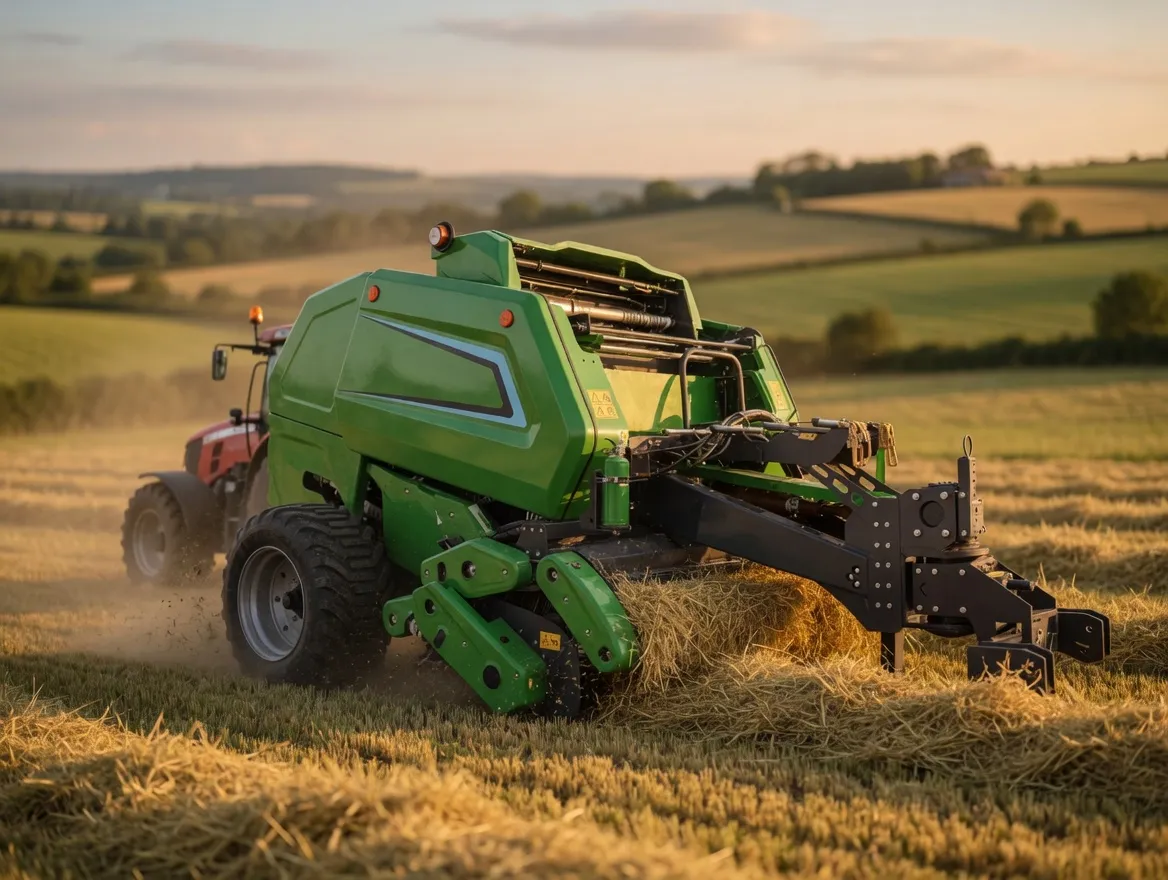
Clean mowing is the first link in a quality chain that runs through raking, baling, and wrapping to the livestock trough.
Blade Sharpness: The Non-Negotiable Starting Point
No amount of speed adjustment or cutting-height tuning overcomes a dull blade. A sickle-bar mower cuts by shearing — each triangular knife section slides past a stationary guard finger, and the crop stem is severed between the two edges like fabric in a pair of scissors. When the blade edge wears beyond a certain threshold, shearing fails and the mechanism begins to tear. On the 9GD-2.5, each replaceable knife section has a factory edge angle of approximately 22–25 degrees. Field testing on irrigated perennial ryegrass in the Goulburn Valley shows that a freshly sharpened blade maintains a clean shear through 15–20 hectares of medium-density pasture before the edge deteriorates noticeably. In dense lucerne, that interval drops to 8–12 hectares because lucerne stems contain more lignin and higher silica deposits in the outer epidermis, which abrade the steel faster.
Practical sharpening protocol: carry a spare knife bar assembly and swap at the interval your crop demands — typically at the mid-point of each day’s mowing. Sharpen the removed bar on a bench grinder that evening, maintaining the original bevel angle. Avoid grinding past the heat-treatment line visible on quality blade sections; once you grind into untreated steel, the edge life halves. A full set of replacement knife sections for the 9GD-2.5 runs approximately AUD $120–$180, making routine replacement far cheaper than the hay-value loss from even one paddock of poor cut quality.
Guard Plate Alignment and Ledger Plate Condition
The guard plates (also called fingers) are the stationary half of the shearing pair. Each guard has a ledger plate — a hardened insert that the knife section slides across. If the ledger plate is worn, chipped, or missing, the knife section has nothing to shear against. The stem simply folds over and is pulled through the gap rather than cut. This produces the classic “ropy” swath appearance: strands of uncut or partially cut grass draped across the stubble, which are impossible to pick up cleanly with a rake or tedder.
Checking guard alignment takes five minutes with the mower raised on level ground. Look along the knife bar from one end: every guard finger should sit at the same height, and the gap between each guard and the knife section should be no more than 0.5 mm when the blade is at rest against that guard. Bent guards — usually the result of hitting a rock or a hardwood stump — create a wider gap and must be straightened with a cold-set tool or replaced. On rocky country in the Central West or New England Tablelands, carry three or four spare guards per mowing session. A single bent guard creates a 75 mm streak of uncut crop that runs the full length of the paddock.
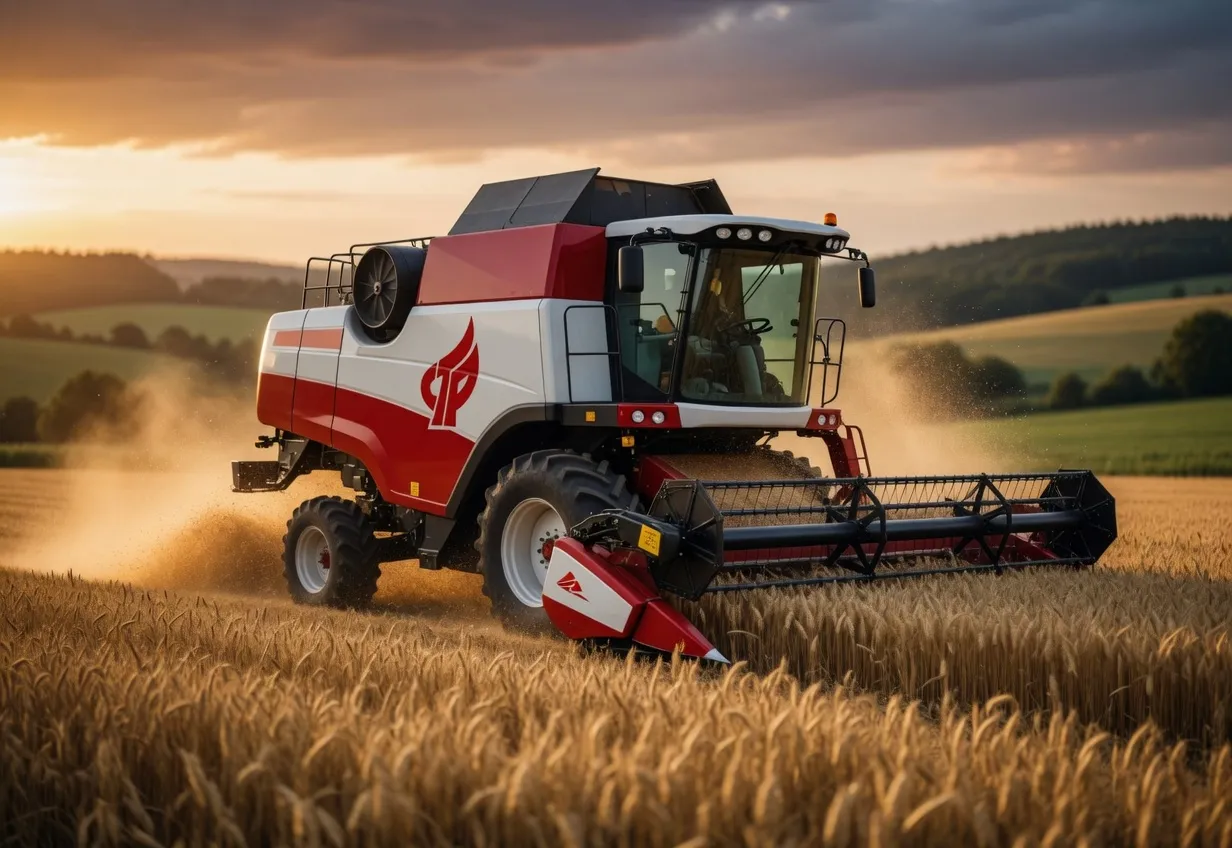
Every stage of the forage chain depends on the mower delivering a clean, uniform swath to work with.
Cutting Height Settings for Ryegrass vs Lucerne
Optimal cutting height differs between the two crops because of their regrowth biology. Getting this wrong does not just affect the current harvest — it reduces yield on every subsequent cut for the rest of the season.
Ryegrass: 50–70 mm Stubble
Perennial and annual ryegrass regrows from basal tillers located at or near ground level. Cutting below 50 mm removes too many tiller buds and slows regrowth, particularly under moisture stress. Cutting above 70 mm leaves excessive standing biomass that the rake cannot gather into a clean windrow, resulting in field losses of 5–8%. The 9GD-2.5’s cutting height is set via the adjustable skid shoes on each side of the cutter bar. Position both shoes at the same setting — uneven shoe height tilts the bar and creates a stepped cut that is visually obvious in the stubble. On irrigated ryegrass paddocks in Gippsland or the Murray-Darling corridor, a 60 mm setting is the most common compromise between regrowth protection and swath density.
Lucerne: 70–100 mm Stubble
Lucerne regrows from crown buds located 20–40 mm above the soil surface. Cutting into the crown — below 50 mm — damages or kills these buds, thinning the stand permanently. The ideal cutting height for most Australian lucerne varieties is 75–80 mm, which preserves the crown while capturing 90%+ of the standing dry matter. In the first cut of spring, when stems are longest and most lignified, increasing to 90–100 mm produces a cleaner shear because the stems are thinner and less woody at that height. Across a typical five-cut lucerne season in the Riverina, maintaining correct cutting height preserves stand density for 4–5 years. Cutting too low can reduce stand life to 2–3 years — requiring re-establishment at AUD $400–$600 per hectare.
Ground Speed and PTO Speed: Finding the Balance
Ground speed and PTO rpm interact to determine how many knife strokes occur per metre of forward travel. More strokes per metre means each stem is engaged by the blade at least once — ideally twice — as the mower passes. The 9GD-2.5 running at 540 PTO rpm produces approximately 540 knife strokes per minute. At a ground speed of 8 km/h (133 metres per minute), each metre of forward travel sees roughly 4 knife strokes across the full bar width. At 12 km/h (200 metres per minute), that drops to about 2.7 strokes per metre — still adequate for light grass, but marginal in thick lucerne where each stem needs a clean individual engagement.
The practical rule: in light to medium ryegrass, 10–12 km/h ground speed works well with a clean blade. In dense ryegrass or lucerne at first cut, reduce to 7–9 km/h to increase strokes per metre and maintain cut quality. Never reduce PTO speed below 540 rpm to compensate — blade stroke speed must remain at the design value. Reducing ground speed slightly is always preferable to slowing the blade. A tractor with a creeper gear or a continuously variable transmission (CVT) provides the finest speed control for matching conditions in real time.
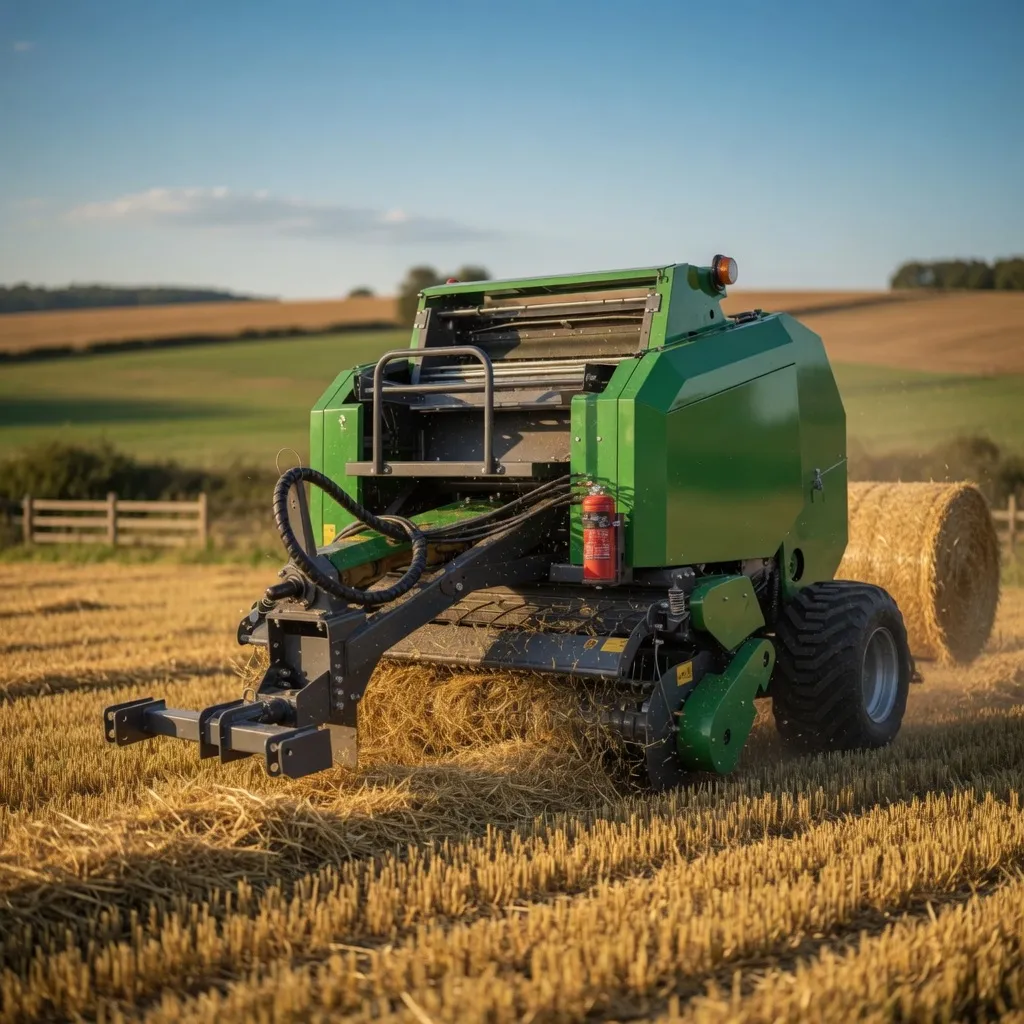
The right ground speed keeps blade engagement consistent — too fast and stems slip between the guards uncut.
Time of Day: Moisture Content and Cut Quality
Experienced hay producers in the Riverina and Western Districts of Victoria consistently report that mowing between 9:00 AM and 11:30 AM produces the cleanest cut and fastest dry-down. The reasoning is straightforward. Before 8:00 AM, surface dew raises moisture content above 80%, making stems slippery and prone to sliding across the blade rather than being sheared. The additional weight of wet crop also loads the cutter bar more heavily, increasing PTO demand. After midday, ryegrass leaf blades begin to wilt slightly in high temperatures, becoming limp and harder to cut cleanly — they fold over the guard rather than standing stiff enough for the blade to engage.
Lucerne is less sensitive to time-of-day effects because its woody stems remain rigid throughout the day, but the dew factor still applies. Starting after the dew lifts — typically 8:30–9:30 AM in southeast Australian autumn and spring — avoids the worst of the wet-stem cutting issues. Mowing in the late afternoon (after 4:00 PM) is a viable alternative when morning schedules are constrained, though the swath will not begin meaningful drying until the following morning, effectively adding 12 hours to total field exposure time.
Five Common Mistakes That Ruin Cut Quality
Each of these errors is avoidable with a 10-minute pre-mowing check and awareness of in-paddock conditions.
Running Dull Blades Past the Replacement Interval
Pushing 30 hectares on a blade set that lost its edge at 15 ha. The cost of a new section set (AUD $120–$180) is a fraction of the hay value lost from one poorly cut paddock. Swap or sharpen at the interval your crop demands — light grass every 15–20 ha, dense lucerne every 8–12 ha.
Mismatched Skid Shoe Heights
Even a 10 mm difference between left and right shoes tilts the cutter bar, creating a stepped cut with one side scalping the soil and the other leaving tall stubble. Check and reset both shoes on level ground before each session.
Excessive Ground Speed in Dense Crop
Pushing 12 km/h through first-cut lucerne at 10+ t/ha standing dry matter. The blade cannot engage every stem. Slow to 7–8 km/h and the cut quality transforms — the time lost is recovered in reduced drying hours and higher bale grade.
Ignoring Bent or Missing Guard Plates
A single bent guard leaves a 75 mm ribbon of uncut crop along every pass. Over a 20 ha paddock, that ribbon adds up to roughly 0.5 tonnes of uncollected forage — scattered across the stubble where it rots rather than contributes to bale count.
Mowing Through Heavy Dew
Starting at 6:30 AM to “get ahead” when stems are still dripping. Wet stems clog guard openings, wrap around the pitman arm, and produce a matted swath that takes 40+ hours to dry. Wait for the dew to lift — usually by 9:00 AM — and gain those hours back in faster dry-down.
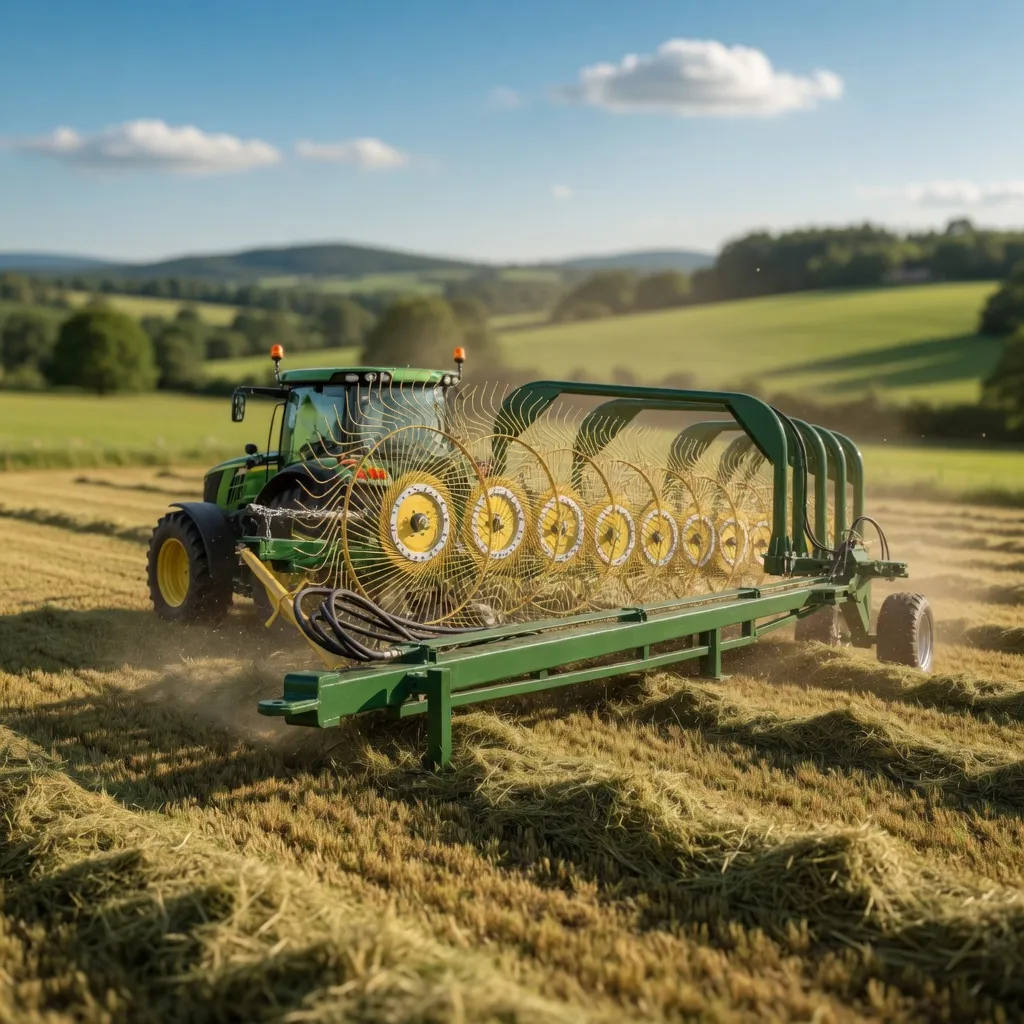
A clean mower cut produces a uniform swath that rakes into tight windrows with minimal leaf loss.
Comparing Cut Quality: Single-Blade Sickle vs Disc Mower on Lucerne
Australian lucerne producers often debate whether a disc mower delivers a cleaner cut than a sickle-bar mower. The answer depends on how you define “clean.” A disc mower uses high-speed rotating blades (2,800–3,000 rpm) that cut by impact rather than shearing. The cut surface is rough but complete — virtually no stems escape. A single-blade sickle-bar mower produces a smoother shearing cut that preserves stem integrity better, resulting in faster moisture loss and less cell-sap leakage. Field trials at Wagga Wagga and Temora have measured dry-down rates 15–20% faster for sickle-cut lucerne compared to disc-cut lucerne under identical weather conditions, primarily because the sickle shear seals the stem end more cleanly.
The trade-off is operational speed. Disc mowers can run at 12–15 km/h and tolerate rough ground better, while sickle-bar mowers perform best at 7–12 km/h and require smoother paddock surfaces. For producers who prioritise hay quality — export-grade lucerne destined for Japanese or Korean dairy markets at AUD $450–$600 per tonne — the sickle-bar mower’s superior cut finish often justifies the slightly lower forward speed. For silage operations where the crop will be chopped within hours of mowing, the disc mower’s speed advantage may outweigh the cut-quality difference.
Post-Mowing Checks That Protect the Next Cut
A five-minute inspection after each mowing session catches developing problems before they degrade cut quality on the next paddock. Walk the cutter bar from left to right, checking each guard for damage or debris buildup. Clear any grass wraps from the pitman arm and connecting rod — accumulated material increases friction and can cause overheating in the drive mechanism. Check the knife-bar bolts for tightness; vibration loosens them progressively, and a loose bolt allows the bar to shift laterally, creating uneven shear along the full width. Inspect the skid shoes for wear — on abrasive soils in the Central West, steel shoes can lose 3–5 mm of height in a single day, lowering the effective cutting height below your target. Finally, grease the pitman bearing and any other zerks on the drive assembly. The 9GD-2.5 has four grease points that require attention every 8–10 operating hours — roughly once per day of full-time mowing. A missed grease cycle does not cause immediate failure, but it accelerates bearing wear that eventually manifests as blade vibration and inconsistent stroke speed.
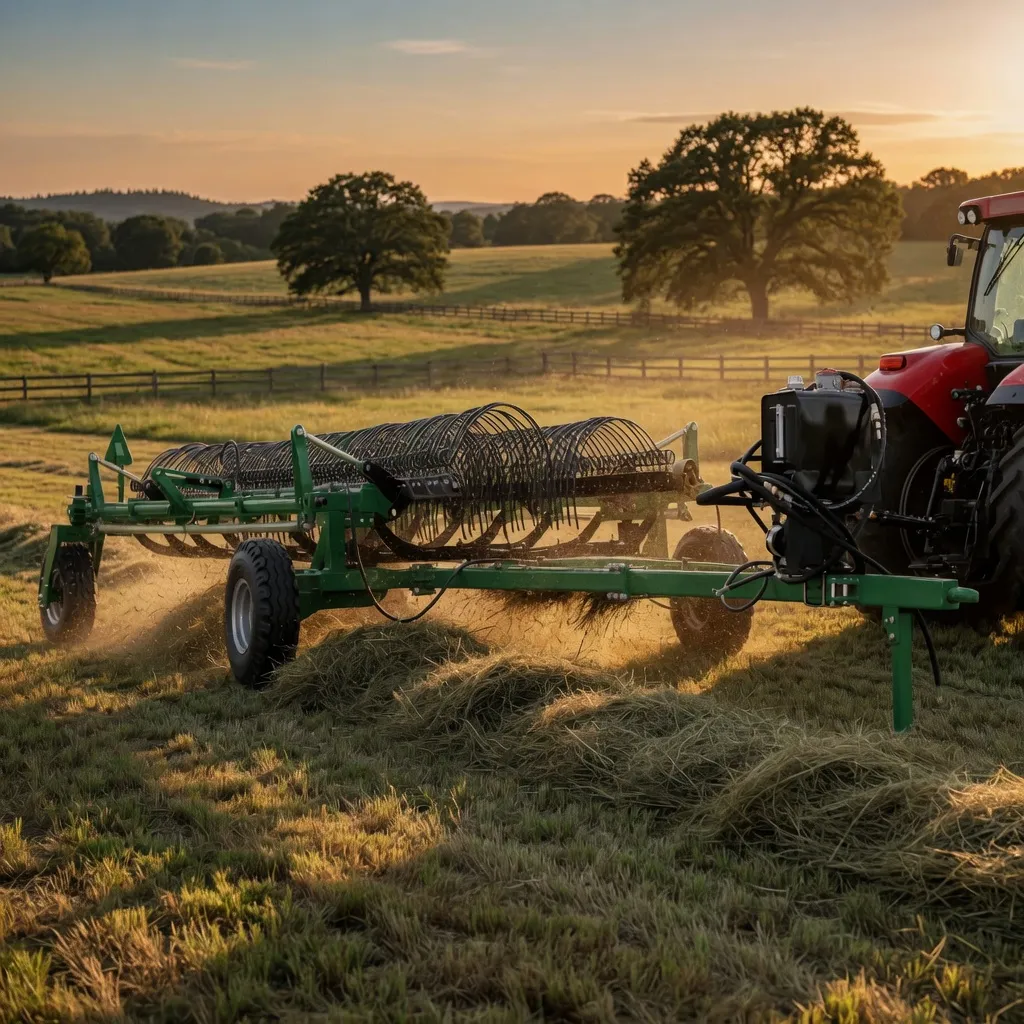
Well-maintained mowing equipment integrates with downstream raking and baling for a smooth harvest workflow.
Why EverPower Supports Your Mowing Operation Year-Round
EverPower Baling Machinery Australia stocks a full range of replacement blade sections, guard plates, pitman arms, and drive components for the 9GD-2.5 traction mower at its Condell Park warehouse in western Sydney. Spare parts ship Australia-wide, with next-day delivery available to metropolitan NSW addresses and 2–3 day delivery to regional centres. The technical team can advise on blade-section selection for specific crop types, recommend sharpening intervals based on your soil and crop conditions, and supply complete spare knife-bar assemblies for producers who prefer hot-swapping in the field. Contact the team at +61 2 9708 3322 or [email protected] for parts pricing and availability.

EverPower maintains warehouse stock of all wear parts for rapid dispatch across Australia.
Recommended Product: 9GD-2.5 Traction Single-Blade Mower
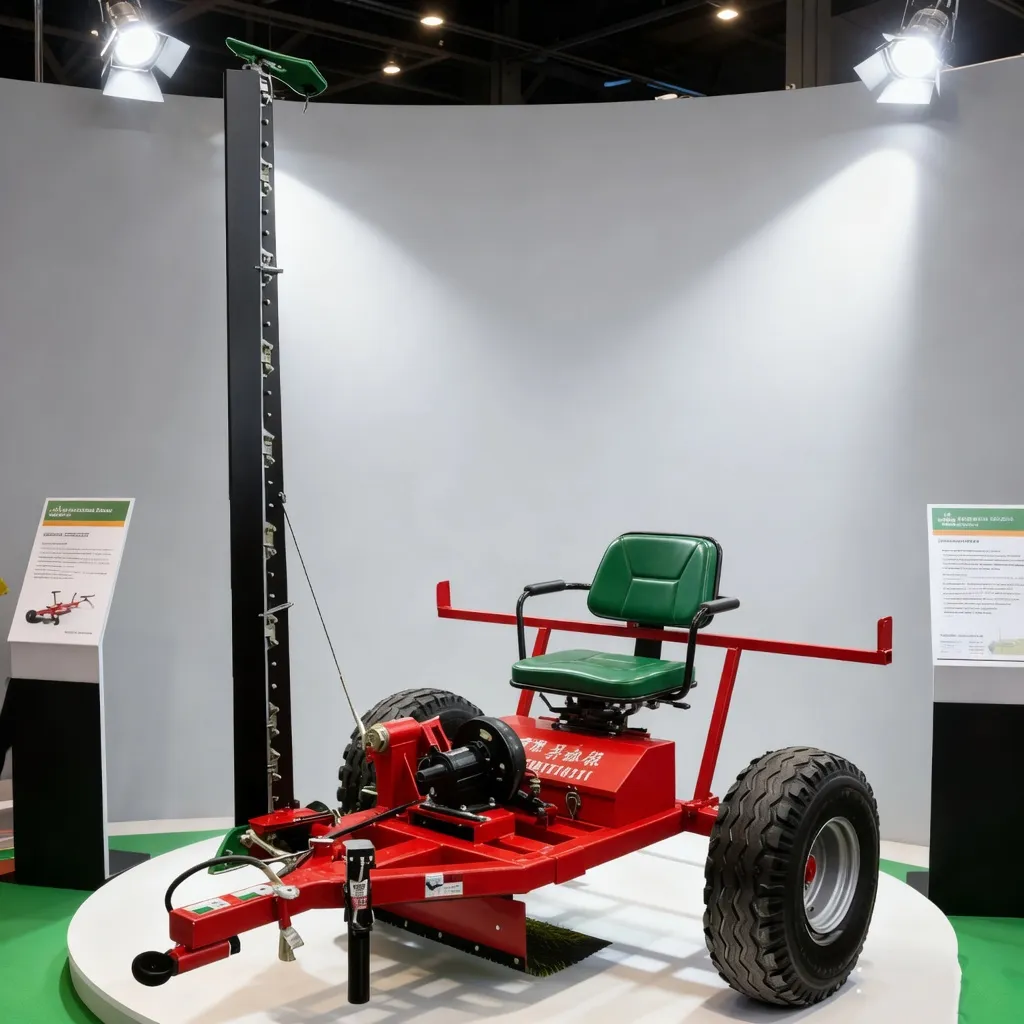
The 9GD-2.5 features a 2.5-metre reciprocating sickle bar with field-replaceable knife sections and hardened guard plates. Designed for 540 rpm PTO tractors in the 60–80 engine hp range, it delivers a clean shearing cut across ryegrass, lucerne, and oaten hay at working speeds of 7–12 km/h. Towed chassis with independent wheel suspension follows ground contours on flat and rolling paddocks. Spare parts stocked at EverPower’s Sydney warehouse for rapid Australia-wide dispatch.
Frequently Asked Questions
Need Blades, Guards, or Technical Advice?
EverPower stocks all wear parts for the 9GD-2.5 and can recommend sharpening intervals for your specific crop and soil conditions.
EverPower Baling Machinery Australia Pty Ltd | 27 Harley Crescent, Condell Park NSW 2200
📞 +61 2 9708 3322 | ✉️ [email protected]