
Layer Count Is the Single Most Debated Variable in Silage Wrapping
Ask ten silage contractors in Australia how many layers of film a bale needs and you will receive answers ranging from four to eight. Everyone is partly right — and the disagreement reflects the fact that the correct layer count depends on variables that differ between every operation: crop type and moisture, storage duration, site exposure, local bird and vermin pressure, and whether the wrapped bales will be moved after wrapping or remain stationary. A bale wrapped in four layers and stored indoors in a dry, sheltered shed in a low-rainfall region may retain its silage quality for 18 months without a single puncture. The same four-layer bale stored on a hillside paddock in a high-rainfall zone, exposed to UV radiation, bird activity, and frost-thaw cycles, may develop significant oxygen ingress within three months. Understanding the mechanism by which layers provide protection — and the specific failure modes that each additional layer guards against — allows operators to make an informed choice rather than defaulting to either false economy (too few layers) or unnecessary expense (more layers than the storage conditions warrant).

The 9YCM-850 applies film in adjustable layer counts — the correct setting depends on crop type, storage duration, site conditions, and the level of physical protection required.
How Film Layers Provide Protection: The Physics
Each layer of pre-stretched silage film is approximately 25 microns (0.025 mm) thick after application. At this thickness, the film is a semi-permeable barrier — it passes very small amounts of oxygen over time through molecular diffusion, but at rates far below the threshold at which aerobic fermentation can be sustained. The primary protection mechanism is not the film’s impermeability per se but the combination of thickness, overlap sealing, and physical puncture resistance that multiple layers provide.
With 50% overlap between passes on the 9YCM-850, each nominal layer count produces double the effective film thickness at every point. A four-layer wrap delivers eight overlapping film sheets; a six-layer wrap delivers twelve. The overlap sealing — where contracting pre-stretched film presses adjacent layers together — is actually more important for oxygen exclusion than raw film thickness, because it eliminates the seam gaps that would otherwise exist between passes. The overlapping layers self-seal under the tension of the contracting pre-stretch, creating a barrier with no identifiable seam lines at normal wrapping tension.
Additional layers beyond four add physical puncture resistance and UV protection. A puncture that penetrates a four-layer wrap at one point creates an oxygen ingress channel that can spoil a cone of silage 150–300 mm in diameter around the puncture site. The same puncture through a six-layer wrap penetrates fewer combined film thicknesses — the probability of a thorny branch or bird beak punching completely through six overlapping layers is substantially lower than penetrating four. This is why layer count recommendations increase with physical hazard level.
Layer Count Recommendations by Storage Condition
The Cost of Going From 4 to 6 Layers
Increasing from four to six layers increases film consumption per bale by 50% — from approximately one-twentieth of a roll to three-fortieths of a roll at standard pre-stretch settings. On a 1,500 m roll costing AUD $130–$160, film cost per bale increases from AUD $6.50–$8.00 (4 layers) to AUD $9.75–$12.00 (6 layers) — a difference of approximately AUD $3–$4 per bale. For an operation wrapping 200 bales per season, the additional cost of upgrading to six layers is AUD $600–$800.
Compare this to the value of a single spoiled bale: a 1.5-tonne ryegrass hay bale at AUD $360/tonne has a feed value of AUD $540. If six-layer wrapping prevents even two additional spoilage events per 200-bale season compared to four-layer wrapping, it has paid for itself three times over. In areas with known cockatoo activity — where bale puncture rates of 5–15% have been documented on four-layer-wrapped silage — the economics of six-layer wrapping are strongly favourable regardless of storage conditions.
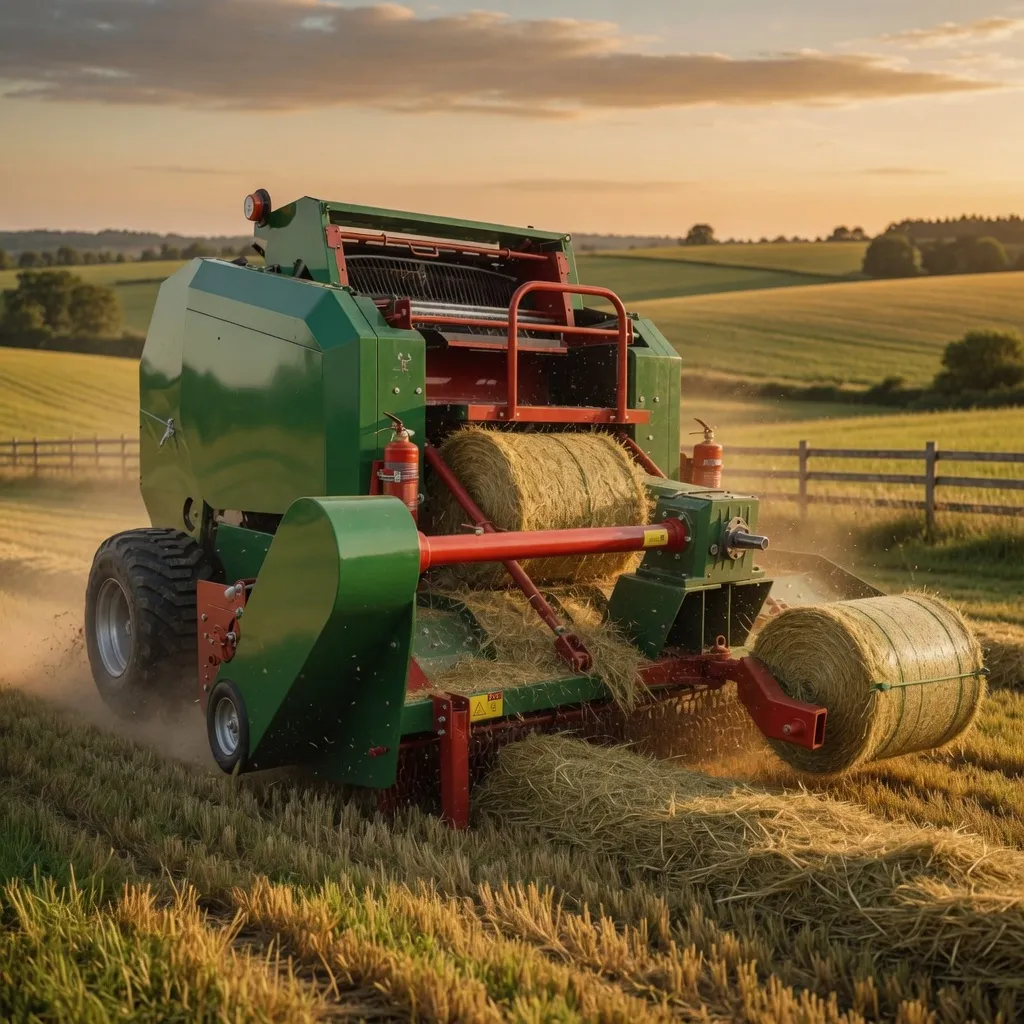
In Australian conditions, bird pressure from cockatoos and ravens is one of the primary drivers for choosing six or more layers — the puncture resistance of additional film layers is the most cost-effective protection available.
How to Adjust Layer Count on the 9YCM-850
The 9YCM-850 produces four layers at its factory default speed settings. To increase to six layers, reduce the hydraulic flow to the bale table drive by approximately 30% using the flow control valve on the table circuit. This slows bale rotation relative to the film arm orbit, increasing the number of arm passes per bale revolution and depositing additional film layers. The change takes approximately 60 seconds to make at the start of a wrapping session and applies to all subsequent bales until reversed.
Alternatively, some operators run four layers as default for the bulk of their bales and selectively increase to six for bales placed in the most exposed storage positions — the row facing prevailing weather, bales on elevated ground, or the outermost bales in a row that are most accessible to birds. This targeted approach reduces total film cost while applying additional protection where it is most needed.
Film Quality Matters as Much as Layer Count
Layer count alone does not determine storage outcome if the film quality is inadequate. Two film quality parameters are critical: UV stabilisation and pre-stretch performance. UV-stabilised film contains UV absorbers in its formulation that slow the photo-degradation of the polyethylene polymer under Australian sunlight. Non-UV-stabilised film can become brittle and crack within 6–9 months of outdoor storage in high-UV regions such as northern and central Australia — at which point even six layers of degraded film provide less protection than four layers of quality UV-stabilised film. Always specify UV-stabilised film for any outdoor storage application.
Pre-stretch performance — the film’s ability to maintain consistent elongation across the full roll width and throughout the roll’s length — determines whether each layer is applied at uniform tension. Low-quality film with variable pre-stretch properties produces bales with inconsistent layer thickness, visible in the wrinkles and loose zones that appear at the bale ends and seam lines. These loose zones are the first points to fail under UV stress or physical contact.
Recommended Product: 9YCM-850 Bundling Film Wrapping Machine
Adjustable 4–6 layer wrap via hydraulic flow control — no tools required to change layer count between bales. 55–70% film pre-stretch for tight, self-sealing overlap. Handles 1,000–1,600 mm round bales. Compatible with standard 850 mm UV-stabilised silage film. Available from EverPower’s Condell Park NSW warehouse with Australia-wide delivery.
Frequently Asked Questions
Wrap the Right Number of Layers for Your Conditions.
EverPower can advise on layer count, film selection, and storage site preparation for your specific operation and climate zone.
EverPower Baling Machinery Australia Pty Ltd | 27 Harley Crescent, Condell Park NSW 2200
📞 +61 2 9708 3322 | ✉️ [email protected]