
Australia’s growing anaerobic digestion sector is contracting agricultural silage and crop residue bales as biogas feedstock — different specs to livestock markets, but real demand and stable pricing.
Australia’s Biogas Sector: A Growing Market for Baled Agricultural Biomass
Australia’s anaerobic digestion (AD) industry has expanded significantly since 2018, driven by rising renewable energy targets under the Renewable Energy Target (RET) and, increasingly, by state-level waste-to-energy policies. As of 2025, Australia has approximately 120 to 160 operating commercial-scale AD plants, with 30 to 45 accepting or actively contracting agricultural biomass feedstocks alongside food waste, municipal organic waste, and sewage sludge. The primary agricultural feedstock categories currently contracted by Australian AD plants are grass silage baleage, whole-plant maize silage, food processing by-products, and animal manure.
The relevance for hay and silage producers is direct: Australian AD plants located within 50 to 150 km of productive agricultural regions are contracting baled silage at gate prices of AUD $15 to $40 per tonne fresh weight (AUD $40 to $120 per tonne DM equivalent), providing a stable, contracted offtake channel for grass silage, crop residue baleage, and mixed organic material that does not need to meet the palatability and fermentation quality standards of the livestock feed market. A bale that would be rejected at a dairy farm for butyric odour or elevated pH is often acceptable at a biogas plant — the AD process converts the organic material to methane regardless of fermentation quality.
This article covers the specific requirements for agricultural silage and crop residue baling for Australian biogas plant supply — the specification differences from livestock markets, the contract structures that AD operators offer, the crops and regions where the economics work best, and the handling and transport logistics for bulk bale delivery to plant gate. For producers already using high-throughput baler equipment for livestock silage operations, our article on how hay and silage contractors increase daily bale output covers the throughput management relevant to contract biogas supply operations.
How AD Plants Use Agricultural Silage: The Biogas Production Chain
What Happens to Silage Bales at an AD Plant
Agricultural silage bales delivered to an AD plant are received at the plant gate, weighed, sampled for VS (Volatile Solids) and DM content, and entered into the plant’s feedstock inventory. At the AD plant, bales are opened by a bale opener or trommel feeder, the material is slurried with process water to approximately 10 to 12% total solids, and the slurry is fed into the anaerobic digester vessel where it remains for 20 to 30 days at 37 to 55°C (mesophilic or thermophilic digestion) before being discharged as digestate.
During the digestion period, the organic matter in the silage (cellulose, hemicellulose, sugars, proteins) is broken down by the anaerobic microbial community into biogas (60 to 70% methane, 30 to 40% CO₂). The methane is captured and used for electricity generation, heat production, or biomethane injection to the gas grid. The digestate — the residual material after gas extraction — is a liquid nutrient solution applied to agricultural land as fertiliser.
Methane Yield: Which Feedstocks Produce the Most Energy
| Feedstock | VS Content (% DM) | Specific Methane Yield (L CH₄/kg VS) | Relative Energy Value |
|---|---|---|---|
| Whole-plant maize silage | 95–97% | 300–390 | Very high |
| Ryegrass silage (flag leaf) | 92–94% | 280–360 | High |
| Oat silage (flag leaf) | 90–93% | 260–340 | Good |
| Mixed grass silage | 88–92% | 240–320 | Good |
| Wheat/cereal straw baleage | 88–92% | 200–270 | Moderate |
| Food waste (for comparison) | 80–90% | 350–500 | Very high — reference |
Grass silage produces 280 to 360 litres of methane per kg of volatile solids — a biogas energy content equivalent to approximately 0.9 to 1.1 kWh of electricity per kg VS. At a typical combined heat and power (CHP) conversion efficiency of 38 to 42%, a tonne of fresh ryegrass silage at 40% DM generates approximately 130 to 170 kWh of electricity at the plant’s generator.
Specification for Biogas-Grade Silage: What AD Plants Specify
How Biogas Specification Differs From Livestock Specification
The critical difference between livestock silage specification and biogas silage specification is that fermentation quality — the characteristic that is most important for livestock feed value (pH, NH₃-N, aerobic stability) — is largely irrelevant to an AD plant. The AD process destroys all residual microbial populations from the silage fermentation and converts the organic matter to methane regardless of whether the silage was lactic-fermented or clostridially spoiled. A butyric, high-ammonia silage batch rejected by a dairy delivers essentially the same methane yield to an AD plant as a high-quality lactic-acid silage from the same crop.
| Specification Parameter | Livestock Silage | Biogas Silage | Notes |
|---|---|---|---|
| pH | 3.8–4.5 | Not specified | AD process degrades regardless |
| NH₃-N | <8% of TN | Not specified | Immaterial to AD |
| DM content | 35–55% | 18–40% acceptable | Higher DM = easier transport |
| VS content (% of DM) | Not specified | ≥85% | Key biogas yield driver |
| Contamination (soil, plastic) | <3% ash | <5% ash for soil; zero plastic | AD cannot process plastic |
| Moisture uniformity | Important for ferment | Less critical | AD can handle variable moisture |
The Zero-Plastic Requirement
The one absolute specification for biogas silage that has no equivalent flexibility is plastic contamination. AD plant feedstock handling equipment (choppers, slurrifiers, pumps) cannot process plastic film, net wrap, or twine fragments — even small quantities of plastic can block pumps, damage mixers, and contaminate digestate in ways that prevent its use as agricultural fertiliser under state EPA requirements. Before any bale enters an AD plant’s receiving system, all net wrap and twine must be completely removed and bagged for separate disposal. AD plants that accept bales typically require confirmed net/twine removal as a contract condition.
Market Structure: How Australian AD Plants Contract Agricultural Silage
Contract Structures and Pricing
Australian AD plants contracting agricultural silage typically use one of three pricing models: (1) gate price per tonne fresh weight (most common) — typically AUD $15 to $40 per tonne fresh, equivalent to AUD $40 to $120 per tonne DM depending on moisture content; (2) gate price per tonne VS — paying based on actual biogas yield potential rather than fresh weight, which rewards higher-DM, higher-VS feedstocks; (3) indexed pricing — base price adjusted quarterly against electricity or biomethane market prices, providing price stability while maintaining energy market relevance.
Contract terms for agricultural feedstock typically run 12 to 36 months — sufficient security for producers to invest in dedicated bioenergy crop production, but shorter than the 5 to 10 year contracts that energy crop producers in Europe receive from biogas plants with established infrastructure. Australian AD plant operators are generally willing to discuss tailored contract structures for large-volume, long-term agricultural feedstock suppliers.
Transport Economics: The 100 km Catchment Rule
At AUD $20 to $35 per tonne fresh gate price and transport costs of AUD $0.08 to $0.15 per tonne-km by road, the maximum economically viable transport distance from paddock to AD plant gate is approximately 80 to 120 km for grass silage bales. Beyond this distance, transport cost exceeds the gate price value of the delivered material. Operations located within 80 km of an active Australian AD plant contracting agricultural feedstock have access to the most economically viable bioenergy supply channel; beyond this radius, the economics require either higher gate prices from premium biogas plants or a closer outlet.
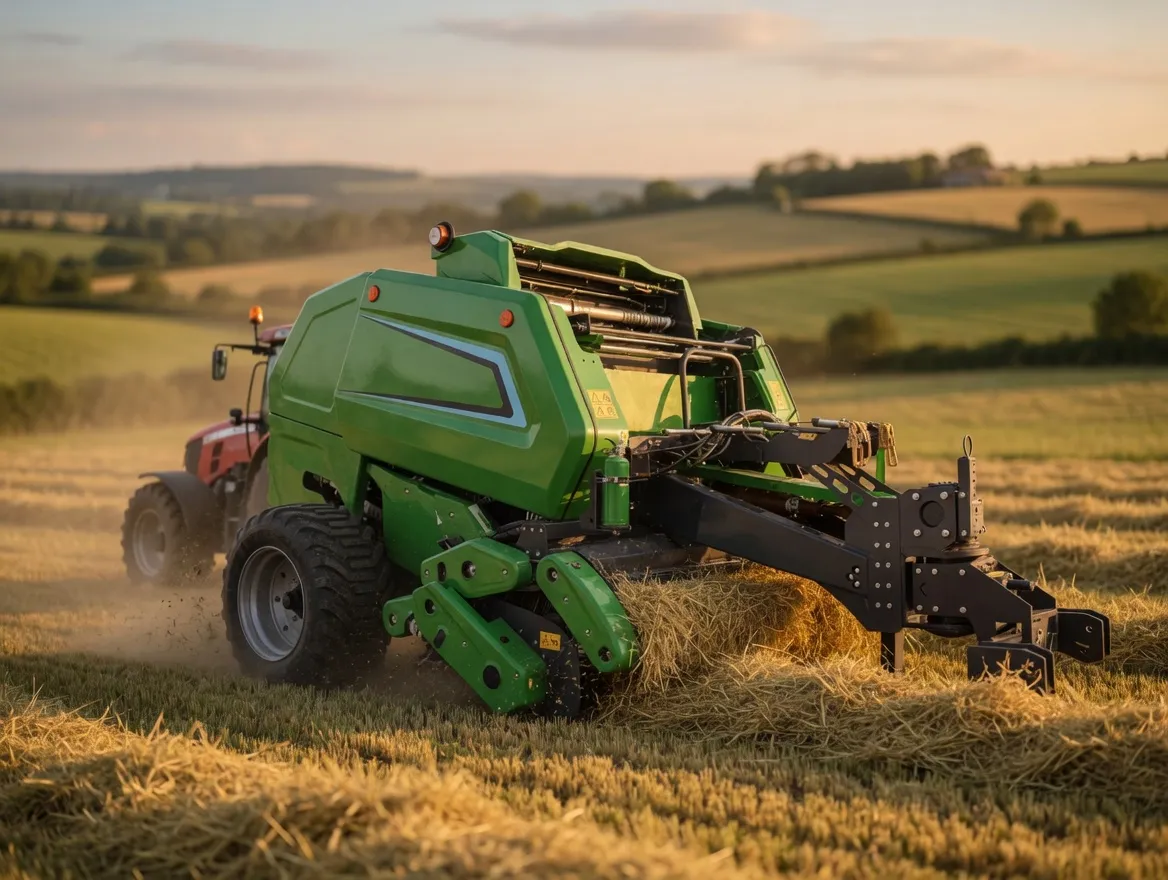
The 9YG-2.24D S9000 Beyond round baler produces the high-throughput bale output (up to 90 to 120 bales per hour in favourable conditions) and the large-diameter 1.25 m bale format that maximises tonnes per load on flat-bed transport to AD plant gates. For contractors aggregating biomass from multiple producers in a 50 to 100 km radius around an AD plant, the throughput advantage of the S9000 Beyond format directly reduces the per-tonne harvesting cost that determines contract profitability.
Which Crops Work Best for Biogas Baling in Australia
The Best Bioenergy Crops Near Australian AD Plants
The geography of Australian AD plant locations — concentrated near population centres in southeast Queensland, greater Sydney, Melbourne metropolitan fringe, and Adelaide — determines which agricultural regions are within the viable 80 to 120 km transport catchment. For these regions:
| Region | AD Plants Within 100 km | Best Crops for Bioenergy Baling | Seasonal Opportunity |
|---|---|---|---|
| SE Queensland (Darling Downs) | 2–4 plants | Whole-plant sorghum, ryegrass | Mar–Jul (sorghum), Sep–Nov (grass) |
| Greater Sydney (Riverina fringe) | 3–5 plants | Oat silage, ryegrass, wheat straw | Sep–Dec |
| Melbourne fringe (Western District) | 4–7 plants | Ryegrass, oat silage, grass hay | Sep–Jan |
| Adelaide fringe (Barossa/McLaren) | 2–3 plants | Ryegrass, medic, cereal silage | Sep–Dec |
| Perth metropolitan fringe | 1–2 plants | Oat silage, wheat straw | Sep–Nov |
Common Questions From Producers Considering Biogas Supply
Discuss Biogas Feedstock Baling for Your Operation
Tell us your location, available crop biomass, and existing equipment — we’ll help assess whether an AD plant contract makes sense for your operation and what baler specification fits the bioenergy supply chain.