
Mowing Before Baling: Choosing the Right Mower
Disc mower, mower-conditioner, or windrower — what the choice means for wilt time, crop quality, and daily throughput across different farms and forage types.
The Mower Decision Nobody Talks About Enough
The round baler gets the attention in farm equipment conversations, but the mower that precedes it has an equally significant impact on silage and hay quality outcomes. An appropriate mower for the crop and the operation sets up successful baling; an inappropriate one forces compromises that the best baler in the world cannot correct. Over-conditioning an oat hay crop causes excessive leaf loss; under-conditioning a lucerne stand doubles the required wilt time in warm weather; a plain disc mower on a 3-cut irrigated ryegrass system produces windrows that take 36 hours to wilt instead of 18 hours.
The choice between a plain disc mower, a mower-conditioner, and a traction windrower (disc-mower-windrower) determines the wilt window available, the leaf retention in legume crops, the DM loss to field respiration during wilting, and the subsequent fermentation quality of the baled silage or hay. For most Australian dairy, beef, and sheep operations making silage or premium hay, the mower choice is worth careful analysis rather than defaulting to whatever the local machinery dealer has in stock. Our article on baling oaten hay and straw on a mixed farm covers the full context of a mixed hay operation where mower selection directly affects the seasonal production plan.
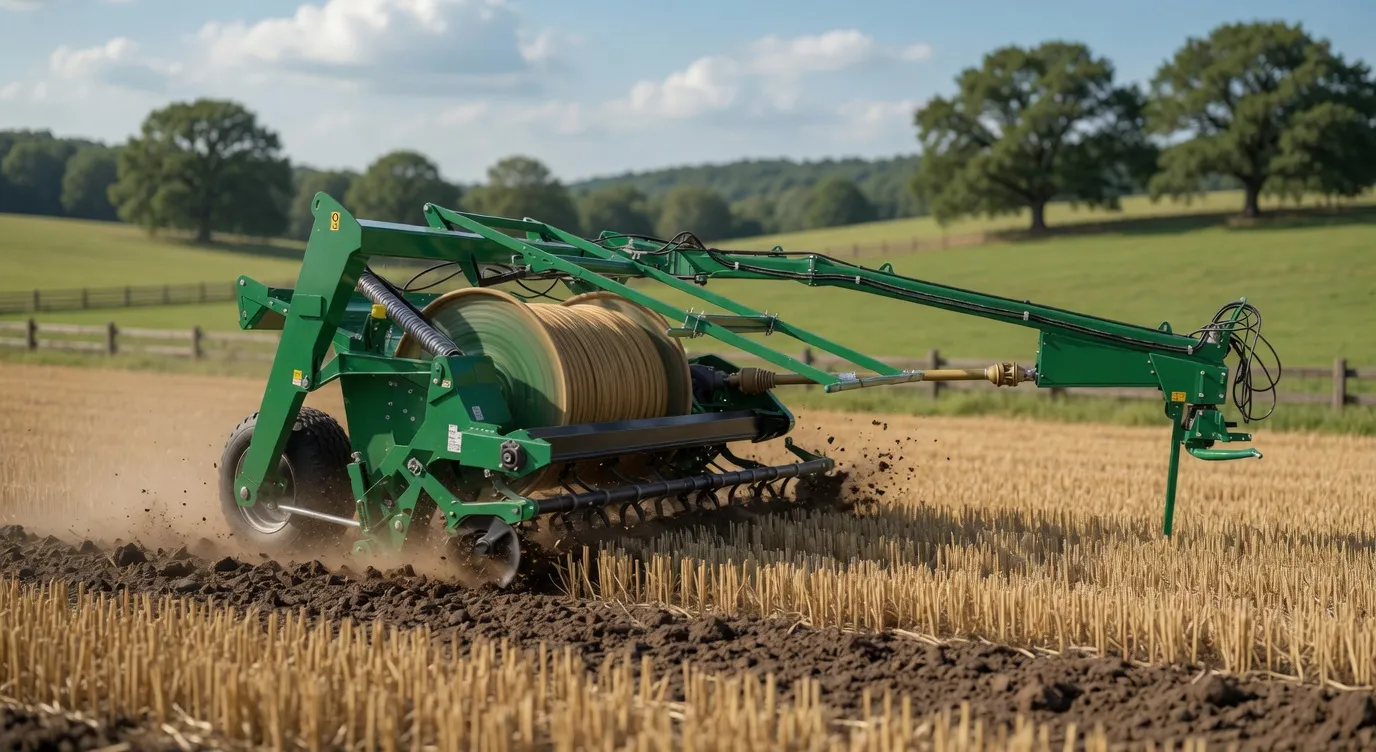
Three Machine Types: When Each Is the Right Choice
1. Plain Disc Mower — Simple, Fast, Right for Cereals and Dry Hay
A plain disc mower cuts the crop and lays it in a windrow with no further mechanical treatment. The crop dries by surface evaporation and gas exchange through the swath. For crops where conditioning is not needed — cereal hay (wheat, barley, oat) made in reliable drying conditions, grass hay in high-UV low-humidity environments, straw — the plain disc mower is the most appropriate choice. It has fewer components than a mower-conditioner, lower maintenance cost, and operates at higher forward speeds (8 to 12 km/h versus 6 to 9 km/h for mower-conditioners) that produce better daily throughput on large paddocks.
Where plain disc mowers underperform: in any silage application where wilt time matters (the unconditioned crop dries 30 to 50% slower than conditioned material), in legume crops where conditioning is needed to break the stem cuticle (lucerne in particular), and in any situation where the drying window is less than 3 to 4 consecutive days of suitable weather.
2. Mower-Conditioner — The Right Choice for Silage and Most Legume Hay
A mower-conditioner cuts the crop and immediately passes it through conditioning rollers (impeller or roller type) that crack, crimp, or bruise the stem cuticle and cell walls. This mechanical damage exposes the internal stem moisture to direct evaporation rather than relying solely on gas exchange through intact cuticle — accelerating drying rate by 25 to 50% compared to unconditioned material under the same weather conditions. For lucerne or grass-legume silage in warm weather, this can mean the difference between a 18-hour wilt (manageable same-day baling) and a 30 to 36-hour wilt (requiring an overnight field exposure that increases DM loss and aerobic heating risk).
The 9GQY-3.2 mower-conditioner provides conditioning across the full 3.2 m cutting width — matched to 65 to 90 hp tractors common in dairy and mixed livestock operations making 400 to 1,500 bales of silage per season. The conditioning intensity is adjustable to suit different crops: lighter conditioning for ryegrass and oat hay (to reduce leaf shatter), heavier conditioning for lucerne stems that need more aggressive cuticle damage to achieve rapid wilt.
3. Traction Windrower — For High-Volume Dryland Operations
A traction windrower (disc-mower-windrower) cuts and simultaneously forms a consolidated windrow from a wide cutting width — typically 2.5 to 5.6 m — in a single pass. This format is the standard choice for large dryland hay operations in SA, WA, and the Riverina where paddock sizes of 50 to 200 hectares justify the throughput of a wide cutting machine. Windrowers don’t condition in most configurations, but their ability to produce a consolidated ready-to-bale windrow in a single pass (eliminating the separate raking step needed after a disc mower) saves 1.5 to 2.5 hours per 100 hectares in the harvest chain.
| Machine Type | Best For | PTO Requirement | Working Width | Drying Rate vs Plain Mower |
|---|---|---|---|---|
| Plain disc mower | Cereal hay, dry straw, reliable weather | 40–65 hp | 1.8–3.5 m | Baseline |
| Mower-conditioner | Silage, lucerne, short windows | 65–100 hp | 2.5–4.0 m | 30–50% faster |
| Traction windrower | Large dryland hay areas | 75–130 hp | 2.5–5.6 m | Similar to plain |
Crop-by-Crop Mowing Decisions
Lucerne and Mixed Legume-Grass for Silage
Mower-conditioner is the required specification for lucerne silage in Australian conditions. Without conditioning, lucerne’s thick, waxy stem cuticle restricts moisture loss to the cut-end surface only — a mechanism adequate for 4 to 5 day hay drying windows but completely inadequate for the 18 to 24 hour wilt target of summer silage production. The 9GQY-3.2 mower-conditioner’s impeller-type conditioning system is particularly effective on lucerne’s pithy stems — more aggressive than roller conditioning and faster to achieve the target moisture drop from 75% at cutting to 55% at baling.
Ryegrass and Perennial Grass Silage
Ryegrass responds well to either plain disc mowing (in reliable drying conditions where 24 to 36 hours of field exposure is acceptable) or mower-conditioner (where the wilt window is constrained by weather or the operation is making multiple cuts per week). For irrigated multi-cut ryegrass systems (Murray-Darling Basin, Goulburn Valley), the mower-conditioner’s ability to deliver a ready-to-bale windrow within 18 to 22 hours of cutting is the difference between same-day or next-day baling — a meaningful throughput and quality advantage in a five-cut season.
Oaten, Wheaten, and Barley Hay
Cereal hay is the one common Australian forage where the plain disc mower is often the correct choice over a mower-conditioner. The conditioning rollers that accelerate drying in grass and legumes cause leaf shatter in mature cereal crops — the dry, fragile flag and upper leaves detach from the stem during conditioning and are lost to the windrow. For oaten or wheaten hay where leaf retention is important for nutritional quality and for the visual presentation that equine buyers assess, a plain disc mower at appropriate forward speed (6 to 8 km/h) and high cutting height (12 to 15 cm) produces better quality than a mower-conditioner at the equivalent stage.
The exception: early-cut oaten hay at the flag-leaf stage (before the crop dries naturally in the stem) benefits from light conditioning to accelerate wilt in weather-constrained windows. Set conditioning to minimum intensity and check leaf loss rates in the first 30 to 40 m of each paddock by walking behind the mower.
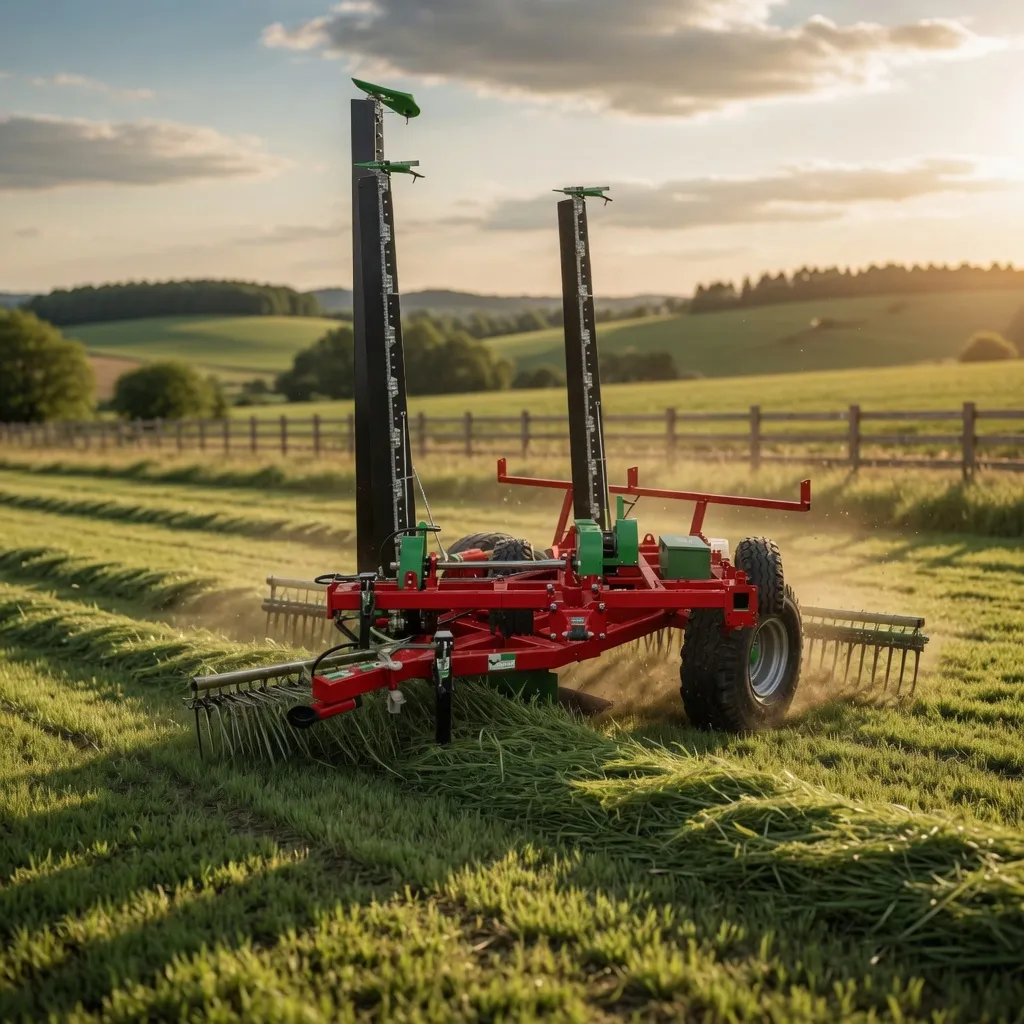
PTO Power, Working Width, and Tractor Compatibility
| Mower | Working Width | PTO Requirement | Suited To |
|---|---|---|---|
| 9GD-2.5 single blade mower | 2.5 m | 40–55 hp | Small paddocks, tight gateways, low-volume |
| 9GS-5.0 double blade mower | 5.0 m | 70–90 hp | Large flat paddocks, fast dryland hay |
| 9GL-2.5/2.9 windrower | 2.5–2.9 m | 55–75 hp | Mid-scale dryland hay, single-pass windrow |
| 9GL-5.0/5.6 windrower | 5.0–5.6 m | 90–130 hp | Large-scale dryland hay, high throughput |
| 9GQY-3.2 mower-conditioner | 3.2 m | 65–90 hp | Silage, lucerne, multi-cut irrigated grass |
Matching working width to tractor horsepower is the first mower selection principle. Running a 5.0 m windrower on a 70 hp tractor — common at farm sales where the mower was purchased separately from the tractor — produces a PTO overload at full forward speed in dense standing crops. The practical result is reduced ground speed (increasing cost per hectare) or PTO slip at peak loading (accelerating clutch and gearbox wear). Always confirm the mower’s rated PTO requirement against your tractor’s rated PTO output before purchase, with a 15% safety margin.
Frequently Asked Questions
Match the Right Mower to Your Crop and Operation
Tell us your crop type, paddock size, available tractor HP, and silage or hay target — we’ll specify the right mower to pair with your baling programme.