
Feed Mills and Pellet Operations Have Different Grinding Demands Than Farm Feeding
A farm-based forage grinder is typically used for 1–3 hours per day to prepare roughage for a single mob. A feed mill or pellet operation runs a grinder as a continuous production asset — often 6–16 hours per day, processing multiple raw material types in sequence, feeding downstream processes that have no tolerance for downtime. The requirements for machine setup, screen management, wear-part scheduling, and infeed configuration are correspondingly more demanding in a commercial feed-processing context than in a farm-feeding context. A 9F-70 configured correctly for feed mill or pellet operation delivers consistent pre-ground infeed at the particle size required by the pellet die or mixer, supports the daily throughput target of the downstream process, and stays in specification through multi-shift operation with a structured preventive maintenance regime. This guide covers the setup parameters, screen selection logic, throughput planning, and maintenance schedule for running the 9F-70 in a feed mill or pellet production context.
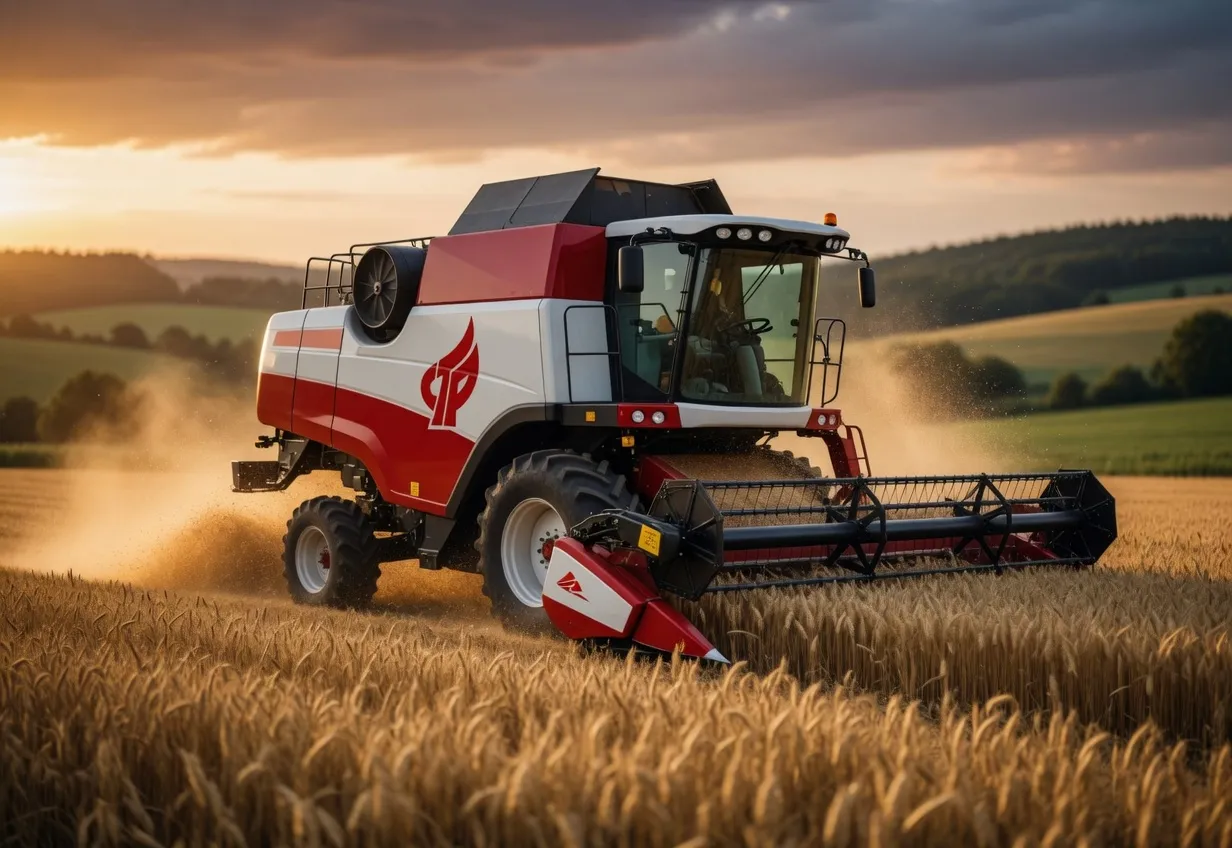
Feed mill operations require a consistent, reliable supply of uniform-quality bales — variable bale density and moisture are the main causes of inconsistent grinder output in commercial processing.
Pellet Mill Infeed: Particle Size Requirements
Pellet dies are the most particle-size-sensitive downstream process a hammer-mill grinder feeds. Die holes for standard livestock pellets range from 4 mm to 8 mm diameter. As a practical rule, the infeed material must have a maximum particle dimension no greater than 80% of the die hole diameter to pass cleanly through the die without bridging or blocking. For a 6 mm die — the most common size for cattle and sheep pellets in Australia — this means infeed particles must be below 4.8 mm in maximum dimension. A 4 mm screen on the 9F-70 produces particles with 95%+ below 5 mm from dry hay and lucerne, meeting this requirement comfortably. For an 8 mm die (larger cattle or horse pellets), a 6 mm screen provides adequate size reduction.
Moisture is equally critical for pellet die performance. Infeed material at 10–14% moisture pellets more efficiently than drier material — the residual moisture acts as a lubricant in the die channel and reduces the friction heat that can cause pellets to crack. Grinding hay that is too dry (below 9% moisture) and then attempting to re-condition it with steam is common in large commercial mills but adds cost and complexity. For smaller pellet operations using the 9F-70, sourcing bales at 12–15% moisture and grinding immediately after delivery produces better pellet quality than grinding over-dry hay and conditioning downstream.
TMR Feed Mill Setup: Screen Selection by Product
Commercial TMR feed mills and custom-mix operations produce multiple ration formulations for different customer livestock classes from the same grinder. Screen changes between product runs are the primary tool for adjusting roughage particle size to specification. A structured screen management system — keeping screens labelled, staged in sequence, and serviced after each production run — eliminates the production errors that occur when a worn screen from a previous run is inadvertently reused for a particle-size-sensitive product.
Infeed Configuration for Continuous Operation
Manual bale-breaking and hand-feeding is practical for farm operations with short daily grinding windows but is not appropriate for feed mills running 6–16 hours per day. Continuous operation requires a controlled infeed system that presents material to the grinding chamber at a consistent, regulated rate without operator attention at every bale change.
The recommended configuration for commercial feed mill use of the 9F-70 is an inline conveyor infeed with a variable-speed drive. The conveyor draws material from a broken bale or pre-broken stock pile and advances it into the grinder inlet at a rate set by the operator. The variable speed allows the infeed rate to be reduced when switching to denser, harder material (stover, straw) and increased when processing soft hay — keeping the rotor load consistent rather than alternating between overloaded and idle states. A consistently loaded rotor produces a narrower particle size distribution than an intermittently fed one, which directly improves end-product quality consistency.
For operations processing whole round bales without pre-breaking, a bale breaker or bale shredder positioned upstream of the 9F-70 provides continuous material supply. The bale breaker tears the bale apart and deposits material onto the infeed conveyor at a controlled depth — one operator manages both the bale breaker loading and the grinder output monitoring, replacing what would otherwise require two or three people in a manual hand-feed operation.
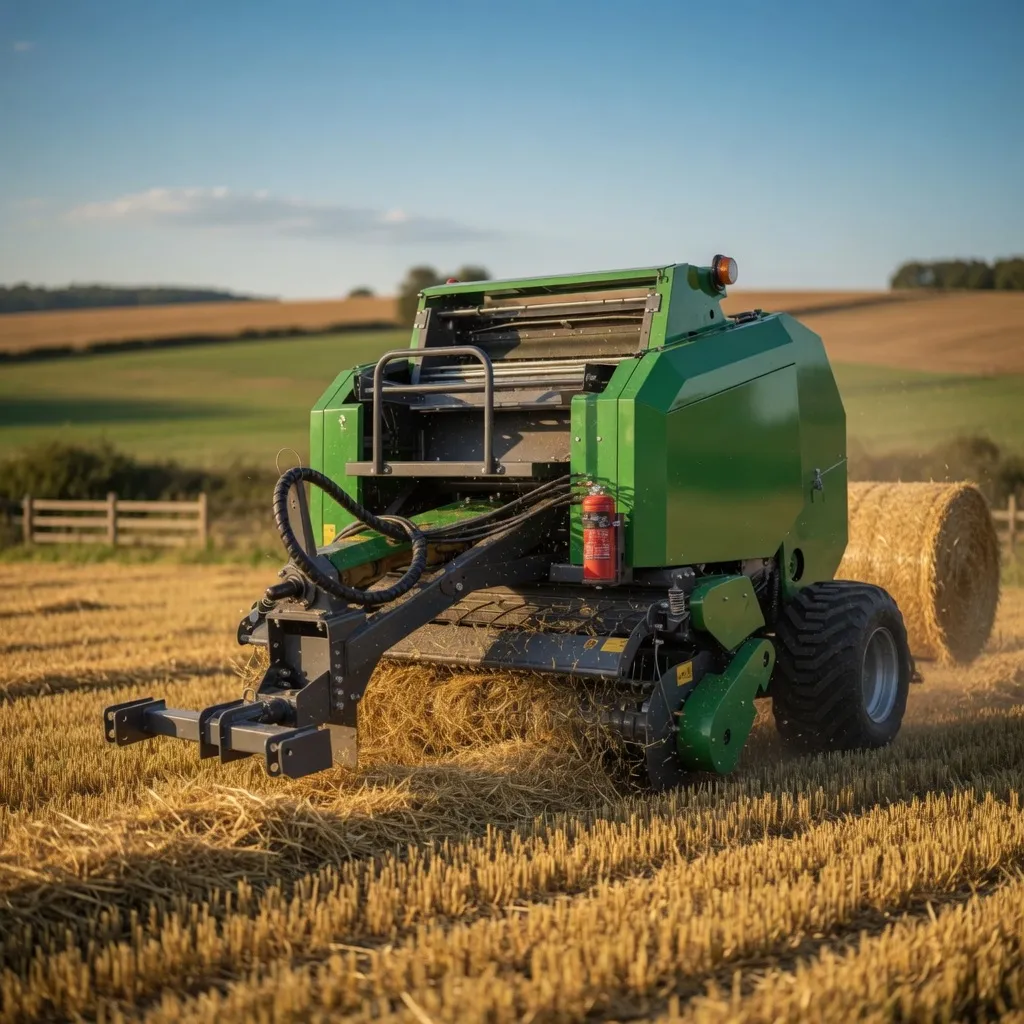
Feed mill operations benefit from a consistent supply of uniform-density bales — inconsistent bale density creates uneven infeed rates that widen the particle size distribution of the ground output.
Preventive Maintenance Schedule for Commercial Operation
A farm operation grinding 2 hours per day accumulates 60 hours per month — a hammer flip every 5–6 weeks. A feed mill grinding 10 hours per day accumulates 300 hours per month — a hammer flip every 3–4 days of operation and a full replacement set every 7–8 days. This frequency makes spare-part stock management and scheduled maintenance windows non-negotiable in a commercial context.
End-of-shift inspection
Clean screen holes, check belt tension, listen for bearing noise on startup and during operation, visually inspect discharge for particle size consistency. Log operating hours and any anomalies. 10–15 minutes per shift.
Hammer flip check and Penn State sieve test
At each 100-hour interval (approximately weekly at 10 hrs/day on hay, more frequently on straw or stover), flip or replace the full hammer set. Run a Penn State sieve test on a 200 g output sample at the start of each new material batch to confirm particle size is within specification before running a full production lot.
Full bearing and drive inspection
Grease rotor bearings. Check belt tension and wear. Inspect chamber for breaker bar wear and housing abrasion. Check infeed conveyor belt tracking and drive chain lubrication. Replace any component showing abnormal wear before it progresses to failure.
Screen replacement review
At 300–500 hours of operation, inspect all screens for hole edge wear. Replace any screen whose hole edges are visibly rounded rather than sharp-punched. Maintain a minimum of two spare screens per size in stock at all times to prevent unplanned downtime from screen failure.
Recommended Product: 9F-70 Animal Feed Grass Grinder
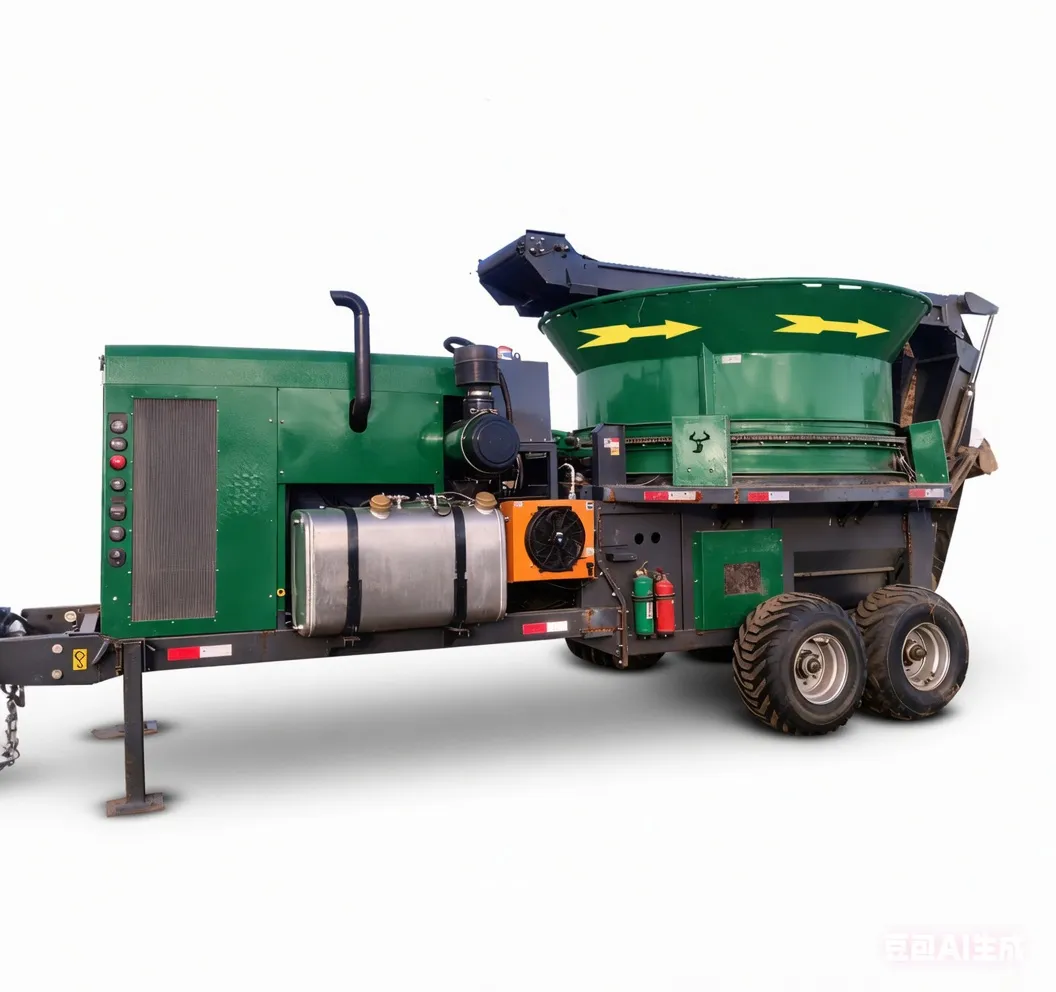
Configurable for pellet mill infeed (4 mm screen), dairy TMR (6 mm), beef feedlot (8 mm), and dry cow roughage (10 mm) with 10–15 minute screen changes. Supports conveyor infeed for continuous operation. Through-hardened reversible hammers for multi-shift durability. All wear parts — hammers, screens, bearings, belts — stocked at EverPower’s Condell Park NSW warehouse for same-day dispatch, keeping commercial operations running without extended parts delays.
Frequently Asked Questions
Configure the 9F-70 for Your Feed Mill or Pellet Operation.
EverPower can advise on screen selection, infeed configuration, and maintenance schedules for commercial-scale grinding operations across Australia.
EverPower Baling Machinery Australia Pty Ltd | 27 Harley Crescent, Condell Park NSW 2200
📞 +61 2 9708 3322 | ✉️ [email protected]