
Most Wrapping Faults Have a Single Root Cause — Find It and Fix It
Film wrapping faults fall into two categories: those that are visible immediately during the wrapping cycle — film tears, arm stops, uneven coverage — and those that only become apparent weeks later in storage — bale end spoilage, heating zones, mould patches under the film. The first category is inconvenient; the second is expensive. Understanding the mechanical cause of each fault type, and knowing what to check first in the field, prevents both the immediate production disruption and the downstream silage quality losses that follow from a fault that was not correctly diagnosed and fixed at the time. This guide covers the eight most common film wrapping faults on the 9YCM-850 in Australian operating conditions, their specific causes, and the field and workshop corrections that resolve each one reliably.
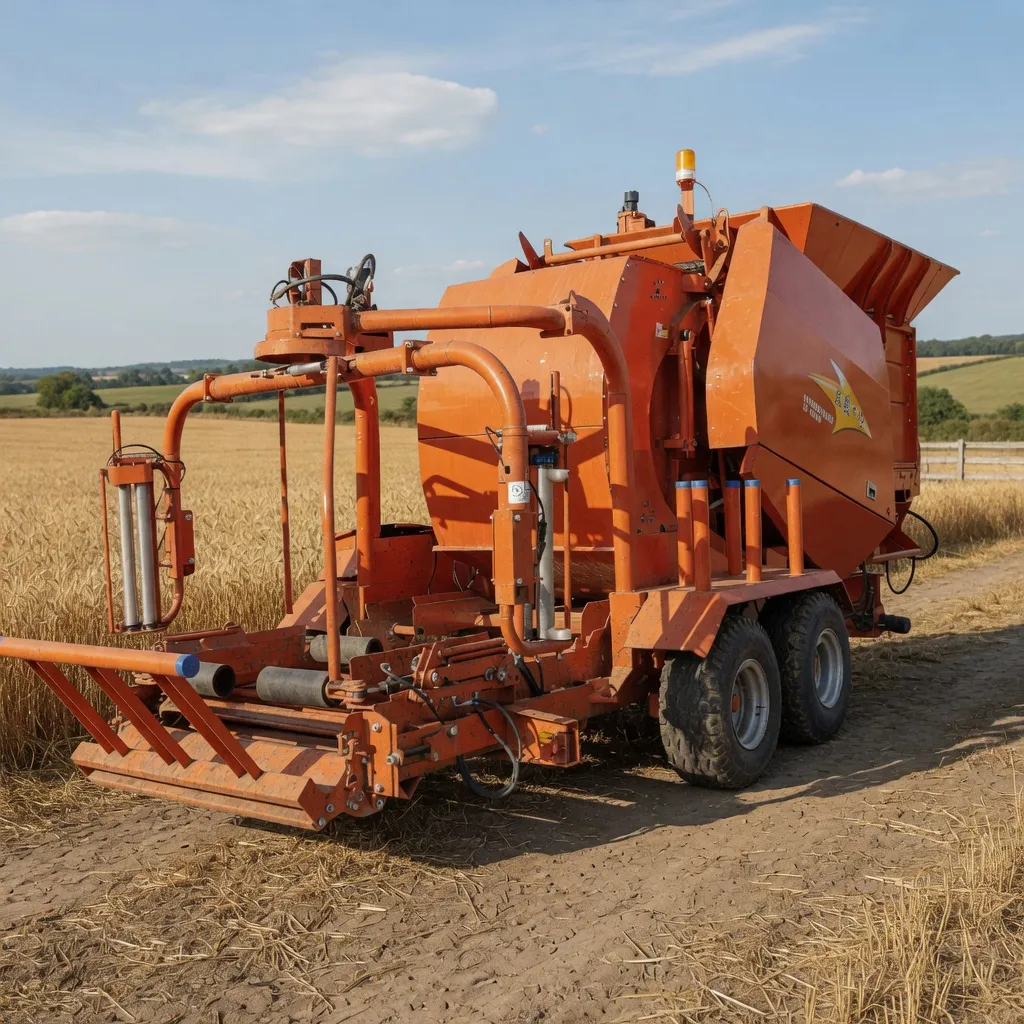
Most film wrapping faults are caused by one of three things: film quality or temperature, mechanical wear or maladjustment, or bale geometry issues from the baler. Identifying the correct category immediately narrows the diagnosis.
Fault 1: Film Tears Repeatedly on the Same Bale Position
Symptom: Film tears consistently at the same point in the arm orbit — typically at the 3 o’clock or 9 o’clock position as viewed from above — rather than randomly across the bale surface.
Cause: A sharp protrusion on the bale surface at the position where film tension is highest during the arm pass. Common culprits are protruding baler net wrap that was not cut flush, wire tails from twine-wrapped bales, crop stem ends protruding through the bale surface on stemmy hay, and bale surface damage from the front-loader spike during loading. The film tears at the same position because the bale rotates at a consistent speed and presents the same protrusion to the film arm at the same point in every orbit.
Fix: Before loading onto the wrapper table, inspect the bale surface for protruding net wrap, wire, or sharp stems. Cut any net wrap tail flush with the bale surface. For consistently stemmy hay bales, reduce pre-stretch ratio by 5–10% to give the film more elasticity at the moment of contact with a protrusion. If the front-loader spike is creating surface damage on loading, reposition the spike point to the bale end rather than the cylindrical surface.
Fault 2: Film Tears Randomly Across Multiple Bales
Symptom: Film tears at unpredictable positions across multiple sequential bales — not the same position each time and not on every bale.
Cause: Film quality or condition issue rather than a machine or bale problem. Most commonly: film roll stored in direct sunlight and partially UV-degraded before use; film stored in cold conditions (below 5°C) and not allowed to warm before use; film roll with a defective core causing uneven unwind tension; or substandard film with inconsistent gauge across the roll width. Cold film is the most common cause of this fault pattern in winter wrapping seasons in southern Australia — a film roll stored in an uninsulated shed overnight at 3–4°C has significantly reduced elongation-at-break and tears repeatedly until it warms during the day.
Fix: Store film rolls indoors, away from direct sunlight, and above 10°C before use. On cold mornings, bring the day’s film rolls inside the previous evening. If suspected film quality is the cause, switch to a new roll from a different batch and compare — if tearing stops, the original batch is defective and should be returned to the supplier.
Film condition at the time of use determines whether the wrapping cycle runs clean or tears repeatedly — storage temperature and UV exposure before use are as important as machine adjustment.
Fault 3: Loose, Wrinkled Film — No Tight Coverage
Symptom: Finished bale has visible loose film with wrinkles and sag zones, particularly on the cylindrical surface. Film does not conform tightly to the bale profile.
Cause: Pre-stretch ratio too low, meaning the film exits the dispenser with insufficient tension to contract against the bale surface. Also caused by an oval or under-density bale — a bale that is significantly non-round causes the film arm to be at varying distances from the bale surface during each orbit, resulting in some passes applying film under correct tension while other passes apply it with excess slack at the wider bale dimension.
Fix: Increase pre-stretch ratio to the 9YCM-850’s design specification of 55–70%. Check pre-stretch roller differential by threading film manually and pulling — the exit roller should noticeably resist more than the entry roller. If the differential is correct but film is still loose, the issue is bale geometry — address bale density and roundness at the baler before the next wrapping day.
Fault 4: Bale Ends Spoiling While Centre Is Preserved
Symptom: When opening stored bales, the outer 100–200 mm of each bale end face is moulded or aerobically spoiled, while the cylindrical surface and bale core are in good silage condition.
Cause: Inadequate film coverage at the bale ends. This is the most common storage fault on wrapped bales and has three possible causes: film width too narrow for the bale width (insufficient end overhang); too few layers (not enough film fold-over at ends); or arm orbit speed too fast relative to bale rotation speed (the film arm completes the end-pass before depositing adequate overhang film on the bale face).
Fix: Confirm film width is 850 mm for standard Australian bales up to 1,300 mm wide. Increase layer count to 6 for all bales — the additional end fold-over coverage from two extra layers significantly improves end protection. Check that hydraulic flow settings match the factory specification for the arm-to-table speed ratio. If end spoilage persists after these adjustments, the bale width may exceed the 9YCM-850’s 1,300 mm specification — measure bale width and confirm it is within range.
Fault 5: Uneven Layer Count — Thick Zones and Thin Zones
Symptom: Visible variation in film opacity across the bale surface — some zones are clearly thicker (more opaque) and others are thinner (more translucent). In storage, thin zones are more likely to develop punctures or UV degradation damage.
Cause: Inconsistent bale rotation speed caused by a slipping or worn table roller drive chain, or by the bale occasionally losing contact with the rollers due to oval geometry. When the bale rotation speed varies, the advance distance per arm orbit changes, producing variable overlap and therefore variable layer count across the surface.
Fix: Inspect and tension the table roller drive chain. Check that both rollers rotate at the same speed — a roller that has seized in its bearing will not turn, causing the bale to drag across rather than roll cleanly, resulting in irregular rotation speed and variable coverage. Replace any seized roller bearing immediately — this is a common wear item after several seasons of use.
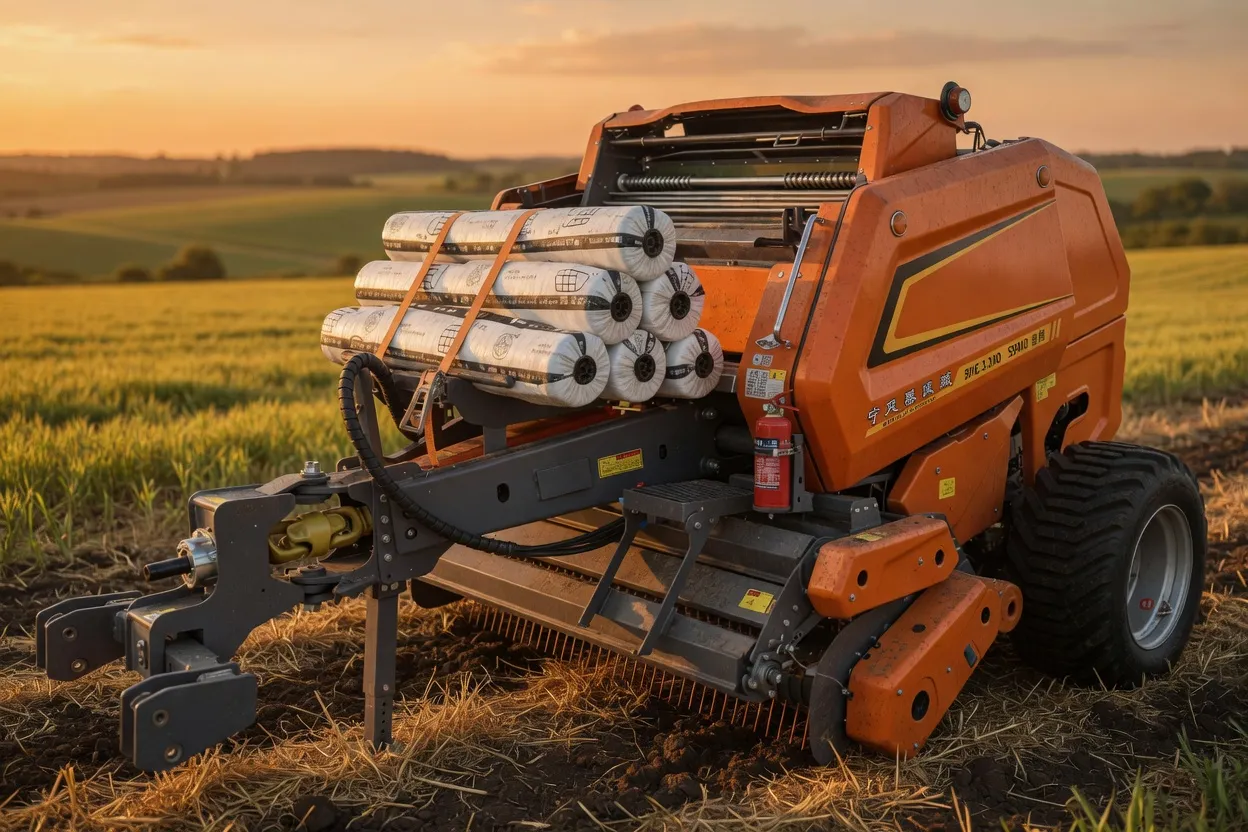
Bale quality from the baler directly affects wrapper performance — a dense, round bale rotates uniformly on the wrapper table and produces consistent layer coverage across the entire surface.
Fault 6: Film Arm Stopping or Slowing Mid-Cycle
Symptom: The film arm orbit slows or stops partway through a wrapping cycle. The bale continues rotating but the arm does not orbit, leaving one section of the bale with zero film coverage from that point forward.
Cause: Hydraulic flow to the arm drive circuit interrupted — most commonly by a remote outlet on the tractor closing due to pressure relief, a kinked or pinched hydraulic hose in the arm circuit, or the arm ring drive chain jumping a sprocket tooth. Less commonly, a seized arm ring bearing creates resistance that exceeds the hydraulic motor’s available torque at the set flow rate.
Fix: Check the tractor’s remote outlet pressure and flow settings — some tractors have adjustable remote outlet pressure that may be set too low for the arm motor’s requirements. Inspect all hydraulic hoses in the arm circuit for kinks and pinch points, particularly where hoses pass through the rotating arm ring. Re-engage any jumped chain and inspect the sprocket for worn teeth that allow the chain to skip under load. Lubricate the arm ring bearing track and check for debris trapped in the bearing path.
Fault 7: Film Tail Not Sealing — Unravelling After Cut
Symptom: After the film is cut at cycle completion, the tail end of the film peels away from the bale surface rather than adhering. The tail either hangs loose or unravels in the wind, leaving a gap in the final layer coverage.
Cause: Pre-stretch too low for the film to generate adequate contraction force against the bale surface after cutting. Also caused by a dull cutter blade that tears the film rather than cutting it cleanly — a torn tail has a ragged edge with no elastic memory, while a cleanly cut tail contracts back against the bale under the tension stored in the pre-stretched film.
Fix: Increase pre-stretch to 60–70%. Replace the cutter blade — this is a seasonal item and a new blade should be installed at the start of each wrapping season. After cutting, manually press the tail firmly against the bale surface for 3–5 seconds to initiate adhesion if the automatic tail-press mechanism is insufficient for a particularly smooth bale surface.
Fault 8: Bale Heating in Storage Despite Intact Film
Symptom: Stored wrapped bales feel warm to the touch 2–4 weeks after wrapping. When opened, the outer layers of silage are brown or discoloured with a cooked smell rather than the expected acid silage aroma. Film appears intact with no visible punctures.
Cause: This is not a wrapping machine fault — it is a fermentation quality fault originating at baling. The bale was either wrapped at too low a moisture (below 30%), preventing adequate lactic acid fermentation; or it was baled and wrapped with a long delay that allowed aerobic fermentation to consume most available fermentable sugars before anaerobic conditions were established; or the crop had high buffering capacity (common in legumes and mature grasses) that resisted pH drop even with adequate LAB populations.
Fix: This fault is addressed at baling, not at the wrapper. Ensure crop moisture is between 45–70% for high-quality silage fermentation. Wrap within 2 hours of baling. Apply a homofermentative LAB inoculant to crops with high buffering capacity (legumes, mature ryegrass). The 9YCM-850 is performing correctly in this scenario — the fermentation quality issue predates wrapping.
Recommended Product: 9YCM-850 Bundling Film Wrapping Machine
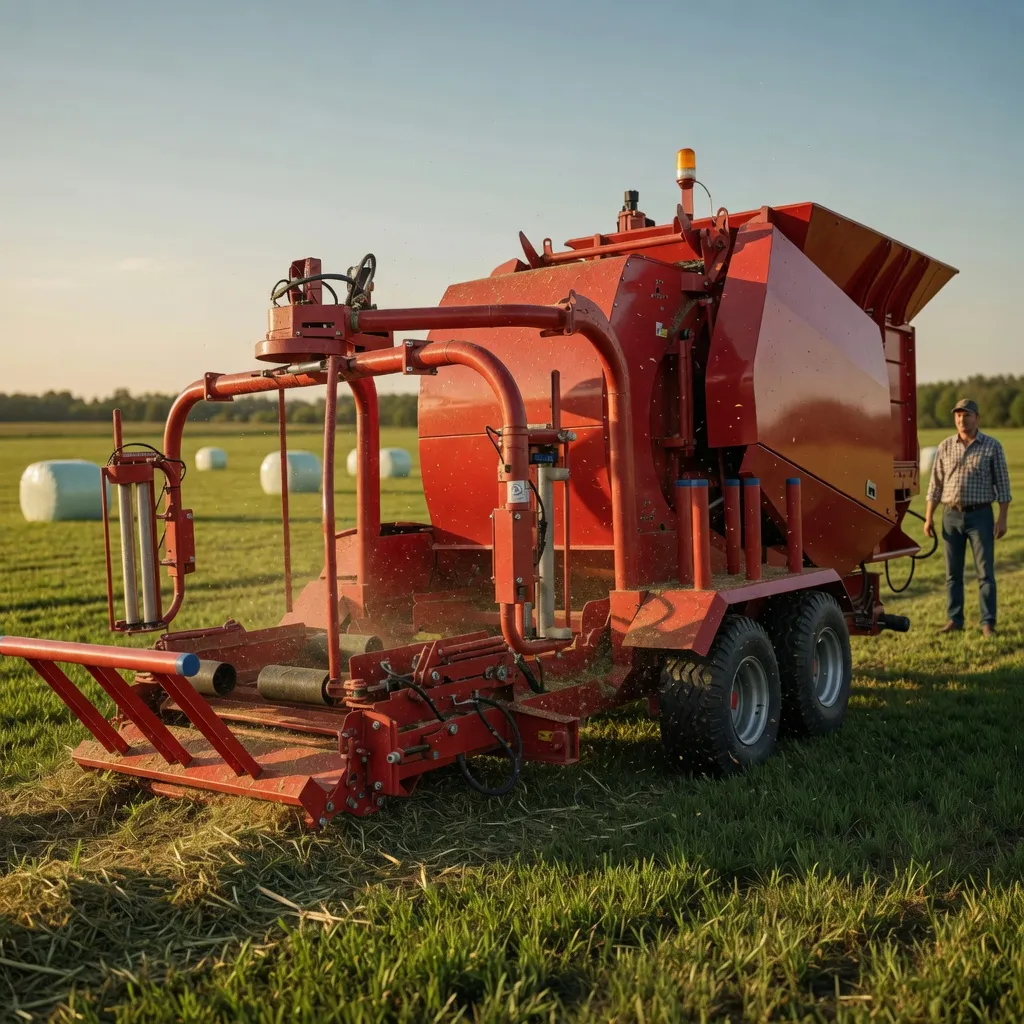
Simple hydraulic table and arm drive design — most common faults are diagnosable and field-fixable in under 15 minutes. Replacement cutter blades, pre-stretch roller kits, drive chains, and bearing sets stocked at EverPower’s Condell Park NSW warehouse for same-day dispatch. Technical phone support available during the wrapping season. Handles 1,000–1,600 mm round bales, 4–6 adjustable layers, 850 mm film width.
Frequently Asked Questions
Diagnose the Fault. Fix It Fast. Keep Wrapping.
EverPower’s team can assist with fault diagnosis and parts dispatch for the 9YCM-850 during your wrapping season.
EverPower Baling Machinery Australia Pty Ltd | 27 Harley Crescent, Condell Park NSW 2200
📞 +61 2 9708 3322 | ✉️ [email protected]