
How large dairy TMR operations are using hay grinder machines to convert round bales into consistent-particle ration components — and why particle length control matters more than most dairy farmers realise.
The Gap Between Baled Hay and TMR-Ready Feed
Total Mixed Ration (TMR) feeding has become the management standard for Australian dairies milking 200 cows or more — particularly in the Murray-Darling Basin’s irrigated dairy belt, the Goulburn Valley, and the large-scale dairies of SW Victoria. The TMR system’s nutritional advantage is that cows cannot sort the ration — all components are delivered simultaneously, ensuring every animal receives the formulated energy:protein:fibre balance regardless of individual preference. The system’s operational challenge is that every ingredient in the TMR must be at a particle length compatible with the mixer wagon’s ability to blend uniformly and the cow’s physiological requirement for effective fibre.
Round bales of silage and hay are the most common stored roughage component in Australian dairy TMR systems. A standard 1.25 m round silage bale contains material at particle lengths ranging from 20 mm (fine-chopped silage) to 200 mm (long-stemmed silage from poorly conditioned crops). When this variable-length material enters a TMR mixer wagon, the long-particle fraction does not blend uniformly with grain, mineral, and protein components — it forms clumps that pass through the mixer without full integration, resulting in physical sorting by cows at the feed face.
A grass grinder or hay processor — dedicated machinery that processes round bales through a hammermill or roller system before the material enters the TMR mixer — solves this problem by standardising the roughage particle length before blending. This article covers how grass grinder machines function in a dairy TMR context, what particle length targets are appropriate for different stock classes, and the EverPower grinder product suited to Australian large-dairy operations. For how consistent bale density in the round baler affects the consistency of material going into the grinder, our article on how dairy farmers use round balers to secure year-round silage supply covers the upstream production decisions that determine grinder input quality.
Why Particle Length Matters in Dairy TMR
The Penn State Particle Separator: What Dairy Nutritionists Measure
The Penn State Particle Separator (PSPS) is the standard field tool used by Australian dairy nutritionists to assess particle length distribution in TMR. It consists of three stacking sieves (19 mm, 8 mm, and 1.18 mm screens) plus a catch pan. A correctly formulated dairy TMR should have: 2 to 8% of DM on the top screen (>19 mm — the physically effective long fibre), 30 to 50% on the second screen (8 to 19 mm — medium fibre), 30 to 50% on the third screen (1.18 to 8 mm — fine particle), and below 20% in the catch pan (<1.18 mm — very fine or starch-rich).
When round bale silage or hay with long-particle fractions (100 to 200 mm stems) is added to the TMR without prior processing, it can push the top screen fraction above 15 to 20% — far above the 2 to 8% optimal. Cows at the feed face select and eat the long-fibre fraction preferentially (or sort it out and leave it) depending on their individual rumen buffering needs, producing inter-cow variation in actual nutrient intake that the TMR system was designed to prevent.
Effective NDF: The Fibre Quality Target
Long-fibre forage provides physically effective NDF (peNDF) — structural fibre that stimulates rumination and saliva production, maintaining rumen pH above the subacute acidosis threshold. The challenge is to maintain adequate peNDF content in the TMR without creating the sorting problem that comes from excessively long particles. The optimal solution is medium-length (8 to 25 mm) chopped roughage that contributes peNDF without sorting risk — precisely what a properly calibrated grass grinder produces from round bale hay or silage input material.
The 9F-70 Grass Grinder: Specifications and Application
How the 9F-70 Processes Round Bales
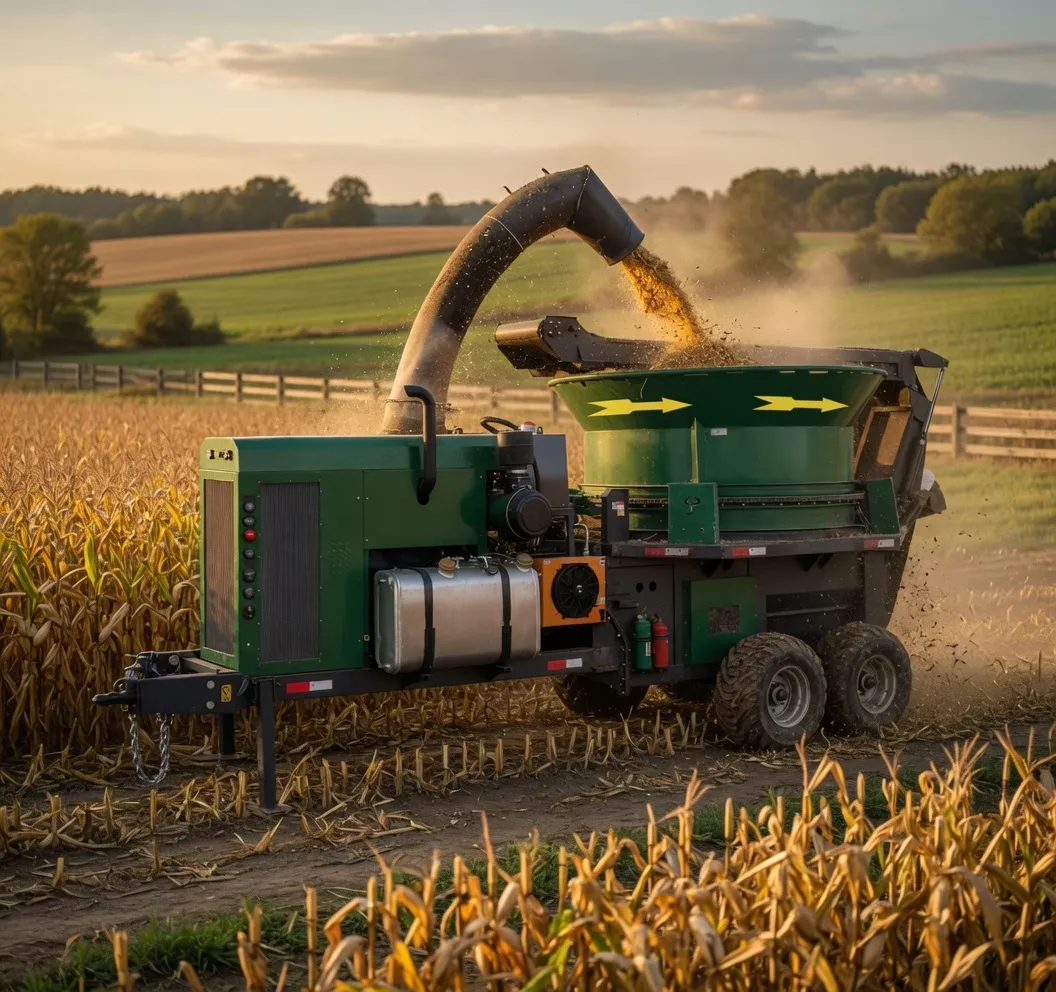
The 9F-70 animal feed grass grinder machine accepts whole round bales directly — the operator places the bale on the feed table using the farm’s standard loader, and the machine draws the bale through the processing chamber at a controlled feed rate. Internal hammers or rollers break the bale material down to the operator-selected particle length (typically 20 to 50 mm for dairy TMR applications) before the processed material is discharged into the mixer wagon or feed out conveyor.
Key operational parameters: throughput rate of 3 to 6 tonnes of fresh hay or silage per hour, adjustable particle length from 15 to 80 mm through screen selection, PTO power requirement of 55 to 80 hp, and direct compatibility with the 1.0 m and 1.25 m round bale formats produced by the 9YG-1.0 and 9YG-1.25A balers.
| Target Particle Length | Screen Setting | Best For | peNDF Contribution |
|---|---|---|---|
| 15–25 mm | Fine screen | High-grain TMR, peak-lactation dairy | Moderate — adequate for >50% NDF silage |
| 25–40 mm | Medium screen | Standard dairy TMR, balanced ration | Good — standard dairy target |
| 40–60 mm | Coarse screen | Heifer TMR, beef TMR, sheep roughage | High — maximum rumen stimulation |
| 60–80 mm | Open screen | Roughage-only feeding, minimal sorting risk | Very high — for low-grain rations |
When Grinding Is Worth the Capital Investment
At current equipment costs, the 9F-70 is financially justified for dairy operations processing 4 to 8 round bales per day (1,200 to 2,400 bales per season). Below this volume, the TMR mixer wagon’s own processing capacity (most modern mixer wagons with kicker rollers and knives can handle long-particle silage at modest inclusion rates without external grinding) is sufficient. Above 4 bales per day, the grinder’s contribution to ration consistency and sorting prevention becomes measurable in milk production uniformity across the herd and reduction in subclinical acidosis signs at the feed face.
TMR Management: How Grinding Fits the Dairy Day
The Grinder in the Morning Feed Preparation Sequence
On large Australian dairy operations, TMR preparation typically begins 2 to 3 hours before morning milking. The standard sequence on a grinder-equipped dairy: load 4 to 6 round bales onto the grinder feed table before mixing begins, process each bale through the grinder into the mixer wagon, add grain, protein, mineral, and liquid components to the wagon, mix for the specified mix time, and discharge to the feed face before cows return from milking. The grinder’s throughput rate of 3 to 6 tonnes per hour means a 1.25 m silage bale (typically 500 to 600 kg fresh weight) processes in 6 to 12 minutes — adding 30 to 70 minutes to the TMR preparation sequence depending on number of bales per mix.
Integration With the Baling Programme
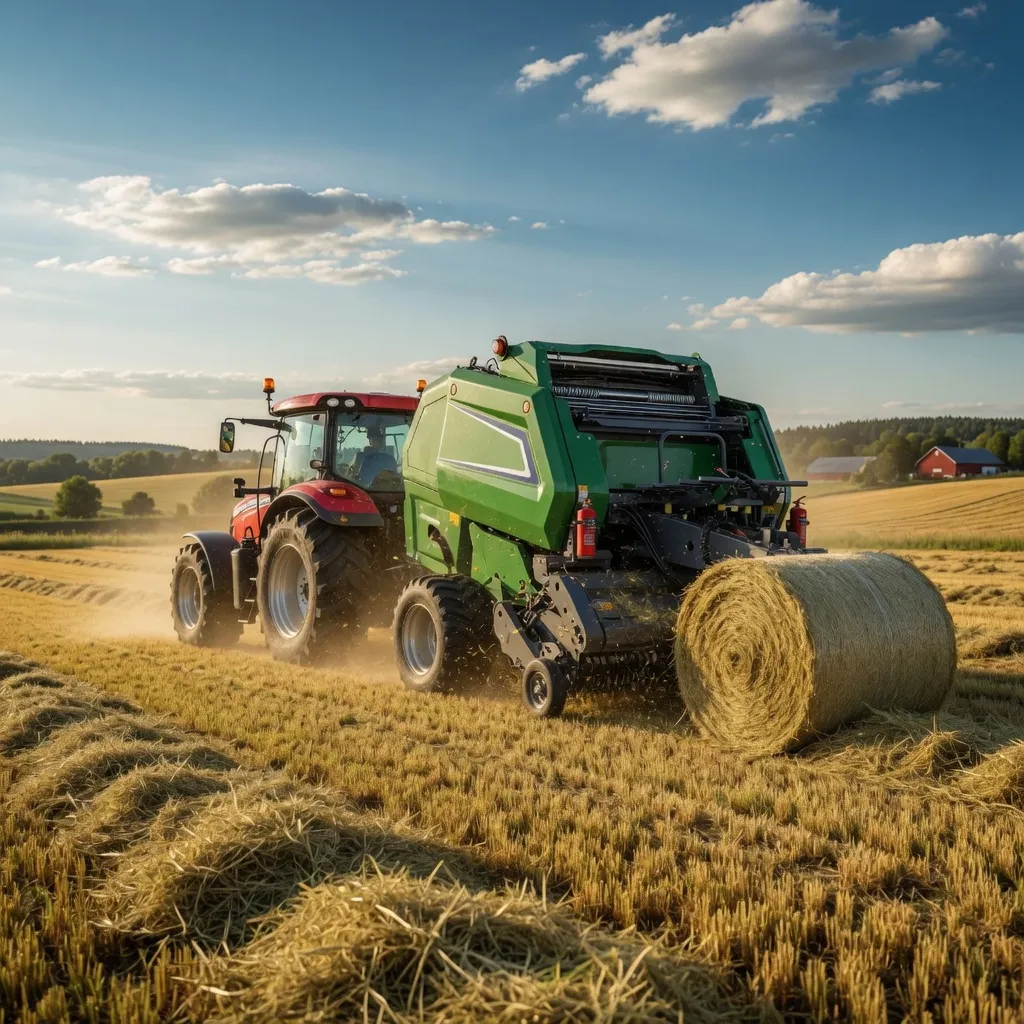
Grinding is most effective when the round bale silage going into the grinder has consistent particle length from the baling step — a baler that produces consistently dense bales with uniform silage particle size (from well-conditioned crops at correct moisture) delivers more consistent grinder output than one producing variable-density bales from over-wilted or under-conditioned material. The investment in quality at the baling stage — mower-conditioner, correct DM targets, LAB inoculant — pays forward into more consistent TMR particle length from the grinder and, ultimately, more consistent cow performance at the feed face.
Frequently Asked Questions
Discuss the 9F-70 for Your Dairy TMR Programme
Tell us your daily bale throughput, current TMR mixer wagon specifications, and particle length targets — we’ll spec the 9F-70 configuration for your feed preparation system.