
Single-Blade Mowers: The Right Tool for Tight Paddocks
Why a 2.5 m single-blade mower outperforms wider machines on small, irregular paddocks — headland management, gateway clearance, and the operations where compact mowing wins.
When Working Width Becomes a Liability
The instinct when buying farm equipment is to maximise working width — wider mowers cover more hectares per hour, reduce the number of passes per paddock, and appear to be more efficient. This logic holds on large, square paddocks where the headland turning loss from multiple passes is a small fraction of total paddock area. It breaks down on the small, irregular paddocks that dominate mixed sheep and beef farming in NSW’s tablelands and slopes, WA’s Great Southern, and Tasmania’s mixed farmland — where paddocks of 5 to 15 hectares with irregular boundaries, awkward gateways, and internal obstacles make a 5-metre windrower more trouble than it is worth.
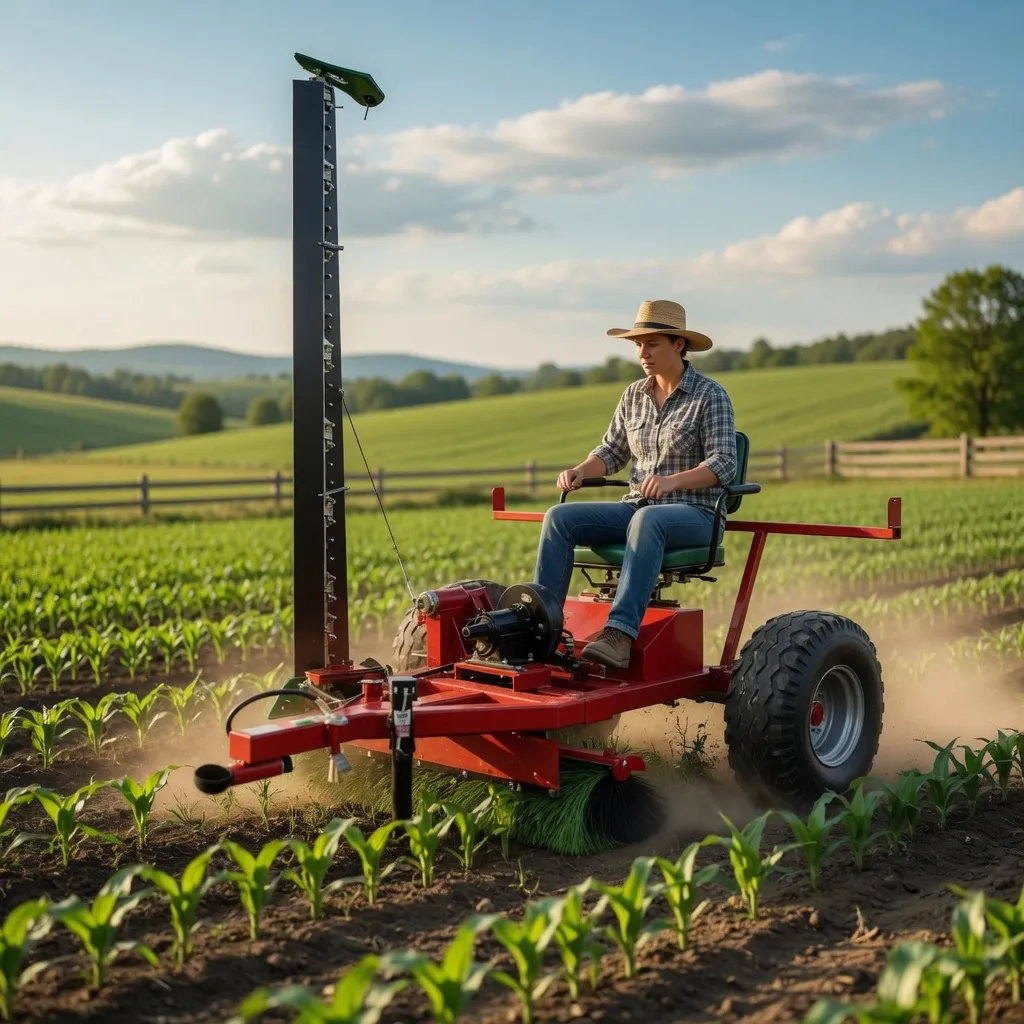
The single-blade disc mower at 2.5 m working width is the machine that handles these conditions without compromise. It fits through standard agricultural gateways (2.8 m minimum), turns in a short headland (5 to 8 m), manoeuvres around trees, dams, and fence corners that would require multiple repositioning passes from a wider machine, and operates from the 45 to 60 hp tractors that are the workhorses of small-to-medium mixed farms. This article covers where the single-blade mower is the right choice and what it delivers in practice. For context on where the mower-conditioner or wider windrower is the better fit, our article on baling oaten hay and straw on a mixed farm covers the full mowing and baling chain for mixed farm operations.
Single-Blade vs. Wider Mowers: The Practical Comparison
| Factor | 9GD-2.5 Single-Blade | 3.2 m Mower-Conditioner | 5.0 m Windrower |
|---|---|---|---|
| Gateway clearance | ✓ Fits 2.8 m gateways | Marginal — 3.5 m transport width | ✗ Requires 5.5 m+ gateway |
| Headland turn radius | ✓ 5–8 m | 8–12 m | 12–18 m |
| Tractor HP required | 45–60 hp | 65–90 hp | 90–130 hp |
| Small paddock coverage (10 ha) | 8–12 passes | 5–8 passes | 3–5 passes |
| Large paddock coverage (50 ha) | 25–40 passes | 18–28 passes | 10–16 passes |
| Conditioning capability | ✗ No conditioning | ✓ Yes | Some models only |
| Purchase price (new) | Lower | Medium | Higher |
Where Single-Blade Mowers Win
The single-blade mower’s advantages compound on paddocks with: multiple gateways that must be accessed from different sides (the machine’s compact transport width allows passage through any standard gateway without reversing or repositioning), tree lines and internal fences requiring sharp turns at the headland, irregular paddock shapes where a wide machine loses a high proportion of area to headland overlap, and operations where the tractor that operates the mower is also used for other farm tasks and cannot justify a dedicated high-HP machine.
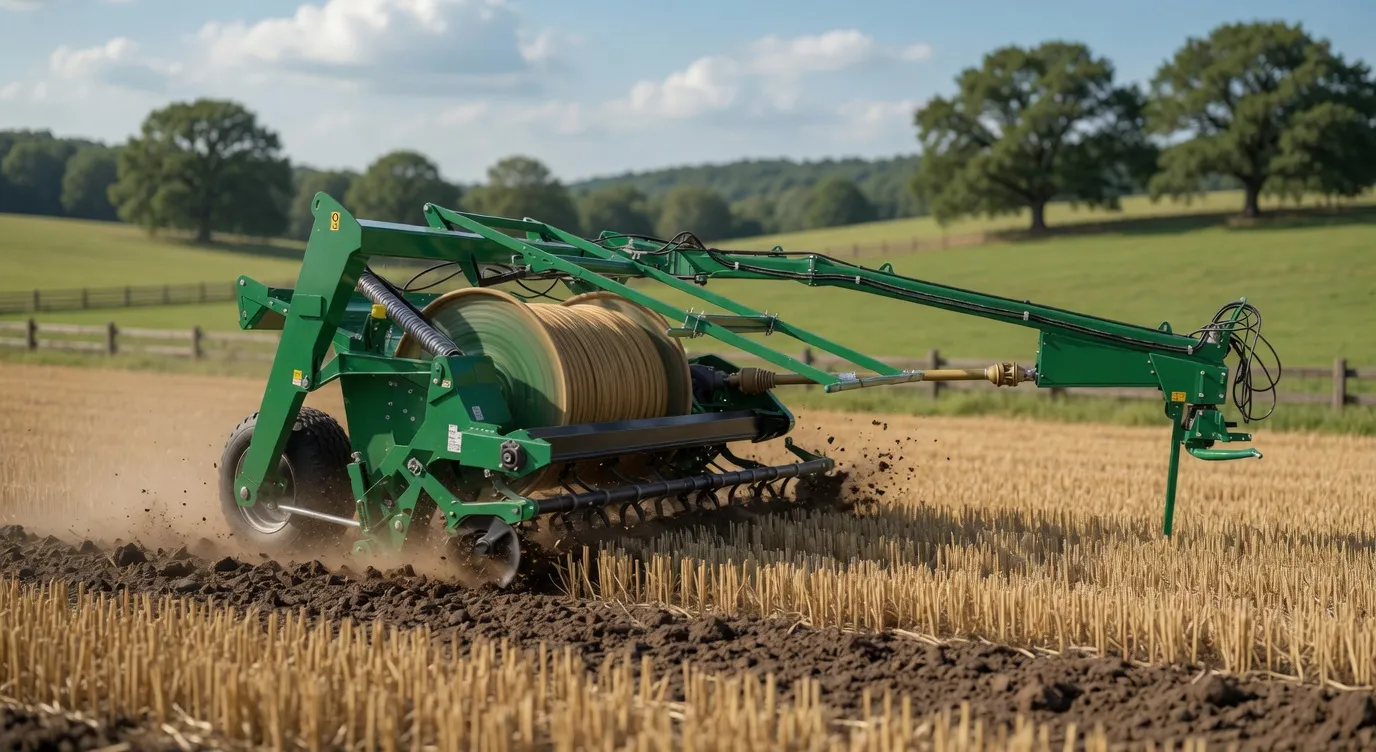
The 9GD-2.5 model traction single-blade mower provides a 2.5 m cutting width with centre-mounted disc configuration that runs cleanly in grassy fence lines and uneven terrain — features that matter more on the small, irregular paddocks of mixed sheep and beef properties than on the large flat paddocks where wider mowers excel.
Operating the 9GD-2.5 for Hay and Silage
Cutting Height and Stubble Management
The single-blade mower cuts cleanly at user-selected heights from 5 to 15 cm via skid or roller height adjustment. For sheep country hay making — where post-cut grazing of the stubble by sheep immediately after baling is standard — setting at 10 to 12 cm leaves adequate stubble for sheep grazing without scalping the paddock surface. For silage crops where the windrow will be raked and baled within 24 to 36 hours, 8 to 10 cm is the target — low enough to capture the full above-ground biomass, high enough to avoid soil pickup in the windrow.
Working Speed and Quality
The 9GD-2.5 single-blade operates at 8 to 12 km/h in standard hay and silage crops — comparable to wider mowers at equivalent field speed. The compact disc head allows the machine to maintain consistent cutting height over uneven ground that would cause scalping or gouging on a wider rigid-head mower. Ground-following on rough tablelands terrain and across farm track depressions is one of the single-blade’s practical field advantages over wider machines that require more aggressive flotation spring adjustment to follow the same terrain.
Frequently Asked Questions
Discuss Your Mowing Equipment Needs
Tell us your paddock sizes, gateway widths, and tractor HP — we’ll advise on the right mower specification for your property’s specific layout.