Description
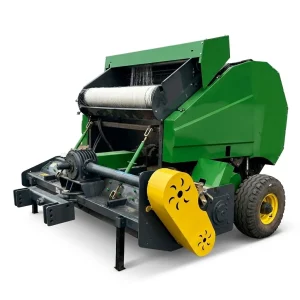
Heavy-Duty Roll Drum Round Baler with Touch Screen Control and Continuous Screw Feeding
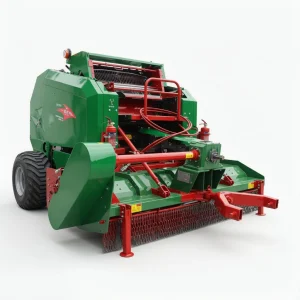
The 9YG-2.2 is a towed round hay baler built for high-volume, high-throughput operations where bale consistency, machine reliability, and operator control take priority over compact size or minimal power requirements. At 3800 kg and designed for tractors in the 110–150 kW (approximately 150–200 hp) range, the 9YG-2.2 is positioned at the heavy-duty end of the EverPower round baler lineup — a machine for serious hay and silage producers who measure success in bale quality and daily throughput rather than simply bale count.
The defining mechanical difference of the 9YG-2.2 is its roll drum compression chamber — an 18-roller drum configuration with a Φ1220 mm compression diameter and 1400 mm chamber width, rather than the belt-drive compression system used in lighter round balers. Roll drum chambers are inherently more resistant to the slippage, tracking drift, and surface contamination issues that affect belt-drive machines in high-moisture or heavily soiled crop conditions. The 18 working rollers maintain consistent compression force around the full bale circumference on every rotation, producing bales with uniform density from core to surface — the characteristic that round baler end-users associate with premium machine quality.
Control is handled through a handheld colour touchscreen display with a high-precision displacement sensor that monitors bale weight in real time. Combined with automatic net-wrap counting via high-precision position sensors, the operator has a level of bale parameter control that is typically associated with much more expensive European round baler platforms. For information on how round baler technology fits into a complete silage operation, see our guide on what a silage baler is and how it works.
Complete Technical Specifications
Full technical documentation including PTO shaft specs, lubrication schedule, and spare parts diagrams available on request — contact our team.
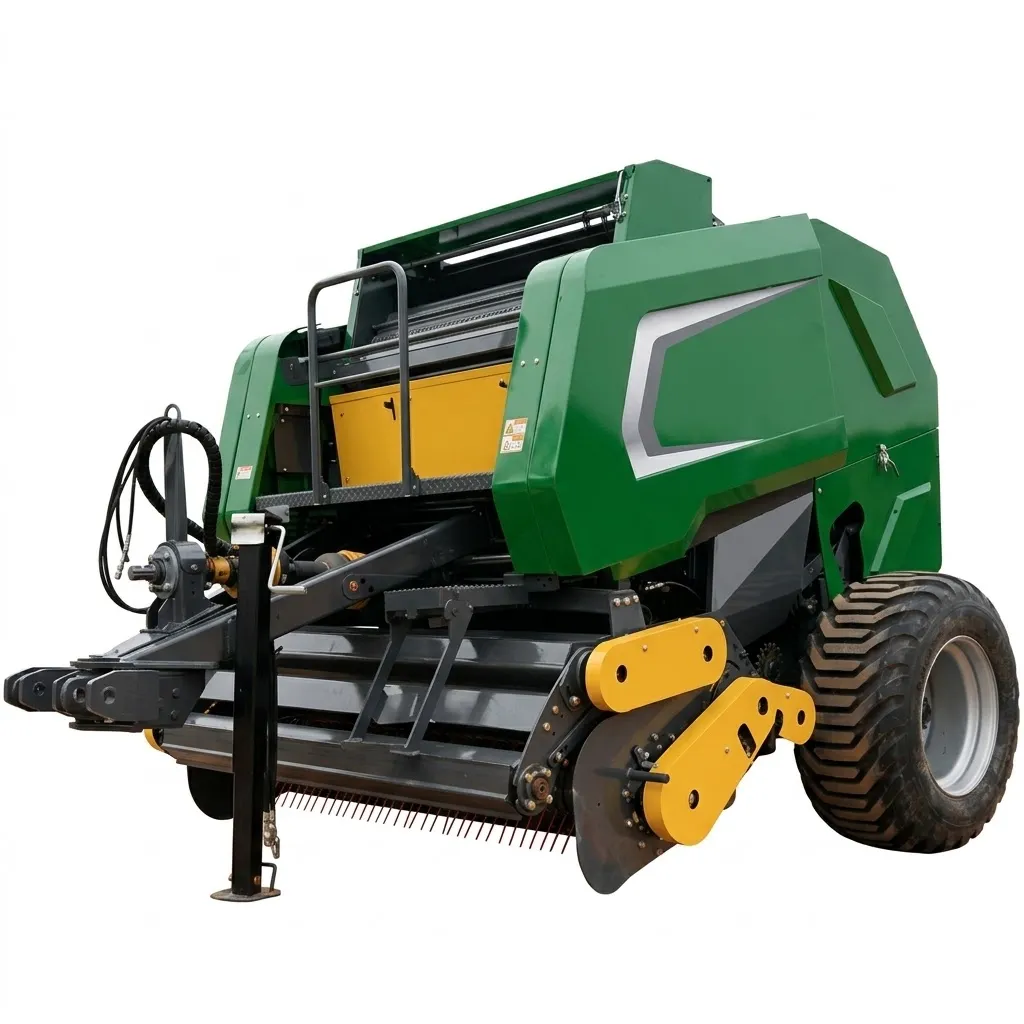
Roll Drum Chamber — 18 Working Rollers, Φ1220 mm Compression Diameter
The compression chamber is the heart of any round baler. The 9YG-2.2 uses a roll drum chamber — 18 Φ222 mm hardened steel rollers arranged in a fixed-diameter configuration around the 1400 mm chamber width — rather than the belt or chain-and-slat drive systems found in lighter machines. This distinction shapes every aspect of how the bale forms, how consistent it is, and how reliably the machine performs across extended operating seasons.
Uniform Bale Density — Core to Surface
The fixed-diameter roller array applies consistent radial pressure on the forming bale from the moment material enters the chamber. The bale core and surface layers receive equivalent compression — unlike variable-chamber belt balers where outer layers have lower compression force. For silage baling specifically, uniform density across the bale cross-section is directly linked to fermentation uniformity and reduced surface spoilage risk during storage.
Long Roller Service Life — No Belt Replacement
Hardened steel rollers last far longer than baler belts under equivalent throughput conditions. In high-volume operations where belt replacement is a recurring planned maintenance expense — typically every 1–3 seasons in intensive baling use — the absence of belts in the 9YG-2.2’s compression chamber removes that entire cost category from the machine’s ownership lifecycle. Roller bearing replacement is the primary maintenance interval for the compression zone, at much longer service intervals than belt replacement.
Performance in Wet and High-Moisture Conditions
High-moisture silage crops — ryegrass at 65%+ moisture, green corn silage, fresh pasture — introduce significant effluent and surface contamination inside the bale chamber. Belt surfaces absorb and retain moisture and crop residue, increasing slippage risk and accelerating surface degradation. Steel rollers shed effluent and resist contamination, maintaining consistent traction on the forming bale surface even in the most demanding high-moisture silage conditions that Australian coastal dairy operations routinely produce.
Fixed Bale Diameter — Consistent Wrapping Geometry
The Φ1220 mm compression diameter is fixed by the roller array geometry, producing every bale at the same diameter. This consistency simplifies silage film wrapping calculations — the number of film layers per bale is predictable across the entire field run, allowing precise film inventory management and eliminating the variable-coverage uncertainty that arises when bale diameter changes between loads in a variable-chamber machine.
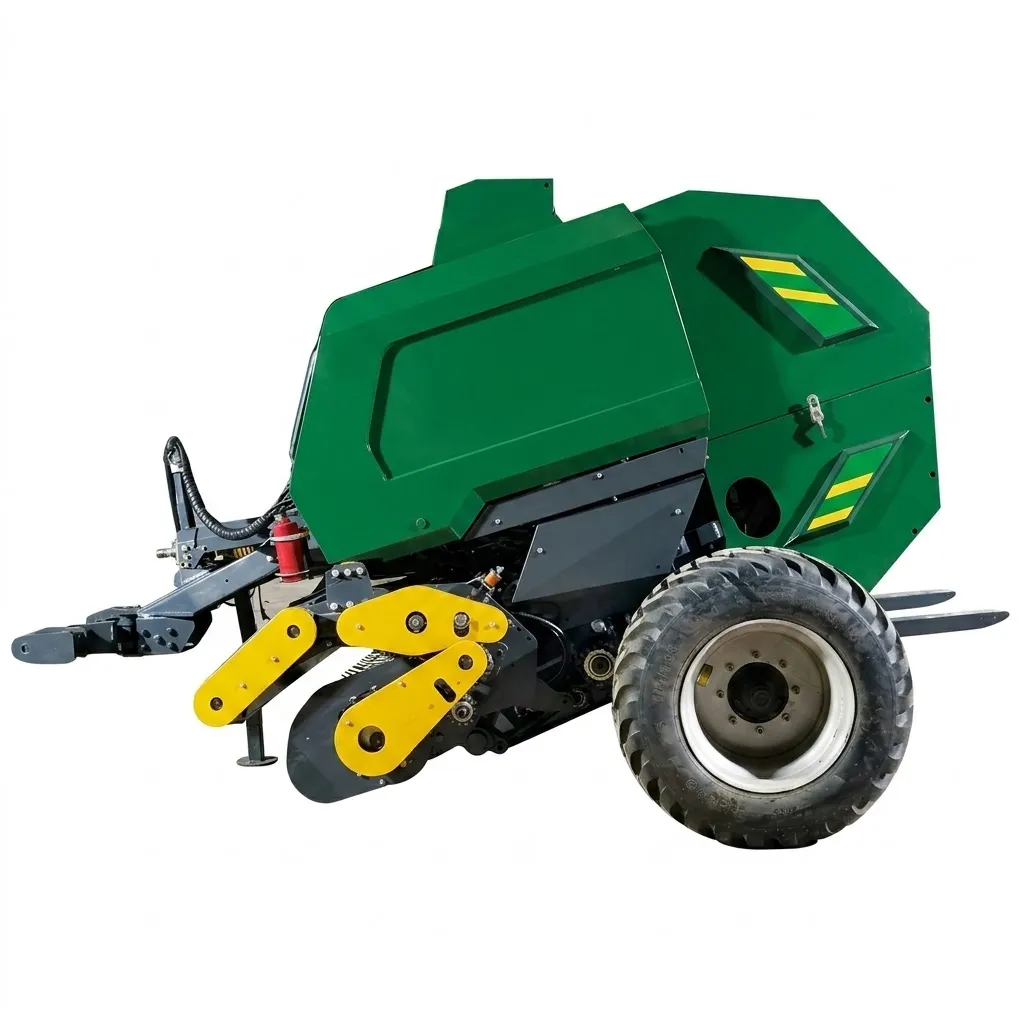
Touchscreen Control, Sensor-Driven Bale Weight Monitoring, and Dual Operating Modes
The 9YG-2.2 brings a level of digital control to the baling operation that substantially reduces the variability and guesswork that characterise manually-observed baling on conventional machines. The combination of a handheld colour touchscreen, high-precision displacement sensor, and automatic net-wrap counter gives the operator measurable, repeatable bale parameters rather than subjective assessments of bale size and weight.
Handheld Colour Touchscreen Display
The 9YG-2.2 is operated through a handheld colour touchscreen unit that the operator can position for clear visibility from the tractor seat. The display shows live bale formation status, machine operational data, and alert conditions in a format that is designed for quick reading while moving at field working speed — no squinting at small indicator lights or listening for audible-only alarms.
Automatic and manual operating modes
The operating system offers both automatic and manual modes. Automatic mode handles the full bale cycle — compression monitoring, net-wrap initiation, wrap completion, and bale ejection — without requiring the operator to judge when each stage is complete. Manual mode gives the operator direct control over each step, which is valuable for non-standard crop conditions or when dialling in machine parameters at the start of a new crop type or field block.
High-Precision Displacement Sensor — Real-Time Bale Weight Control
A high-precision displacement sensor monitors the forming bale throughout the compression cycle, feeding real-time data to the touchscreen display. This allows the operator to see bale weight building in real time and intervene or adjust parameters before the net-wrapping cycle initiates — rather than discovering that bales are heavier or lighter than intended only when they hit the ground and are weighed on a platform scale.
Why bale weight control matters commercially
For silage contractors billing on bale weight, or for hay operations selling product by bale weight to feed distributors, bale-to-bale weight consistency is a direct revenue and quality metric. An operation producing bales that vary significantly in weight either under-delivers value to buyers (heavy bales at a fixed per-bale price) or undercharges for product (light bales sold by count). The displacement sensor keeps bale weight within a narrow target range across the full field run — the kind of consistency that builds long-term buyer relationships in commercial forage markets.
Sensor-Counted Net Wrap Loops — Precision Film Cost Control
The net-wrapping system uses a high-precision position sensor to count wrap loops around the bale during the wrapping cycle. The operator sets the target loop count on the touchscreen and the sensor confirms delivery — eliminating the under-wrap risk (too few loops, inadequate net retention) and the over-wrap waste (too many loops, excess net cost per bale) that arise when wrap count relies on timer-based or operator-estimated approaches.
Net wrap cost is a significant ongoing operating expense
At high bale volumes — hundreds or thousands of bales per season — even a single extra wrap loop per bale multiplies into significant consumable cost over a season. The sensor-counted system holds wrap loop count precisely at the set value for every bale, ensuring net consumption per bale is the same at bale 1 and bale 1000. This consistency also simplifies net roll inventory management — the rolls per 100 bales calculation holds accurately across the season rather than varying with operator-to-operator wrap count differences.
Full Machine Status Monitoring — Operational Visibility at a Glance
Beyond bale weight and wrap count, the touchscreen displays the full operational status of the machine’s key systems — allowing the operator to verify that the machine is running within normal parameters without leaving the cab. Fault conditions and alert states appear on the display as they occur, giving the operator an early warning of developing issues before they become field stoppages.
Reducing diagnostic time in the field
On a 3800 kg machine working in remote paddock conditions, the ability to read machine status from the cab rather than climbing down for a physical inspection saves meaningful time across a full working day. The display’s live status readout also gives maintenance personnel a starting point for fault diagnosis — knowing which system triggered an alert before starting the physical inspection process cuts diagnostic time considerably compared to working from symptom observation alone.
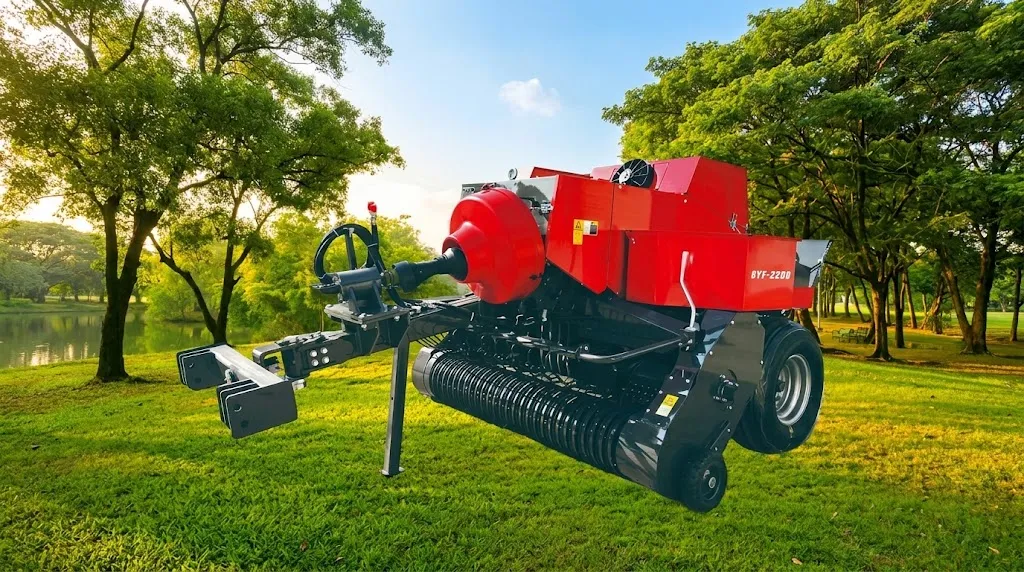
Continuous Screw Feeder, Automatic Lubrication, and Global-Sourced Drive Components
The mechanical systems that support the compression chamber are engineered for the sustained high-load operation that a 110–150 kW machine at this throughput level demands — from the feeder design that determines how evenly material enters the chamber to the lubrication architecture that determines how long the chain drive stays smooth between service events.
Continuous Screw Feeding Mechanism
The screw feeding mechanism delivers a continuous, controlled flow of crop material from the pickup reel into the compression chamber — rather than the intermittent, charge-based delivery of a fork feeder. For a roll drum chamber operating at fixed diameter, continuous material input maintains consistent chamber filling pressure throughout the bale formation cycle, supporting the uniform density profile the roller array is designed to produce.
The screw design also handles a wider range of crop moisture levels without the bridging risk that intermittent feeders can experience with sticky or partially wet material — important in Australian dairy silage conditions where crop moisture can vary significantly across a single paddock cut as weather conditions change during harvest.
Fully Automatic Thin-Oil Lubrication — Chain Drive System
The 9YG-2.2’s chain drive system is served by a fully automatic thin-oil lubrication arrangement — the system delivers oil to the chain continuously during operation without requiring the operator to monitor or intervene. This is a significant improvement over manual chain lubrication intervals, particularly in operations where machines run for extended daily periods and chain lubrication intervals are easy to miss under harvest time pressure.
Grease lubrication points use a centralised oil supply system that reduces the number of individual grease nipple service points the operator must access for routine maintenance — cutting daily service time and reducing the probability of a lubrication point being missed during a rushed pre-run inspection.
Hydraulic Pickup Height Adjustment with Float Capability
Pickup height is adjusted hydraulically from the tractor cab — no manual adjustment or tool use required when conditions change between field sections. The pickup reel also has a float mode that allows it to follow ground contours automatically within a set height range, maintaining consistent windrow contact without the operator needing to react to every surface variation.
Float capability is particularly valuable on coastal dairy paddocks with slight undulations, drainage swales, and mole drainage ridges that would otherwise require constant manual height correction to maintain clean windrow capture without driving the reel into the ground. The system also facilitates faster cleaning and maintenance access to the pickup reel without the need to support the reel manually during inspection.
Global-Sourced Key Drive Components
The drive shaft, bearings, clutch, chain, and electronic control system are sourced from internationally recognised component manufacturers — not generic commodity parts. This is a deliberate engineering decision: on a machine working at 110–150 kW input with 3800 kg of mass in motion, the quality and dimensional consistency of bearings, clutch engagement components, and drive chain determines how long the machine operates without unplanned stoppages between planned service events.
International-brand components also simplify parts sourcing in markets like Australia — where OEM-specification replacement bearings and chain components from major global brands are available through local industrial suppliers, reducing parts lead time when unplanned replacement is required mid-season.
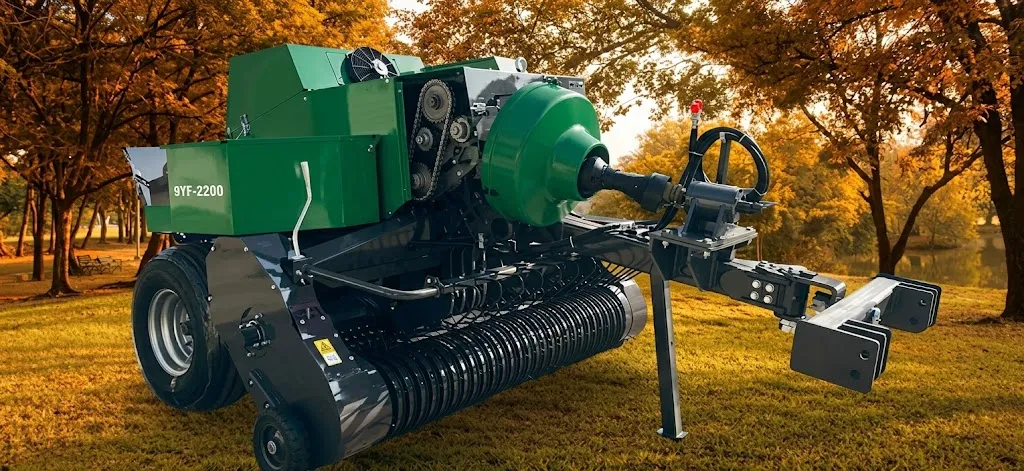
Who the 9YG-2.2 Is Built For
The 9YG-2.2 is a high-specification machine for operations where consistent bale quality, long machine service life, and precise operator control are worth the investment in a heavier, more powerful, and more sophisticated machine than entry-level or mid-range round balers provide.
High-Volume Dairy Silage Operations
Dairy farms requiring consistent silage quality across hundreds or thousands of bales per season are the core use case for the 9YG-2.2. The roll drum chamber’s uniform density profile supports consistent fermentation conditions inside each bale — a direct input into the nutritional consistency of the silage at feedout, which in turn affects daily milk production consistency across the herd through the winter feeding period.
Commercial Silage and Hay Contractors
Contractors billing on bale weight or quality-assessed silage contracts need a machine that delivers repeatable results across diverse client farms and crop conditions. The touchscreen weight monitoring, sensor-counted net wrap, and dual auto/manual operating modes give a contractor crew the tools to maintain consistent bale specifications regardless of which operator is running the machine on a given day — critical for quality-assured silage contracting businesses.
Large Beef and Mixed Livestock Stations
Large beef stations building drought reserve silage across broad pasture areas benefit from the 9YG-2.2’s 2200 mm pickup width, high daily throughput capability at 110–150 kW input, and low-intervention automatic operation. The machine’s ability to produce consistent, well-formed bales across varying pasture conditions — from dense green ryegrass to lighter cured vetch and clover — makes it effective across the diverse feed reserve baling programs that large mixed operations run across spring and early summer.
✓
✓
✓
✓
✓
→
→
→
→
Getting the Best from the 9YG-2.2 in High-Volume Silage Operations
A machine at this specification level rewards disciplined operating and maintenance routines. The automatic lubrication, sensor monitoring, and hydraulic pickup adjustment reduce the routine intervention burden compared to a manually-maintained machine — but the following practices remain essential for peak seasonal output.
Calibrate the Weight Sensor at Season Start
The displacement sensor’s bale weight readings should be validated against physical bale weights on a platform scale at the start of each season and when switching to a new crop type with significantly different bulk density. A calibrated sensor reading that tracked accurately in dry ryegrass will shift when the same field is cut at higher moisture in a subsequent season — taking 10 minutes to re-verify sensor accuracy before a major seasonal cut prevents systematic weight error across hundreds of bales.
Inspect All 18 Rollers Pre-Season
Before the first bale of each season, inspect all 18 compression rollers for bearing play, surface wear, and debris accumulation from the previous season’s stored position. A roller with damaged surface texture or elevated bearing play will produce a consistent flat spot or low-density band around the bale circumference at the angular position of that roller — the kind of subtle bale quality issue that is difficult to diagnose in the field but easy to prevent with a pre-season roller inspection routine.
Verify Automatic Lubrication Function at Start-Up
The automatic thin-oil lubrication system should be verified as operating correctly at each day’s start before field work begins. A visual check that oil is flowing to the chain drive within the first 2–3 minutes of operation takes less than a minute and confirms the lubrication pump is functioning. A lubrication system that has failed silently — still appearing active on the display but not delivering oil — will cause accelerated chain wear that accumulates undetected across the day.
Set Pickup Float for Your Field Surface
The hydraulic pickup float range should be set appropriately for the paddock surface before starting each new field. Tighter float range on smooth, level paddocks produces cleaner windrow capture with less soil disturbance. Wider float range on undulating ground, drained paddocks, or previously cultivated surfaces prevents the reel driving into surface irregularities. Spending two minutes setting float range at field entry saves the spring tine inspection and replacement that results from operating with incorrect float limits on variable surface conditions.
Set Net Wrap Count for Crop Moisture
The sensor-counted net wrap system makes it easy to adjust wrap count between crop conditions — do so actively rather than leaving the count fixed across different crop types and moisture levels. High-moisture ryegrass silage at 60%+ moisture needs more net loops than dry oaten hay at 15% moisture to maintain bale shape until film wrapping. Set the wrap count conservatively on new crop types and adjust downward once bale shape retention in storage has been confirmed across a representative sample.
Maintain PTO Speed at Rated Input
The 9YG-2.2’s 18-roller chamber and screw feeder are designed to operate at rated PTO speed — either 540 or 1000 RPM depending on the machine’s PTO configuration. Operating below rated PTO speed reduces screw feeder throughput rate and roller surface speed, which affects the bale formation compression profile and increases the time per bale cycle — reducing daily throughput. If PTO speed is dropping under load, reduce ground speed rather than tolerating reduced PTO output in a heavy windrow.

Factory-Direct Access to Heavy-Duty Roll Drum Baler Technology in Australia
The 9YG-2.2 is supplied directly to Australia by EverPower Baling Machinery Australia Pty Ltd, 27 Harley Crescent, Condell Park NSW 2200. Learn more about our supply model at silage-baler.com/about-us.
Factory-Direct Pricing on Premium-Spec Equipment
Roll drum round balers at 110–150 kW with touchscreen control are conventionally marketed at a significant premium through European brand distributor channels. EverPower’s direct factory-to-Australia supply model removes the distributor margin, making this specification level accessible at a price point that reflects the machine’s production cost rather than its placement in a premium product tier.
NSW Spare Parts — Rollers, Sensors, Chain Drive
Replacement roller bearings, spring pickup tines, net-wrap sensor components, and chain drive parts for the 9YG-2.2 are stocked at our Condell Park NSW facility. For a machine at this throughput level, having locally available parts is not a convenience — it is what separates a one-day repair from a week-long wait for international freight during peak silage season.
Technical Support Including Touchscreen Setup
Our Sydney-based team assists buyers through first-season setup of the touchscreen control system, displacement sensor calibration, net wrap count configuration, and lubrication system verification. All documentation is provided in English. Contact us at 61 2 9708 3322 or [email protected] during business hours.

Frequently Asked Questions
Common questions from dairy farmers, silage contractors, and large livestock operations evaluating the 9YG-2.2 Round Hay Baler.