Hay for Beekeeping Properties: Managing Pasture Around Hives
Beekeeping properties have unusual hay management requirements — cutting timing that avoids peak flowering, species selection that supports bee forage, and the hay operation that coexists with the apiary calendar.
The Conflict Between Hay Cutting and Bee Forage Production
Commercial beekeeping operations in Australia — concentrated in SA’s Mid North and McLaren Vale, Victoria’s Western District and Gippsland, and NSW’s tablelands — manage hives on properties where the pasture is simultaneously the primary bee forage source and a potential hay crop. The commercial beekeeper’s dilemma is that the flowering stage of most hay crops — the point at which the beekeeper most wants the pasture to be in full bloom for nectar production — is also the point at which the hay farmer needs to cut before quality declines beyond viable marketing specification.
For properties that combine commercial beekeeping with hay production — either as a single enterprise or as a landowner leasing hive sites to a commercial beekeeper — the cutting calendar must be managed to respect both the hay quality timeline (cut before full heading) and the bee forage timeline (allow flowering to proceed through the peak nectar flow). The two objectives are directly in tension for most temperate Australian hay species.
This article covers the specific hay management considerations for beekeeping properties — which species provide the best dual-purpose hay-and-forage value, the cutting timing protocols that balance hay quality against nectar flow, and the pasture management practices that support both the hay and the hive. For context on the hay baling equipment appropriate to small-to-medium pastoral properties typical of Australian beekeeping operations, our article on which silage baler works best for ryegrass, lucerne, and oats covers the crop-to-equipment match across the species most relevant to beekeeping pastures.
Dual-Purpose Species: Supporting Bees and Producing Hay
| Species | Hay Quality at Cut Stage | Nectar Production | Best Management for Dual Use |
|---|---|---|---|
| Phacelia (P. tanacetifolia) | Good — 15–20% CP at flower | Excellent — major nectar source | Cut 20% flowering; leave 10% strips uncut |
| Lucerne | Excellent — 20–24% CP at bud | Good — long flowering season | Cut at bud stage; stagger cuts across paddocks |
| Red clover | Good — 15–20% CP at early flower | Very good — top bee forage | Leave 15–20% strips to flower; cut remainder |
| White clover | Moderate — 14–18% CP | Excellent — continuous flowering | Not a primary hay crop; graze or cut high |
| Oaten hay | Good — 9–12% CP at flag leaf | Poor — limited bee value at flag leaf | Cut normally; no bee forage conflict |
| Borage (B. officinalis) | Moderate — 12–15% CP | Outstanding — premium honey | Harvest seed; cut stems for roughage |
The Lucerne-Beekeeper Partnership
Lucerne is the most naturally aligned dual-purpose crop for beekeeping properties because its bee forage value (nectar from the tripped flower) and its hay value (cut at vegetative to early bud) are separated by only a 7 to 14 day window. Cutting at early bud captures peak hay protein and ME; leaving 2 to 3 weeks beyond bud stage produces the open flowers that provide premium lucerne honey. A beekeeping property with 20 hectares of irrigated lucerne can stagger cutting across 5-hectare blocks on a rolling 28-day cycle — ensuring that at any point in the season, at least one block is in active flower for the hives while the other blocks are at various stages of hay cutting and regrowth.
Cutting Protocols That Respect the Hive Calendar
Communication With the Beekeeper — Essential Before Any Cut
On properties where hives belong to a commercial beekeeper rather than the landowner, the fundamental management requirement is advance communication before any hay cut. Commercial beekeepers plan honey harvesting and hive movement around the nectar flow calendar — a hay cut that removes their primary forage source 2 weeks before a scheduled honey extraction creates a direct financial loss for the beekeeper. Most hive lease agreements include a 14-day notification requirement for any significant pasture cut; properties without a formal agreement should establish this expectation before the first hay season.
Identify which paddocks are within 2 km of hive sites (the primary foraging radius for most Australian bee species). These are the paddocks where cutting timing has the most direct impact on nectar collection. Paddocks beyond 3 km from hives can be cut on standard hay quality timing without material bee forage impact.
In paddocks adjacent to hive sites, cut 80 to 85% of the area at flag-leaf to early-bud stage for hay quality, and leave 15 to 20% strips in full flower for bee access. The strips rotate each cut — last cut’s hay area becomes this cut’s flower strip. This protocol costs 15 to 20% of annual hay yield from adjacent paddocks but maintains nectar flow through the cutting season.
The peak bee foraging period is 9 AM to 3 PM. Mowing activity in this period disrupts foraging patterns and can result in mower-bee contact injuries. Start cuts near hive sites in early morning (before 8 AM) or late afternoon (after 4 PM) to minimise disruption during peak foraging hours.
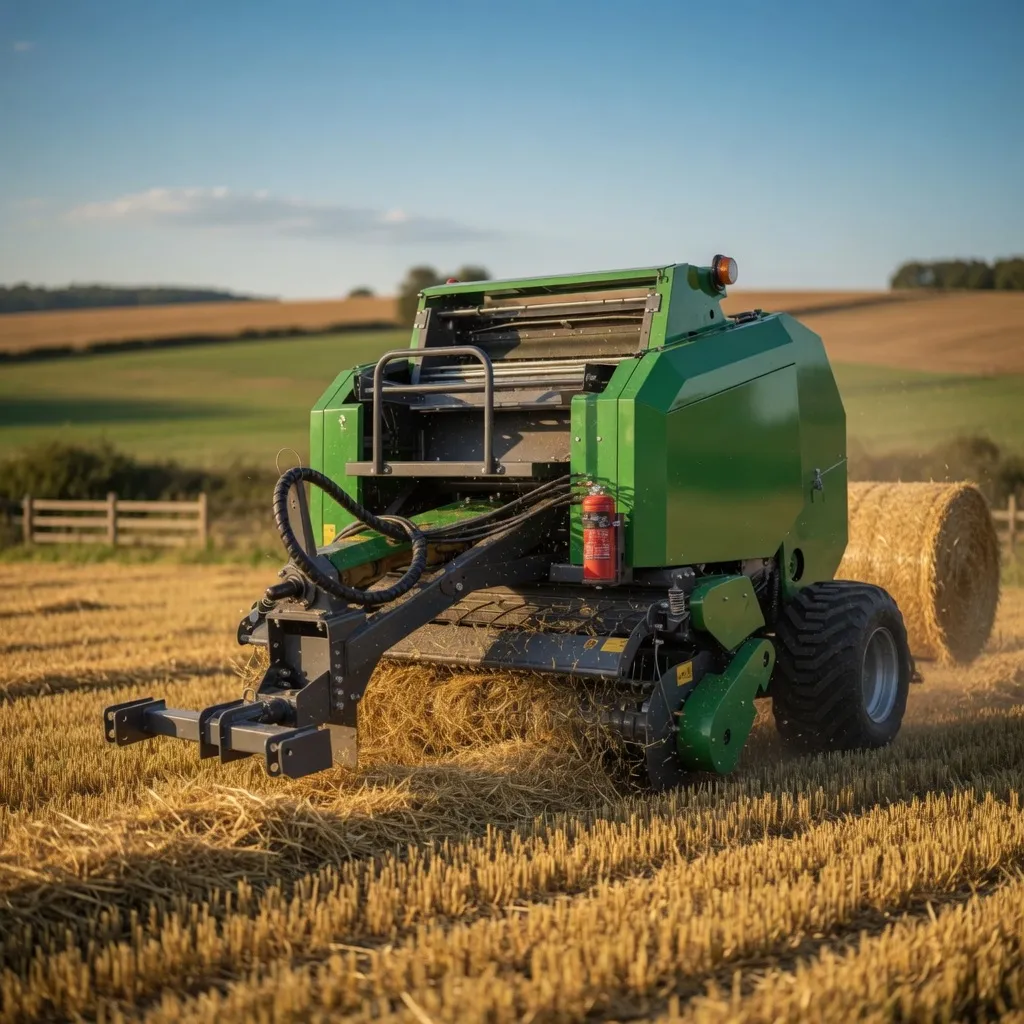
The 9YG-1.0 round baler produces the compact 1.0 m bale format appropriate for small beekeeping property hay operations (100 to 300 bales per season) where the primary hay market may be local horse property supply rather than commodity livestock markets.
Frequently Asked Questions

Discuss Your Beekeeping Property Hay Programme
Tell us your hive density, pasture species, and annual hay volume — we’ll advise on the right cutting and baling equipment for dual-purpose apiary and hay production.