
A decade ago, the standard silage baling setup on Australian cattle farms was a standalone round baler working ahead of a separate satellite wrapper — two machines, often two tractors, two operators, and an unavoidable delay between baling and wrapping that most producers accepted as simply the way things worked. That acceptance is changing. Across beef and dairy country in New South Wales, Queensland, and Victoria, a growing number of cattle producers have made the switch to combined baler-wrapper units and aren’t going back. The reasons go deeper than equipment preference — they connect directly to silage quality, labour economics, and the farm’s ability to act decisively inside a narrow seasonal window. This article examines what’s actually driving the change and what cattle farmers are finding on the other side of it.
The Old Workflow and Its Hidden Costs
The separate baler-and-wrapper setup has real attractions on paper. The baler runs at maximum speed without the wrapping cycle adding time per bale, and a satellite wrapper stationed at the paddock edge or a central storage site can process bales as fast as a telehandler or bale runner can deliver them. In ideal conditions — flat terrain, short transport distances, reliable equipment, and two skilled operators working in sync — this system delivers high daily bale output.
In practice, those ideal conditions rarely hold across an entire silage season. Equipment delays, staff availability, longer-than-expected transport distances between paddock and wrapper, and the fundamental challenge of keeping two machines and two people coordinated across a large property all create friction. The most consequential result of that friction is the bale-to-wrap delay — bales sitting in the paddock heat for 6, 8, or even 12 hours before the wrapper arrives. Each hour of delay past the 4-hour standard sees the aerobic phase of biological activity continue inside the freshly baled material, consuming fermentable sugars and reducing the substrate available for lactic acid fermentation. The silage that results is not ruined — but it is measurably less nutritious than it could have been.
For cattle producers accustomed to treating silage as a rough-and-ready emergency supplement rather than a precision feed, these quality differences can seem abstract. But when silage is providing 40–60% of the diet for a breeding herd during a 16-week dry period, a 0.5 MJ/kg DM difference in ME content between well-made and poorly-made silage translates directly into body condition score outcomes, reproductive performance, and whether purchased grain needs to be added to the ration to compensate.
Reason 1 — Immediate Wrapping Eliminates the Biggest Quality Risk
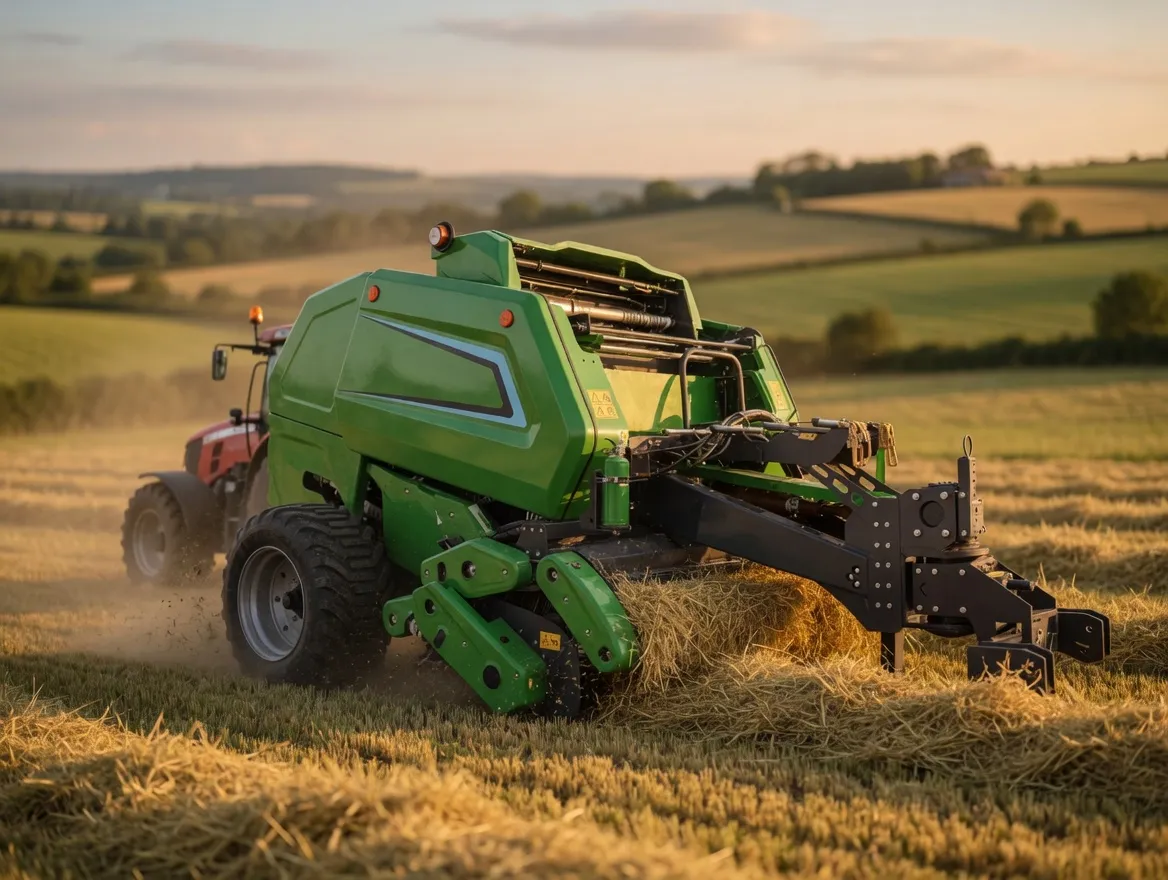
The most direct case for a combined baler-wrapper is also the simplest: it makes the 4-hour wrapping rule structurally impossible to violate. When baling and wrapping happen in one machine in one continuous pass, the bale is sealed the moment it leaves the baling chamber. There is no window between baling and wrapping because that window no longer exists in the workflow.
Cattle producers who have tested silage quality across seasons — comparing years when they ran a separate wrapper with years after switching to a combined unit — consistently report ME improvements of 0.3–0.7 MJ/kg DM in the combined-machine silage from the same paddocks and crop conditions. On a 600-bale drought reserve for a 300-head breeding herd, that energy uplift can mean the difference between a silage ration that maintains dry-cow condition through winter without grain supplementation and one that requires an additional $8–14 per head per week in purchased grain to make up the energy deficit. Across the 120-day drought period, that cost saving justifies a significant portion of the machine’s purchase price by itself.
Reason 2 — Single-Operator Capability
Labour is one of the most consistent constraints on Australian cattle farms. The standard separate baler-and-wrapper setup, operated correctly, requires two people: one driving the baler and one managing the wrapper, telehandler, and bale transport. Finding and retaining two skilled tractor operators available simultaneously during the harvest window is a genuine scheduling challenge on many properties — particularly during spring and autumn when multiple farm tasks compete for the same people.
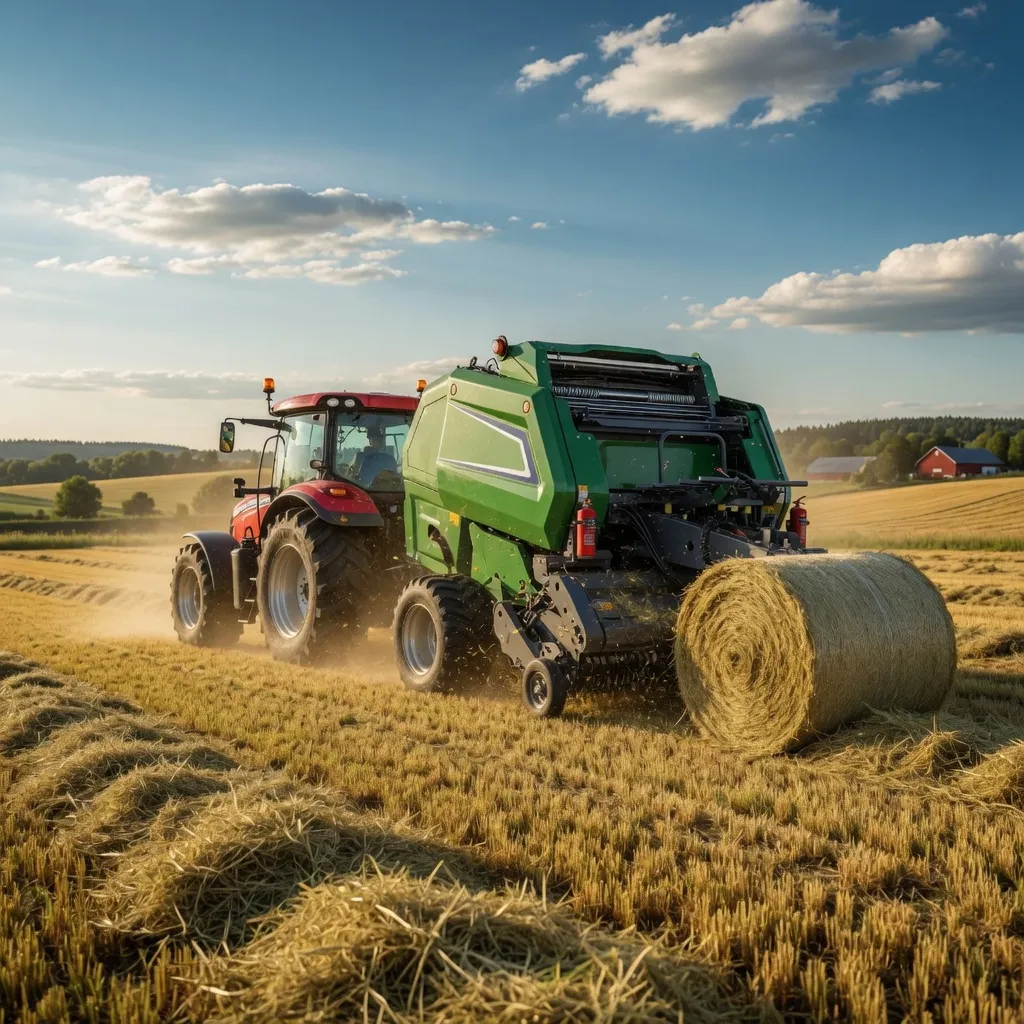
A combined baler-wrapper requires one operator. That operator drives the baler at normal forward speed, and the machine handles the wrapping cycle automatically before depositing the finished wrapped bale on the paddock surface. The daily bale output per operator is lower than a two-person team running separate machines at peak efficiency — but for the majority of cattle farms where labour is the actual constraint rather than machine capacity, that comparison is irrelevant. A single operator running a combined machine all day produces more wrapped silage bales than a one-person team trying to run a baler and a wrapper alternately.
On farms where the owner-operator is the primary machine driver, the combined unit also significantly reduces the mental load during harvest. Managing baler output, wrapper logistics, bale transport, and storage placement simultaneously — while monitoring crop conditions, weather, and machine performance — is a genuinely taxing task. The combined machine reduces this to a single, continuous operation that one person can manage with attention to spare for quality monitoring and machine health checks.
Reason 3 — Fewer Machines to Maintain and Service
Every machine on a farm is a maintenance obligation. A standalone baler and a separate satellite wrapper each have their own service schedules, wear components, hydraulic systems, film mechanisms, and potential failure points. Running two machines means two sets of pre-season service costs, two inventories of wear parts to carry, and twice the potential for a mechanical breakdown to stall the harvest operation at a critical moment.
A combined machine consolidates all of this into one service schedule, one parts inventory, and one machine to inspect before each shift. For cattle farmers who don’t have a dedicated farm mechanic and rely on self-servicing or local dealership support, this simplification is genuinely valuable — not just in cost terms but in the practical ability to stay on top of machine health during a busy harvest season when time for maintenance is limited.
Reason 4 — Better Performance in Difficult Field Conditions
Australian cattle country is rarely flat, well-drained, and uniformly accessible. Steep paddocks, soft black soil after rain, tight gateway access, and remote paddocks with long track distances all create conditions where moving a second machine — particularly a satellite wrapper that needs to be towed to and from the paddock — becomes a logistical burden. Combined machines eliminate the second machine transport problem entirely; the baler arrives, and all wrapping happens in-field without requiring a separate piece of equipment to follow it.
In soft-ground conditions where tractor movements need to be minimised to protect soil structure, the ability to complete baling and wrapping in a single pass through the paddock — rather than bringing the wrapper tractor in for a second pass — also reduces soil compaction. On lighter soils, this is a minor consideration; on heavily clay-based cattle country after autumn break rains, it can be the difference between getting into a paddock and having to wait several days for ground conditions to firm up.
For large properties with paddocks several kilometres from the homestead, the time saving from not having to transport the wrapper out to each paddock and back accumulates across the season. At 30 minutes saved per paddock across 40 paddocks per season, that’s 20 hours of tractor time — which in fuel and operator cost terms is not trivial.
Reason 5 — Lower Overall Cost Per Quality Bale
Comparing the capital cost of a combined machine against a separate baler plus wrapper often leads producers to dismiss the combined unit as more expensive upfront. That comparison is incomplete. The full cost picture includes labour (one operator vs two), fuel (one tractor vs two), maintenance (one machine vs two), and — most importantly — the value of the silage quality difference between the two production methods.
| Cost Component | Separate Baler + Wrapper | Combined Machine |
|---|---|---|
| Operator labour cost | 2 operators × rate | 1 operator × rate |
| Tractor fuel (per day) | 2 tractors | 1 tractor |
| Annual service cost | 2 machines | 1 machine |
| Silage ME quality uplift value | — | +$8–15/bale (est.) |
| Effective cost advantage | Baseline | Lower total cost per quality bale |
Reason 6 — Consistent Bale Quality Across Operators and Seasons
One of the underappreciated benefits of a combined machine is consistency. When baling and wrapping are separate operations run by different people with different levels of experience, the quality outcome of each bale depends on the attention and skill of multiple individuals at multiple points in the workflow. An experienced baler operator who makes excellent bales can have that quality undermined by a wrapper operator who delays wrapping, under-stretches film, or misses layers on the bale ends.
A combined machine with programmable wrap settings removes the human variability from the wrapping step. Layer count, film pre-stretch, and overlap pattern are set once at the beginning of the season — or adjusted by one operator who understands the machine — and then applied consistently to every bale regardless of who is driving. This is particularly valuable on farms that rely on seasonal workers during the silage harvest period, where the same level of experience cannot be guaranteed year to year.
What the Switch Actually Looks Like in Practice
Most cattle farmers making the switch from a separate setup to a combined machine don’t do it as a radical overhaul — they typically replace the baler at natural end-of-life and choose a combined unit as the upgrade. The transition period involves learning the combined machine’s workflow, which takes one to two harvest seasons to optimise but is rarely described as difficult by experienced operators who already know how to run a standalone baler.
The most common operational adjustment is recalibrating daily output expectations. A combined machine producing 60 consistently well-wrapped bales per day replaces a setup that might have produced 80 bales per day at theoretical maximum but averaged 65 quality bales per day after accounting for wrapping delays and the occasional substandard batch. The combined machine’s headline daily output is lower, but the quality-adjusted output is comparable — and in many cases higher once the value of the silage quality difference is factored in.
Producers who have made the switch also consistently mention a reduction in harvest-season stress as an unexpected benefit. Running one machine rather than coordinating two, worrying about one set of potential breakdowns rather than two, and knowing that every bale leaving the paddock is already fully wrapped — these operational simplifications accumulate into a genuinely less pressured harvest experience that has real value beyond what appears in a spreadsheet comparison.
When a Separate Setup Still Makes Sense
The combined machine case is strong, but it isn’t universal. There are specific operational contexts where a separate baler and wrapper remains the more logical choice, and cattle farmers considering the switch should evaluate their own circumstances honestly before committing.
Operations targeting very high daily bale output — 120+ bales per day — with two experienced operators and a well-organised bale transport system can consistently outperform a single combined machine in raw throughput. For large commercial beef feedlots or big dairy operations building a major silage reserve in a short seasonal window, the throughput advantage of two specialists running separate machines at full speed may outweigh the quality advantage of the combined unit. In these cases, a two-combined-machine setup is often the better solution — delivering both throughput and quality without the wrapping coordination problem.
Operations that bale both dry hay and silage in the same season may also find value in maintaining a standalone baler for hay work — where wrapping is unnecessary and baling speed is the primary efficiency driver — combined with a separate wrapper for silage bales. This configuration requires more equipment investment and storage, but it suits operations with genuinely mixed annual needs across both hay and silage production at significant scale.
Finding the Right Combined Machine Through EverPower
EverPower Baling Machinery Australia Pty Ltd stocks a range of round balers across scales that suit Australian cattle operations from compact single-operator properties through to large commercial pastoral enterprises. Whether you’re replacing an ageing standalone baler, upgrading from a two-machine system, or setting up a first-time silage program on a property that has previously relied on contractors, the EverPower team can match a machine to your herd size, tractor specifications, and seasonal throughput requirements. The NSW-based operation means local technical support, fast parts access, and a team that understands the practical realities of Australian cattle country rather than responding from an overseas call centre.
27 Harley Crescent, Condell Park NSW 2200 ·
+61 2 9708 3322 ·
[email protected]
Frequently Asked Questions
27 Harley Crescent, Condell Park NSW 2200 | +61 2 9708 3322 | [email protected]
About Us | Contact Us