Description
Product Specifications
| No. | Parameter | Unit | Specification |
|---|---|---|---|
| 1 | Model Name | — | 9YG-1.25A Round Baler |
| 2 | Hitching Method | — | Tractive |
| 3 | Pickup Width | mm | 2,150 |
| 4 | Pickup Structure | — | Spring Tooth Type |
| 5 | Feeder Structure | — | Finger Roller + Drum |
| 6 | Chamber Mechanism | — | Drum Type |
| 7 | Chamber Width | mm | 1,250 |
| 8 | Chamber Diameter | mm | Φ1,200 |
| 9 | Rolling Drums | pcs | 18 (Drum) |
| 10 | Drum Diameter | mm | Φ222 |
| 11 | Baling Method | — | Net Wrapping |
| 12 | Matching Power | kW | ≥ 75 |
| 13 | Structural Mass | kg | 4,472 |
| 14 | PTO Speed | r/min | 540–1,000 |
| 15 | Overall Dimensions | mm | 4400×2850×2400 |
| 16 | Bale Density Control | — | Sensor Control |
| 17 | Bale Size (Dia.×Width) | mm | Φ1,300 × 1,250 |
| 18 | Bale Density | kg/m³ | 100–200 |
| 19 | Productivity | bales/h | 40–100 |
| 20 | Wheelbase | mm | 2,450 |
Product Overview
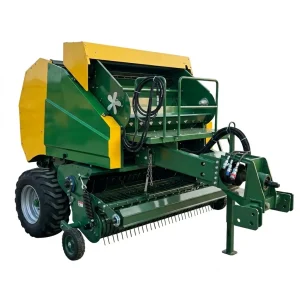
The 9YG-1.25A sits in a purposeful position in EverPower’s range — wider than entry-level machines, more tractor-flexible than the full S9000 platform, and priced to make sense for farms producing 1,500–5,000 bales per season. Its defining feature is a genuine dual-PTO drive system: the machine accepts both 540 r/min and 1,000 r/min inputs without adapters or gearbox changes, covering the full spread of working tractors across the Australian fleet from mid-2000s models through to the latest releases.
The 2,150 mm spring-tooth pickup is 350 mm wider than the industry-standard 1.8 m machines that dominated Australian farms through the 2010s. At the same ground speed, that extra width means roughly 20% more crop collected per kilometre — a compounding advantage over a full day’s baling. Eighteen Φ222 mm drums compress the crop to a Φ1,300 × 1,250 mm bale, with density held consistent by the same sensor-control system used across EverPower’s larger S9000 machines. Bale density sits between 100 and 200 kg/m³ depending on crop type and moisture.
At 4,472 kg, the machine sits within the tow-weight comfort zone of most 100 hp tractors without demanding dedicated ballast. The 4,400 × 2,850 × 2,400 mm working footprint is road-registerable on standard float equipment. Validated tractor brands include John Deere, New Holland, Massey Ferguson, and Case IH across their 75 kW-plus model ranges.
Technical Advantages — What the 1.25A Does Differently
Genuine Dual-PTO Compatibility: 540 & 1,000 rpm
No other machine in this size and price category treats dual-PTO compatibility as a standard built-in feature rather than an optional accessory kit. Both PTO coupling adapters ship in the tool box; switching between them takes five minutes flat. The machine’s internal gearing responds to each input speed by maintaining correct drum rotation and net-wrap timing at either rate, so the bale formation process is identical whether you’re plugged into a 2006 Massey Ferguson or a 2023 John Deere. Practically, this frees farms to assign any capable tractor to the baler without scheduling conflicts or adaptor hunting during the busy season.
2,150 mm Spring-Tooth Pickup — Gentle on Leaf, Tough on Throughput
Spring-tooth design at 2,150 mm working width covers wide windrows from a single pass at speeds up to 35 km/h. On lucerne — where tine aggression determines whether leaf makes it into the bale or gets shattered onto the ground — the spring-tooth action preserves the leaf-to-stem ratio that determines grade on export markets. The hydraulic float system adjusts the tine bank continuously to ground contours across undulating paddocks; the operator steers and leaves the pickup height to the hydraulics.
18-Drum Chamber — S9000 Compression in a Lighter Package
The same 18 × Φ222 mm drum array that compresses bales in the S9000 Series is fitted in the 1.25A without modification. The sensor monitors internal chamber pressure and fires the auto net-wrap precisely when the target density is confirmed. The result is bale-to-bale weight consistency that enables export shipments and predictable feed ration planning — neither of which is achievable when bale weight varies unpredictably as it does with manual timing.
Operating Speed to 35 km/h
The 35 km/h ceiling is the machine’s rated working speed under load — not a transport figure. On light windrows with capable tractors, operators working at the upper speed range achieve the top end of the 40–100 bale/hour productivity window. Most Australian conditions sit at 8–20 km/h for optimum bale consistency, but the ceiling gives useful headroom to keep pace with larger swathing equipment on big paddocks.
How It Works in the Paddock
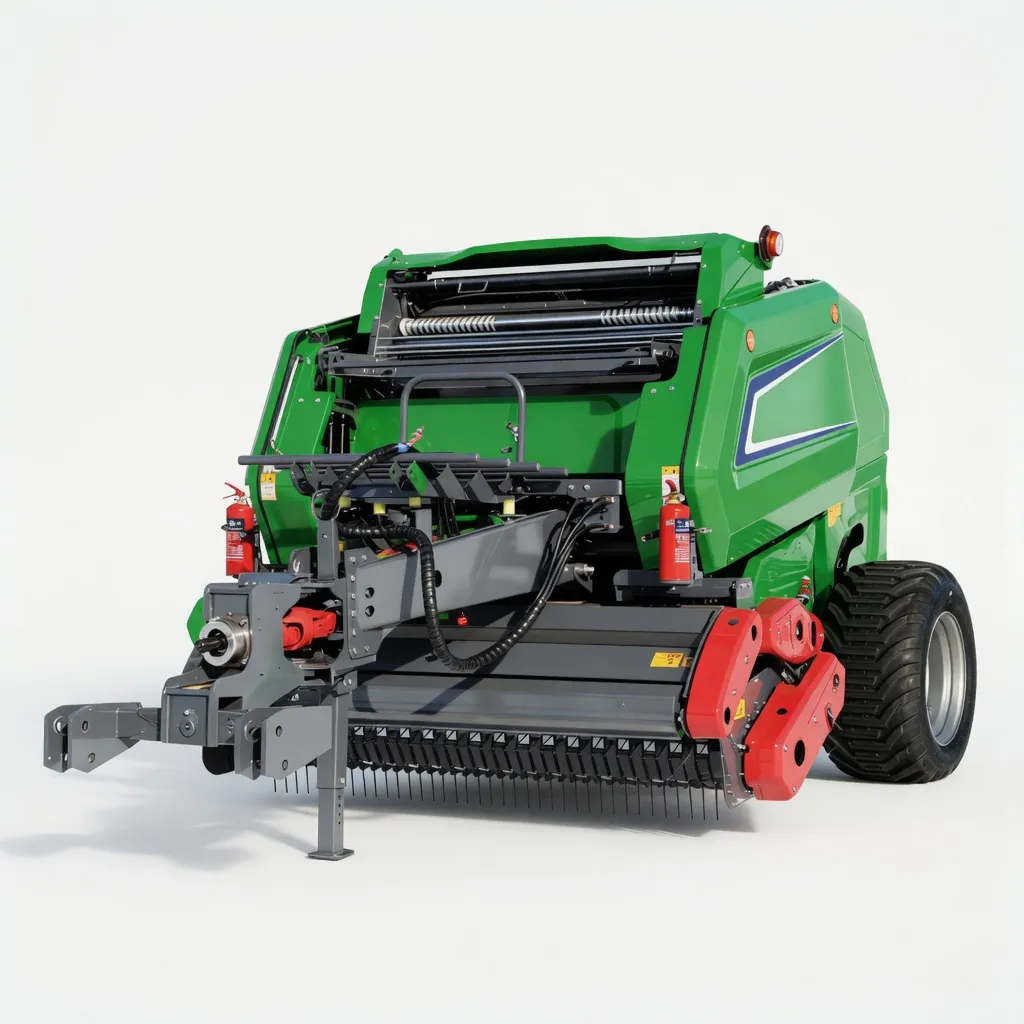
Five rows of spring-tooth tines lift the windrow cleanly across 2,150 mm. Hydraulic float tracks ground contours without manual input — useful on the undulating paddocks found across Riverina irrigation districts and Queensland hill country.
The finger-roller plus drum system smooths and centres crop flow into the chamber, preventing the edge-heavy loading that creates density variation on wide-pickup machines feeding narrower chambers.
18 × Φ222 mm drums build even compression. The sensor reads chamber pressure continuously — the netter fires only when the preset density is confirmed, removing timing variability from bale weight entirely.
Net wraps fire automatically in 2–3 passes, the knife cuts, and the door opens. Bale rolls clear; door closes in under 15 seconds. Operator maintains forward travel throughout.
On full-auto mode the control display shows live bale count and density reading via the tractor cab. Late-model tractors with ISOBUS read the display directly on their existing screens. Older tractors use the included wiring harness to a supplementary display.
Applications Across Australian Farming
Mixed-Fleet Operations — No More PTO Arguments
The farm running a 2005-era 540 rpm tractor alongside a current 1,000 rpm model no longer needs to dedicate one machine to the baler. Any available tractor above 75 kW goes straight to the 1.25A — the machine handles the speed difference internally. This is not a niche use case; it describes hundreds of Australian family farms where fleet modernisation happened gradually and machines of different generations share the same shed.
Lucerne, Oaten Hay & Export Production
For operations producing 1,500–4,000 bales per season across multiple cuts, the 1.25A keeps pace with a single mower-conditioner without running at its performance ceiling. On export-grade lucerne, the spring-tooth pickup preserves leaf material better than cam-driven or hammer-claw designs, maintaining the leaf-to-stem ratio that underpins premium grades on Japanese and Korean markets. Farms around Griffith and the Murray system have found the 1.25A their most cost-effective single baling investment over recent seasons.
Silage for Beef, Sheep & Dairy Support Blocks
The 40–100 bale/hour rate comfortably covers the 300–800 bale batches typical of mid-size grazing enterprises building seasonal silage reserves. The Φ1,300 mm bale diameter wraps efficiently with both satellite and inline wrappers, and the 1,250 mm bale width is narrow enough for handling with compact front-end loaders — removing the need for purpose-built wide-bale equipment.
Entry-Level Contracting & Machinery Sharing Groups
The 1.25A’s dual-PTO flexibility and mid-weight build make it the natural choice for contractors visiting properties with varied tractor fleets. At 4,472 kg it loads onto standard float equipment within platform weight limits, and the 4,400 mm working length fits the float lengths that most rural hire operators run across eastern Australia.
Maintenance — What Keeps the 1.25A Running Long
Daily Pre-Shift (6 Minutes)
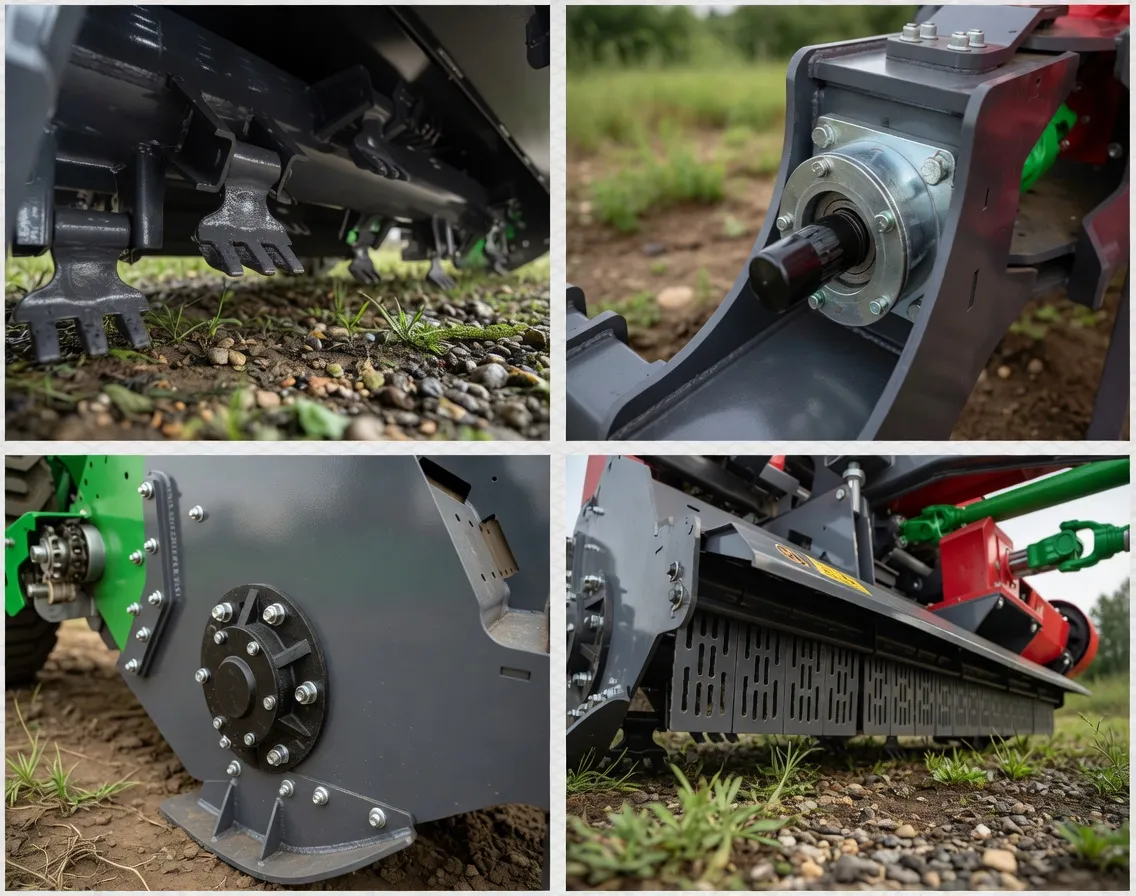
Walk the tine rows and check for bent or missing spring teeth — one missing tine shifts the pickup pattern enough to leave a strip through every pass. Grease the eight main daily nipples, confirm the net knife moves freely and is sharp, and verify PTO adapter engagement before moving off.
Every 400–500 Bales
Two grease shots on each of the 18 drum bearings through the side-panel nipples. Visually confirm chain tension on both drive sides — auto-tensioners handle routine adjustment but can reach their travel limit on high-count daily operations. Top up the central auto-lube tank. Check PTO universal joints on both driveshaft ends for any heat or clicking.
End-of-Season Full Service
Full grease service across all lubrication points. Hydraulic oil and filter change. Inspect spring-tooth tine carrier bars for fatigue cracking — look along the bar, not just at the tine tips, as bar cracks are a common failure mode that tine-only inspection misses. Replace worn tines as a complete set to maintain an even pickup pattern. EverPower stocks complete tine sets at the Sydney Condell Park depot for next-day east coast delivery.
PTO Speed Change Procedure
Disengage PTO. Remove driveshaft. Swap the coupling adapter (stored in tool box; mark them clearly with tape or paint). Refit driveshaft. Confirm full engagement and latch before moving off. Total time: five minutes. The internal gearing change is automatic once the correct input speed is applied — no internal adjustment needed.
Five Reasons the 9YG-1.25A Makes Financial Sense
Any tractor above 75 kW in your fleet works — no dedicated machine assignment, no adapter kits.
20% more ground covered per pass versus standard 1.8 m machines at the same speed.
Same sensor-controlled drum system as the flagship. Tight bale-to-bale weight tolerance across every crop type.
Whole-machine cover administered by EverPower Australia directly. Parts held in Sydney for 72-hour national delivery.
30–40% below equivalent European machines. The saving comes from direct supply — not from component shortcuts.

About EverPower Baling Machinery Australia
EverPower Baling Machinery Australia Pty Ltd — 27 Harley Crescent, Condell Park NSW 2200 — is the direct Australian arm of a high-tech manufacturer with ISO 9001 certification, a 32,000 m² factory, 180 staff, and a dedicated R&D centre. Every machine is backed by a genuine Australian warranty administered from our Sydney office. Spare parts are stocked locally for 72-hour national delivery. We do not process warranty claims offshore.
Call +61 2 9708 3322, email [email protected], or read more at silage-baler.com/about-us.
Frequently Asked Questions
Ready to Put the 9YG-1.25A to Work?
Contact EverPower Australia for pricing, stock, and advice on which machine matches your tractor fleet and season volume.