Description
Product Specifications
| No. | Parameter | Unit | Specification |
|---|---|---|---|
| 1 | Product Name | — | 9YCM-850 Baler & Wrapper All-in-One |
| 2 | Bale Size (Dia. × Length) | cm | φ85–90 × 85 |
| 3 | Bale Volume | m³ | 0.48–0.54 |
| 4 | Hopper Volume | m³ | 2.5 |
| 5 | Matching Power | — | ≥ 120 hp |
| 6 | Overall Dimensions (L×W×H) | m | 7.00 × 2.19 × 3.03 |
| 7 | Tyre Specification | — | 295/60-15 |
| 8 | PTO Speed | rpm | 540 |
| 9 | Hydraulic Requirement | — | 1×½ in, 1×¾ in |
| 10 | Electrical Requirement | — | 12V DC |
| 11 | Control System | — | Electronic Control System |
| 12 | Productivity | bales/h | 30–40 |
Product Overview
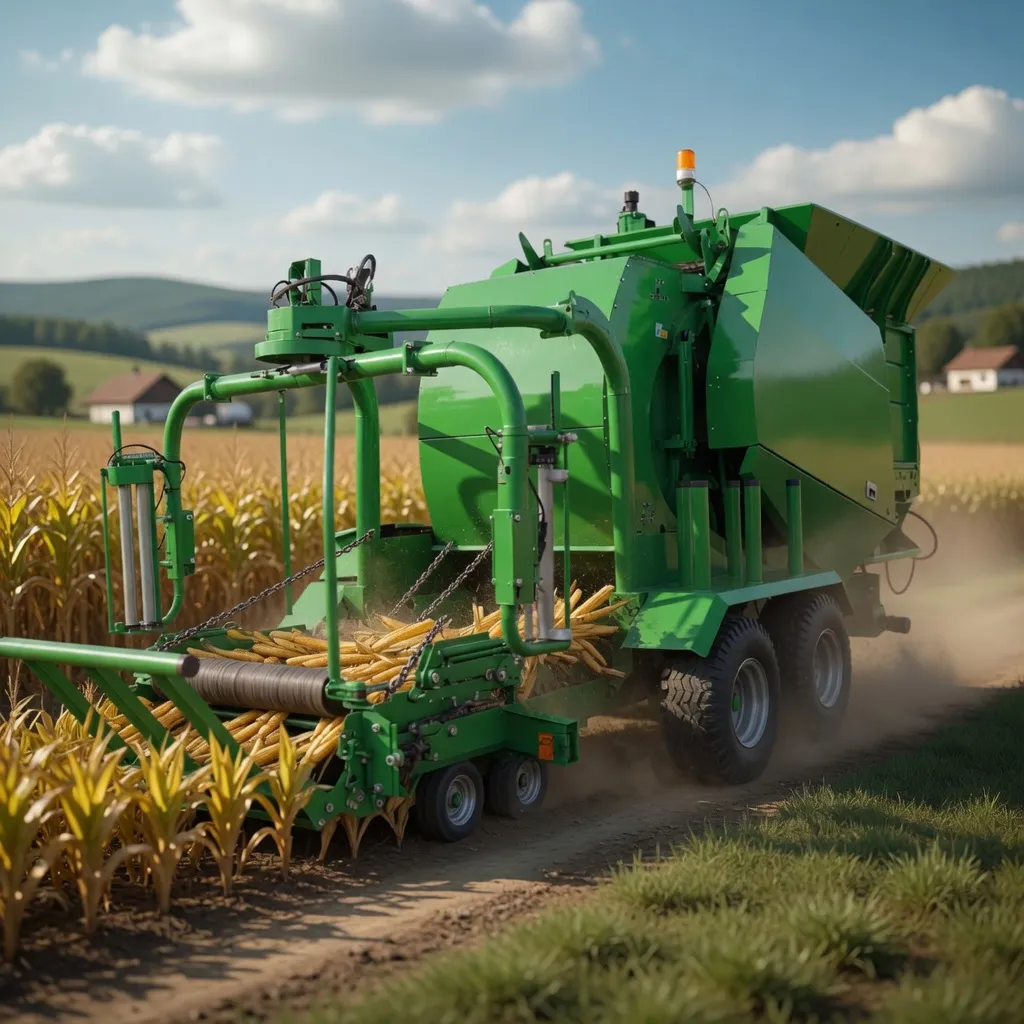
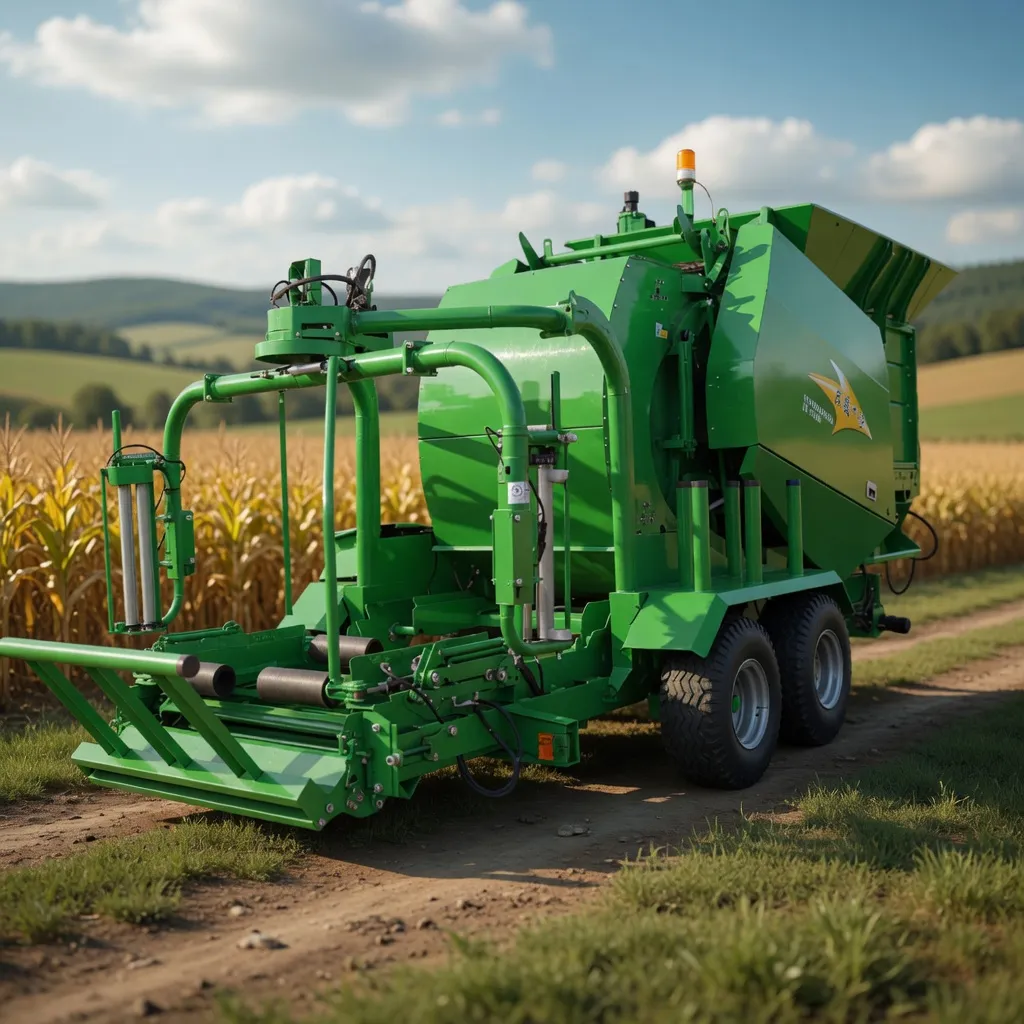
Running a baler and a separate wrapper requires two machines, two operators or one operator moving constantly between tasks, and the persistent risk that bales sit in the open air between operations — absorbing oxygen and losing the tight film seal that good silage fermentation depends on. The 9YCM-850 eliminates all three problems by integrating the baling and film-wrapping functions into a single tractor-mounted unit. One machine, one operator, one pass: the bale forms, transfers directly to the integrated wrapper turntable, receives its stretch-film wraps, and is ejected — all without touching the ground between baler and wrapper.
The machine produces φ85–90 × 85 cm silage bales — a compact, high-density format particularly well-suited to cattle and sheep operations that handle bales individually with a front-end loader rather than with a dedicated bale handler. The 2.5 m³ hopper volume and 30–40 bales/hour output rate cover the volumes that single-farm silage operations typically produce in a day without requiring contractor support. At 540 rpm PTO with a minimum 120 hp tractor requirement, the 9YCM-850 pairs with John Deere 6R/7R Series, Case IH Puma, New Holland T6/T7, and Kubota M7/M8 Series tractors that are standard equipment on mid-to-large Australian farms.
Silage quality improvement is the practical payoff. Research consistently shows that the time between baling and the first film layer is the single largest variable affecting fermentation quality in round-bale silage — every minute of oxygen exposure degrades the fermentation environment. Eliminating that gap by wrapping within seconds of bale formation rather than hours later regularly produces measurable improvements in silage pH, dry-matter recovery, and aerobic stability on reopening.
Core Advantages of the Integrated Design
Zero Gap Between Baling and Wrapping
The defining advantage of any combined baler-wrapper over separate machines is the elimination of bale exposure time between compression and film application. On a conventional two-machine system, bales can sit unwrapped for 15 minutes to several hours depending on crew size and paddock layout. On the 9YCM-850, the bale transfers from the compression chamber to the integrated wrapper turntable in seconds. First film layer is applied before any significant oxygen ingress has occurred. Trials comparing integrated wrapping against delayed wrapping (1–4 hour exposure) on ryegrass silage consistently show 0.3–0.6 pH unit improvement and 3–8% higher dry-matter recovery at feed-out on the integrated-wrapped bales.
Compact φ85–90 cm Bale Format
The 85–90 cm bale diameter is intentionally smaller than the 1.1–1.3 m bales produced by the standalone baler range. A smaller bale means lower individual bale weight (typically 250–400 kg), which makes handling with compact front-end loaders and standard bale spikes practical without needing dedicated large-bale handling equipment. For sheep and beef operations feeding out silage by the single bale per group per day, the compact format also reduces waste at feed-out — a full 1.3 m bale is excessive for a small mob, but a 90 cm bale is often the right size for a paddock group.
Single-Operator, Single-Pass Production
The 9YCM-850 requires only one operator to produce wrapped silage bales ready for storage — the same operator who drives the tractor. There is no requirement to coordinate a second tractor, a second operator, or a trailing wrapper positioned in the paddock. For family farms operating with limited labour during the peak silage window, the reduction from a two-person to a one-person operation is not a minor convenience: it can be the difference between making a cut on a short weather window and missing it.
Electronic Control System — Simple, Reliable Operation
The 12V DC electronic control system manages bale formation, bale transfer, wrapper arm speed, film layer count, and eject timing from a single in-cab controller. The operator sets target film layers (typically 4–6 for silage, 2–3 for hay) and bale density before the first pass, then monitors the display for alerts and bale count through the shift. The system does not require specialist knowledge to operate or adjust, which matters on farms where the machine may be run by different workers across the season.
2.5 m³ Hopper — Reduced Film Change Frequency
The 2.5 m³ film hopper holds enough rolls to run 2–3 hours without a film-change stop depending on layers per bale. Film changes on combined machines typically take 4–6 minutes — a short enough stop that output rates across a full day remain well above what a separate baler-plus-wrapper system achieves, because the combined system never has bales waiting exposed while the wrapper catches up.
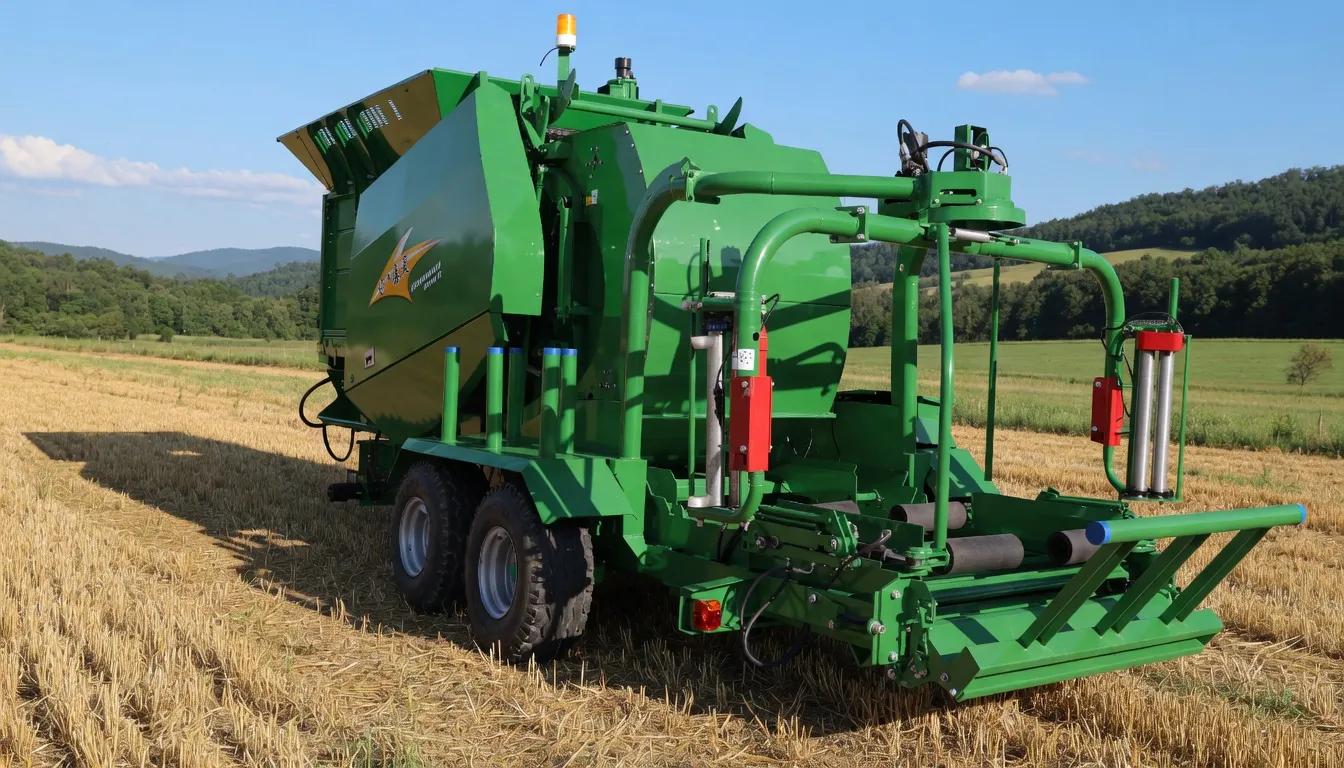
How the 9YCM-850 Works — Bale to Wrapped in Under 2 Minutes
The baler pickup collects the windrow and builds a bale in the compression chamber to the operator’s density preset. The electronic control monitors chamber fill and signals readiness.
At target density, the bale transfers automatically from the compression chamber to the integrated wrapper turntable — no operator input, no ground contact, no open-air exposure window.
The wrapper arm spins the pre-stretched film around the rotating bale on the turntable. Operator-set layer count (typically 4–6 for silage) is completed in seconds per layer. The arm applies film to the full bale circumference including ends.
The wrapped bale is ejected from the turntable and the system resets for the next bale. At 30–40 bales per hour, a full production day delivers 300–400 wrapped silage bales with one tractor and one operator.
At the 30–40 bale/hour production rate, a 10-hour day delivers 300–400 fully wrapped silage bales. On a typical mid-size dairy farm making two silage cuts from 80–100 ha, that covers the full cut in 2–3 days of single-operator work. On beef properties building drought reserves, 300 bales of well-wrapped silage represents a meaningful feed bank that can be constructed in a single intensive baling session during peak pasture growth.
Applications — Who Gets the Most from a Combined Machine
Dairy Farms — Four Silage Cuts per Season
Dairy operations making three to five silage cuts annually are the highest-value users of combined baler-wrappers. Each cut requires rapid baling and wrapping to capture peak-quality grass before dry-matter content falls or rain events compromise the crop. A combined machine working at 30–40 bales/hour produces wrapped bales that can be stacked and stored within hours of cutting — eliminating the quality-degrading exposure window that occurs when a standalone baler working ahead of a separate wrapper creates a queue of unwrapped bales in the paddock.
Beef & Sheep — Drought-Reserve Silage Stockpiling
Properties building drought reserves in a single intensive window — when rainfall produces a flush of excess pasture growth — need speed and simplicity rather than maximum output rate. A single operator running the 9YCM-850 can produce and store 250–350 wrapped bales in an intensive day without coordinating crew or equipment. The compact 85–90 cm bale format also makes on-farm storage more efficient: the smaller bales stack in lower space and can be repositioned individually without a tractor on feed-out day.
Contractors — Simplified Labour, Faster Paddock Clearance
Silage contractors who have transitioned from separate baler-plus-wrapper systems report that the combined machine removes the primary scheduling friction in their operation: the wrapper is never behind or ahead of the baler, creating either a queue of exposed bales or a waiting wrapper. The output normalises at the combined machine’s 30–40 bale/hour rate, which is lower than a dedicated high-output baler, but the per-bale labour cost and the quality improvement from immediate wrapping often make the economics more attractive on quality-sensitive silage contracts.
Mixed Livestock Enterprises — Hay & Silage From One Machine
For farms producing both dry hay and silage from the same paddocks across the season, the 9YCM-850 handles both: dry hay bales do not require film wrapping but can be produced through the baling stage only, and the wrapper bypassed. This flexibility means a single machine investment covers both the summer hay operation and the autumn silage cut — eliminating the need to own or hire separate baling and wrapping equipment for different seasonal operations.
Maintenance — Keeping Both Systems Running
Daily — Baler and Wrapper Checks
The 9YCM-850 requires daily checks across two functional systems: the baler pickup and compression mechanism, and the wrapper arm, turntable, and film brake. Before each shift: check pickup tines for bending, grease the six main baler nipples, verify the baler net/compression knife, inspect the wrapper arm pre-stretch rollers for film residue, and confirm the turntable rotates freely with no binding at the drive gear. Film residue on the pre-stretch rollers is the most common source of uneven film tension and should be cleared with the supplied removal tool rather than by hand.
Every 200–300 Bales
Inspect the wrapper arm pivot bearings for any play or heat — the arm rotates hundreds of times per production day at speed and the pivot bearings are the highest-load point on the wrapper system. Grease the turntable drive ring gear using the grease gun with the long-reach nozzle (included). Check the film pre-stretch ratio is within the manufacturer’s specified range: under-stretched film wastes material and over-stretched film tears during application. Clean film debris from the wrapper arm sensor faces.
End of Season
Full service across both systems: baler compression chamber, pickup, chains, and netter; wrapper arm bearings, turntable drive gear, pre-stretch rollers, and all film-path surfaces. Replace any pre-stretch roller that shows uneven wear across its width — lateral wear variation on the roller creates a film tension gradient that results in spiral wrapping faults on the bale end sections. Store the machine with the wrapper arm in the transport position and the film holders capped against moisture ingress.
Why the 9YCM-850 Outperforms Separate Machines on Silage Quality
Bale wraps within seconds of formation — the single biggest driver of silage fermentation quality. No open-air window, no oxygen ingress.
Produces fully wrapped silage bales from a single-operator, single-tractor setup. No crew coordination during the peak weather window.
φ85–90 cm bales are handleable with compact loaders, right-sized for small mob feed-out, and stack efficiently in standard farm storage.
Simple in-cab controller manages both baling and wrapping functions. Adjustable film layers, density target, and cycle automation.
About EverPower Baling Machinery Australia
EverPower Baling Machinery Australia Pty Ltd — 27 Harley Crescent, Condell Park NSW 2200 — is the direct Australian arm of an ISO 9001-certified manufacturer operating a 32,000 m² factory with 180 staff and a dedicated R&D centre. Every machine carries a genuine Australian warranty administered from our Sydney office, backed by locally stocked spare parts for 72-hour national delivery.
Call +61 2 9708 3322, email [email protected], or visit silage-baler.com/about-us.
Frequently Asked Questions
One Machine. One Operator. Better Silage.
Talk to EverPower about current stock and pricing for the 9YCM-850 — and whether an integrated machine suits your operation better than separate baling and wrapping equipment.