
The mixed farm — running cropping alongside livestock, typically sheep or cattle — operates with a feed logistics challenge that pure livestock farms don’t face and pure cropping farms don’t need to solve. Every year, the cropping program produces oaten hay, cereal straw, and sometimes silage-quality green material that the livestock enterprise can use — but only if it’s captured in bales at the right time, in the right format, and stored correctly before the weather turns. Waiting on a contractor to become available when the harvest window opens has cost mixed farmers real money in lost quality and missed windows for years. This article is a practical guide to doing it yourself — the equipment selection, the workflow setup, and the numbers behind making on-farm baling pencil out on a mixed operation.
Why Mixed Farms Are Moving Away from Contractors
Hay and silage contractors serve an essential function for farms that don’t have the volume to justify their own equipment — but for mixed farms producing 400+ bales annually across hay and straw, the contractor relationship increasingly fails to deliver what the farm needs. Contractors work on their schedule, not yours. When oaten hay at the right heading-to-early-dough growth stage is ready to cut on your property, it is almost certainly also ready on dozens of other properties in your district. Contractor availability in that narrow window is not guaranteed — and in seasons when the weather closes in quickly after a flush growth period, a 3–5 day contractor delay can mean the difference between premium-quality oaten hay and a product that’s past its best.
Beyond scheduling, there’s a quality control issue. Contractors optimise for their own throughput — they bale at speeds and settings that suit their machine and their daily output target, not necessarily the density and net wrap settings that suit your feed storage conditions. When you own the equipment, every bale is made to your standard.
The financial case for mixed farms is also clearer than many producers initially estimate. A farm producing 600 oaten hay bales and 300 straw bales per year, currently paying a contractor $22 per bale all-in, spends $19,800 annually on baling services. Owning and operating a suitable round baler brings that to $7,000–$10,000 per year including depreciation, fuel, and maintenance — a saving of $9,000–$12,000 per year that repays a quality mid-range machine in three to four years.
Choosing Your Round Baler: Key Specifications for Mixed Farm Use
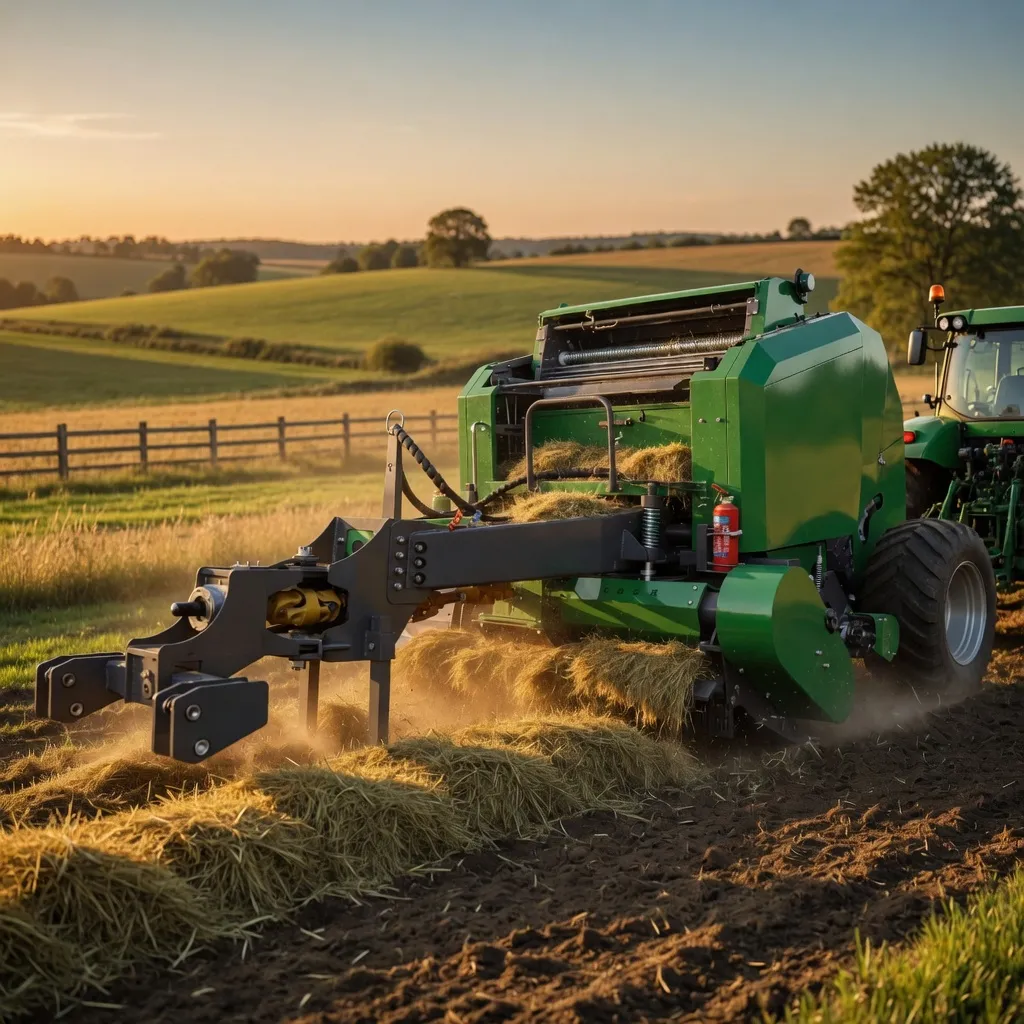
A mixed farm baler needs to handle a wider range of crops and conditions than a specialist silage or hay-only machine. In a single season, it may bale high-moisture oaten silage in September, dry oaten hay in October, wheat straw in December, and native pasture baleage in March. Each of these has different density requirements, different pickup challenges, and different stress on the baling chamber. A machine selected for versatility and robustness across this range is more valuable than one optimised for a single application.
Variable Chamber vs Fixed Chamber for Mixed Farms
A variable-chamber baler is the better choice for mixed farms precisely because it accommodates the density variation that different crops require. Dry straw is low density — a fixed-chamber machine will under-fill on straw, producing light, loose bales that are awkward to handle. A variable-chamber machine fills the bale at whatever density the incoming crop supports, and a consistent, firm bale results whether the input is heavy wet silage or light dry straw.
Pickup Reel Design for Hay and Straw
Hay and straw pickup requires different pickup reel characteristics than high-moisture silage crops. Straw in particular can be heavy if baled from a thick windrow or bridging-prone if the material is dusty and tangled. A wide, well-clearanced pickup reel with robust tines handles the range of windrow presentations typical of mixed farm crops without repeated blockages. The EverPower 9YG-1.25 series uses a proven wide-pitch pickup design that handles the full spectrum from light straw through to heavy wet silage with minimal operator intervention.
Net Wrap vs Twine for Hay and Straw
For dry hay and straw, twine remains a perfectly functional and lower-cost binding option. Net wrap produces a slightly more stable bale that handles and stores better, but on pure hay and straw applications where no wrapping film is required, twine saves meaningful cost per bale across a large annual program. The EverPower 9YG-1.25 series accommodates both net wrap and twine, giving mixed farm operators the flexibility to switch between applications without machine changes.
The Oaten Hay Baling Process: Step by Step
Oaten hay is the most commonly produced hay on Australian mixed farms and the most commonly fed roughage to sheep and cattle across the southern states. Getting the production process right — from crop assessment through to bale storage — requires disciplined execution at each stage.
Cut oaten hay at head emergence to early dough stage for the best ME:protein:fibre balance. Cutting too early gives high quality but low yield. Cutting at late dough or beyond drops ME below 9.0 MJ/kg DM and produces a product suited only to maintenance feeding.
Use a conditioning mower or plain disc mower depending on terrain and crop density. A mower-windrower that combines cutting and windrow formation in a single pass saves a separate raking step on flat paddocks — the EverPower 9GL series handles this efficiently. Leave swath in a medium-density row matched to baler pickup width.
Monitor moisture daily using the stem crush test or a portable moisture meter. Target below 16% moisture (84%+ DM) before baling. Turn the windrow once on day 2 if drying is slow or the windrow is thick. Never bale above 18% moisture — internal heating risk in the stored bale.
Set baler density to medium — lower than silage but firm enough to produce a stable bale that won’t collapse under stacking. Maintain consistent forward speed through the windrow for even chamber fill. Avoid baling in the last hour before rain approaches.
Oaten hay stored in the open loses 15–25% ME over summer through bleaching and weathering. A hay shed or UV-resistant tarp cover protects quality and allows hay made in September to still be premium-quality supplement in May. Stack bales on pallets or timber bearers to prevent ground moisture wicking up through the bale base.
Baling Cereal Straw: Different Rules, Different Value
Cereal straw — the residue left after grain harvest from wheat, barley, oat, or canola crops — has a low ME value (typically 6.0–7.5 MJ/kg DM for cereal straw) but high value as a roughage and bedding material. For sheep and cattle operations, straw serves a critical role during late pregnancy as a high-fibre gut-fill component that prevents pregnancy toxaemia in ewes carrying multiples on high-grain rations. It’s also the most cost-effective drought emergency feed for maintaining stock at minimal weight loss when energy supplementation is provided separately as grain.
Straw baling on a mixed farm follows grain harvest and operates under different timing pressures than hay. The window to bale straw after the harvester passes is governed by two constraints: stubble burning regulations (where burning is the alternative to baling) and the risk of rainfall before baling is complete. In most Australian cereal zones, straw baling needs to happen within 2–3 weeks of harvest to work around both constraints.
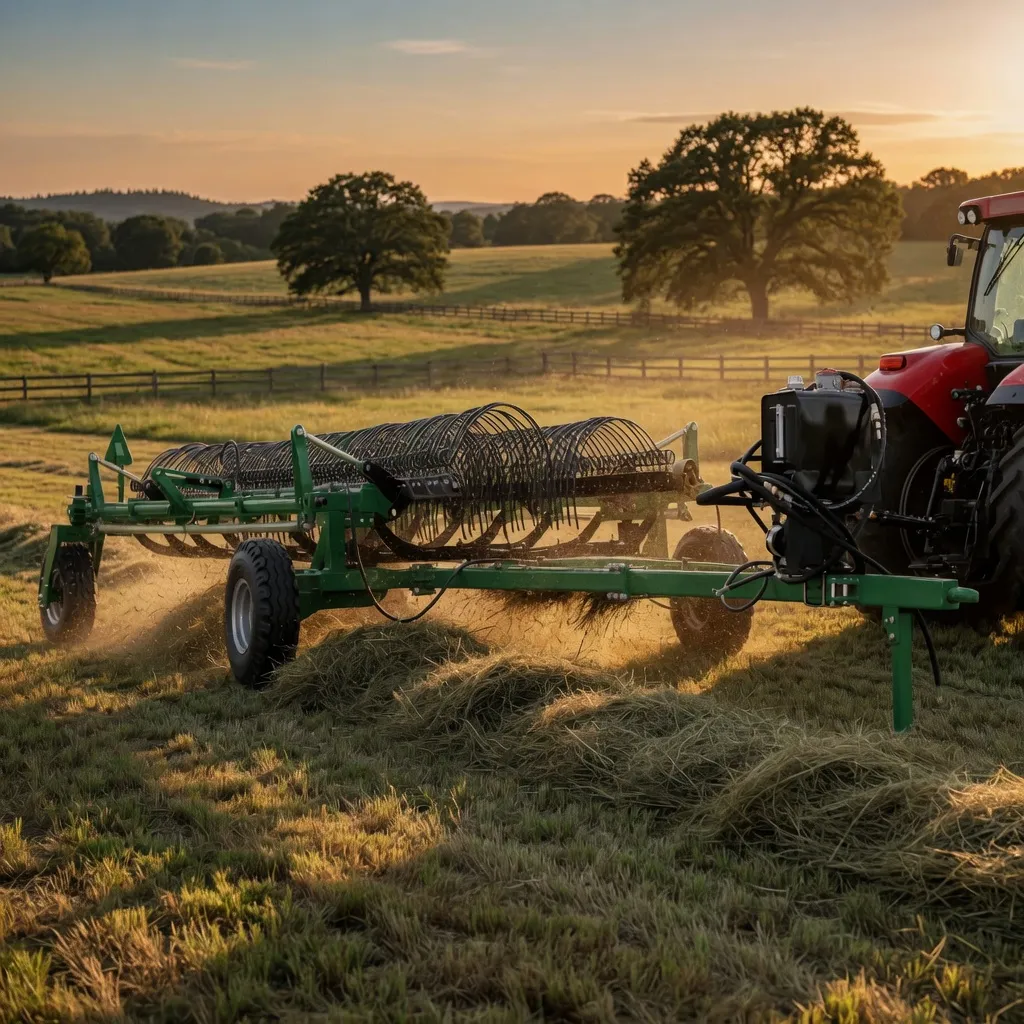
The specific challenge of straw baling is windrow consistency. Harvesters spread straw unevenly across the full header width — which on a modern 12m+ header can produce a very wide, thin windrow that a 1.25m pickup reel cannot collect efficiently. On large mixed farms, it pays to run a rake over harvested straw rows to consolidate them into a consistent pickup-width windrow before baling. A single pass with the EverPower 9LH-12 Lateral Rake converts the harvester’s spread pattern into a baler-ready windrow and reduces straw collection losses from 12–18% down to under 5% of available material.
Producing On-Farm Silage From Oaten and Mixed Cereal Crops
The highest-value use of oaten crop biomass on a mixed farm is often not as dry hay but as silage — baled at the stem elongation to flag leaf stage before head emergence, when ME is at its peak and the crop still has enough moisture to ferment well. Oaten silage at this stage typically tests at 10.0–11.5 MJ ME/kg DM — significantly above what the same crop will deliver as dry hay cut at a later growth stage.
The practical trade-off for mixed farms is that cutting for silage at the early growth stage means the grain yield from that paddock is sacrificed. On paddocks specifically sown as dual-purpose crops — where the cropping decision has already been made — this is straightforward. On pure grain-sown paddocks, the economics of silage versus grain harvest need to be evaluated each season based on grain prices and silage demand. In many years, silage baling from dual-purpose oat paddocks delivers higher total income per hectare than grain alone, particularly when sheep and cattle silage demand is high and grain prices are modest.
The baling and wrapping process for oaten silage follows the same protocol as any silage crop: cut at target growth stage, wilt to 55–65% DM over 24–36 hours using a conditioning mower, rake to appropriate windrow width, bale at high density with net wrap, and wrap within 4 hours with minimum 4–6 layers of UV-stabilised stretch film. The EverPower 9YCM-850 wrapping machine handles oaten silage bales at 1.25m diameter with consistent pre-stretch and layer coverage suited to extended storage through summer and autumn.
Mowing Equipment for Mixed Farm Hay and Silage Programs
The mower choice on a mixed farm needs to serve two distinct functions efficiently — cutting for silage (where conditioning speed matters and field drying time is a quality variable) and cutting for dry hay (where slower drying is acceptable and conditioning is less critical). A single mower-windrower that handles both applications without requiring major setup changes between jobs gives mixed farm operators the operational simplicity they need during a busy cropping calendar.
The EverPower 9GL-5.0/5.6 Traction Mower-Windrower is designed for larger-scale mixed farm cutting operations — its wider cutting width suits the larger paddock areas and higher crop volumes that mixed cropping enterprises typically manage. For farms cutting 200+ hectares of hay and silage crops annually, moving to a wider mower reduces the number of passes and the total time spent mowing, allowing the harvest window to be better utilised. On flat to gently undulating country, the 9GL-5.0 provides the cutting capacity to stay ahead of two balers operating simultaneously during peak silage season.
For mixed farms operating on smaller total cutting areas or more varied terrain, the EverPower 9GL-2.5/2.9 provides a more manoeuvrable, lower-power-requirement option that suits the typical 80–100hp tractor found on mid-sized mixed properties. The 2.5–2.9m cutting width matches the output capacity of a single 1.25m baler operating at normal field speeds, making it a natural pairing for owner-operated single-machine setups.
Managing the Mixed Farm Harvest Calendar
The most common failure in mixed farm baling programs isn’t equipment-related — it’s scheduling. The cropping calendar and the livestock feed calendar overlap in ways that create competing priorities for the same labour, tractor, and weather windows. Understanding how to sequence the different baling tasks across the year prevents the situation where everything needs to happen at once and nothing gets done well.
Cut dual-purpose oat paddocks at stem elongation to flag leaf. Wilt 24–36 hours, bale and wrap within the same day. Priority task — this window closes as grain fills. Schedule baling crew and wrapper before crop reaches flag-leaf stage.
Cut hay paddocks at head emergence to milky dough. Allow 3–5 day field drying period. Monitor moisture daily. Bale once below 16% moisture. Stack under cover immediately to protect quality over summer.
Rake consolidated windrows within 2 weeks of grain harvest. Bale as capacity allows — straw has no time-sensitive quality window, but weather risk is real. Store in open (tarp-covered) or shed. No wrapping required for straw.
Opportunistic silage baling from any autumn pasture flush. Priority to paddocks carrying legume-dominant swards or autumn-sown ryegrass at early growth stage. Adds to drought reserve inventory at lowest per-bale production cost.
Storage Infrastructure: Shed vs Open Storage
The feed you produce is only as valuable as the quality it retains through to feedout. Storage decisions on mixed farms are frequently made on capital cost grounds without full accounting of the quality losses that open storage accumulates over 6–9 months. The numbers tell a consistent story: oaten hay stored in the open with no cover will lose 15–25% of its ME content between October and May on a typical central NSW property — primarily from UV bleaching of chlorophyll and carotene (which reduces vitamin A as well as palatability), rain leaching of water-soluble nutrients, and oxidative respiration losses.
A hay shed is the premium storage option and pays back across multiple seasons. Where a permanent structure isn’t feasible, a heavy-duty UV-resistant tarp laid over a single-row stack of bales on a well-drained hardstand is the minimum standard for protecting oaten hay quality through summer. Silage bales, by contrast, are self-contained in their film wrapping and can be stored in the open without quality loss from UV or rain — the film is the shed. The film investment at wrapping replaces the infrastructure investment at storage, which is one of the most underappreciated economic advantages of silage over hay for mixed farms in regions where hay sheds are limited.
For straw, open storage is generally acceptable — straw has little nutritional quality to lose from UV exposure, and the main storage requirement is preventing it from getting excessively wet. A basic row of bales on high-ground, free-draining paddock surface with ends covered handles straw adequately in most inland Australian climates.
The Full Equipment List for an Independent Mixed Farm Baling Program
A complete on-farm baling setup for a mixed farm running 400–800 bales per year across hay, straw, and silage applications requires the following equipment. Not all farms will need every item immediately — a staged approach, starting with the baler and adding complementary equipment over time, is a practical way to build the capability without a single large capital outlay.
| Equipment | EverPower Model | Primary Application | Priority |
|---|---|---|---|
| Round baler | 9YG-1.25A or 9YG-1.25 | All hay, straw, silage | Essential |
| Film wrapper | 9YCM-850 | Silage only | Essential (silage) |
| Mower-windrower | 9GL-2.5/2.9 or 9GL-5.0 | Hay and silage cutting | High |
| Lateral rake | 9LH-12 | Straw consolidation, windrow merging | High |
| Finger wheel rake | 9LZY-9.0 | Legume/clover silage raking | Optional |
Getting Started with EverPower
EverPower Baling Machinery Australia Pty Ltd supplies the complete equipment range for mixed farm hay and silage programs — from entry-level compact balers through to mid-scale commercial machines, supported by a full range of mowers, rakes, and wrappers. The NSW-based team works with mixed farm operators across southern and inland Australia to identify the right starting configuration for their specific crop volumes, tractor fleet, and feed production goals. Parts availability from Condell Park means downtime during peak harvest periods can be minimised, which is essential when the harvest window closes regardless of whether the baler is running or not.
27 Harley Crescent, Condell Park NSW 2200 ·
+61 2 9708 3322 ·
[email protected]
Frequently Asked Questions
27 Harley Crescent, Condell Park NSW 2200 | +61 2 9708 3322 | [email protected]
About Us | Contact Us