Picture two contractors setting off on the same morning to bale two adjacent dairy farms — similar paddock sizes, similar ryegrass swards at similar dry matter. One is running a standalone baler with a satellite wrapper following behind on a quad bike. The other is running a combined machine, alone. By the time the paddocks are finished and the bales are sitting wrapped on the headlands, the differences that have emerged between the two operations are not minor variations — they are structural, and they compound across every job for the rest of the season. This article traces those differences through the scenarios where they are most visible: a normal day, a multi-site day, a hot afternoon, a long season, and a day when something goes wrong.
Scenario One: A Normal Baling Day
On a normal day, the two-machine setup has a theoretical output ceiling that exceeds the combined machine. The baler cycles slightly faster because it doesn’t pause for the wrapping step — it completes a bale and moves immediately to the next windrow section while the wrapper operator follows behind, picks up the ejected bale, wraps it, and sets it down. In good conditions with two experienced operators in rhythm, this produces an effective bale cadence that is genuinely impressive.
The problem is that “good conditions with two experienced operators in rhythm” describes approximately 40% of the normal baling days experienced by a commercial contractor across a full season. The other 60% involve something: the wrapper operator falls behind after a film roll change that takes longer than expected; the baler hits a heavy section of the paddock and slows while the wrapper keeps moving and runs out of bales to wrap; the two operators lose visual contact on a large paddock and the coordination breaks down for 20 minutes; the wrapper tractor has a hydraulic hesitation that adds four seconds per bale to the wrap cycle; the baler operator completes one paddock and moves to the next while the wrapper operator is still finishing the last few bales of the first.
Each of these events is individually minor. Together, across a season, they represent the gap between the two-machine setup’s theoretical output and its actual output. The combined machine has a lower theoretical maximum but no coordination variable — it produces the same output whether conditions are ideal or not, because there is no second system to fall out of sync with. In practice, across a full eastern Australian silage season, the combined machine’s actual output is typically within 5–8% of the two-machine setup’s best days and significantly ahead of the two-machine setup’s median days.
Scenario Two: The Multi-Site Day
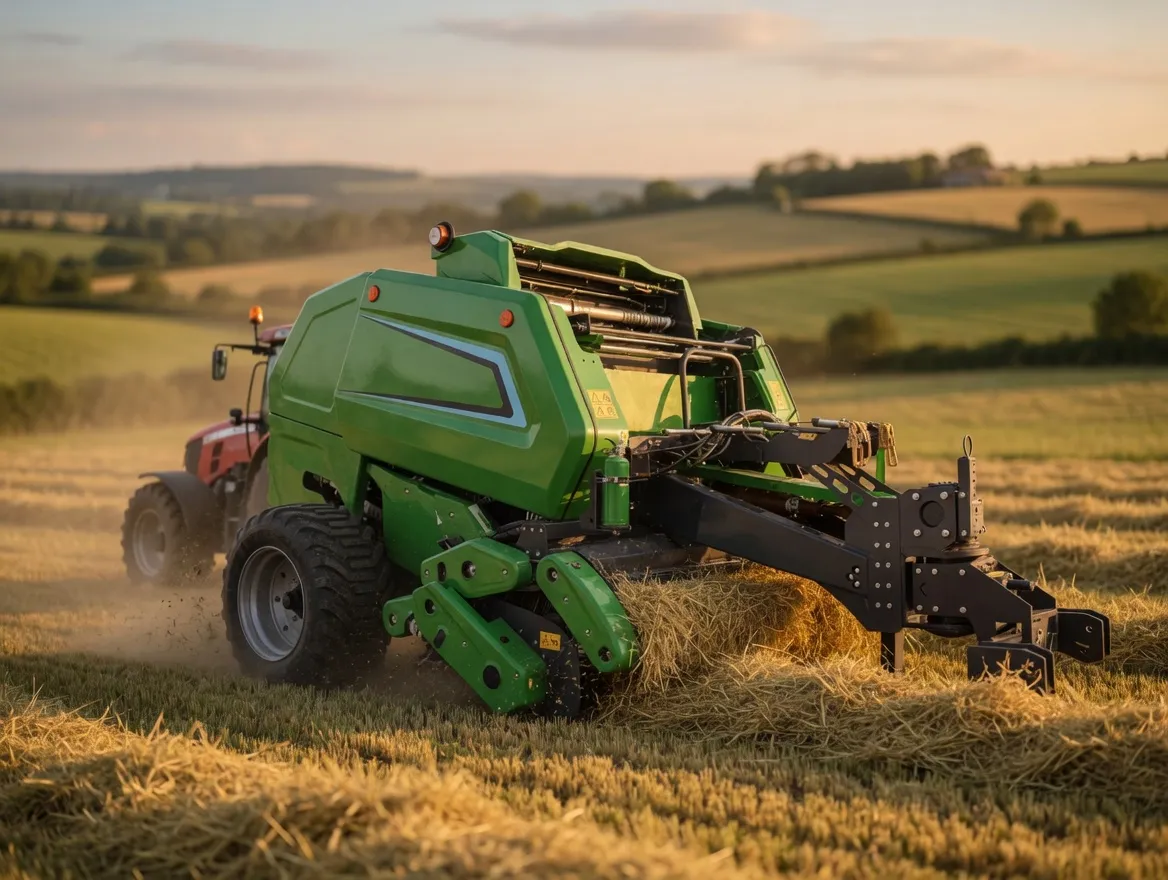
Now move both contractors from a single-farm day to a morning-at-one-farm, afternoon-at-another day. The two-machine contractor needs to load both the baler and the wrapper onto their trailer or drive them separately on the road. They need to coordinate the departure from site one — do you leave when the baler finishes or when the wrapper finishes? — and then coordinate the arrival and setup at site two with both machines arriving at the same time, or one waiting for the other.
The combined machine contractor drives one tractor and one machine from site one to site two. There is nothing to coordinate. The transition takes as long as the drive, plus five minutes at each end.
The time difference on a typical multi-site transition — two-machine setup versus combined machine — is 45 to 90 minutes. At 80 bales per 10-hour day, those 90 minutes represent 12 bales. Across 30 multi-site days in a season, that is 360 bales. At $27 per bale, the combined machine contractor has earned $9,720 more from the same number of client jobs, purely because their machine transitions faster between sites. The client count, the per-bale rate, and the machine performance were all identical — only the transition efficiency differed.
Scenario Three: A Hot Afternoon in January
It is 2 PM in late January. The temperature on the paddock is 36 degrees. The ryegrass sward that was baled from 6 AM has been sitting in the sun for eight hours. The baler operator on the two-machine setup is on the 85th bale of the day; the wrapper operator is on the 78th. Seven bales are sitting unwrapped on the headland, exposed.
At 36 degrees, aerobic deterioration in a freshly baled high-moisture silage bale progresses measurably within two to three hours of baling. Bale number 79, which was baled at 7:30 AM and is now sitting in the sun at 2:30 PM, has been exposed for seven hours. The fermentation quality of that bale will be meaningfully lower than bale number 85, which the wrapper is approaching. The client opening those bales in winter will find variation across the batch — not enough to call it a failure, but enough to notice.
The combined machine contractor, meanwhile, has bale number 79 wrapped and stabilised. Every bale that has left the combined machine’s wrapping cycle has had its fermentation environment established. The client opening those bales in winter will find consistent quality across the batch. This is not a minor quality nuance — it is the difference between a contractor who builds a reputation for consistent silage quality and one who produces good silage on average but with enough variation that clients have cause to negotiate on quality in bad years. Over five seasons, that reputation difference is worth thousands of dollars in client retention and premium per-bale rate.
Scenario Four: When Something Goes Wrong
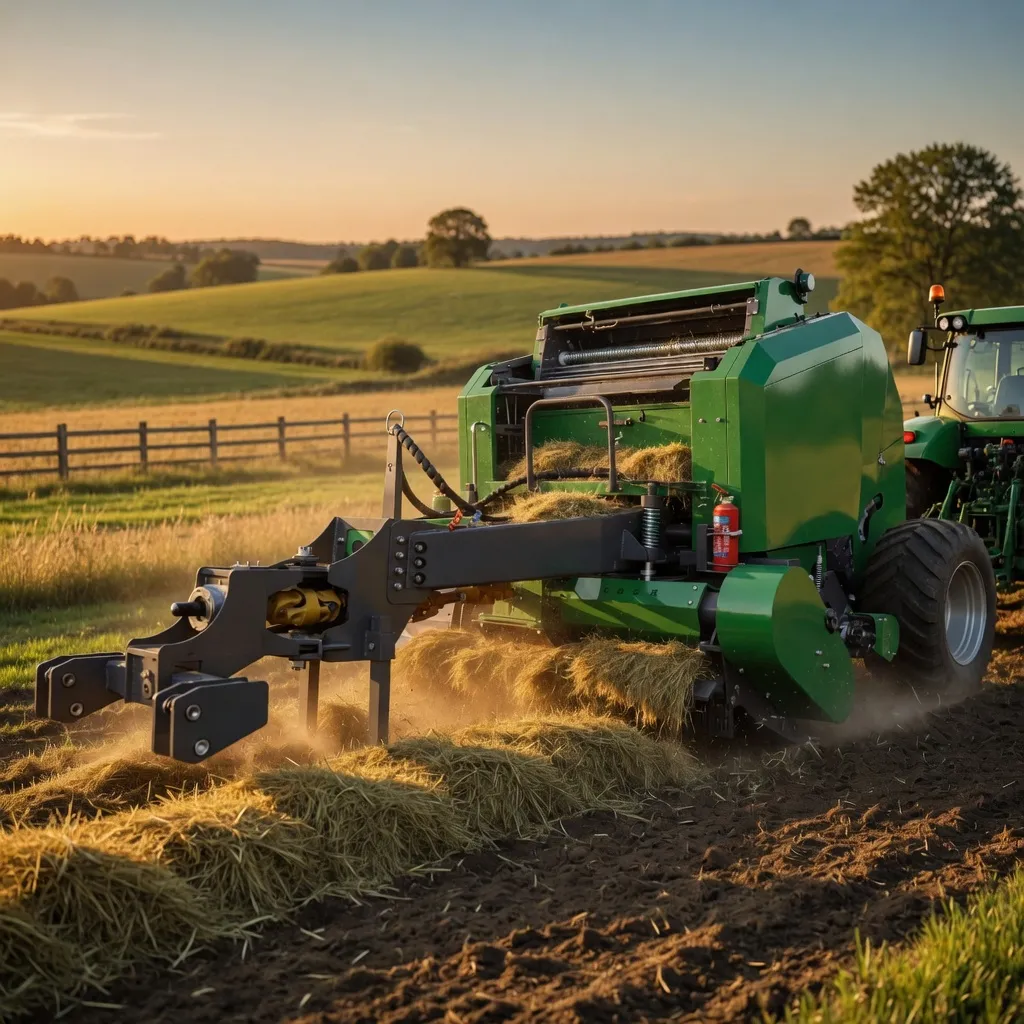
At 10 AM on a critical day in peak season, the wrapper on the two-machine setup develops a hydraulic fault. The baler is still operational — but it cannot sensibly keep producing unwrapped bales at 36 degrees. The contractor stops baling, calls the client, and begins diagnosing the wrapper fault. If it is something simple — a hydraulic fitting has come loose — it takes 45 minutes to resolve and the day loses an hour. If it requires a part, the day is lost.
The objection most commonly raised against the combined machine is the mirror of this scenario: if a combined machine has a fault, both baling and wrapping stop simultaneously, whereas with separate machines a baler fault stops only the baler and a wrapper fault stops only the wrapper. This is true in theory. In practice, it ignores two things. First, the probability of a combined machine fault is not higher than the probability of either of the two separate machines having a fault — and the maintenance burden is lower because there is only one machine to maintain. Second, the combined machine’s single-machine architecture means there is only one hydraulic system, one electrical circuit, and one mechanical drive train to maintain — the failure modes are halved, not doubled.
The practical risk management for a combined machine operator is the same as for any contractor operating a single critical machine: a comprehensive pre-season service, an on-machine spare parts kit covering the common failure modes, and a direct line to the supplier for rapid parts dispatch when the kit doesn’t cover the problem. EverPower’s Condell Park NSW depot holds the high-demand wear items for EverPower machines in local stock — same-day dispatch for most common failure scenarios, rather than the 10–21 day offshore parts lead time that makes combined machine downtime genuinely problematic.
Scenario Five: The End of the Season
At the end of an eastern Australian silage season, both contractors total their bale counts, review their client satisfaction, and service their equipment. The two-machine contractor services two machines — twice the service cost, twice the storage space, and twice the registration and insurance overhead going into next year. The combined machine contractor services one.
The two-machine contractor also reviews their season feedback. Some clients opened silage that was excellent. A few opened bales from the difficult late-season days — the 38-degree days when the wrapper fell two hours behind — and found slightly variable quality. These clients haven’t complained formally, but they’ve had the conversation with their neighbour, who used the combined machine contractor, and noted that their neighbour’s silage was more consistent. Two of them have quietly called the combined machine contractor for a quote for next season.
This is how the combined machine advantage compounds over seasons rather than just within them. It is not a dramatic overnight shift — it is a steady accumulation of consistent quality, smoother operations, and a reputation that makes the phone ring at the start of the next booking season without the contractor having to market themselves. After four or five seasons, the two contractors are in structurally different competitive positions in their district, and the machine choice made at the beginning is a significant part of the reason.
Choosing Between 1.25m and 2.24m Combined Formats
The combined machine scenario described above applies equally at the 1.25m and 2.24m bale diameter levels, but the economics of the choice between them depend on the client base. The EverPower 9YG-1.25A combined unit is the right entry point for contractors whose client base is diverse — some large clients, many medium and smaller farms — and whose tractor fleet sits in the 75–110hp range. It serves the full spectrum of silage farm types in eastern Australia and generates the daily bale count that makes the contracting business commercially viable from day one.
The 9YG-2.24D S9000 combined unit is for contractors who have built a client base dominated by large commercial operations — dairy farms with 300+ cows, large beef stations, commercial hay producers — and who can regularly fill a day with the large-format bale volume that justifies the machine’s operating scale. The per-machine-hour economics at this level are compelling, but only if the client volume is there to realise them. A 2.24m combined machine running at 60% of its capacity is less efficient than a 1.25m combined machine running at 90% — the right machine is the one that operates closest to its design throughput, which is a client base question as much as a machine specification question.
EverPower’s Combined Machine Range
EverPower Baling Machinery Australia Pty Ltd supplies combined baler-wrapper solutions from the mid-scale 9YG-1.25A through to the commercial S9000 platform. The NSW-based team provides commissioning support on delivery day — machine setup, operator training, wrapping system calibration for the specific crop conditions and layer count target — which gets new combined machine operators productive from the first working day of the season rather than spending the first week working through settings alone. Local parts availability and direct technical support are the operational backstop that make the combined machine’s single-point-of-failure risk manageable rather than concerning.
EverPower Baling Machinery Australia Pty Ltd
27 Harley Crescent, Condell Park NSW 2200
+61 2 9708 3322
[email protected]
Frequently Asked Questions
27 Harley Crescent, Condell Park NSW 2200 | +61 2 9708 3322 | [email protected]
About Us | Contact Us