The choice between a variable chamber and a fixed chamber round baler is not the most glamorous equipment decision a mixed cropping farmer makes — but it is one of the more consequential ones, because it affects not just what the machine can do but how it performs across the full spectrum of conditions those farms encounter. Variable chamber technology is often described in marketing terms without much technical substance. This article takes a different approach: it explains how the variable chamber mechanism actually works, where it creates genuine performance advantages, where those advantages are modest or irrelevant, and what operational disciplines the design requires to deliver on its potential.
How the Variable Chamber Mechanism Works
In a variable chamber round baler, the baling chamber expands to accommodate the growing bale as crop material feeds in from the pickup reel. The expansion is achieved through a belt-and-roller system: a series of parallel belts run between a set of fixed and moving rollers, and as the bale core builds, the moving rollers are pushed outward against hydraulic pressure. The hydraulic resistance is what creates bale density — the pressure setting determines how hard the chamber resists expansion, which determines how tightly the material is compressed as the bale grows.
The critical mechanical implication is that the bale forms from the inside out — the core forms first, and the outer layers are added progressively as the chamber expands. This is different from a fixed chamber, where the bale fills a predetermined space and density increases as more material is forced into a chamber that cannot expand. Inside-out bale formation has specific consequences for bale shape consistency and for how the machine handles material at different moisture levels, which are examined in subsequent sections.
The belt system in a variable chamber baler also serves as the material transport mechanism — crop moves from the pickup reel through the feed system and into the nip between the belts, where it is caught and rotated into the growing bale. The belts are therefore both the structural element of the chamber and the active crop-handling mechanism. This dual role means that belt condition directly affects both bale quality and crop handling efficiency — a point with maintenance implications that will be addressed specifically.
Where Variable Chamber Has Clear Advantages for Mixed Cropping
The variable chamber’s most significant practical advantage for mixed cropping operations is its tolerance for varying crop densities and moisture levels without requiring mechanical reconfiguration. A fixed chamber baler is optimised for a specific crop density range — it fills best, produces the most uniform bales, and operates most efficiently when the crop density matches its design parameters. Outside that range, performance degrades: under-dense crops produce loose, misshapen bales; over-dense crops cause feeding problems and excessive drive load.
A variable chamber baler adjusts to what’s being fed into it. Dense, heavy spring ryegrass silage at 58% DM and light, dry oat hay at 82% DM occupy completely different positions on the density spectrum — and the variable chamber’s hydraulic resistance system accommodates both by adjusting the pressure at which the chamber expands. The operator adjusts the density setting between applications; the mechanism does the rest. This is the operational flexibility that makes variable chamber designs the default choice for mixed cropping farms that bale multiple crop types without wanting to manage two different machines.
Bale Shape Consistency Across Variable Windrow Density
In a mixed crop paddock — or in any paddock where sward density varies across the field — the variable chamber maintains more consistent bale diameter than a fixed chamber because the expansion mechanism responds continuously to the feed-in rate. A section of lighter windrow density does not immediately produce an undersized bale in a variable chamber design; the chamber simply expands more slowly as the lower-density material accumulates. The bale reaches its target size at the operator’s set pressure regardless of whether the windrow was consistently dense or variable, as long as the operator maintains the appropriate forward speed for the crop.
High-Moisture Crop Handling
At silage moisture levels — 35–50% moisture — crop material is heavy, dense, and hydraulically demanding to compress. Variable chamber designs handle high-moisture material better than most fixed chamber alternatives because the inside-out formation process allows the bale core to establish rotation before the full compression load is applied to the chamber. Fixed chamber designs that attempt to force high-moisture material into a preset space from the beginning of the bale cycle can experience feeding problems and uneven density distribution, particularly in the bale core. The variable chamber’s gradual expansion avoids this problem structurally.
Where the Fixed Chamber Has the Technical Edge
An honest technical evaluation of variable chamber versus fixed chamber designs has to acknowledge where the fixed chamber performs better — because it does, in specific circumstances, and mixed cropping farmers who understand this make more informed decisions about when to adjust settings or expectations.
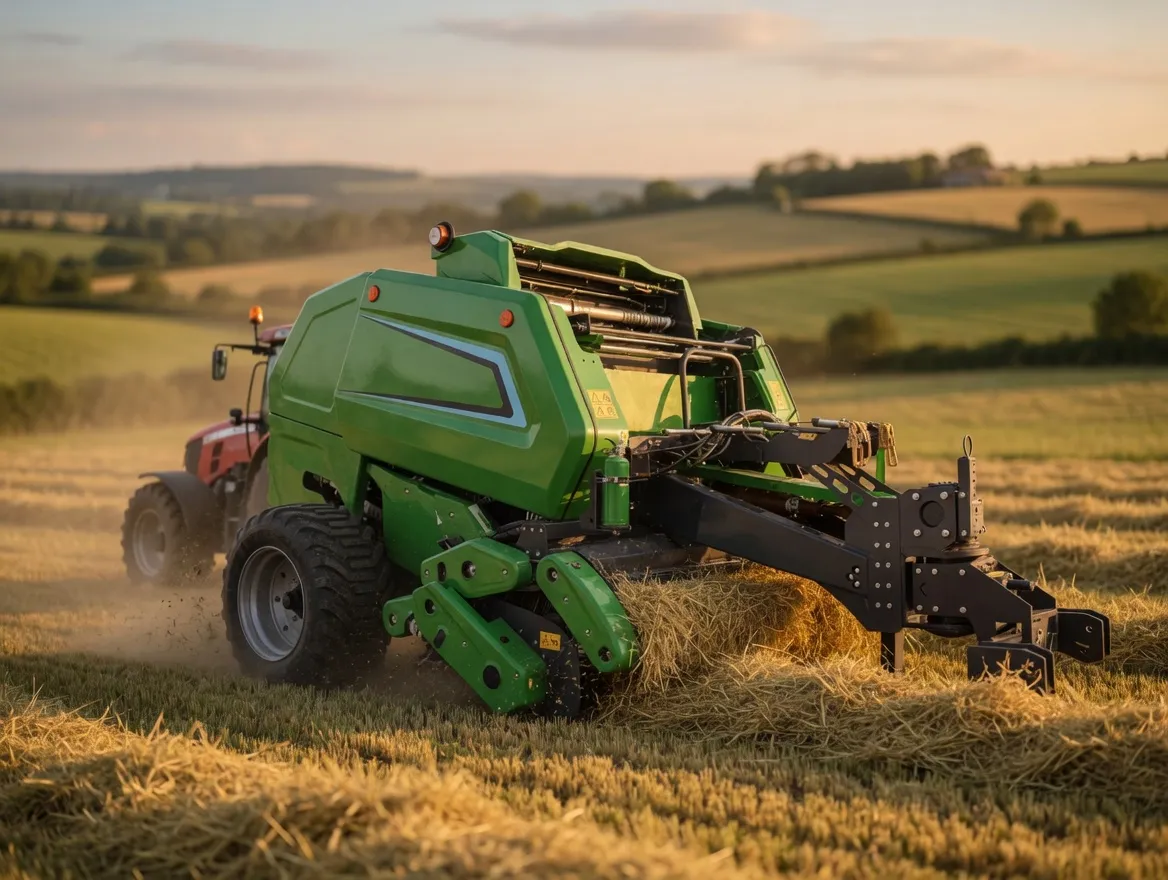
The fixed chamber’s structural advantage is in maximum cycle speed for a single, well-matched crop type. Because there is no expansion mechanism — no moving belts and rollers adjusting against hydraulic pressure — the fixed chamber can complete bale cycles slightly faster when the crop is perfectly matched to its design parameters. In very high-volume, single-crop silage applications where conditions are consistent and the operator’s only objective is maximum bale count per day, the fixed chamber has a modest raw throughput advantage.
The practical significance of this advantage for mixed cropping farms — where crop types, windrow densities, and moisture levels vary across the season — is limited. The variable chamber’s flexibility compensates for its slightly lower peak throughput with more consistent bale quality across the variable conditions that mixed cropping delivers. For the occasional specialist operation with extremely high silage volumes and very consistent crop conditions, the fixed chamber’s raw throughput may be genuinely relevant. For the typical eastern Australian mixed cropping farm, it rarely is.
The Belt System: The Variable Chamber’s Critical Maintenance Point
Because the belts in a variable chamber baler are both the structural element of the chamber and the crop-handling mechanism, their condition is more directly tied to machine performance than in a fixed chamber design where the chamber walls are structural metal. Belt wear, tension variation between individual belts, and belt joint condition all affect bale quality in ways that are not always obvious until the problem is well advanced.
The most common belt-related performance issue is uneven tension between individual belts — one belt running slightly tighter than its neighbours produces an asymmetric bale that appears consistent at ejection but rolls unevenly in the paddock and wraps inconsistently under film. Operators who check belt tension at multiple points across the width of the belt set, rather than checking a single belt as representative of all, catch this problem before it manifests in bale quality. A simple physical tension check — pressing each belt at mid-span and comparing the deflection across all belts — takes four minutes and is a reliable weekly check during peak season.
Belt joint condition is a higher-stakes maintenance point because joint failure is typically sudden — the belt joint separates under load and the belt immediately becomes non-functional, stopping the baling cycle. Inspecting joint lacing for wear or fatigue cracking before each season and mid-season at the 150-hour mark catches joints that are approaching end of life before they fail. Carrying a spare belt joint kit on the machine — as part of the standard field spare parts kit — means that a joint failure in the paddock is a 20-minute repair rather than a day-ending event.
EverPower machines in the 9YG series are designed with belt access in mind — the chamber can be opened for belt inspection and tension adjustment without major disassembly, and belt joint access is achievable with standard hand tools. This maintenance accessibility is one of the practical design factors that contributes to the machine’s suitability for operators who are maintaining it themselves rather than relying on workshop service for routine checks.
Hydraulic Pressure Settings: What They Actually Do and Why They Matter
The hydraulic density control setting on a variable chamber baler determines the resistance at which the chamber expands — higher pressure means the belts resist expansion more forcefully, producing a denser bale. This is the mechanism that allows the operator to target different density outcomes for different applications: high pressure for silage, where dense bales ferment better; medium pressure for hay, where moderate density avoids heating; lower pressure for straw, where bulky material needs the chamber to expand readily.
What the hydraulic setting does not do is compensate for forward speed errors. An operator driving too fast through a heavy windrow section on high pressure will produce an incompletely filled chamber — the material feeds faster than the bale core can establish rotation, causing uneven packing. The resulting bale may look complete at the standard diameter but will have a loose, asymmetric core that affects both bale integrity and fermentation quality in silage applications. The hydraulic pressure setting and forward speed management work together — neither alone determines bale quality.
Mixed cropping operators who record their density settings and corresponding forward speeds for each crop type — and review that record at the start of each new crop season — maintain more consistent bale quality across the season than those who re-establish settings each time by trial and error. The first bale on the first day of each new crop application is the most informative: cut it open, examine the core, assess the density gradient from core to outer layer. This five-minute assessment at the beginning of each application season is worth more than any instrumentation reading.
Bale Diameter Variability: Understanding What’s Normal vs What’s a Problem
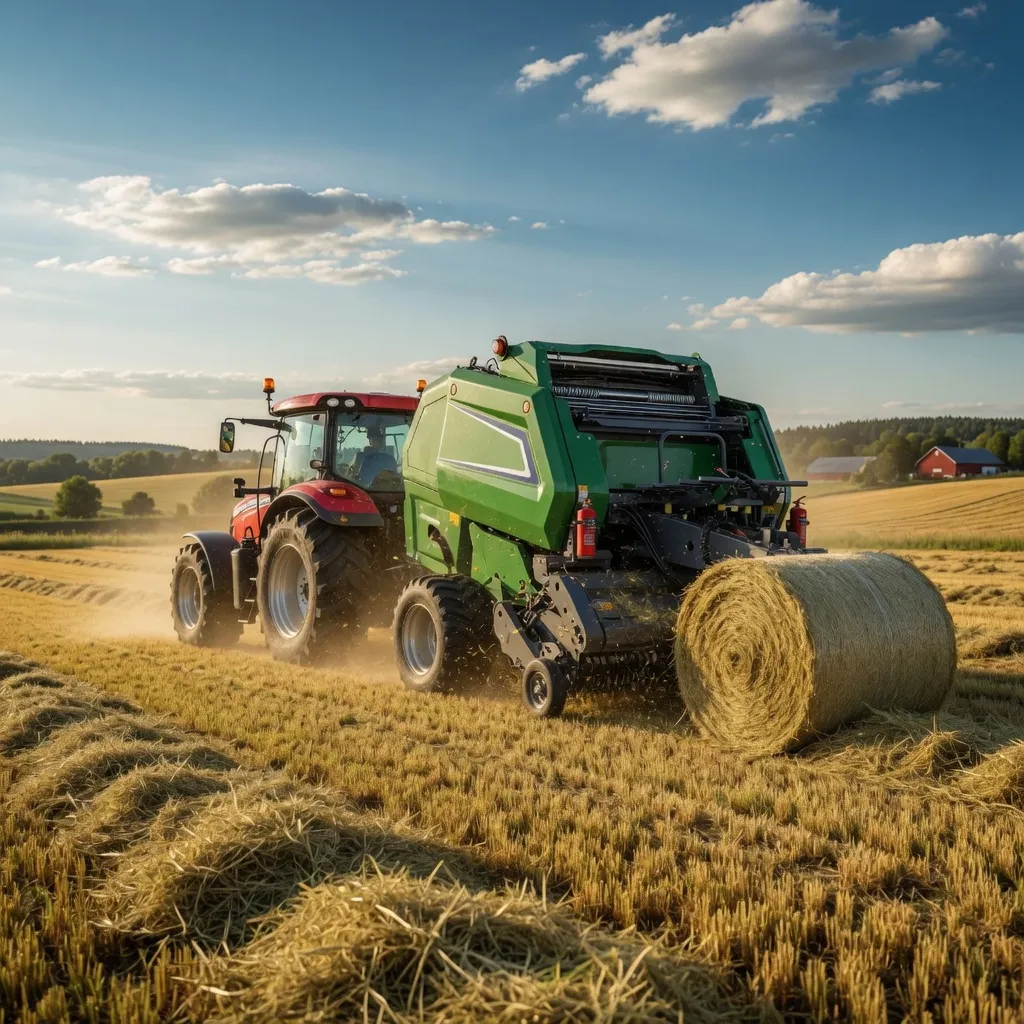
One observation that operators new to variable chamber machines sometimes make is that bale diameter varies slightly between bales — particularly across a paddock with variable windrow density. This is a feature of the design, not a defect, and understanding why it occurs prevents unnecessary machine adjustment that can actually worsen the outcome.
The variable chamber terminates the bale cycle when a target diameter (set by the chamber expansion limit) or a target bale completion signal is reached — typically a combination of pressure and a visual or electronic diameter indicator. In uniform crop conditions, the bale cycle is very consistent. In variable conditions — where windrow density changes across the paddock — the cycle time varies because the chamber expands at different rates in light versus heavy sections. The resulting bales are slightly different diameters in some cases. As long as the range is within ±50mm and the bale shapes are uniform and symmetric, this variability is within the normal operating envelope and reflects the machine working correctly.
A diameter variability that exceeds ±50mm consistently, or that produces asymmetric bales, warrants investigation — it suggests either a windrow preparation problem, an uneven belt tension issue, or a density setting that is inappropriate for the crop conditions. The corrective action is almost always a combination of windrow preparation improvement (rake to a more consistent width and density) and a belt tension check, not a machine reconfiguration.
Comparing Variable Chamber Models in the EverPower Range
EverPower’s 9YG series uses variable chamber architecture across all models in the range, with the specific belt width, roller count, and hydraulic system specification scaled to the bale diameter class of each model. The 9YG-1.0 and 9YG-1.25A are suited to mixed cropping farm scales with annual volumes of 800–4,500 bales across the silage-hay-straw cycle. The 9YG-2.24D (S9000) is scaled for commercial operations where the bale diameter is matched to large-scale feedout equipment and the annual volume warrants the larger capital investment.
The variable chamber mechanism in the 9YG-1.25A has a pressure range specifically calibrated for the Australian mixed cropping context — including the high-moisture silage density demands of irrigated ryegrass and the lower-density straw applications typical of cereal-growing mixed farms. This calibration reflects EverPower’s NSW-based operating experience with Australian crop types rather than a generic export product specification, which is why farmers in different Australian regions find the machine behaves consistently with their local crop conditions.
For farmers evaluating which model in the range is appropriate for their operation, EverPower’s NSW team can provide a recommendation based on the annual bale volume target, the primary crop types to be baled, the tractor fleet specifications, and the feedout logistics that determine what bale diameter suits the livestock management system. These are not questions with generic answers — the right machine for a 150-cow dairy farm baling ryegrass and lucerne is a different specification from the right machine for a mixed cropping operation baling oaten hay and cereal straw with a seasonal silage program on the side.
Windrow Preparation: The Input the Variable Chamber Can’t Compensate For
There is one area where the variable chamber’s flexibility has no compensating effect: poor windrow preparation. A baler — variable or fixed chamber — can only process what the pickup delivers, and what the pickup delivers is determined by the quality of the raking work. Windrows that are too wide for the pickup reel width leave material in the paddock. Windrows that are too narrow underfill the baler and produce undersized bales. Windrows with inconsistent density — caused by raking at variable speed or overlapping on turns — produce variable bale density that the variable chamber mechanism can reduce but not eliminate.
For mixed cropping farms baling multiple crop types, matching the rake configuration to each crop type’s specific requirements is as important as the baler settings. The EverPower 9LH-12 Lateral Rake and 9LZY-9.0 Finger Wheel Rake represent two different raking approaches suited to different mixed crop contexts — the lateral rake for heavier swards requiring consolidation, the finger wheel rake for lighter crops where minimising leaf shatter is the priority. Running the correct rake for the crop, rather than using a single rake setting for all applications, produces windrows that allow the variable chamber baler to operate at its designed performance point consistently.
EverPower Variable Chamber Range: Specifications and Support
EverPower Baling Machinery Australia Pty Ltd supplies variable chamber round balers through its Condell Park NSW base with local technical support and parts availability. The 9YG series is backed by a commissioning program that covers chamber setup, density setting calibration, and net wrap system adjustment for the specific crop types and tractor specifications of each buyer’s operation. This commissioning step — which gets the machine set up correctly from the first operating day — is particularly valuable for variable chamber balers, where the range of adjustable parameters can be confusing without structured guidance from someone familiar with the specific machine and the crop conditions it will encounter.
EverPower Baling Machinery Australia Pty Ltd
27 Harley Crescent, Condell Park NSW 2200
+61 2 9708 3322
[email protected]
Frequently Asked Questions
27 Harley Crescent, Condell Park NSW 2200 | +61 2 9708 3322 | [email protected]
About Us | Contact Us