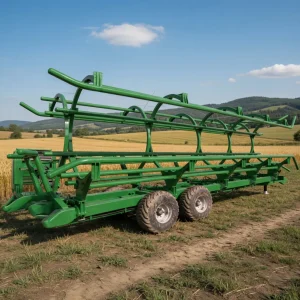
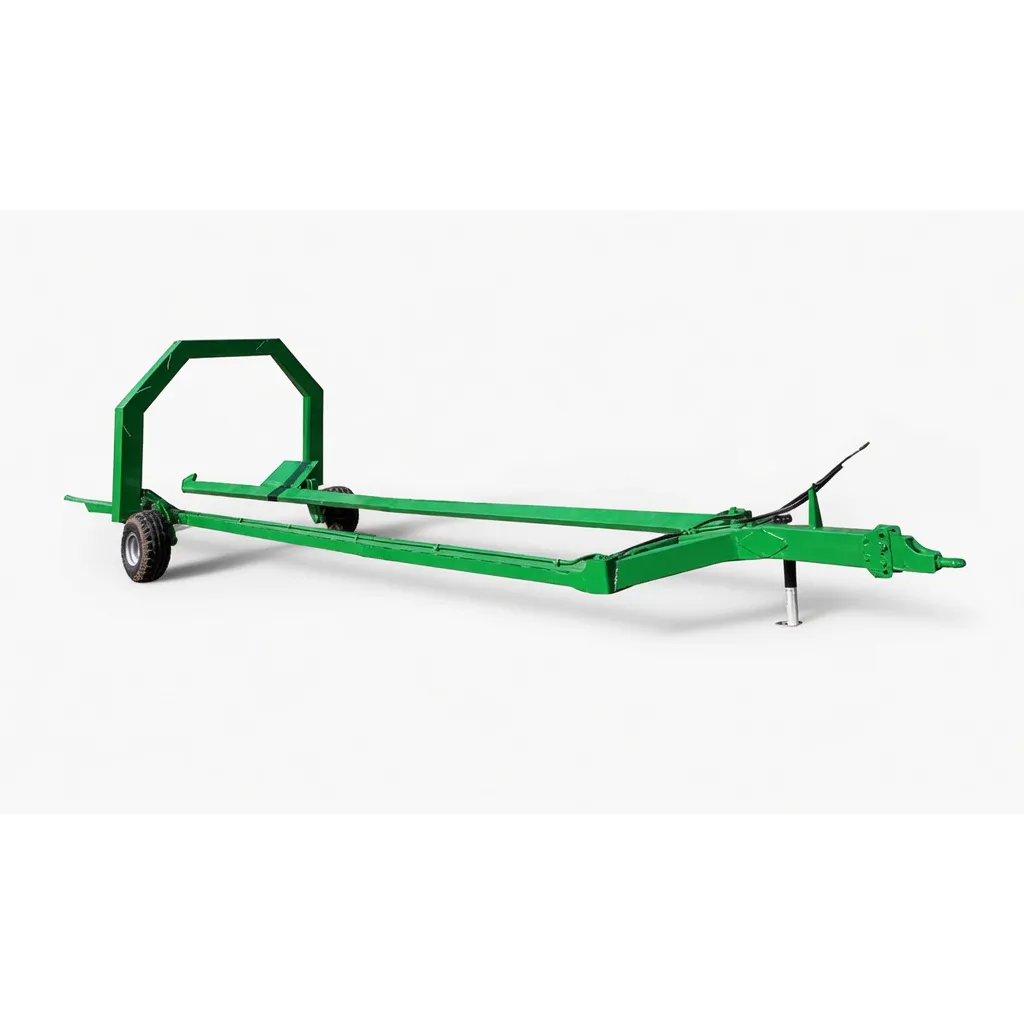
Description
Product Specifications
| No. | Parameter | Unit | Specification |
|---|---|---|---|
| 1 | Product Name | — | Round Hay Baler Transporter |
| 2 | Model | — | 9JYY-2.5 |
| 3 | Hitching Method | — | Tow-Behind Type |
| 4 | Loading / Unloading | — | Hydraulic |
| 5 | Maximum Load Capacity | kg | 2,500 |
| 6 | Matching Power | kW | ≥ 20 |
| 7 | Working Pressure | MPa | ≥ 16 |
| 8 | Transport Speed | km/h | ≤ 40 |
| 9 | Tyre Model | — | 10.0/80-12 (Dual Wheels) |
| 10 | Bale Size (Dia. × Length) | mm | Dia. 1,300 / Length 1,000–1,500 |
| 11 | Overall Dimensions (L×W×H) | mm | 10300 × 2420 × 2485 |
| 12 | Machine Weight | kg | 1,165 |
Product Overview
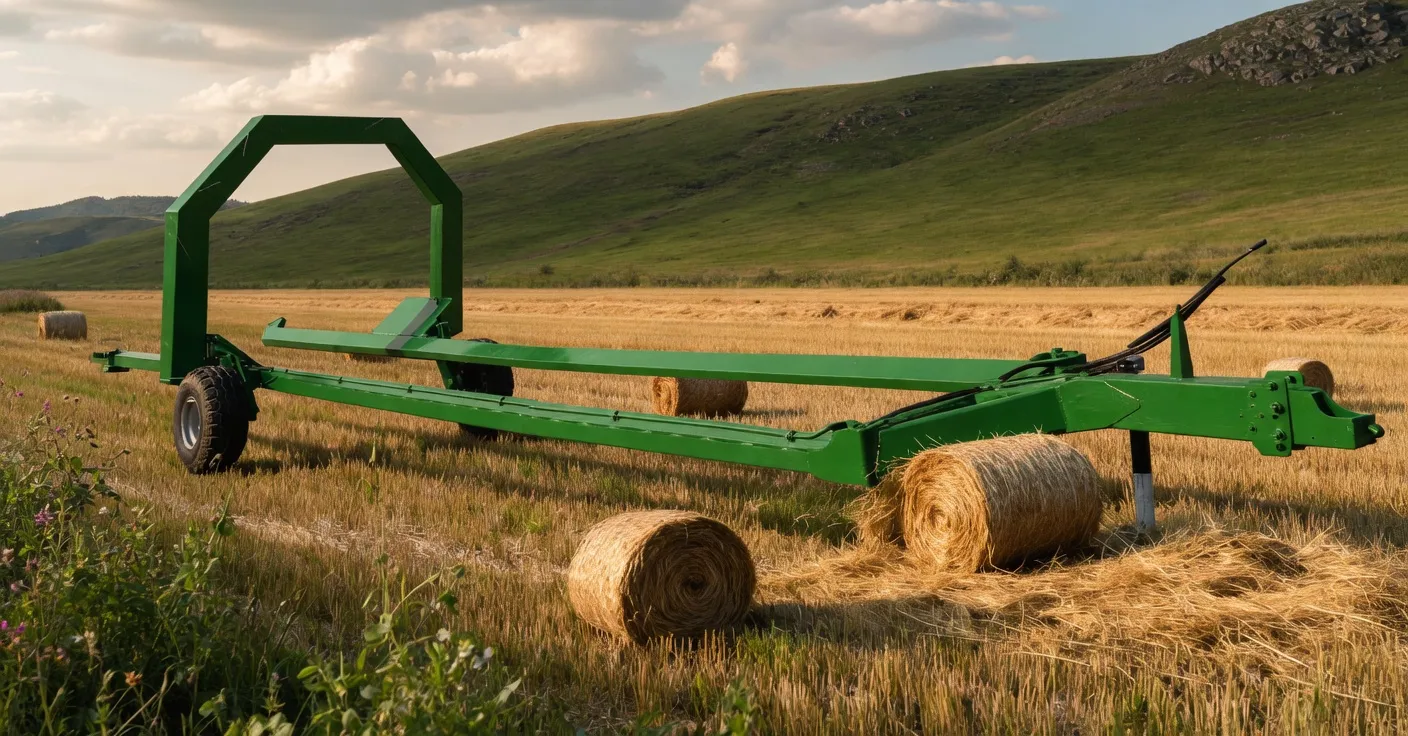
The 9JYY-2.5 occupies a specific and well-defined space in the EverPower transport range: it is the machine for the farm where the primary tractor is 20–40 kW, the baler produces standard Φ1,300 mm bales, and moving one bale at a time to the stack is an acceptable trade-off for a machine that costs a fraction of the larger 9JYY-4.5 and requires no more tractor than the baler itself does. Farms in this category are numerous across Australia — hobby farms, small grazing blocks, rural lifestyle properties, and remote stations running compact utility tractors alongside older-generation balers.
At 1,165 kg tare weight and with a minimum power requirement of just 20 kW (approximately 27 hp), the 9JYY-2.5 can be towed by virtually any tractor that also runs the baler. The hydraulic loading and unloading arm handles Φ1,300 mm bales in all standard length configurations from 1,000 to 1,500 mm, covering the output of EverPower’s 9YG-1.0, 9YG-1.25A, and S9000 Series machines. The dual-wheel 10.0/80-12 tyre configuration gives stability on soft or uneven paddock surfaces that single-wheel trailers lack — an important design detail on the wet, undulating country where smaller farms in coastal areas and southern regions typically operate.
Transport speed is rated to 40 km/h — practical for farm-road running between paddock and shed without requiring an escort vehicle or route planning around steep grades. The 10,300 × 2,420 × 2,485 mm overall dimensions are road-registerable on rural roads without a permit, and the hydraulic system uses standard agricultural couplings compatible with any tractor above 20 kW with rear hydraulic outputs.
Key Features — Small Machine, Smart Design
≥ 20 kW Minimum — Any Tractor on the Property
The 20 kW minimum power requirement is the defining practical feature of the 9JYY-2.5. It means the machine is towed by a compact 27 hp utility tractor — the type that is the primary or only tractor on many small Australian properties. There is no need to redirect the main baling tractor from its work, no waiting for the large tractor to finish the current pass. The 9JYY-2.5 runs behind whatever is available, including the ATV-compatible models in the 20–30 kW range that some coastal lifestyle farms run as their only traction equipment.
1,165 kg Tare — Genuine Lightweight for Soft Ground
In wet conditions — coastal paddocks after autumn rains, irrigated pastures in the Riverina, hill country in southern Victoria after a wet spring — bale transport is often the operation that causes the most ground damage. A fully loaded heavy transporter with a 3,000+ kg tare sinks into soft soil and creates ruts that take seasons to repair. The 9JYY-2.5 at 1,165 kg tare and 2,500 kg maximum load keeps the total transport weight under 3,700 kg — significantly below the threshold where most well-managed Australian paddocks show lasting compaction from a single pass.
Dual-Wheel Tyres — Stable on Uneven Ground
The 10.0/80-12 dual-wheel configuration spreads the load across a wider footprint than single-wheel alternatives, providing better stability on the soft or undulating terrain common in coastal farming regions and on the smaller properties where the 9JYY-2.5 is most used. Dual-wheel also provides a useful redundancy on remote properties: a puncture on one tyre of a dual pair does not stop the machine immediately the way a single-tyre puncture does. The remaining tyre supports the load at reduced capacity while a repair is made in the paddock.
Hydraulic Load & Unload — Precise Placement, Film Protection
The hydraulic arm lifts bales from the ground without the rolling and dragging that manual-assist or drive-over loading systems use. For silage bales, this is not a minor consideration: every film abrasion point created during loading is a potential aerobic deterioration site that can spread to affect 10–20 kg of silage before the bale is opened for feeding. The arm places bales onto the platform with a controlled arc, and the unload cycle positions bales precisely into the storage stack rather than dropping them and rolling them into position.
Road-Registerable Dimensions — Farm to Road Without Permits
At 2,420 mm transport width, the 9JYY-2.5 is within standard road-legal width limits on all Australian rural roads without requiring an oversize-load permit. This matters for properties that move bales between paddocks via public roads, or that need to transport to off-farm storage without scheduling logistics around permit availability.
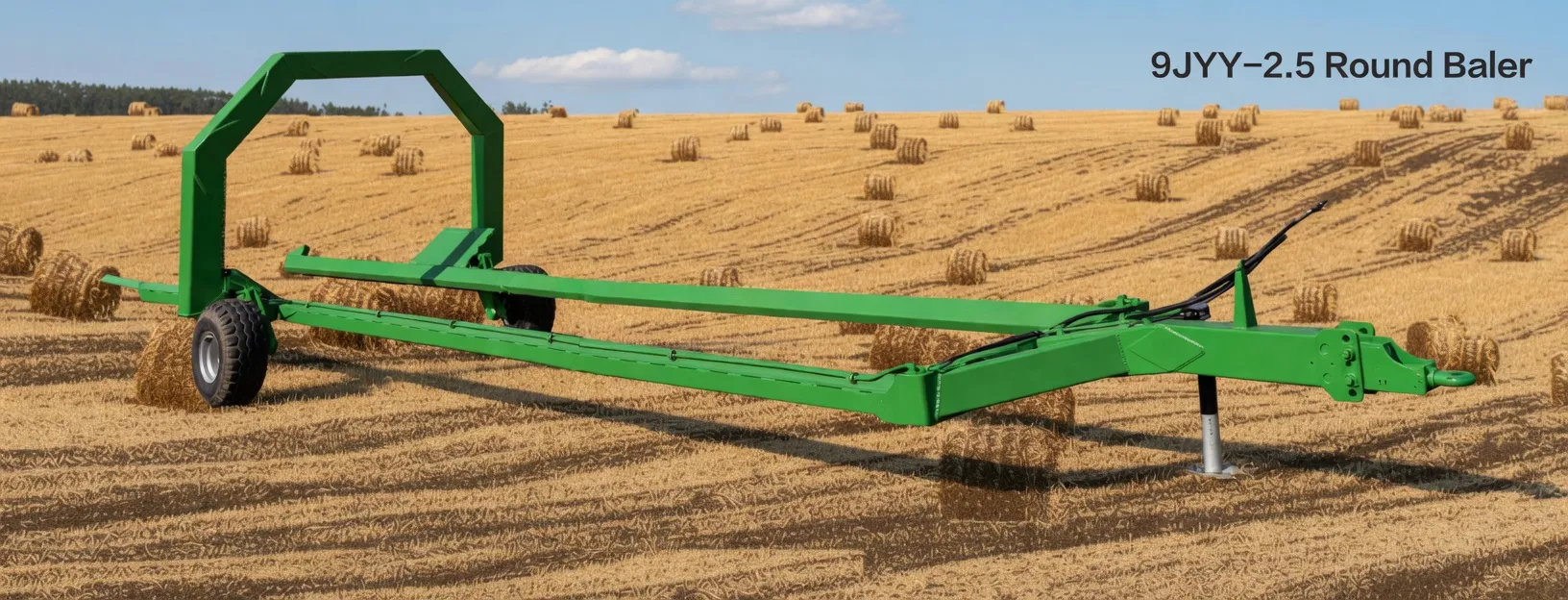
How It Works
Drive the tractor forward to position the transporter arm adjacent to the bale. The compact 2,420 mm width allows precise positioning in tight paddock layouts without wide turning arcs.
Operate the arm from the tractor seat via the rear hydraulic levers. The arm grips the bale and lifts it cleanly from the ground onto the platform in a single smooth arc — no manual assist required.
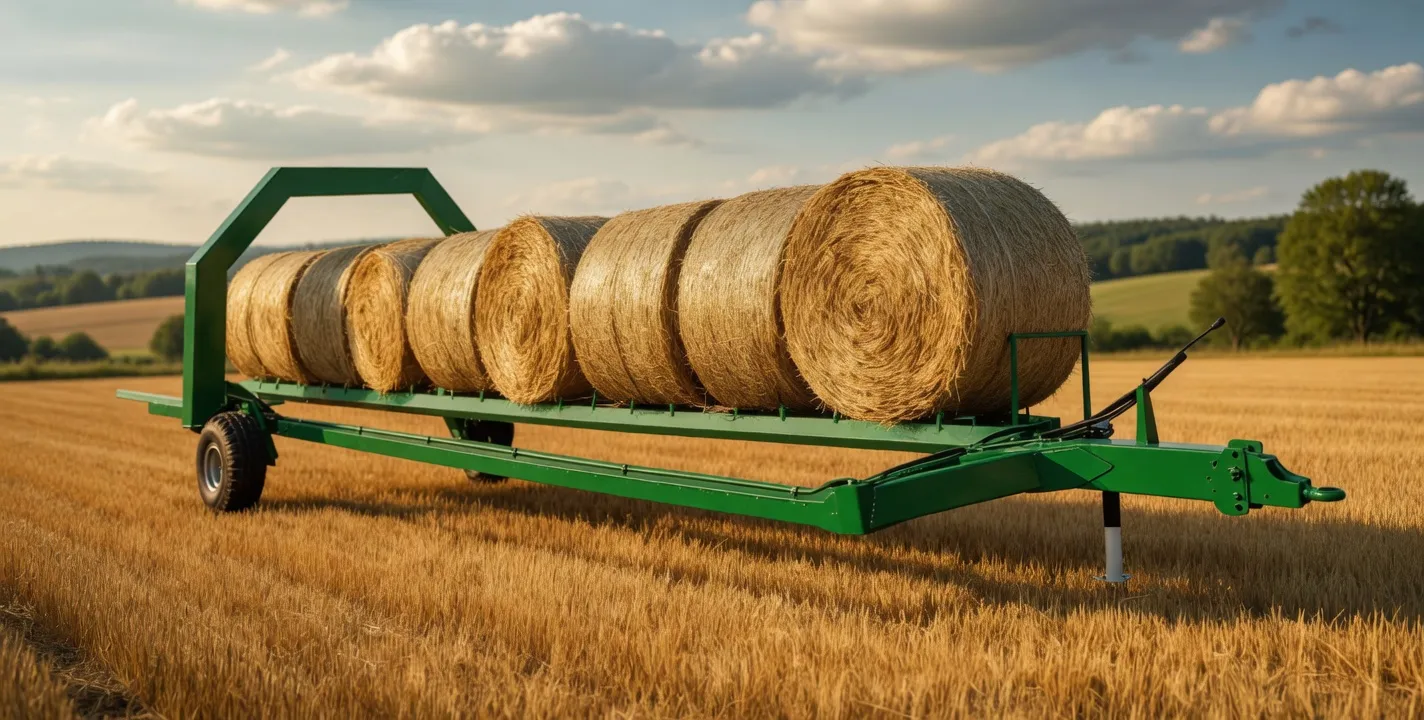
Tow the loaded transporter to the storage stack or shed at up to 40 km/h on farm roads. The dual-wheel tyres and low tare weight maintain stable tracking even on gravel and soft-dirt surfaces.
At the stack, the hydraulic arm reverses the load sequence — lowering the bale precisely into position. No bale rolling, no chain winching, no manual repositioning required.
On a 150-bale paddock with the stack 800 metres from the farthest bale, single-bale transport with the 9JYY-2.5 behind a 30 kW tractor takes approximately 5–6 hours — well within a working day for one operator without any support equipment. The simplicity of single-bale operation also means the machine is easily operated by any farm worker, including seasonal labour, without training beyond understanding the two hydraulic lever functions.
Applications — The Properties That Need the 9JYY-2.5
Hobby Farms & Rural Lifestyle Properties
Small properties producing 50–300 bales per season typically cannot justify the purchase price of a multi-bale transporter when single-bale operation covers their volume comfortably within a working day. The 9JYY-2.5 delivers the film-protection and precise placement benefits of hydraulic arm loading at a price point that makes sense for operations producing hundreds rather than thousands of bales per year. The 20 kW power minimum also means the compact utility tractors these properties typically run are immediately compatible without any upgrade.
Remote Stations — Simplicity Above Everything
Remote cattle and sheep stations running seasonal baling operations value the 9JYY-2.5 for two reasons: the hydraulic-only system is serviceable by any station mechanic without specialist knowledge, and the low weight means it doesn’t dig up the paddocks that remote properties need to protect carefully from compaction. Dual-wheel tyres provide the soft-ground stability that single-wheel trailers cannot, and the standard hydraulic coupling means any of the station’s tractors can run it without a dedicated attachment.
Small Silage Operations — Protecting Every Bale
For farms producing 100–400 silage bales per season, every film puncture matters proportionally more than on a 3,000-bale operation where a few losses blend into the statistics. The 9JYY-2.5’s gentle hydraulic arm loading protects each bale individually — no drive-over abrasion, no chain-drag film damage. On a small silage operation where every bale represents meaningful feed value, that protection is worth a premium over push-and-roll collection methods.
Contractor Support Equipment
Contractors already running the larger 9JYY-4.5 on their main operation often add a 9JYY-2.5 for client properties where the paddock layout is too tight for the 6,750 mm working width of the larger machine, or where the client’s available tractor is too small to tow the 4.5. The 9JYY-2.5 fills those jobs without the contractor needing to mobilise different equipment from a separate source.
Maintenance — Straightforward & Remote-Friendly
Pre-Season Inspection
Check all hydraulic hose connections at the arm pivot points — these flex repeatedly during every load/unload cycle and are the highest-wear point on the machine. Replace any hose with cracking on the outer sleeve before the season starts. Inspect the arm pivot pin and bushings for wear; a worn pin allows lateral deflection during the lift arc. Check all four dual-wheel tyres for inflation, sidewall condition, and bead seating.
Every 50 Operating Hours
Change the hydraulic fluid and filter in the arm circuit. Forage dust accumulates in hydraulic fluid faster than in most other agricultural circuits because the arm operates close to the ground during loading. Clean fluid at 50-hour intervals extends control-valve service life significantly compared to seasonal-only fluid changes. Grease the arm pivot and tow-hitch ball per the lubrication schedule.
Remote-Property Serviceability
The 9JYY-2.5 uses no electronic systems, no calibrated sensors, and no specialist components outside of standard hydraulic fittings and seals. Every consumable item — hoses, seals, pivot pins, arm bushings — is a standard agricultural hydraulic component available from any rural hydraulic supplier in Australia. For stations 200+ km from the nearest dealer, this is not a minor detail: it is the reason the machine keeps working through a season rather than sitting idle waiting for parts.
Four Reasons the 9JYY-2.5 Fits Where Others Don’t
Runs behind any compact utility tractor above 27 hp. The lowest power requirement of any hydraulic bale transporter in this capacity class.
Minimal ground compaction on wet or soft paddocks. Total loaded weight under 3,700 kg on most bale types.
Better soft-ground tracking than single-wheel alternatives. Built-in puncture redundancy for remote locations.
No firmware, no calibrated sensors. Serviceable anywhere with standard rural hydraulic components.
About EverPower Baling Machinery Australia
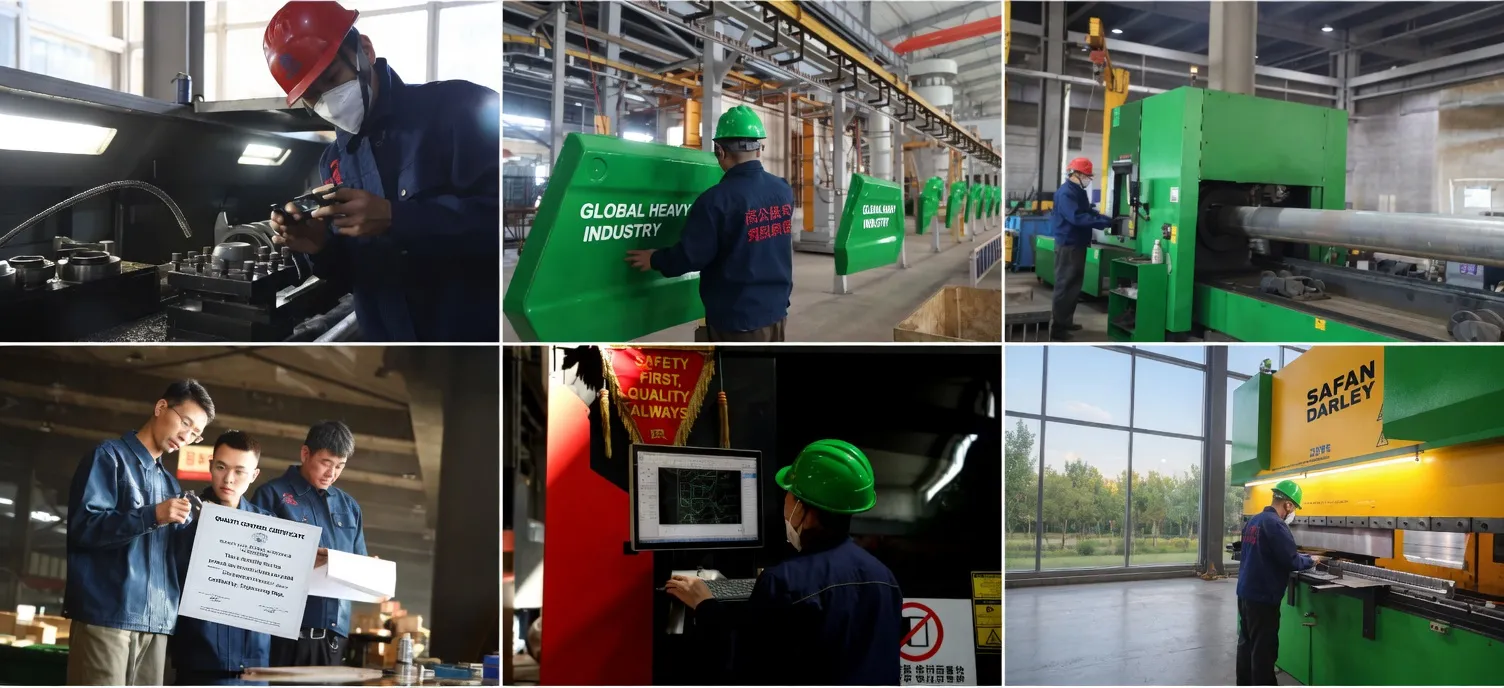
EverPower Baling Machinery Australia Pty Ltd — 27 Harley Crescent, Condell Park NSW 2200 — is the direct Australian arm of an ISO 9001-certified manufacturer with a 32,000 m² factory, 180 staff, and a dedicated R&D centre. Every machine carries a genuine Australian warranty administered locally, backed by spare parts stocked for 72-hour national delivery.
📞 +61 2 9708 3322 | ✉️ [email protected] | silage-baler.com/about-us
Frequently Asked Questions
The Right Transporter for the Right Operation
Contact EverPower for pricing and stock availability. We’ll help you compare the 9JYY-2.5 and 9JYY-4.5 for your tractor size and annual bale volume.